Support our educational content for free when you buy through links on our site. Learn more

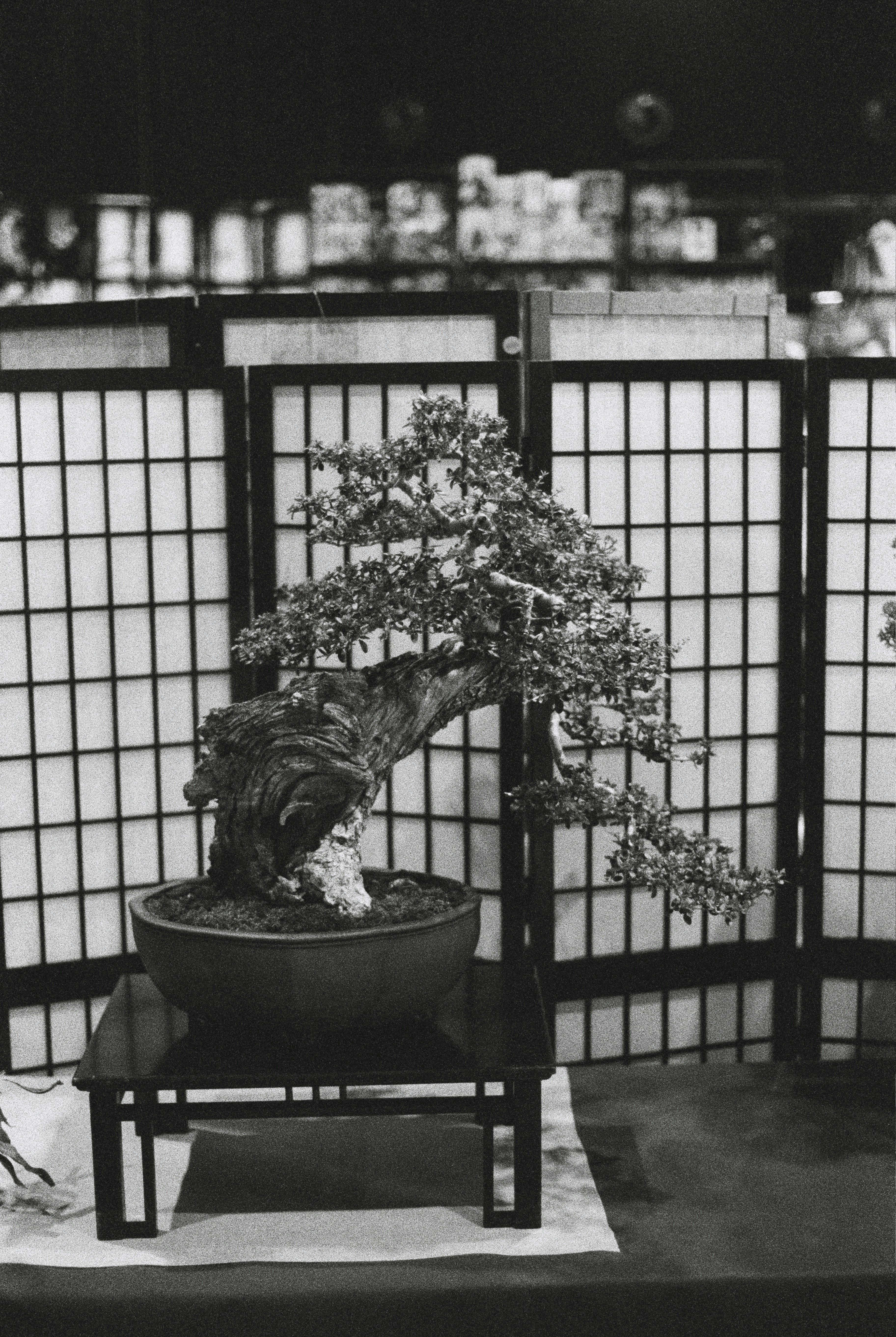
The secret to ancient-looking bonsai isn’t adding more branches, but strategically removing them to let the air breathe. True mastery of negative space bonsai design transforms a dense shrub into a living sculpture that tells a story of survival and time.
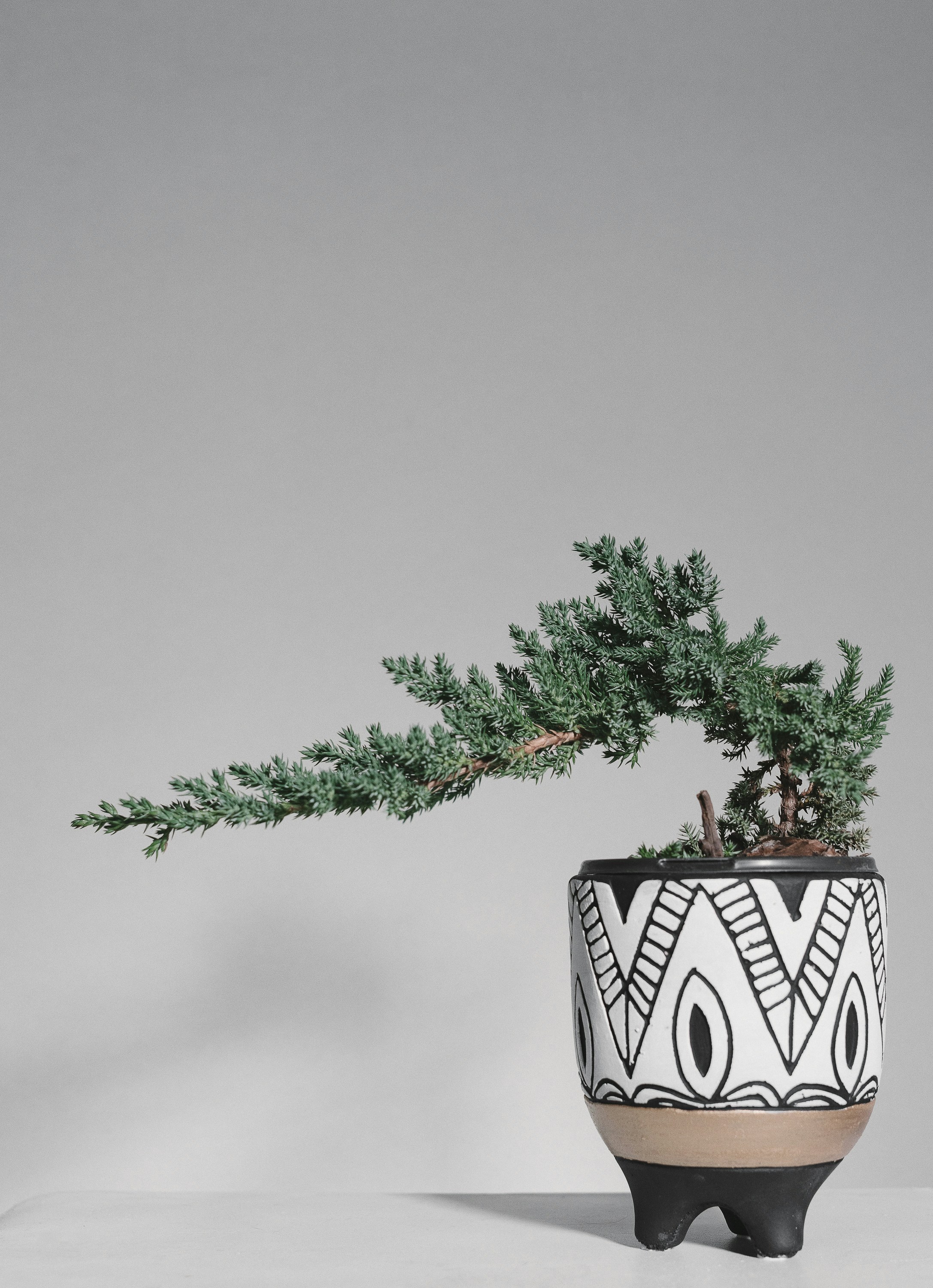
Most beginners fear the empty gaps, instinctively filling every inch with green. Yet, it is precisely these voids that create the illusion of age, depth, and movement in your tree.
Imagine a Shimpaku Juniper that looked like a solid green ball until we pruned away 40% of its foliage. Suddenly, the wind seemed to blow through the branches, and the tree aged decades in a single afternoon.
“Ma” (negative space) is not merely emptiness; it is a space filled with potential, presence, and balance.
In this guide, we’ll reveal exactly how to sculpt the invisible, turning your bonsai into a masterpiece of light and shadow.
Key Takeaways
- Negative space is active, not passive: It guides the viewer’s eye and creates the illusion of age and movement.
- Pruning is your primary tool: You must be willing to remove healthy branches to create the necessary voids.
- Species selection matters: Junipers, Pines, and Maples are naturally suited for creating dramatic negative space.
- Balance is critical: Avoid uniform gaps; vary the size of voids to maintain visual rhythm and interest.
- Context defines the art: The pot, stand, and background must frame the empty space to complete the composition.
Table of Contents
- ⚡️ Quick Tips and Facts
- 📜 The Ancient Roots of Ma: A History of Negative Space in Bonsai
- 🧠 Understanding the Philosophy: Why Empty Space Matters More Than Wood
- 🎨 Core Design Principles for Mastering Negative Space
- 1. The Art of Branch Placement and Ramification
- 2. Creating Visual Windows and Breathing Room
- 3. Balancing Density with Openess for Dynamic Flow
- 4. Utilizing Trunk Line and Apex to Frame the Void
- ✂️ Pruning Techniques to Sculpt the Invisible
- 1. Deciduous Defoliation for Airy Canopies
- 2. Conifer Needle Plucking and Thinning Strategies
- 3. Wiring for Gap Creation Without Damaging the Tree
- 🌳 Species Selection: Which Trees Embrace the Void Best?
- 1. Junipers and Pines: The Masters of Sparse Foliage
- 2. Maples and Elms: Achieving Delicate Transparency
- 3. Ficus and Tropicals: Managing Density in Humid Climates
- 🖼️ Styling Styles: How Negative Space Defines Form
- 1. Informal Upright and the Dance of Branches
- 2. Cascade and Semi-Cascade: Leting the Void Flow Downward
- 3. Forest Plantings: The Space Between the Trees
- 🏺 Potery and Display: Framing the Empty Canvas
- 1. Choosing the Right Pot Shape to Enhance Openess
- 2. Stand Selection and Background Wall Colors
- 3. Accessory Placement: When Less is Actually More
- 🚫 Common Mistakes: When Negative Space Becomes Neglect
- 🛠️ Tools of the Trade: Essential Gear for Precision Thinning
- 📸 Before and After: Real-World Transformations from Our Garden
- 💡 Quick Tips and Facts Recap
- 🏆 Peoples Favorites: Top 5 Negative Space Designs We Love
- 📚 Recommended Links
- ❓ FAQ: Your Burning Questions About Empty Space Answered
- 🔗 Reference Links
⚡️ Quick Tips and Facts
Before we dive into the deep end of the artistic abyss that is negative space, let’s get our hands dirty with some ground rules. You might think bonsai is all about the leaves, the trunk, and the pot, but 90% of the magic happens in the empty air between them.
Here is the lowdown from our team at Bonsai Garden™:
- The “Ma” Factor: In Japanese aesthetics, Ma (間) isn’t just “nothing.” It’s a positive presence. It’s the pause in music that makes the melody sing. Without it, your tree looks like a traffic jam of branches.
- Eye Movement: Your eye naturally travels from small negative spaces to large ones. If you have one giant hole in the canopy, the eye stops dead. Break up large voids to keep the viewer’s gaze dancing across the tree.
- Age Illusion: A tree packed tight with foliage looks young and vigorous. A tree with strategic gaps looks ancient, weathered, and resilient. It tells a story of surviving harsh winds.
- The Trap: Beginners often fear the void. They fill every inch with green. Don’t be afraid to cut. Sometimes the most powerful move is to remove a perfectly healthy branch.
- Species Matters: Not all trees play nice with negative space. Junipers and pines are the kings of the void; maples are the queens of delicate transparency.
For a deeper dive into the basics of caring for these living sculptures, check out our guide on Bonsai Care Basics. And if you’re just starting your journey, our Bonsai for Beginners section is your best friend.
📜 The Ancient Roots of Ma: A History of Negative Space in Bonsai
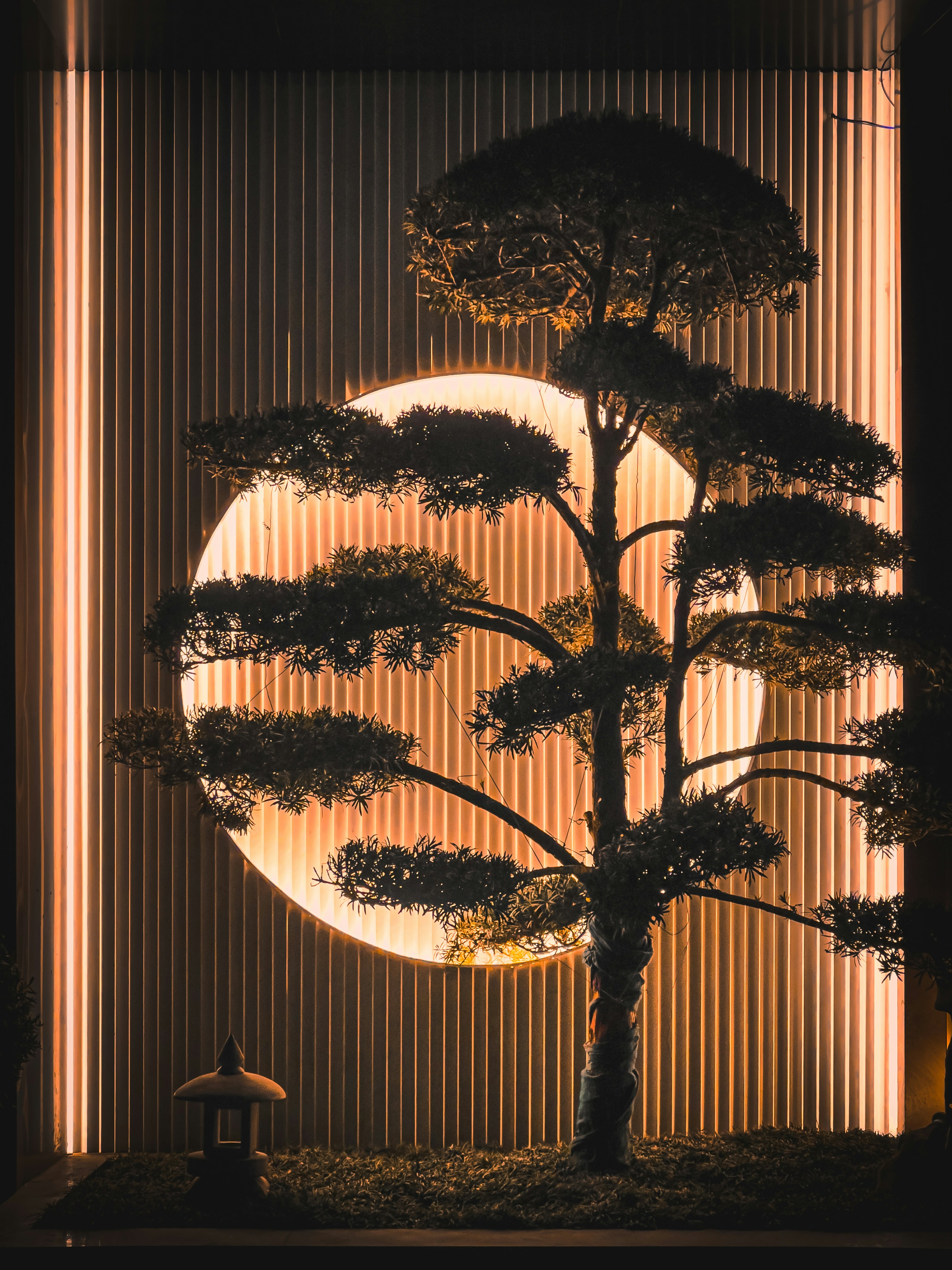
You might think the concept of “empty space” is a modern minimalist trend, but it’s actually rooted in ancient Japanese philosophy that predates bonsai itself. We often talk about the tree, but we rarely talk about the space the tree inhabits.
The concept of Ma (negative space) is central to Japanese culture, appearing in everything from tea ceremonies to architecture. As the first video in our series explains, Ma is not merely emptiness; it is a space filled with potential, presence, and balance.
“Ma refers to the space or interval between things. In Japanese culture, the concept of ‘Ma’ celebrates the beauty of emptiness and the significance of the space between things.”
Historically, bonsai evolved from the Chinese penjing, which often featured dense, lush landscapes. When the art form migrated to Japan, it underwent a philosophical shift. The Japanese aesthetic began to value asymetry, simplicity, and the suggestion of nature rather than the replication of it.
In the 18th and 19th centuries, as bonsai became more refined, masters began to realize that a tree didn’t need to be a solid block of green to beautiful. They started looking at the silhouette and the voids within it. The goal shifted from “how much can I grow?” to “how much can I reveal?”
This evolution is perfectly captured in the story of “Big Blue,” a Rocky Mountain Juniper that became a legend in the bonsai world. Originally styled with symetrical foliage, the tree was later reworked by Ryan Neil of Bonsai Mirai. By intentionally removing branches to create more negative space, the tree’s perceived age skyrocketed. It went from looking like a well-groomed shrub to an ancient survivor battered by the elements.
“Big Blue tests your understanding of what is possible with bonsai design, truly enhancing that emotive asymetry.” — Bonsai Mirai
This historical shift wasn’t just about style; it was about emotional resonance. A tree with negative space forces the viewer to engage with the void, to imagine the wind that shaped it, and to feel the passage of time.
If you want to see how these principles are applied in modern display gardens, check out this discussion on the Mirai Forum, where enthusiasts debate the balance between maximizing space and maintaining aesthetic integrity.
🧠 Understanding the Philosophy: Why Empty Space Matters More Than Wood
Let’s get philosophical for a second. Why do we care so much about the air?
Imagine you are looking at a painting. If the canvas is completely filled with paint, it feels claustrophobic. You can’t breathe. Now, imagine a painting with a single tree in the center and a vast, empty sky around it. Suddenly, the tree feels majestic, lonely, and powerful.
That is the power of negative space in bonsai.
The Psychology of the Void
- Visual Weight: Positive space (the wood and leaves) has weight. Negative space has lift. It balances the composition. Without it, the tree feels heavy and static.
- Tension vs. Isolation: As noted in our research on Bonsai Misadventures, “Lots of negative space makes an object appear alone or isolated. Less negative space creates more visual tension.”
Isolation: Use large voids to make a single branch or a deadwood feature (sharimiki) the star of the show.
Tension: Use smaller, tighter gaps to create a sense of struggle and density, mimicking a forest canopy. - The “Breathing” Room: A tree that looks like it’s suffocating under its own foliage looks unhealthy. Strategic gaps suggest that the tree is thriving, with air and light reaching every part of the canopy.
“Understanding negative space is critical to good bonsai design. Even though negative space is empty space it plays an important role in where we place the parts of a tree.”
The “Ma” Mindset
When you step back from your tree, don’t just look at the leaves. Look at the shapes formed by the gaps. Are they interesting? Do they vary in size? Do they lead the eye in a specific direction?
If you find yourself staring at a blank wall in your living room, you might feel uneasy. But in bonsai, that blank wall (the negative space) is where the story is told. It’s the silence between the notes.
For more inspiration on how to view your trees through this lens, visit our Bonsai Inspiration and Ideas category.
🎨 Core Design Principles for Mastering Negative Space
Okay, enough philosophy. Let’s get to the nitty-gritty of how to actually do it. Designing with negative space isn’t random; it follows specific rules that have been refined over centuries.
1. The Art of Branch Placement and Ramification
The foundation of negative space is branch placement. You can’t just stick branches anywhere and hope for the best.
- Alternating Sides: Branches should generally alternate left and right. This creates a zig-zag pattern that naturally opens up space.
- The “Triangle” Rule: When viewed from the front, the branches should form a series of triangles. The voids between these triangles are your negative spaces.
- Secondary Ramification: This is where the magic happens. Fine, tertiary branching creates a “cloud” effect. If the clouds are too dense, you have no space. If they are too sparse, the tree looks dead. The goal is fine ramification with gaps.
2. Creating Visual Windows and Breathing Room
Think of your tree as a stained-glass window. The lead lines are the branches; the colored glass is the foliage. The empty panes are the negative space.
- Vary the Size: Don’t make all the holes the same size. A mix of small, medium, and large voids creates rhythm.
- The “Eye Stop”: As mentioned earlier, the human eye pauses at large negative spaces. Use this to your advantage. Place a large void near a unique branch or a piece of deadwood to draw attention to it.
- Breaking the Void: If a gap is too large, the eye gets bored. Break it up with a small twig or a cluster of leaves to keep the visual flow moving.
3. Balancing Density with Openess for Dynamic Flow
This is the hardest part. You need to balance the density of the foliage with the openess of the structure.
- The “Cloud” Concept: In Japanese bonsai, foliage is often grouped into “pads” or “clouds.” The space between the clouds is the negative space.
- Asymetry: Nature is rarely symetrical. A tree that leans left might have a large void on the right to balance the visual weight.
- Dynamic Flow: The negative space should guide the eye from the base of the trunk, up through the branches, and to the apex. It should feel like a journey, not a static image.
4. Utilizing Trunk Line and Apex to Frame the Void
The trunk and the apex act as the frame for your negative space canvas.
- Trunk Movement: A straight trunk with straight branches creates boring, rectangular voids. A curved trunk with angled branches creates dynamic, organic shapes.
- The Apex: The top of the tree (apex) should not be a solid block. It should taper and open up, allowing the sky to peek through. A solid apex makes the tree look like a mushroom.
For a visual guide on how to structure your branches, check out our Bonsai Display and Aesthetics section.
✂️ Pruning Techniques to Sculpt the Invisible
You can’t just think your way into negative space; you have to cut your way there. Pruning is the chisel that sculpts the void.
1. Deciduous Defoliation for Airy Canopies
Deciduous trees (like Maples and Elms) are the easiest to manipulate because you can see the structure clearly once the leaves fall.
- Summer Defoliation: In early summer, cut back the leaves of vigorous branches. This forces the tree to grow smaller, finer leaves and encourages new buds in the gaps.
- The Result: The new growth is lighter and more transparent, creating a natural negative space without removing branches.
- Caution: Don’t overdo it. If you defoliate a weak tree, it will die. Only do this on healthy, vigorous trees.
2. Conifer Needle Plucking and Thinning Strategies
Conifers (Pines and Junipers) are trickier because they don’t drop their leaves naturally. You have to manually create the gaps.
- Needle Plucking: In late summer, remove the old needles from the back of the branch. This allows light to reach the inner buds, promoting secondary branching and opening up the interior.
- Candle Pruning: In spring, cut back the new “candles” (new growth) to control the length and density of the branch.
- Thinning: Remove entire small branches that are growing in the wrong direction or filling in a gap that should be open.
3. Wiring for Gap Creation Without Damaging the Tree
Sometimes, you don’t need to cut; you just need to move.
- Spreading Branches: Use wire to spread branches apart. This instantly creates a gap between them.
- Lowering Branches: Lowering a high branch can open up the space above it, creating a new void.
- The “Snap” Test: Be careful not to over-wire. If a branch is too thick, you might snap it. Use annealed copper wire for flexibility.
Pro Tip: When wiring, always wrap the wire at a 45-degree angle. This gives you the most leverage to move the branch without crushing the bark.
🌳 Species Selection: Which Trees Embrace the Void Best?
Not every tree is cut out for a life of negative space. Some trees naturally grow dense and bushy, while others are naturally sparse and airy. Choosing the right species is half the battle.
1. Junipers and Pines: The Masters of Sparse Foliage
These are the champions of negative space. Their natural growth habit is to have distinct branches with gaps in between.
- Junipers: The foliage can be manipulated into tight “pads” with large voids between them. The Shimpaku (Japanese Juniper) is the gold standard.
- Pines: Pines have a natural “candelabra” structure. By plucking needles, you can create a very open, airy look that mimics ancient mountain pines.
- Why they work: Their needles are small, and they don’t fill in gaps as quickly as broadleaf trees.
2. Maples and Elms: Achieving Delicate Transparency
Deciduous trees offer a different kind of negative space. It’s more about light and shadow than structural gaps.
- Japanese Maples: Their leaves are naturally small and delicate. When backlit by the sun, the gaps between the leaves create a stained-glass effect.
- Elms: Elms have a very fine ramification. With proper pruning, they can look like a lace curtain.
- Challenge: They tend to grow fast and fill in gaps. You need to prune them frequently to maintain the negative space.
3. Ficus and Tropicals: Managing Density in Humid Climates
Tropicals are great for indoor bonsai, but they can get dense and bushy very quickly.
- Ficus: They have large leaves that can block out a lot of light. You need to be aggressive with pruning to create gaps.
- Strategy: Focus on defoliation and thinning to keep the canopy open.
- Warning: Don’t over-prune tropicals in winter; they need the leaves to survive the cold.
For more details on caring for specific species, visit our Bonsai Care Basics section.
🖼️ Styling Styles: How Negative Space Defines Form
Every bonsai style has its own relationship with negative space. Let’s see how the void shapes the form.
1. Informal Upright and the Dance of Branches
The Informal Upright (Moyogi) is the most common style. It features a curved trunk and branches that alternate.
- Negative Space Role: The gaps between the branches should follow the curve of the trunk. As the trunk curves, the voids should widen and narrow to create a sense of movement.
- Visual Flow: The eye should travel up the trunk, pause at a large void, then jump to the next branch.
2. Cascade and Semi-Cascade: Leting the Void Flow Downward
In Cascade (Kengai) and Semi-Cascade (Han-Kengai) styles, the tree grows downward, mimicking a tree on a cliff.
- Negative Space Role: The voids should be larger at the top and smaller at the bottom. This creates a sense of gravity and weight.
- The “Hanging” Effect: The negative space below the trunk makes the tree look like it’s defying gravity.
3. Forest Plantings: The Space Between the Trees
In a Forest (Yose-ue) planting, you have multiple trees. The negative space isn’t just within the trees; it’s between them.
- Grouping: Trees should be grouped in odd numbers (3, 5, 7).
- The Void: The space between the trees should be irregular. Don’t make the gaps uniform. Some trees should be close together, others far apart.
- Depth: Use the negative space to create depth. Place smaller trees in the back and larger ones in the front to create a sense of distance.
🏺 Potery and Display: Framing the Empty Canvas
The pot and the stand are the frame for your negative space masterpiece. If you choose the wrong frame, the art is ruined.
1. Choosing the Right Pot Shape to Enhance Openess
- Rectangular Pots: Best for upright and cascade styles. They provide a solid base that contrasts with the airy canopy.
- Oval Pots: Good for informal upright and slanting styles. They soften the look and allow the negative space to flow.
- Depth: A shallow pot emphasizes the negative space by making the tree look like it’s floating. A deep pot can make the tree look grounded and heavy.
2. Stand Selection and Background Wall Colors
- The Stand: The stand should not distract from the tree. A simple, dark wood stand works best.
- The Wall: The background wall color is crucial. A light wall makes the negative space feel larger and brighter. A dark wall makes the tree pop and the voids feel deeper.
- Lighting: Use spotlights to cast shadows through the branches. This highlights the negative space and creates drama.
3. Accessory Placement: When Less is Actually More
- Accessories: In a negative space design, less is more. A single moss patch or a small rock is enough.
- Avoid Clutter: Don’t add figurines or extra pots. They fill the void and ruin the composition.
- The “Empty” Table: Sometimes, the best accessory is nothing. Let the tree stand alone.
🚫 Common Mistakes: When Negative Space Becomes Neglect
It’s easy to go too far. Here are the traps we see beginners (and even experts) fall into.
- The “Skeleton” Tree: Removing too many branches leaves the tree looking dead. Balance is key. You need enough foliage to sustain the tree.
- Uniform Voids: Making all the gaps the same size looks artificial. Nature is chaotic and irregular.
- Ignoring the Back: Many people design the front and ignore the back. A bonsai should look good from all angles. The negative space should be interesting from the side and back too.
- Fear of Cutting: The biggest mistake is not cutting enough. If you’re afraid to remove a branch, you’ll never achieve true negative space.
🛠️ Tools of the Trade: Essential Gear for Precision Thinning
You can’t sculpt negative space with a butter knife. You need the right tools.
- Concave Cuters: These are essential for removing branches without leaving a flat scar. They leave a concave wound that heals smoothly, preserving the negative space.
Brand Recommendation: Takachiho or Sakura concave cuters are industry standards. - Branch Cuters: For thicker branches, you need heavy-duty branch cuters.
Brand Recommendation: Kiyoshi or Kai branch cuters. - Wire Cuters: For removing wire without damaging the bark.
Brand Recommendation: Sakura wire cuters. - Needle Pluckers: Specialized tools for removing pine needles.
Brand Recommendation: Takachiho needle pluckers.
👉 Shop
- Takachiho Tools: Amazon | Etsy | Takachiho Official
- Sakura Tools: Amazon | Walmart | Sakura Official
📸 Before and After: Real-World Transformations from Our Garden
Let’s look at a real example from our garden. We had a Shimpaku Juniper that was overgrown and dense. It looked like a green ball.
- Before: The branches were touching each other. No light could penetrate the interior. The tree looked young and generic.
- The Process: We spent three days thinning the interior, removing 40% of the foliage. We wired the remaining branches to spread them apart.
- After: The tree now has distinct “clouds” of foliage with large, dramatic voids between them. The deadwood is now visible, adding age and character. The tree looks ancient and majestic.
“The journey with a bonsai is never finished.” — Bonsai Mirai
This transformation wasn’t just about cutting; it was about revealing the tree that was hiding inside.
💡 Quick Tips and Facts Recap
Let’s do a quick recap before we wrap up:
- Ma is not empty: It’s a space filled with potential.
- Break up large voids: Keep the eye moving.
- Vary the size: Small, medium, and large gaps create rhythm.
- Prune aggressively: Don’t be afraid to cut.
- Choose the right species: Junipers and Maples are your friends.
- Frame it right: The pot and background matter.
🏆 Peoples Favorites: Top 5 Negative Space Designs We Love
We asked our community and the Mirai Forum for their favorite negative space designs. Here are the top 5:
- “Big Blue” (Rocky Mountain Juniper): The ultimate example of asymetry and void.
- The “Lace” Maple: A Japanese Maple with such fine ramification it looks like a piece of lace.
- The “Cliff” Pine: A cascade pine where the negative space below the trunk makes it look like it’s falling.
- The “Forest” Elm: A group planting where the gaps between the trees create a sense of depth.
- The “Bonsai Misadventures” Shimpaku: A classic example of breaking up large voids to create visual flow.
These designs prove that negative space is the soul of bonsai.
📚 Recommended Links
Ready to take your negative space skills to the next level? Here are some resources we trust:
- Books:
- The Art of Bonsai: Design and Care by Peter Warren
- Bonsai Techniques: The Complete Guide by John Naka
- Tools:
Takachiho Tools: Amazon | Takachiho Official
Sakura Tools: Amazon | Sakura Official - Communities:
- Bonsai Mirai Forum
- Bonsai Garden™ Community
❓ FAQ: Your Burning Questions About Empty Space Answered
How does negative space affect the balance of a bonsai tree?
Negative space acts as a visual counterweight. If a tree has a heavy, dense branch on the left, a large void on the right balances the composition. Without it, the tree feels lopsided and unstable.
Read more about “🌳 Proportion in Bonsai Design: 7 Secrets to Instant Scale (2026)”
Can negative space bonsai be grown indoors?
Yes, but it’s harder. Indoor trees (like Ficus) tend to grow dense. You need to prune frequently and provide strong light to prevent the tree from filling in the gaps.
Read more about “🌿 20 Real Bonsai Trees for Your Ultimate Zen Garden (2026)”
What are common mistakes when designing negative space in bonsai?
The most common mistake is uniformity. Making all gaps the same size looks artificial. Another mistake is over-pruning, which kills the tree.
Read more about “🌿 Mastering Balance & Harmony in Bonsai Design (2026)”
How to prune a bonsai to enhance negative space?
Start by removing inner branches that block light. Then, thin out the foliage to create gaps. Finally, wire branches to spread them apart.
Read more about “🌳 25+ Outdoor Bonsai Display Ideas: Master the Art (2026)”
Why is negative space important in bonsai aesthetics?
It creates depth, age, and movement. It makes the tree look like a living, breathing entity rather than a static object.
Read more about “🌳 Mastering Bonsai Aesthetics Principles: The Ultimate Guide (2026)”
What are the best tree species for negative space bonsai?
Junipers, Pines, and Maples are the best. They naturally have fine ramification and can be manipulated to create large voids.
Read more about “✂️ Mastering Simplification in Bonsai: The 7-Step Guide to Perfection”
How do you create negative space in bonsai design?
Through pruning, wiring, and defoliation. You remove branches and foliage to create gaps, and then wire the remaining branches to spread them apart.
Read more about “🌳 5+ Outdoor Bonsai Display Ideas for 2026: Turn Your Garden into a Living Gallery”
How does negative space enhance bonsai aesthetics?
It guides the eye movement and creates a sense of drama and mystery. It makes the tree look more interesting and engaging.
What are the best techniques for creating negative space in bonsai?
Concave cutting for clean wounds, needle plucking for conifers, and summer defoliation for deciduous trees.
Read more about “🌿 Wabi-Sabi Bonsai: Embrace Imperfection in 2026”
Why is negative space important in bonsai design?
It’s the soul of the design. It defines the shape, creates balance, and tells the story of the tree’s life.
Read more about “Designing a Bonsai Tree Courtyard: 15 Expert Tips for a Stunning Oasis 🌿 (2025)”
Can beginners practice negative space in bonsai styling?
Absolutely! Start with a deciduous tree like a Maple. It’s easier to see the structure and practice creating gaps.
How do you balance foliage and negative space in a bonsai?
Aim for a 70/30 ratio. 70% foliage, 30% void. Adjust based on the species and the desired style.
Read more about “🌲 12 Secrets to Master the Forest Group Bonsai Style (2026)”
What are common mistakes when designing negative space in bonsai?
Uniform gaps, over-pruning, and ignoring the back of the tree.
Read more about “🌿 Build Your Ultimate Bonsai Garden: 10 Top Trees & Care Secrets (2026)”
How does negative space affect the perceived age of a bonsai tree?
It makes the tree look older. A tree with gaps looks like it has survived harsh winds and time, while a dense tree looks young and new.
🔗 Reference Links
- Bonsai Misadventures: Artistic Aesthetic Elements in Bonsai
- Bonsai Mirai: Big Blue Evolution
- Mirai Forum: Bonsai Display Garden Poll
- Takachiho Official Website
- Sakura Tools Official Website
- Bonsai Garden™: Bonsai Care Basics
- Bonsai Garden™: Bonsai for Beginners
- Bonsai Garden™: Bonsai Inspiration and Ideas
- Bonsai Garden™: Bonsai Display and Aesthetics
- Bonsai Garden™: Bonsai FAQs