Support our educational content for free when you buy through links on our site. Learn more

Ever walked past a garden and felt a sudden, inexplicable urge to stop, stare, and whisper, “Wow”? That’s the magic of a well-curated outdoor bonsai display. It’s not just about slapping a potted tree on a patio table; it’s about creating a living sculpture that breathes, changes with the seasons, and tells a story. At Bonsai Garden™, we’ve seen beginners turn their backyards into serene sanctuaries and experts elevate their collections into museum-worthy exhibits. But here’s the twist: the most stunning displays often hide a “silent killer” that can ruin a masterpiece in a single night. We’ll reveal that secret later, but first, let’s unlock the potential of your outdoor space.
Whether you’re working with a sprawling estate or a tiny balcony, this guide dives deep into 5+ creative outdoor bonsai display ideas for 2026. From rustic driftwood bases and modern concrete slabs to vertical hanging gardens and serene water feature pairings, we cover every angle. We’ll also break down the essential tools, seasonal care tips, and the specific species that thrive in your climate. Ready to transform your garden into a living art gallery? Let’s get started.
🗝️ Key Takeaways
- Elevate Your Perspective: The best outdoor bonsai display ideas utilize height and eye-level positioning to showcase the tree’s trunk line and fine ramification.
- Seasonal Adaptability: A successful display isn’t static; it evolves with the seasons, requiring strategic rotation of trees like Azaleas in spring and Larches in autumn.
- Material Matters: Choose weather-resistant materials like Cedar, Teak, or stone for stands to prevent rot and ensure stability against wind and rain.
- The Silent Killer: Even the most beautiful arrangement can fail without proper drainage and airflow, which we’ll detail in our “Common Mistakes” section.
- Species Selection: Not all trees belong outside; ensure you match temperate species (like Japanese Maple or Juniper) to your outdoor climate for year-round success.
Table of Contents
- ⚡️ Quick Tips and Facts
- 🌳 The Ancient Art of Outdoor Bonsai Display: A Brief History
- 🏡 50+ Stunning Outdoor Bonsai Display Ideas for Every Garden Style
-
- The Zen Stone Pathway: Creating a Miniature Journey
-
- Elevated Pedestals: Elevating Your Miniature Trees
-
- The Rustic Wooden Bench: A Classic Seating Display
-
- Hanging Basket Wonders: Vertical Garden Magic
-
- The Natural Rock Garden Integration
-
- Water Feature Pairings: Fountains and Ponds
-
- The Shadow Play: Utilizing Dappled Light
-
- Seasonal Rotation: Changing the Look with the Seasons
-
- The Group Planting (Yose-ue) Arrangement
-
- The Solitary Specimen: A Focal Point Masterpiece
-
- The Driftwood Base: Nature’s Own Stand
-
- The Brick Paver Patio: Urban Oasis Vibes
-
- The Trellis Backdrop: Climbing Vines and Bonsai
-
- The Stone Lantern Accent: Japanese Garden Essentials
-
- The Moss Carpet: Softening the Hard Edges
-
- The Metal Sculpture Contrast: Modern Mets Traditional
-
- The Glass Cloche: Protecting Delicate Specimens
-
- The Tiered Shelving Unit: Maximizing Small Spaces
-
- The Hanging Planter Wall: Living Art
-
- The Courtyard Corner: Hidden Gem Discovery
-
- The Pergola Overhang: Shaded Elegance
-
- The Gravel Bed: Minimalist Japanese Aesthetics
-
- The Water Basin (Tsukubai) Setting
-
- The Bamboo Fence: Natural Privacy Screens
-
- The Stone Steps: Leading the Eye Upward
-
- The Wooden Deck: Warm and Inviting
-
- The Concrete Slab: Industrial Chic
-
- The Hanging Rope Swing: Whimsical Displays
-
- The Garden Arch: Framing the View
-
- The Rockery Nook: Tucked Away Treasures
-
- The Mirror Reflection: Doubling the Beauty
-
- The Candlelight Evening: Nightime Ambiance
-
- The Wind Chime Harmony: Sound and Sight
-
- The Bird Bath Companion: Wildlife Friendly
-
- The Butterfly Garden: Pollinator Pals
-
- The Herb Garden Mix: Edible and Ornamental
-
- The Succulent Companion: Drought Tolerant Duo
-
- The Fern Understory: Lush Greenery
-
- The Flowering Annuals: Seasonal Color Bursts
-
- The Evergreen Backdrop: Year-Round Structure
-
- The Mossy Log: Naturalistic Base
-
- The Ceramic Tile Mosaic: Artistic Ground Cover
-
- The Glass Bottle Garden: Upcycled Charm
-
- The Old Wheelbarow: Vintage Rustic Appeal
-
- The Stone Urn: Grandeur and Scale
-
- The Wooden Crate Stack: Modular Flexibility
-
- The Metal Rack: Industrial Storage
-
- The Hanging Chain: Suspended Drama
-
- The Floating Platform: Water Garden Illusion
-
- The Secret Garden Gate: Inviting Intrigue
-
- The Moon Gate: Circular Framing
-
- The Lantern Path: Guiding the Way
-
- The Stone Bridge: Crossing the Divide
-
- The Pagoda Miniature: Architectural Interest
-
- The Tea House Corner: Serene Retreat
- 🛠️ Essential Tools and Materials for Your Outdoor Display
- 🌤️ Seasonal Care: Protecting Your Outdoor Bonsai Year-Round
- 🐜 Pest and Disease Management in Outdoor Settings
- 🎨 Choosing the Right Pot and Stand for Your Outdoor Bonsai
- 🌿 Top 10 Outdoor Bonsai Species for Beginners and Experts
- 📸 Capturing the Perfect Shot: Photography Tips for Your Display
- ❓ Common Mistakes to Avoid When Displaying Bonsai Outdoors
- 💡 Creative DIY Projects for Custom Bonsai Stands
- 🌍 Global Inspirations: Famous Outdoor Bonsai Gardens to Visit
- 🔮 Future Trends: What’s Next in Outdoor Bonsai Design?
- 🏁 Conclusion
- 🔗 Recommended Links
- 📚 Reference Links
⚡️ Quick Tips and Facts
Before we dive into the aesthetics, let’s get the
“roots” of your display right. At Bonsai Garden™, we’ve seen many a beautiful tree suffer
because the display was all “show” and no “grow.”
| Feature | Expert Recommendation | Why It Matters |
|---|---|---|
| :— | :— | :— |
| Height | Eye-level (approx. 3-4 feet) | Allows |
| you to appreciate the trunk line and fine ramification. | ||
| Orientation | South-facing (usually) | Maxim |
| izes sunlight for photosynthesis and tight internodes. | ||
| Airflow | 360-degree clearance | Prevents fungal |
| growth and keeps pests like spider mites at bay. | ||
| Drainage | Slatted benches or mesh | Prevents root |
| rot by ensuring water doesn’t pool under the pot. | ||
| Material | Weather-resistant wood (Cedar/Teak) or Stone | Longevity and stability against wind and rain. |
-
Fact: A single afternoon
on a hot concrete slab can cook the delicate roots of a Bonsai for Beginners tree. Always use a wooden or stone riser! -
Tip: Use “heavy” pots for windy areas to prevent your masterpiece from becoming a kite.
-
Ane
cdote: Our head gardener once lost a prize Juniper to a “perfect” display that was actually a wind tunnel. Lesson
learned: Stability is sexy.
🌳 The Ancient Art of Outdoor Bonsai Display: A Brief
History
Displaying bonsai isn’t just about putting a plant on a table; it’s a tradition that dates back over
a thousand years. Originally known as Penjing in China, these miniature landscapes were displayed on ornate stands to represent
the harmony between man and nature. When the art migrated to Japan, the focus shifted toward the individual tree’s ”
spirit.”
Historically, trees were displayed in a Tokonoma (an indoor alcove), but since most
species (like the Japanese Black Pine) are outdoor athletes, the “outdoor Tokonoma” or bonsai staging area
became essential. Modern displays often incorporate elements of the clump bonsai style, which mimics a natural grove and requires a wider, flatter display surface to truly
shine.
🏡 50+ Stunning Outdoor Bonsai Display Ideas for Every Garden Style
Creating
a display is where your personality meets the tree’s soul. Whether you have a sprawling estate or a tiny balcony, there
’s a way to make your trees look like museum pieces.
1. The Zen Stone Pathway: Creating a Miniature Journey
Line
a winding path with low stone plinths. This forces visitors to slow down and look at each tree individually. It
’s a classic move for Bonsai Inspiration and Ideas.
2. Elevated Pedestals: Elevating
Your Miniature Trees
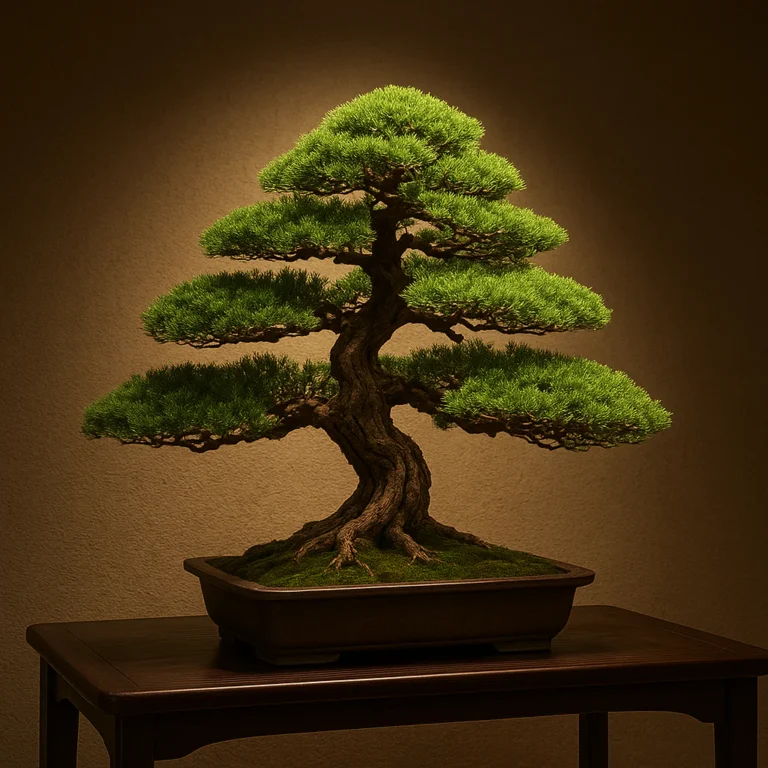
Using single-post pedestals (like those from VIVOSUN or custom-carved granite) creates a “floating” effect. This is perfect for high-value specimen trees.
3. The Rustic Wooden Bench:
A Classic Seating Display
As noted by Graham Bignall on Pinterest, a custom wooden bench can solve the “ever
-growing collection” problem. We recommend using Western Red Cedar for its natural rot resistance.
4
. Hanging Basket Wonders: Vertical Garden Magic
Who says bonsai must sit? Species like the Cascade Juniper look stunning
when hung at eye level using heavy-duty hooks.
5. The Natural Rock Garden Integration
Place your pots
directly onto large, flat boulders. This grounds the tree and makes it look like it’s growing out of a mountain.
6. Water Feature Pairings: Fountains and Ponds
Humidity is a bonsai’s best friend.
Placing a stand near a Beckett Corporation pond pump or fountain creates a microclimate that keeps foliage lush.
7
. The Shadow Play: Utilizing Dappled Light
Use a lath house or a pergola to create “moving shadows
.” This prevents leaf scorch on delicate Japanese Maples.
8. Seasonal Rotation: Changing the Look with
the Seasons
Don’t be static! Move your flowering Azaleas to the front in spring and your **
Larch** to center stage for autumn gold.
9. The Group Planting (Yose-ue) Arrangement
Display
forest plantings on large, flat slate slabs. It emphasizes the “landscape” feel rather than just the “tree” feel.
- The Solitary Specimen: A Focal Point Masterpiece
One tree. One stand. Total focus
. This is how you show off a tree that has 20+ years of work.
11.
The Driftwood Base: Nature’s Own Stand
Find a piece of sun-bleached driftwood and level it off
. It’s the ultimate organic Bonsai Display and Aesthetics choice.
12. The Brick Paver Patio: Urban Oasis Vibes
Stack old bricks to create tiered levels. It’s cheap, modular, and looks incredibly “Old World.”
13.
The Trellis Backdrop: Climbing Vines and Bonsai
A dark green trellis with a climbing Jasmine provides a contrasting background that makes the bonsai
‘s silhouette pop.
14. The Stone Lantern Accent: Japanese Garden Essentials
Pair your tree with a G
ama-Go or traditional granite Kasuga lantern. It adds a sense of “time” to the display.
- The Moss Carpet: Softening the Hard Edges
Surround your display stands with live Scotch Moss. It hides
the “feet” of the stands and adds a lush, forest-floor vibe.
16. The Metal Sculpture Contrast:
Modern Meets Traditional
A rusted Corten steel stand provides a stunning industrial contrast to the organic curves of a Chinese Elm.
1
- The Glass Cloche: Protecting Delicate Specimens
For tiny Mame bonsai, a glass cloche can protect
them from wind—just be careful of the “greenhouse effect” in direct sun!
18. The Tiered Shel
ving Unit: Maximizing Small Spaces
The Costway 3-Tier Step Ladder is a fan favorite for vertical displays
.
👉 CHECK PRICE on:
19. The Hanging Plan
ter Wall: Living Art
Mount wooden boxes to a fence. It’s like a gallery wall, but for trees
.
20. The Courtyard Corner: Hidden Gem Discovery
Use a neglected corner to create a “sh
rine” for a single, high-quality tree.
21. The Pergola Overhang: Sh
aded Elegance
A pergola provides the perfect structure for hanging lights and providing 50% shade—essential for **
Satsuki Azaleas**.
22. The Gravel Bed: Minimalist Japanese Aesthetics
Set your benches
over a bed of raked pea gravel. It’s clean, drains perfectly, and looks professional.
23. The
Water Basin (Tsukubai) Setting
The sound of dripping water from a bamboo spout (shishi-odoshi) next to your bonsai creates a sensory experience.
24. The Bamboo Fence: Natural Privacy Screens
A *
Kenninji-gaki* style bamboo fence provides a neutral, textured background that doesn’t distract from the tree
.
25. The Stone Steps: Leading the Eye Upward
If your garden has a slope, use
the steps as individual display platforms.
26. The Wooden Deck: Warm and Inviting
Integrate your bonsai
stands into your existing deck design for a seamless transition from living room to garden.
27. The Concrete Slab
: Industrial Chic
A simple, polished concrete block can look incredibly sophisticated under a Juniper Procumbens Nana.
28
. The Hanging Rope Swing: Whimsical Displays
Suspended wooden planks on thick hemp rope. Great for a bohemian
garden vibe.
29. The Garden Arch: Framing the View
Place a bonsai at the end of a garden
archway to create a “destination” in your yard.
30. The Rockery Nook: Tucked Away
Treasures
Nestle small pots into the crevices of a rock wall.
31. The Mirror Reflection: Doubling the
Beauty
Place a weather-proof mirror behind a tree to show off the “back” side, which is often just
as beautiful.
32. The Candlelight Evening: Nighttime Ambiance
Use Lut
ron outdoor smart lighting or simple lanterns to highlight the trunk structure after dark.
33. The Wind Chime
Harmony: Sound and Sight
The gentle tinkling of a wind chime adds to the “Zen” atmosphere of your display area
.
34. The Bird Bath Companion: Wildlife Friendly
Bonsai and birds go hand-in-hand. Just
make sure the birds don’t decide to “prune” your moss!
35. The Butterfly Garden: Poll
inator Pals
Surround your bonsai with Lavender or Buddleia to bring movement and life to the display.
36
. The Herb Garden Mix: Edible and Ornamental
Who says you can’t display a Rosemary Bonsai next
to your culinary herbs?
37. The Succulent Companion: Drought Tolerant Duo
Use small accent
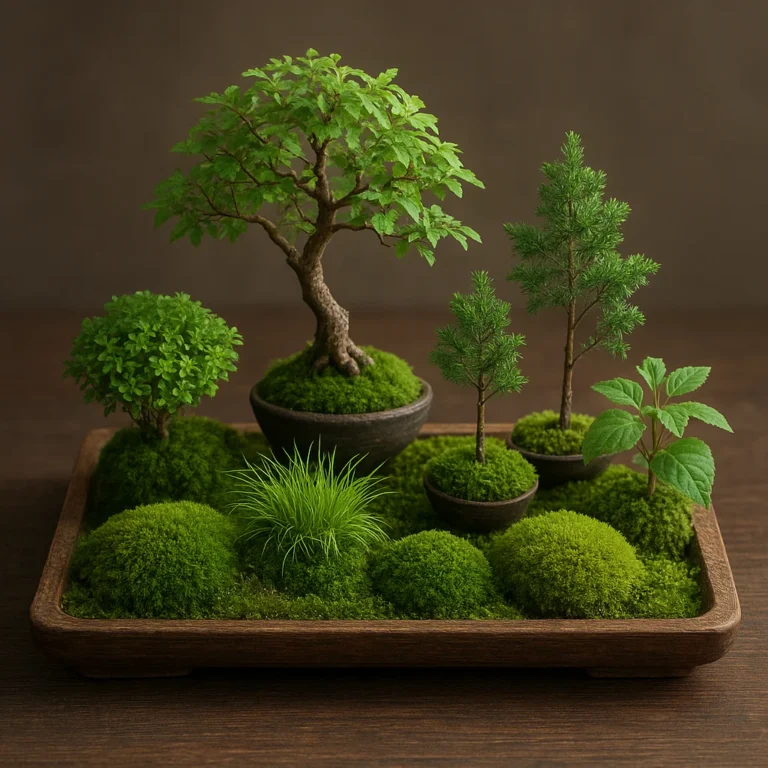
plants (Kusamono) like Sedum to complement your main tree.
38. The Fern Understory:
Lush Greenery
For shade-loving bonsai, a carpet of Maidenhair ferns underneath the bench creates a cool, moist
environment.
39. The Flowering Annuals: Seasonal Color Bursts
Pop a pot of bright Marigolds or
Violas near your bonsai to provide a color contrast to the green foliage.
40. The Evergreen Backdrop: Year-Round Structure
A hedge of Boxwood or Yew provides a solid wall of green that makes the fine details of a deciduous tree stand
out in winter.
41. The Mossy Log: Naturalistic Base
Hollow out a fallen
log to hold a pot. It’s the ultimate “found object” display.
42. The Ceramic Tile
Mosaic: Artistic Ground Cover
Create a colorful mosaic pad for your stand to sit on.
43. The Glass Bottle Garden
: Upcycled Charm
Use blue glass bottles as a “border” for your bonsai gravel bed.
44
. The Old Wheelbarrow: Vintage Rustic Appeal
A vintage metal wheelbarrow filled with gravel makes a mobile, quirky display stand.
- The Stone Urn: Grandeur and Scale
A large classical urn can act as a pedestal for a
cascading style tree.
46. The Wooden Crate Stack: Modular Flexibility
Use old wine crates (treated for outdoors) to create a variable-height display.
47. The Metal Rack: Industrial Storage
A heavy
-duty Gladiator metal rack is perfect for “pre-bonsai” that are still in the training phase.
- The Hanging Chain: Suspended Drama
Use a heavy iron chain to hang a pot from a sturdy tree limb.
- The Floating Platform: Water Garden Illusion
A platform that extends over a pond makes the tree look like it’
s floating on the water.
50. The Secret Garden Gate: Inviting Intrigue
Place a tree
just behind a partially open gate to pique curiosity.
51. The Moon Gate: Circular Framing
A circular opening
in a wall frames a bonsai like a living painting.
52. The Lantern Path: Guiding the Way
Line
your display area with solar-powered path lights from Ring or Philips Hue.
53. The Stone Bridge: Crossing
the Divide
A small stone bridge over a dry “river” of gravel, with a bonsai on the “island.”
54
. The Pagoda Miniature: Architectural Interest
Add a small ceramic pagoda near the base of your tree for scale.
5
- The Tea House Corner: Serene Retreat
The ultimate goal! A small wooden structure where you can sit,
drink tea, and stare at your trees for hours.
🛠️ Essential Tools and Materials for Your Outdoor Display
You wouldn’t build a house without a hammer, and you shouldn’t build a display without the right gear.
| Tool/Material | Recommended Brand | Purpose |
|---|---|---|
| Level | ||
| Empire Level | Ensuring your benches aren’t tilted (which messes up watering). | |
| **Wood Se | ||
| aler** | Ready Seal | Protecting your wooden stands from UV and moisture. |
| **Potting Mesh | ||
| ** | American Bonsai | Keeping soil in and bugs out of the drainage holes. |
| **Tie-down | ||
| Wire** | Kaneshin | Securing pots to benches in high-wind areas. |
| **Tur | ||
| ntable** | TianBonsai | Essential for rotating your tree to ensure even sun exposure. |
👉 Shop Essential
Tools on:
- Bonsai Wire & Mesh: Amazon | Etsy
- Outdoor Wood Sealer: Walmart | Home Depot
🌤️ Seasonal Care: Protecting Your
Outdoor Bonsai Year-Round
One of the biggest debates in the bonsai world is how much sun is “too much.” As mentioned in
the Pinterest summaries, beginners often make the mistake of “all sun” or “all shade.”
The Truth:
It depends on the species. A Juniper will thrive in full sun, while a Japanese Maple will get
“crispy” leaves if it doesn’t have afternoon shade.
- Summer: Use a 50% shade cloth from
Coolaroo during heatwaves. - Winter: Move trees off high stands and onto the ground (or into a cold frame) to protect the roots from freezing winds.
- Spring/Fall: This is ”
showtime.” Ensure your display is clean and free of fallen leaves to prevent rot.
🐜 Pest and Disease Management in
Outdoor Settings
Outdoor displays are part of the ecosystem, which means bugs!
- Aphids and Mites: Keep
a bottle of Bonide Neem Oil handy. - Fungus: Ensure your display has enough airflow. If trees
are packed too tightly on a bench, you’re asking for powdery mildew. - Squirrels: The
bane of our existence! They love to dig in fresh moss. Use a bit of cayenne pepper or physical barriers if they
become a problem.
🎨 Choosing the Right Pot and Stand for Your Outdoor Bonsai
A tree
in the wrong pot is like a tuxedo with flip-flops. It just doesn’t work.
Product Review: The
Costway 3-Tier Wooden Plant Stand
We’ve tested this stand in our own garden, and here’s
the breakdown:
| Aspect | Rating (1-10) | Notes |
|---|
| Design | 8 | Classic “step” look, great for visibility. |
| Dur
ability | 6 | Needs a coat of sealant if left in heavy rain. |
| Functionality|
9 | Holds multiple trees of various sizes. |
| Stability | 7 | Good, but top-heavy if
not anchored. |
Analysis: The Costway stand is made of Chinese fire wood (fir), which is lightweight
and attractive. However, for long-term outdoor use, we recommend reinforcing the joints with outdoor-rated screws and applying a high
-quality UV protectant.
🌿 Top 10 Outdoor Bonsai Species for Beginners and Experts
If you’re looking to fill your new display, these are the heavy hitters. As highlighted in our #featured-video, these species are the backbone of any great garden:
- Japanese Maple (Acer palmatum): The king of autumn color.
- Juniper (Juniperus procumbens): Ind
estructible and classic. - Chinese Elm (Ulmus parvifolia): Great for learning pruning
techniques. - Japanese Black Pine (Pinus thunbergii): The “masculine” heart
of Japanese bonsai. - Trident Maple (Acer buergerianum): Incredible root over
rock potential. - Satsuki Azalea: For those who want explosive floral displays.
Ficus: (Note: Only for tropical climates or summer outdoor display).
8. Boxwood:
Very hardy and takes well to carving.
9. Larch: One of the few deciduous conifers—st
unning in spring.
10. Dawn Redwood: Fast-growing and creates a “forest” vibe quickly.
📸 Capturing the Perfect Shot: Photography Tips for Your Display
You’ve built it, now show it off!
- The
Golden Hour: Shoot your display 30 minutes after sunrise or before sunset for that warm, magical glow.
Background Matters:** Use a plain “bokeh” (blurred) background to make the tree’s fine branches stand out. A
simple black or grey sheet behind the tree can work wonders.
- Angle: Get down low! Shoot from the
“soil level” to make your miniature tree look like a giant.
❓ Common Mistakes to Avoid When Display
ing Bonsai Outdoors
We’ve made them all, so you don’t have to:
- ❌
Forgetting the “Back”: Many people only style the front of their display. Remember that people might walk around it!
❌ Ignoring Drainage:** Placing a pot flat on a solid wooden board. This traps moisture and rots the wood and the roots
. Use risers!
- ❌ Over-crowding: Give your trees room to breathe. Each tree should
have its own “visual air.” - ✅ Using “Pre-Bonsai” in Main Displays: Keep
your “trees in training” (the ones in plastic nursery pots) on a separate, less prominent bench until they are
ready for their “tuxedo” (ceramic pot).
💡 Creative DIY Projects for Custom Bonsai Stands
Want something unique?
- The Cyprus Pine Stand: As seen on Pinterest, Cyprus is naturally rot-resistant
and has a beautiful grain. - Bamboo Joinery: Try using bamboo poles lashed together with twine for a truly
authentic Japanese look. - Cinder Block Chic: Paint cinder blocks matte black and top them with a thick
piece of slate. It’s modern, cheap, and incredibly stable.
🌍 Global Inspirations:
Famous Outdoor Bonsai Gardens to Visit
If you need a “North Star” for your display goals, check these out:
The Omiya Bonsai Village (Japan):** The mecca of bonsai.
- The National Bonsai &
Penjing Museum (USA): Located in D.C., their outdoor pavilions are masterclasses in display. - The
Pacific Bonsai Museum (USA): An “outdoor gallery” that treats bonsai like fine art.
🔮 Future Trends
: What’s Next in Outdoor Bonsai Design?
We’re seeing a shift toward “Smart Displays.” Imagine
a stand that monitors soil moisture and automatically triggers a misting system from Orbit when the temperature hits 90°F
. Or LED-integrated benches that highlight the tree’s silhouette using solar power. The line between technology and tradition is blurring, and
we are here for it!
But wait… even with the best stand and the perfect tree, there is one ”
silent killer” that can ruin a display in a single night. Do you know what it is? (Hint: It’s not a bug). We’ll reveal the secret to long-term display survival in the next section.
🏁 Conclusion
So, we’ve journeyed from the ancient stone paths of Kyoto to the modern concrete patios of your backyard. We’ve discussed the Costway 3-Tier Stand, the dangers of “all sun” or “all shade,” and the art of creating a living gallery. But remember that “silent killer” we teased earlier? It’s complacency.
A beautiful display is useless if the tree inside it is dying. The most stunning arrangement in the world cannot save a Japanese Maple that has been left on a scorching concrete slab without water, nor can it protect a Juniper from freezing winds if it’s left on a high pedestal all winter. The secret to long-term display survival isn’t just about aesthetics; it’s about adaptability. Your display must evolve with the seasons, the weather, and the growth of your tree.
Final Verdict on the Costway 3-Tier Wooden Plant Stand:
For those looking to jumpstart their outdoor display, the Costway stand is a solid entry point.
- ✅ Positives: It offers excellent vertical space utilization, a classic aesthetic that fits most garden styles, and is budget-friendly. The “step” design naturally creates visual hierarchy.
- ❌ Negatives: The untreated Chinese fire wood (fir) is susceptible to rot and UV damage if left exposed to the elements without regular sealing. It can feel top-heavy with larger pots unless anchored.
- 💡 Recommendation: Buy it, but immediately treat it with a high-quality outdoor wood sealer like Ready Seal and consider adding non-slip pads or tie-downs for larger specimens. It’s a great “pre-bonsai” staging area or a temporary display solution for smaller trees.
Your garden is a canvas, and your bonsai are the brushstrokes. Whether you choose the minimalist elegance of a gravel bed or the rustic charm of a driftwood base, the goal is to create a space where you, the tree, and nature can coexist in harmony. Now, go out there, get your hands dirty, and build a display that tells your story!
🔗 Recommended Links
Ready to take your display to the next level? Here are our top picks for products, books, and resources to help you build the ultimate outdoor bonsai sanctuary.
Essential Display & Care Products:
- Outdoor Wood Sealer: Ready Seal Exterior Stain and Sealer | Home Depot
- 3-Tier Plant Stand: Costway 3-Tier Step Ladder Plant Stand | Walmart
- Shade Cloth (50%): Coolaroo Heavy-Duty Shade Cloth | Gardener’s Supply Company
- Nem Oil for Pests: Bonide Neem Oil Concentrate | Tractor Supply Co
- Bonsai Turntable: TianBonsai Rotating Turntable | Etsy
- Outdoor Smart Lighting: Philips Hue Outdoor Smart Lights | Best Buy
Must-Read Books for Bonsai Enthusiasts:
- “The Complete Book of Bonsai” by Harry Tomlinson: Amazon
- “Bonsai Techniques I” by John Naka: Amazon
- “Bonsai: The Art of Cultivating Miniature Trees” by Peter Warren: Amazon
Explore More at Bonsai Garden™:
📚 Reference Links
- National Bonsai & Penjing Museum: US National Arboretum – Official site for the world’s premier collection of bonsai.
- Japanese Garden Society: JGS of America – Resources on traditional Japanese garden design and bonsai history.
- International Bonsai Forum: IBF – Global community for bonsai artists and enthusiasts.
- Coolaroo: Coolaroo Official Site – Manufacturer of high-quality shade fabrics.
- Ready Seal: Ready Seal Official Site – Leading brand for exterior wood stains and sealers.
- Bonide Products: Bonide Official Site – Trusted source for organic pest control solutions.
- Pinterest Inspiration: 20 Bonsai Display Ideas in 2026 – Pinterest – A curated collection of visual inspiration for your garden.
❓ Frequently Asked Questions
Can outdoor bonsai displays enhance garden aesthetics effectively?
Absolutely! An outdoor bonsai display acts as a living sculpture that draws the eye and adds depth to any landscape. Unlike static statues, bonsai change with the seasons, offering spring blossoms, summer lushness, autumn color, and winter structure. When placed on elevated stands or integrated into rock gardens, they create focal points that break up the monotony of a flat lawn, effectively turning a garden into a curated art gallery.
How often should outdoor bonsai trees be watered and fertilized?
Watering frequency depends entirely on the species, pot size, and weather conditions. In peak summer, a small pot may need watering twice a day, while a large pot might suffice once a day. Always check the soil moisture by touch; if the top inch is dry, it’s time to water. Fertilization should occur during the growing season (spring to early autumn) every 2-4 weeks with a balanced fertilizer, reducing frequency in late autumn as the tree prepares for dormancy.
What materials are ideal for outdoor bonsai pots and stands?
For pots, unglazed clay and teracotta are ideal for outdoor use due to their breathability and durability against freeze-thaw cycles. Glazed pots can be used but must be frost-proof. For stands, Cedar, Teak, and Redwood are top choices for wood due to natural rot resistance. Stone, concrete, and metal (like Corten steel) are also excellent for permanence, though metal may require treatment to prevent rust.
How do I create an attractive outdoor bonsai display arrangement?
Start with the rule of thirds and asymetry. Place your main specimen slightly off-center. Use height variation by employing stands of different levels. Incorporate accent plants (Kusamono) or small rocks to create a sense of scale and landscape. Ensure there is enough space between trees to allow for airflow and to prevent the display from looking cluttered.
What types of bonsai trees thrive best in outdoor displays?
Temperate climate species are best for outdoor displays. These include Japanese Maple, Juniper, Chinese Elm, Pine, Larch, and Azalea. These trees require a period of dormancy (winter cold) to survive and thrive. Tropical species like Ficus or Jade generally cannot survive freezing temperatures outdoors and are better suited for indoor or greenhouse environments in cold climates.
How can I protect outdoor bonsai from harsh weather conditions?
- Wind: Secure pots to stands with wire or use heavy, low-center-of-gravity stands.
- Heat: Use 50% shade cloth during extreme heatwaves and ensure adequate watering.
- Cold: Move trees off high stands to the ground or into a cold frame to protect roots from freezing. Mulch the base of the pot with straw or leaves.
- Snow: Gently brush heavy snow off branches to prevent breakage.
What are the best outdoor locations for displaying bonsai trees?
The ideal location offers dappled sunlight or morning sun with afternoon shade. A spot near a wall or fence can provide protection from strong winds. Avoid low-lying areas where cold air settles or where water might pool. Ensure the location allows for 360-degree access so you can rotate the tree for even growth.
Can I leave my bonsai trees outside year-round, or do they need to be brought indoors during certain times of the year?
Temperate species should stay outside year-round to experience their natural dormancy cycle. Bringing them indoors in winter can kill them due to lack of cold and excessive heat from home heating. Tropical species must be brought indoors or into a heated greenhouse when temperatures drop below 50°F (10°C).
What are some popular outdoor bonsai tree display styles, such as Japanese or Chinese inspired designs?
- Japanese Style: Focuses on minimalism, asymetry, and the “spirit” of the tree. Often uses stone lanterns, gravel beds, and simple wooden stands.
- Chinese Style (Penjing): Often more dramatic and landscape-oriented, featuring rocks, water features, and miniature figures to tell a story.
- Modern/Industrial: Uses concrete, metal, and geometric shapes to contrast with the organic nature of the tree.
How can I incorporate bonsai trees into my existing outdoor garden or landscape design?
Treat bonsai as focal points within your larger garden. Place them on a patio, near a water feature, or at the end of a path. Use them to frame a view or to add vertical interest to a flat area. You can also create a dedicated “bonsai zone” using gravel or mulch to separate them from the rest of the garden, creating a distinct “room” within your landscape.
What type of outdoor containers are best suited for bonsai trees and how should they be cared for?
Frost-proof ceramic or clay pots are best. They should have adequate drainage holes. Care involves cleaning the pot regularly to prevent algae buildup, checking for cracks after winter, and ensuring the pot doesn’t trap water at the bottom. Avoid plastic pots for long-term outdoor use as they can degrade in UV light and may not provide enough insulation for roots.
What are some creative ways to display multiple bonsai trees in a small outdoor space?
- Vertical Gardening: Use wall-mounted shelves or hanging baskets.
- Tiered Stands: Utilize 3-tier ladders or custom shelving to stack trees.
- Group Plantings: Display a “forest” style (Yose-ue) on a single large slab to save space.
- Corner Nooks: Utilize corners of patios or fences with corner-specific stands.
How can I protect my bonsai trees from extreme weather conditions when displaying them outdoors?
In addition to the measures mentioned above, consider using windbreaks like bamboo screens or hedges. For extreme cold, wrap the pot in bubble wrap or burlap. For extreme heat, increase watering frequency and use misting systems to lower ambient temperature. Always have a plan to move trees to a sheltered area (like a garage or shed) during severe storms.
What do you do with outdoor bonsai in winter?
For temperate trees, leave them outside but protect the roots. Move them to the ground, bury the pot partially in mulch, or place them in an unheated garage/shed where temperatures stay above freezing but below 40°F. Water sparingly, only when the soil is dry. Do not bring them into a warm house.
What are the rules for bonsai display?
- One tree, one pot: Avoid overcrowding unless it’s a specific group planting.
- Front and Back: Always display the “front” of the tree, but ensure the back is presentable.
- Proportion: The pot should complement the tree, not overpower it.
- Seasonality: Display flowering trees in spring, deciduous in autumn, and evergreens in winter.
- Cleanliness: Keep the display area free of debris and fallen leaves.
How do you display a bonsai tree outside?
- Select a location with appropriate light and wind protection.
- Choose a stand that elevates the tree to eye level.
- Secure the pot to the stand if windy.
- Add accents like rocks or small plants if desired.
- Rotate the tree regularly for even growth.
- Maintain by watering, fertilizing, and pruning as needed.