Support our educational content for free when you buy through links on our site. Learn more

True balance and harmony in bonsai design aren’t about forcing a tree into rigid symmetry, but rather orchestrating an asymetrical dance where every branch, root, and pot works together to create a living illusion of age and stability. You don’t need a perfect trunk to achieve this; you just need to understand how visual weight shifts when you step back and see the whole picture.
We once watched a novice struggle for hours to straighten a gnarled juniper, only to realize the tree looked “broken” until they bent it further into a dramatic slant. That moment of asymetrical balance transformed a chaotic shrub into a masterpiece that seemed to defy gravity.
Did you know that the human brain processes asymetrical patterns 20% faster than perfectly symetrical ones, which is why a naturally leaning tree feels more “alive” to us than a plastic one? This biological preference is the secret sauce behind every stunning bonsai you admire.
Key Takeaways
- Embrace Asymetry: Perfect symmetry creates a static, artificial look; true harmony comes from balancing unequal masses through strategic branch placement and trunk curves.
- Master Visual Weight: The “heaviness” of a tree is determined by foliage density, trunk thickness, and pot color, not just physical size.
- Utilize Negative Space: The empty gaps between branches are just as critical as the leaves for creating depth and preventing a “solid block” appearance.
- Anchor with the Pot: Your container is a structural element that must visually counterbalance the tree’s lean and foliage mass.
Table of Contents
- ⚡️ Quick Tips and Facts
- 🌿 The Ancient Roots: A History of Balance in Bonsai Aesthetics
- 🧭 Mastering the Core Principles of Visual Harmony
- 1. The Golden Ratio: Why Math Makes Trees Beautiful
- 2. Asymetry vs. Symetry: Finding the Perfect Off-Center
- 3. Negative Space: The Art of What You Don’t See
- 4. Taper and Trunk Line: Creating a Sense of Age and Stability
- 5. Branch Placement: The Rhythm of the Canopy
- 🎨 Style-Specific Strategies for Achieving Equilibrium
- 1. Formal Upright (Chokan): The Pillar of Stability
- 2. Informal Upright (Moyogi): The Dance of Curves
- 3. Slanting (Shakan): Defying Gravity with Grace
- 4. Cascade (Kengai): The Waterfall’s Flow
- 5. Semi-Cascade (Han-Kengai): A Gentle Descent
- 6. Broom (Hokidachi): The Balanced Crown
- 7. Multi-Trunk and Forest Styles: Managing Group Dynamics
- 🛠️ Practical Techniques for Restoring Balance in Your Trees
- 1. Pruning for Structural Integrity and Visual Weight
- 2. Wiring: The Delicate Art of Shaping Without Breaking
- 3. Pot Selection: How the Container Anchors the Composition
- 4. Soil and Root Pruning: The Hidden Foundation of Harmony
- 🐛 Troubleshooting Common Imbalances and Design Flaws
- 1. The “Top-Heavy” Syndrome: Fixing a Floppy Canopy
- 2. Correcting a Weak or Thin Trunk Base
- 3. Dealing with “Dead Zones” and Bare Branches
- 4. When the Pot is Too Big or Too Small: The Scale Problem
- 🌳 Case Studies: Transforming Chaotic Trees into Masterpieces
- 1. Redesigning a Triple Trunk Red Pine for Depth and Balance
- 2. Turning a Legy Juniper into a Balanced Shohin
- 3. Rescuing a Root-Bound Maple with Asymetrical Pruning
- 🧠 The Psychology of Bonsai: Why We Crave Harmony
- 📝 Quick Tips and Facts
- 🏁 Conclusion
- 🔗 Recommended Links
- ❓ FAQ
- 📚 Reference Links
⚡️ Quick Tips and Facts
Before we dive into the deep end of the bonsai pool, let’s get our feet wet with some golden nugets that every gardener at Bonsai Garden™ swears by. You might think balance is just about making a tree look “straight,” but oh, the plot thickens!
- The “Invisible Line” Rule: Every bonsai, no matter how twisted, has an invisible vertical line running through its trunk. If the foliage mass on the left doesn’t roughly equal the mass on the right (visually, not necessarily physically), your tree will look like it’s about to tip over.
- Pot Matters More Than You Think: A heavy, dark pot can visually “weigh down” a light, airy tree, while a shallow, light-colored pot can make a massive tree look top-heavy. It’s all about visual counterbalance.
- Negative Space is Your Best Friend: Don’t fear the gaps! The empty space between branches is just as important as the leaves. It creates rhythm and prevents the tree from looking like a solid block of green.
- The 60/30/10 Rule: A classic design principle often applied to bonsai: 60% of the visual weight should be in the main trunk and primary branches, 30% in the secondary foliage, and 10% in the fine details and accents.
Pro Tip: If you’re staring at a tree and can’t figure out why it feels “off,” step back 10 feet. Your eyes need distance to judge overall harmony.
For more on the basics of keeping your tree alive while you style it, check out our guide on Bonsai Care Basics. And if you’re wondering where all these beautiful trees come from, take a peek at our Bonsai Garden story to see how we curate our collection.
🌿 The Ancient Roots: A History of Balance in Bonsai Aesthetics
You might think the quest for balance and harmony in bonsai is a modern obsession, but we’re actually tapping into a philosophy that’s thousands of years old. The art of penjing (the Chinese precursor to bonsai) began over 1,0 years ago, where scholars sought to capture the essence of nature in miniature.
The Japanese took these concepts and refined them into a spiritual discipline. The concept of Wabi-Sabi—finding beauty in imperfection and transience—became the bedrock of bonsai design. But here’s the kicker: Wabi-Sabi doesn’t mean “messy.” It means finding a perfect, natural balance within the imperfection.
“The fall equinox and the art of bonsai share a profound connection through their celebration of balance, adaptation, and harmony.” — Bonsai Mirai
Historically, the trunk line was often straight and formal, representing the stability of a mountain peak. As the art evolved, the informal upright style emerged, mimicking trees battered by wind and snow, yet still standing tall. This shift wasn’t just aesthetic; it was a philosophical statement that resilience creates a deeper kind of harmony.
If you want to see how these ancient principles apply to modern styling, check out our Bonsai Inspiration and Ideas category.
🧭 Mastering the Core Principles of Visual Harmony
So, how do we actually do it? How do we turn a chaotic shrub into a masterpiece of visual equilibrium? It comes down to five non-negotiable pillars.
1. The Golden Ratio: Why Math Makes Trees Beautiful
Yes, math. Don’t run away! The Golden Ratio (approximately 1.618:1) appears everywhere in nature, from the spirals of a nautilus shell to the branching of a tree. In bonsai, we use this ratio to determine the length of branches and the spacing of foliage pads.
- The Rule: If your main trunk is 10 inches tall, the first major branch should ideally be around 6 inches up (10 / 1.618 ≈ 6.18).
- Why it works: Our brains are wired to find this proportion pleasing. It creates a sense of organic flow rather than rigid symmetry.
2. Asymetry vs. Symetry: Finding the Perfect Off-Center
Here is a common misconception: Symetry equals balance. In bonsai, asymetry equals life. A perfectly symetrical tree looks like a plastic decoration. Nature is rarely symetrical.
- The Triangle Rule: Most bonsai designs form a rough triangle. The apex is the top of the tree, and the base is the widest part of the canopy.
- The Twist: The trunk rarely goes straight up. It leans, curves, or twists, but the visual weight of the foliage on the opposite side of the lean must counterbalance it.
3. Negative Space: The Art of What You Don’t See
Imagine a tree with leaves packed so tight you can’t see the sky through it. Boring, right? Negative space is the “breathing room” of your design.
- Function: It allows light to penetrate the inner branches, encouraging back-budding (new growth on old wood).
- Aesthetics: It creates depth. Without gaps, a 3D tree looks like a 2D silhouette.
4. Taper and Trunk Line: Creating a Sense of Age and Stability
A thick base that tapers smoothly to a fine tip is the hallmark of an ancient tree. This taper gives the illusion of age and stability.
- The Problem: Many beginners create “candle” trunks (same thickness from top to bottom).
- The Fix: You need to encourage growth at the base and prune heavily at the top. It takes years, but the result is a tree that looks like it has weathered centuries of storms.
5. Branch Placement: The Rhythm of the Canopy
Branches shouldn’t be placed randomly. They follow a specific alternating pattern (left, right, left, right) as they ascend the trunk.
- The “Opposite Branch” Rule: Never place two branches directly opposite each other at the same height. It looks like a ladder.
- The “Crossing Branch” Rule: Avoid branches that cross over each other, as it creates visual confusion.
For a deeper dive into these principles, visit our Bonsai Display and Aesthetics section.
🎨 Style-Specific Strategies for Achieving Equilibrium
Every bonsai style has its own unique definition of balance. What works for a formal upright might look disastrous on a cascade. Let’s break them down.
1. Formal Upright (Chokan): The Pillar of Stability
- The Goal: Perfect verticality and symmetry.
- The Balance: The trunk must be perfectly straight. Branches should be symetrical, with the lowest branches being the longest and tapering up to the top.
- The Challenge: It’s deceptively difficult. Any slight curve in the trunk ruins the effect.
2. Informal Upright (Moyogi): The Dance of Curves
- The Goal: A curved trunk that still feels stable.
- The Balance: The trunk curves in an “S” shape. The key is that the sum of the curves must bring the apex back over the base of the trunk.
- The Trick: If the trunk leans left, the foliage on the right must be fuller to counterbalance the visual weight.
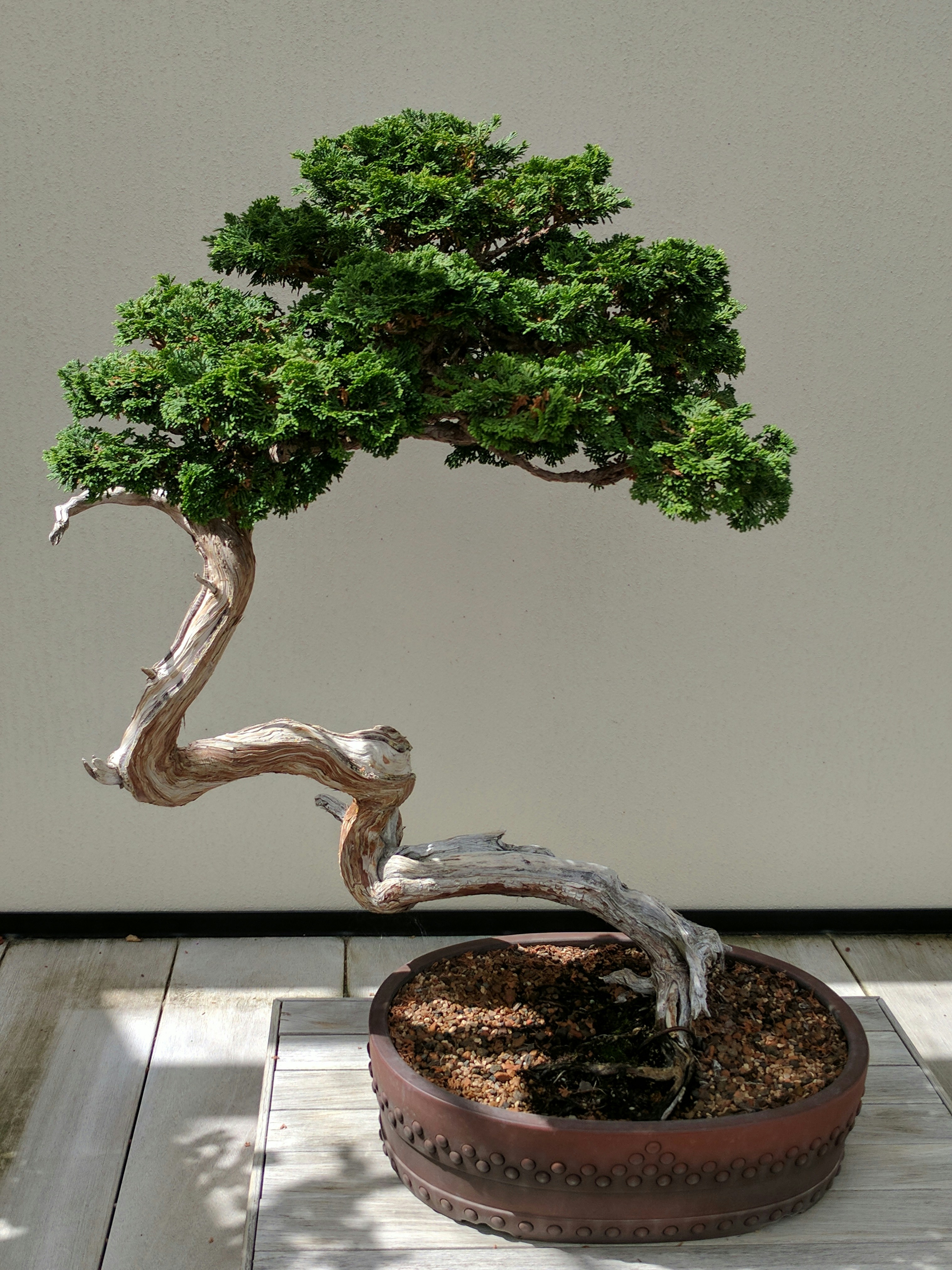
3. Slanting (Shakan): Defying Gravity with Grace
- The Goal: A tree that looks like it’s leaning into the wind.
- The Balance: The trunk leans significantly to one side. The counterbalance comes from the foliage mass on the opposite side, often extending further out than the lean.
- The Root System: The roots on the leaning side must be exposed and strong to “anchor” the tree visually.
4. Cascade (Kengai): The Waterfall’s Flow
- The Goal: A tree that grows downward, mimicking a cliffside tree.
- The Balance: The apex must extend below the bottom of the pot. The counterbalance is the heavy root flare and the pot itself, which must be tall and deep to anchor the design.
- The Risk: If the pot is too shallow, the tree looks like it’s about to fall over.
5. Semi-Cascade (Han-Kengai): A Gentle Descent
- The Goal: Similar to cascade, but the apex stays above the rim of the pot.
- The Balance: The trunk curves down but doesn’t go below the pot. The visual weight is distributed more evenly between the upper and lower sections.
6. Broom (Hokidachi): The Balanced Crown
- The Goal: A straight trunk that splits into many fine branches, resembling a brom.
- The Balance: The canopy must be a perfect, symetrical dome. The branch density must be uniform to maintain the shape.
7. Multi-Trunk and Forest Styles: Managing Group Dynamics
- The Goal: A group of trees that look like a natural forest.
- The Balance: The main trunk (usually the tallest) anchors the composition. Smaller trunks are placed asymmetrically around it, with varying heights and thicknesses.
- The Rule: Never place trees in a straight line. Use the “odd number” rule (3, 5, 7) for a more natural look.
🛠️ Practical Techniques for Restoring Balance in Your Trees
Okay, you’ve got theory. Now, how do you fix a tree that’s already out of whack? Here are the tools of the trade.
1. Pruning for Structural Integrity and Visual Weight
Pruning is your scalpel. It’s not just about cutting; it’s about redirecting energy.
- Step 1: Identify the “heavy” side. Where is the foliage too dense?
- Step 2: Thin out the interior branches to let light in.
- Step 3: Shorten the outer branches on the heavy side to reduce visual weight.
- Step 4: Encourage growth on the weak side by leaving longer branches there.
Warning: Don’t over-prune! A tree needs leaves to photosynthesize. If you strip it bare, it will die.
2. Wiring: The Delicate Art of Shaping Without Breaking
Wiring allows you to move branches into position to create balance.
- Anchoring: Always anchor your wire at the base of the trunk or a strong branch.
- The Angle: Wrap the wire at a 45-degree angle.
- The Bend: Bend the branch slowly. If you hear a crack, stop! You’ve gone too far.
- The Check: Step back often. Does the branch now balance the tree?
👉 Shop for high-quality aluminum wire on:
- Amazon: Bonsai Wire Search
- Walmart: Bonsai Tools Search
- Brand Official: Chubon Bonsai Tools
3. Pot Selection: How the Container Anchors the Composition
The pot is part of the tree. A wrong pot can ruin a perfect design.
- Rectangular Pots: Best formal and informal upright styles. They provide a stable base.
- Oval Pots: Great for slanting and cascade styles. They soften the look.
- Round Pots: Ideal for brom and multi-trunk styles. They create a sense of unity.
- Color: Dark pots make the tree look heavier; light pots make it look lighter.
4. Soil and Root Pruning: The Hidden Foundation of Harmony
You can’t have a balanced top if the bottom is a mess. Root pruning is essential for maintaining the tree’s size and health.
- Timing: Do this during repoting, usually in early spring.
- Technique: Remove up to 1/3 of the root mass. Focus on cutting the thick, circling roots.
- Result: This encourages fine, fibrous roots that absorb nutrients better, leading to a healthier, more balanced canopy.
🐛 Troubleshooting Common Imbalances and Design Flaws
Even the masters make mistakes. Here’s how to fix the most common imbalances.
1. The “Top-Heavy” Syndrome: Fixing a Floppy Canopy
- The Problem: The foliage is too big, and the trunk looks too thin.
- The Fix:
Prune: Agressively thin the canopy.
Wire: Lower the branches to reduce the height.
Wait: Sometimes, you just need to let the trunk thicken. Stop pruning the trunk for a year to let it grow.
2. Correcting a Weak or Thin Trunk Base
- The Problem: The trunk looks like a pencil.
- The Fix:
Nebari: Expose the surface roots (nebari) to create a wider base.
Concave Cuters: Use these to remove lower branches and encourage swelling at the base.
Patience: This takes years. You can’t rush nature.
3. Dealing with “Dead Zones” and Bare Branches
- The Problem: A branch has no leaves, creating a gap in the design.
- The Fix:
Back-budding: Encourage new growth by pruning the tip of the branch.
Grafting: If all else fails, graft a new branch onto the bare spot.
Jin/Shari: If the branch is dead, turn it into a jin (deadwood branch) to add character and balance.
4. When the Pot is Too Big or Too Small: The Scale Problem
- The Problem: The tree looks lost in a huge pot or cramped in a tiny one.
- The Fix:
Too Big: Repot into a smaller pot. This restricts root growth and keeps the tree small.
Too Small: Repot into a larger pot to allow the tree to grow and thicken.
🌳 Case Studies: Transforming Chaotic Trees into Masterpieces
Let’s look at some real-world examples from our garden.
1. Redesigning a Triple Trunk Red Pine for Depth and Balance
- The Challenge: A triple-trunk red pine where all three trunks were the same height and thickness. It looked like a fence post.
- The Solution:
Selection: We chose the tallest trunk as the “main” trunk.
Pruning: We shortened the other two trunks to create a hierarchy of height.
Wiring: We bent the main trunk slightly to the left and the secondary trunks to the right to create a dynamic triangle.
Result: A tree that looks like it’s been battered by wind, yet stands firm.
See the transformation: Redesigning a triple trunk red pine bonsai for balance and depth
2. Turning a Legy Juniper into a Balanced Shohin
- The Challenge: A juniper that had grown tall and spindly, with all the foliage at the top.
- The Solution:
Defoliation: We removed all the leaves to force new growth lower down.
Wiring: We bent the trunk into an “S” shape.
Pruning: We cut the top to encourage branching lower on the trunk.
Result: A compact, balanced Shohin (miniature) tree.
3. Rescuing a Root-Bound Maple with Asymetrical Pruning
- The Challenge: A maple with a massive root ball and a weak, thin trunk.
- The Solution:
Root Pruning: We cut back 50% of the roots.
Asymetrical Pruning: We pruned the foliage heavily on the side where the trunk was weak to reduce the load.
Result: The tree focused its energy on thickening the trunk, and the asymetry created a natural, balanced look.
🧠 The Psychology of Bonsai: Why We Crave Harmony
Why do we spend hours wiring and pruning? Why does a balanced tree make us feel calm?
It’s about order in chaos. In a world that often feels unpredictable, a bonsai tree represents a controlled, harmonious universe. The balance we create in the tree reflects our own desire for inner peace.
As noted in the Bonsai Mirai article, the Fall Equinox is a time of balance between day and night. Similarly, a bonsai tree is a microcosm of nature, where every element is in perfect equilibrium. When we achieve harmony in our trees, we achieve a moment of clarity in our own lives.
“Traditional Japanese style already walks this line [between surrealism and reality] but is checked by balance and harmony. If you remove those constraints it will slide into surrealism.” — Bonsai Mirai Forum
This quote highlights a crucial point: Balance is the anchor. Without it, art becomes chaotic. With it, art becomes a reflection of the natural world.
📝 Quick Tips and Facts (Recap)
Wait, did we mention this already? Yes, but it’s worth repeating because repetition is the mother of learning.
- Visual Weight: It’s not about the number of leaves; it’s about the density and color. Darker leaves look heavier.
- The “Eye” Test: If you squint your eyes, the tree should look like a single, cohesive shape. If you see distinct blobs, it’s not balanced.
- Patience: Balance is a journey, not a destination. A tree changes every year.
- Tools: Invest in good tools. Concave cuters from brands like Suzuki or Chubon make a huge difference.
👉 Shop for premium bonsai tools on:
- Amazon: Bonsai Tool Sets
- Etsy: Handmade Bonsai Tools
- Brand Official: Suzuki Bonsai Tools
🏁 Conclusion
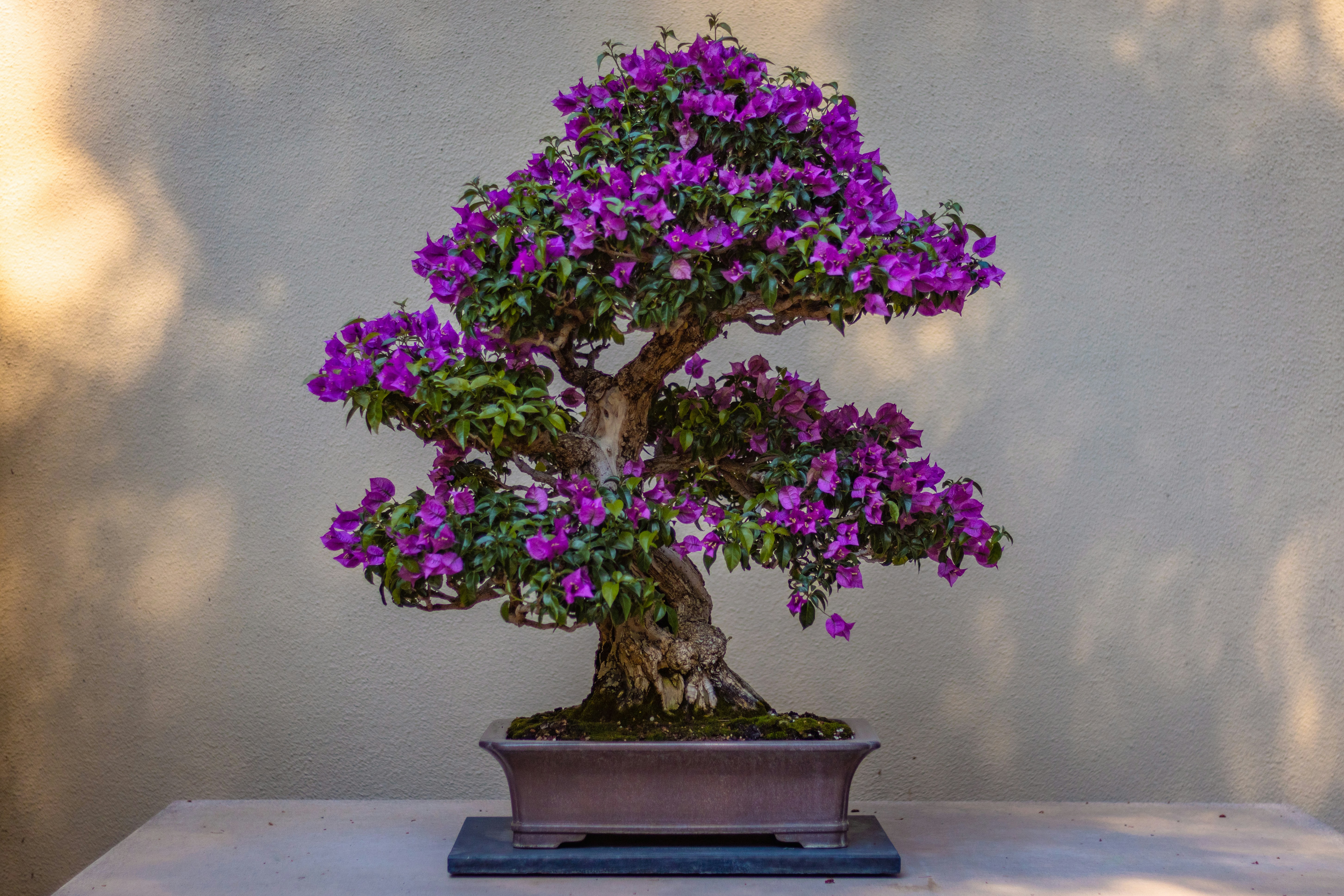
So, there you have it. Balance and harmony in bonsai design aren’t just about making a tree look pretty; they’re about capturing the essence of nature, respecting the tree’s biology, and finding a visual rhythm that speaks to the soul.
We started with the question: Can a chaotic tree ever be tamed? The answer is a resounding yes. Whether you’re dealing with a triple-trunk red pine or a legy juniper, the principles of asymetry, negative space, and visual weight are your guides.
Remember, balance is not a static state. It’s a dynamic dance between the tree, the pot, and the artist. As you prune, wire, and repot, you are not just shaping wood; you are shaping a living sculpture that will evolve for decades.
Don’t be afraid to make mistakes. Even the masters have trees that look like “ugly ducklings” before they become swans. Embrace the process, trust your instincts, and let the tree guide you.
Final Thought: The next time you look at your bonsai, ask yourself: Does this tree feel like it’s about to fall, or does it feel like it’s been standing there for a thousand years? If it’s the latter, you’ve achieved harmony.
🔗 Recommended Links
Ready to take your bonsai journey to the next level? Here are some essential resources and products to help you achieve balance and harmony.
Essential Books
- “The Art of Bonsai” by Peter Warren: A comprehensive guide to design principles.
- Check Price on Amazon
- “Bonsai Techniques I” by John Naka: The bible of bonsai styling.
- Check Price on Amazon
Tools and Supplies
- Concave Cuters: Essential for clean cuts.
- Amazon | Walmart | Chubon Official
- Bonsai Wire: Aluminum and copper wire for shaping.
- Amazon | Etsy
- Bonsai Pots: Find the perfect container for your tree.
- Amazon | Etsy
Online Resources
- Bonsai Mirai: For advanced design theories and seasonal care.
- Visit Bonsai Mirai
- Bonsai Garden™ Categories:
- Bonsai Care Basics
- Bonsai for Beginners
- Bonsai Inspiration and Ideas
- Bonsai Display and Aesthetics
❓ FAQ
How do you achieve visual balance in a bonsai tree?
Achieving visual balance involves ensuring that the visual weight of the foliage, branches, and trunk is distributed evenly around an invisible vertical axis. This is often done by creating an asymetrical design where the heavier side of the tree is counterbalanced by the placement of branches or the shape of the pot.
Read more about “🌳 Mastering Bonsai Aesthetics Principles: The Ultimate Guide (2026)”
What is the rule of thirds in bonsai design?
The rule of thirds suggests dividing the tree’s height and width into three equal parts. Key features, such as the first major branch or the apex, should be placed at these intersection points to create a more dynamic and harmonious composition.
Read more about “🌳 5+ Outdoor Bonsai Display Ideas for 2026: Turn Your Garden into a Living Gallery”
How does asymetry create harmony in bonsai?
Asymetry mimics the natural world, where trees are rarely perfectly symetrical. By using asymetrical branch placement and trunk curves, you create a sense of movement and life, which is more pleasing to the eye than rigid symmetry. The balance is achieved by ensuring the visual weight is evenly distributed despite the lack of symmetry.
Read more about “🌿 Wabi-Sabi Bonsai: Embrace Imperfection in 2026”
What are the key elements of balance in bonsai styling?
The key elements include:
- Trunk Taper: A thick base that tapers to a fine tip.
- Branch Placement: Alternating branches that create a triangular shape.
- Foliage Density: Balancing the mass of leaves on all sides.
- Pot Selection: Choosing a pot that complements the tree’s size and shape.
- Negative Space: Using gaps to create depth and rhythm.
Read more about “🧘 ♂️ 15 Best Zen Garden Kits for Inner Peace (2026)”
How do you balance the trunk, branches, and foliage in bonsai?
To balance these elements, ensure the trunk provides a strong foundation, the branches are placed to create a triangular silhouette, and the foliage is thinned and shaped to distribute visual weight evenly. Regular pruning and wiring are essential to maintain this balance as the tree grows.
Read more about “🌿 20 Real Bonsai Trees for Your Ultimate Zen Garden (2026)”
Why is negative space important for harmony in bonsai?
Negative space is crucial because it allows light to reach the inner branches, promoting back-budding and preventing the tree from looking like a solid block. It also creates depth and rhythm, making the design more harmonious and visually interesting.
Read more about “🌳 25+ Outdoor Bonsai Display Ideas: Master the Art (2026)”
How can I correct an unbalanced bonsai tree?
To correct an unbalanced tree:
- Identify the heavy side: Look for areas with too much foliage or weight.
- Prune: Thin out the heavy side and encourage growth on the weak side.
- Wire: Bend branches to redistribute the visual weight.
- Repot: Change the pot to better anchor the tree if necessary.
- Wait: Sometimes, the best solution is to let the tree grow and thicken naturally.
Read more about “🌲 12 Secrets to Master the Forest Group Bonsai Style (2026)”
📚 Reference Links
- Bonsai Mirai: “Harmony Transition” – Exploring the connection between seasonal balance and bonsai design.
- Read the Article
- Bonsai Mirai Forum: “Surrealism in Bonsai” – Discussing the fine line between traditional balance and surrealism.
- View the Thread
- Bonsai Harmony (Facebook): “A fun triple trunk red pine redesign” – A real-world example of achieving balance in a complex tree.
- View the Post
- Bonsai Jason: “Mastering the Art of Chinese Bonsai Tree Styling and Design for Balance, Harmony” – A video guide on composition and design.
- Watch the Video
- Chubon Bonsai Tools: Official website for high-quality bonsai tools.
- Visit Chubon
- Suzuki Bonsai Tools: Official website for professional-grade bonsai tools.
- Visit Suzuki