Support our educational content for free when you buy through links on our site. Learn more

Have you ever stared at your potted masterpiece, wondering, “How do you display a bonsai tree outside?” without turning your garden into a chaotic mess? You’re not alone. At Bonsai Garden™, we’ve seen countless enthusiasts struggle to balance aesthetics with the harsh realities of wind, sun, and rain. The secret isn’t just finding a sunny spot; it’s about creating a living stage where your tree can truly breathe and shine.
Imagine transforming your backyard into a serene Japanese tea garden, complete with vertical walls, rustic poles, and artistic groupings that tell a story. In this guide, we’ll reveal 25+ unique display methods ranging from simple bench arrangements to complex vertical gardens, ensuring your bonsai thrives while captivating every guest. We’ll even share the shocking story of how a single microburst windstorm taught us the hard way why securing your trees is non-negotiable. Ready to turn your garden into a gallery of living art? Let’s dive in.
Key Takeaways
- Location is Life: Success hinges on balancing sun exposure, shade, and wind protection specific to your tree species.
- Elevate for Impact: Use benches, poles, and vertical walls to create depth and display your trees at eye level for maximum appreciation.
- Seasonal Strategy: Proactive winterizing and summerizing are essential to protect roots from freezing and foliage from scorching.
- Aesthetic Harmony: Choose pots and backgrounds that complement your tree’s style, avoiding clutter to let the bonsai stand out.
- Vigilant Maintenance: Regular pest checks and watering adjustments are the backbone of a thriving outdoor exhibition.
Table of Contents
- ⚡️ Quick Tips and Facts
- 🌳 From Japanese Tea Gardens to Your Backyard: A Brief History of Outdoor Bonsai Display
- 🏡 Choosing the Perfect Outdoor Bonsai Location: Sun, Shade, and Wind Protection
- 🪴 The Ultimate Guide to Outdoor Bonsai Pots and Containers
- 🪑 15 Creative Ways to Display Your Bonsai on Benches and Tables
- 🧱 12 Stunning Ideas for Vertical Bonsai Gardens and Wall Displays
- 🌿 18 Unique Methods for Displaying Bonsai on Poles, Stumps, and Natural Features
- 🎨 25 Artistic Arrangements: Group Plantings, Forests, and Landscape Displays
- 🛡️ Seasonal Care: Winterizing and Summerizing Your Outdoor Bonsai Display
- 🐜 Pest Control and Maintenance for Outdoor Bonsai Exhibitions
- 🌧️ Dealing with Rain, Snow, and Extreme Weather in Your Bonsai Garden
- 🔍 Troubleshooting: Why Your Outdoor Bonsai is Struggling to Thrive
- 📸 Capturing the Beauty: Photography Tips for Your Outdoor Bonsai
- 🛒 Top-Rated Tools and Accessories for the Outdoor Bonsai Enthusiast
- 🌟 Conclusion
- 🔗 Recommended Links
- ❓ FAQ: Frequently Asked Questions About Displaying Bonsai Outside
- 📚 Reference Links
⚡️ Quick Tips and Facts
So, you’ve nurtured your miniature masterpiece indoors, and now you’re wondering, “How do you display a bonsai tree outside?”
Excellent question! At Bonsai Garden™, we believe that showcasing your bonsai outdoors isn’t just about finding a spot; it’s about creating an experience, both for you and your tree. It’s where your living art truly breathes
and connects with nature.
Here are some rapid-fire tips and fascinating facts to get your green thumb tingling:
-
Sunlight is Key, But Not Always Direct! ☀️ Most outdoor bonsai thrive with ample sunlight, but the
intensity can vary wildly. Think morning sun, afternoon shade for many deciduous varieties, especially in hotter climates. We’ll dive deeper into this soon! -
Protection from the Elements is Paramount. 🌬️❄️ Your delicate
tree isn’t a fan of harsh winds, scorching sun, or freezing temperatures. Strategic placement and sometimes, a little extra shelter, are non-negotiable. -
Elevation Enhances Appreciation. ⬆️ Displaying your bonsai at
eye level isn’t just aesthetically pleasing; it allows for closer inspection and prevents strain. As professional gardens often prioritize, placing trees at eye level makes them stand out and allows visitors to gaze at them while strolling. -
Background Matters More Than You Think. 🖼️ A cluttered background detracts from your bonsai’s beauty. Simple, plain backdrops—like a fence or a wall—make your tree the undeniable star of the show.
-
Watering Needs Change Drastically. 💧 Outdoors, evaporation is faster, and environmental factors play a huge role. You’ll likely be watering more frequently.
-
Pests are Part
of the Outdoor Experience. 🐛 Don’t fret! Regular inspection and proactive measures are your best friends. -
Rotation is Your Secret Weapon. 🔄 Turning your bonsai regularly ensures even growth and allows you to appreciate its beauty
from all angles.
Ready to transform your outdoor space into a sanctuary for your miniature trees? Let’s unlock the secrets to a stunning and healthy outdoor bonsai display! For more general guidance, check out our Bonsai Care Basics and for new enthusiasts, our Bonsai for Beginners sections are packed with helpful information. And for a treasure trove of ideas, don’t miss our dedicated article on outdoor bonsai display ideas.
🌳 From Japanese Tea
Gardens to Your Backyard: A Brief History of Outdoor Bonsai Display
Have you ever wondered where the idea of displaying these living sculptures outdoors truly originated? It’s a journey steeped in history, philosophy, and a deep appreciation for nature. The
art of bonsai, while often associated with Japan, has roots stretching back to ancient China, where it was known as penjing. These miniature landscapes were initially enjoyed by the elite, often displayed in courtyards and gardens, blurring the lines between art
and nature.
When bonsai made its way to Japan, it evolved, becoming deeply intertwined with Zen Buddhism and the aesthetics of Japanese tea gardens. Imagine a serene tea ceremony, where a perfectly sculpted bonsai, perhaps a venerable pine, sits as
a focal point, inviting contemplation and reflecting the vastness of nature in a tiny form. These early outdoor displays weren’t just about showing off; they were about creating a harmonious environment, a microcosm of the natural world, designed to evoke peace
and introspection.
Over centuries, the principles of outdoor bonsai display refined. The emphasis shifted towards presenting the tree in a way that highlighted its natural beauty, its age, and the artistic intent of the grower. Simplicity, balance, and a
connection to the surrounding environment became paramount. This historical context informs our modern approach at Bonsai Garden™. We’re not just placing a pot on a stand; we’re continuing a legacy, inviting you to become part of this rich tradition by thoughtfully integrating
your bonsai into your outdoor living space. It’s about bringing a piece of that ancient garden tranquility right to your backyard.
🏡 Choosing the Perfect Outdoor Bonsai Location: Sun, Shade, and Wind Protection
Selecting the ideal spot for your outdoor bonsai is arguably one of the most critical decisions you’ll make. It’
s like finding the perfect home for a cherished family member – you want them to be comfortable, safe, and thriving! We’ve seen countless bonsai flourish or falter based on their environment, so let’s break down the trifecta of
outdoor placement: sun, shade, and wind protection.
The Sun’s Embrace: Finding the Right Light Balance ☀️
Most bonsai, especially those derived from temperate climate trees, crave sunlight. It’s essential for photosynthesis, vigorous
growth, and developing vibrant foliage. However, “full sun” isn’t a one-size-fits-all recommendation.
- Deciduous Bonsai (e.g., Maples, Elms, Ficus): These
often appreciate morning sun and afternoon shade, particularly in regions with intense summer heat. Too much direct, scorching afternoon sun can scorch their delicate leaves. Think about a spot that gets 4-6 hours of direct morning sun, then dapp
led or full shade in the hottest part of the day. - Coniferous Bonsai (e.g., Pines, Junipers, Spruces): Many conifers are sun worshippers and can handle more direct sunlight, often thriving
in 6-8+ hours of direct sun daily. However, even these can benefit from some afternoon protection during extreme heatwaves to prevent stress. - Flowering and Fruiting Bonsai (e.g., Azaleas, Crabapples): These varieties generally need plenty of sun to produce abundant blooms and fruit. Morning sun is usually best, with some protection from the harshest midday rays.
Our Expert Tip: Observe your chosen spot throughout the day and across
seasons. The sun’s path changes! What’s full sun in spring might be partial shade in summer as trees leaf out. Consider using a simple light meter or even a smartphone app to gauge light intensity if you’re unsure.
The
Gentle Veil of Shade: When Less is More ☁️
While sun is vital, strategic shade is equally important. It protects your bonsai from:
- Leaf Scorch: Intense UV radiation can literally burn leaves, leading to unsightly
brown spots and weakened health. - Excessive Water Loss: In direct sun, pots heat up quickly, and soil dries out faster, requiring more frequent watering and potentially stressing the roots.
- Heat Stress: Just
like us, trees can suffer from overheating, leading to wilting and overall decline.
Many professional bonsai gardens utilize sophisticated shade-cloth systems with varying shadow amounts for summer protection. You can replicate this with simpler
solutions:
- Natural Shade: Place your bonsai under the canopy of a larger tree (ensure it doesn’t drip sap or compete for water too much), near a north-facing wall, or under an overhang.
Artificial Shade: A shade cloth (available at garden centers and online retailers like Garden Net or Hydrofarm), an umbrella, or even a temporary structure can provide excellent protection. We often use 30-50% shade
cloth for many of our deciduous trees during peak summer.
👉 CHECK PRICE on:
- Garden Net Shade Cloth: Amazon |
Walmart - Hydrofarm Shade Cloth: Amazon | Hydrofarm Official Website
Battling the Breeze: Wind Protection is a Must 💨
Wind, while sometimes refreshing, can be a
bonsai’s silent killer. It leads to:
- Rapid Dehydration: Wind accelerates water evaporation from leaves and soil, even on cooler days. This can quickly dry out your tree, especially if you’re not vigilant with
watering. - Physical Damage: Strong gusts can knock over pots, breaking branches, damaging delicate roots, or even shattering the pot itself. We’ve had a few heart-wrenching incidents over the years where a sudden storm
sent a beloved juniper tumbling! - Windburn: Constant wind can cause leaves to dry out and turn brown, even if the soil is moist.
Our Solutions for Wind Protection:
- Sheltered Locations
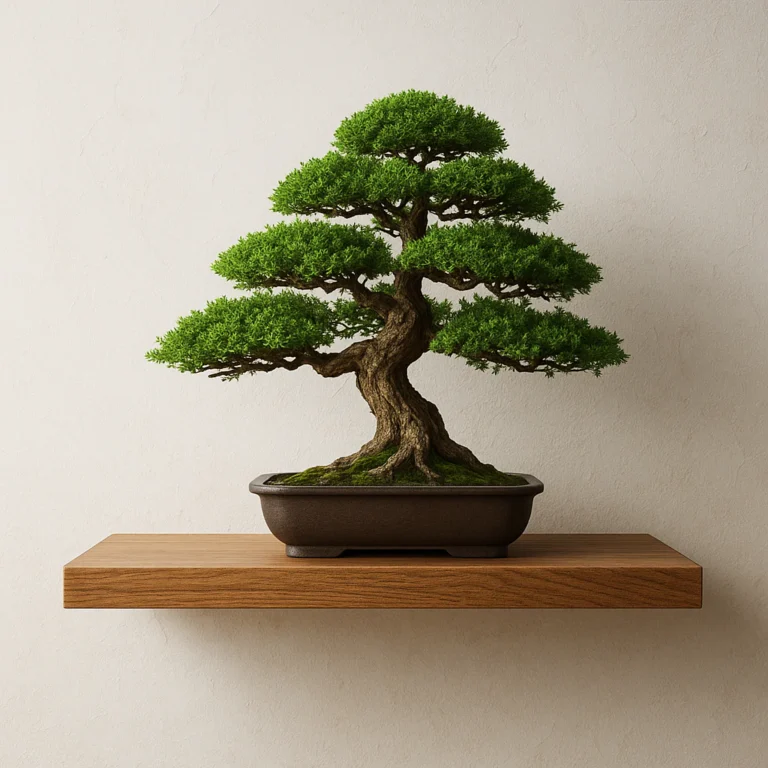
: Place your bonsai near a solid wall, a sturdy fence, or within a dense planting of larger shrubs or trees. - Display Structures: Benches, shelves, or dedicated display stands can offer some protection, especially if they have
a solid back. - Grouping: Arranging several bonsai together can create a microclimate, where they collectively offer each other some windbreak.
- Securing Your Trees: In areas prone to heavy winds
or storms, consider securing your trees to their display poles or benches. Shinji Suzuki’s Garden in Obuse, Japan, is a prime example, where trees are fixed to poles specifically to protect them from storms and heavy snowfall.
By carefully considering these three elements – sun, shade, and wind – you’ll be well on your way to providing a happy and healthy outdoor home for your cherished bonsai. Remember, it’s about creating a balanced
environment where your tree can truly flourish. For more insights on keeping your bonsai healthy, explore our Bonsai Care Basics!
🪴 The Ultimate Guide to Outdoor Bonsai Pots and Containers
The pot is more than just a vessel; it’s
an integral part of your bonsai’s aesthetic and, crucially, its health. Choosing the right outdoor bonsai pot involves a delicate balance of functionality, durability, and artistic harmony. We’ve seen countless growers make common mistakes here, so let’s ensure
you pick a winner!
Material Matters: What’s Your Pot Made Of?
The material of your bonsai pot profoundly impacts drainage, temperature regulation, and overall longevity.
1. Ceramic (Unglazed and Glazed)
-
Unglazed Ceramic:
-
Pros: Excellent breathability, promoting healthy root development. Often has a natural, earthy aesthetic that complements many bonsai styles. Highly durable.
-
Cons: Can dry
out faster than glazed pots, requiring more frequent watering. Can be heavy. -
Our Take: A classic choice for a reason! Unglazed pots, like those from Tokoname or Yixing, are often
preferred by serious enthusiasts for their traditional look and superior aeration. They develop a beautiful patina over time. -
Rating: Design 9/10, Functionality 9/10, Durability 9/10,
Breathability 10/10 -
Glazed Ceramic:
-
Pros: Retains moisture better, reducing watering frequency. Wide range of colors and finishes, allowing for artistic expression. Very durable.
-
Cons: Less breathable than unglazed, which can be a concern for some species if drainage isn’t perfect. Can sometimes look less natural depending on the glaze.
-
Our Take: Fantastic for flowering or
fruiting bonsai where a pop of color enhances the display, or for deciduous trees in very hot, dry climates. Ensure ample drainage holes. -
Rating: Design 8/10, Functionality 7/10,
Durability 9/10, Breathability 6/10
2. Plastic Training Pots
- Pros: Lightweight, inexpensive, and virtually unbreakable. Excellent for young trees in development, as they allow for frequent
repotting and root work without fear of damaging a precious ceramic pot. - Cons: Lacks the aesthetic appeal of ceramic. Can heat up quickly in direct sun, potentially stressing roots.
- Our Take: Essential
for any serious bonsai grower! While not for display, these are invaluable for the training phase. Brands like Anderson Pots offer durable options. - Rating: Design 3/10, Functionality 9/10,
Durability 10/10, Breathability 7/10
👉 Shop Anderson Training Pots on:
- Amazon: Anderson Training Pots
- The Bonsai Supply: The Bonsai Supply Official Website
3.
Concrete
-
Pros: Extremely durable and heavy, offering excellent stability against wind. Can be custom-made to specific dimensions.
-
Cons: Very heavy, making relocation difficult. Can be less aesthetically refined than ceramic.
-
Our Take: We’ve seen concrete used effectively in large-scale garden displays, especially for massive trees where stability is paramount. It’s a niche choice but can be very effective.
Rating:** Design 6/10, Functionality 8/10, Durability 10/10, Breathability 7/10
Drainage: The Unsung Hero of Potting 🚿
Regardless
of the material, excellent drainage is non-negotiable. Without it, your bonsai’s roots will sit in stagnant water, leading to root rot – a death sentence for most trees.
- Drainage Holes: Ensure your pot
has at least one large drainage hole, preferably multiple smaller ones, to allow excess water to escape freely. - Drainage Mesh: Always cover drainage holes with plastic mesh (like Bonsai Jack’s Drainage Mesh) to prevent
soil from washing out and pests from entering, while still allowing water to flow. - Pot Feet: Raising your pot slightly off the surface with pot feet (or even small pebbles) improves airflow and drainage, preventing waterlogging and allowing
the pot to dry out more evenly.
👉 CHECK PRICE on:
- Bonsai Jack’s Drainage Mesh: Amazon | Bonsai Jack Official Website
Size and Shape: A Matter of Proportion and Practicality
The pot’s size and
shape should complement the tree, not overwhelm it.
- Depth: Generally, the depth of the pot should be roughly equal to the trunk’s diameter at the base. Deeper pots are sometimes used for cascade or semi-cascade styles to
provide stability. - Width/Length: The width of an oval or rectangular pot should be about two-thirds the height of the tree. For round pots, the diameter should be about one-third the height.
Shape Harmony:** Match the pot’s shape to the tree’s style. A masculine, upright pine might suit a strong, rectangular pot, while a graceful, feminine wisteria could look stunning in a softer, oval, or round pot. The
first YouTube video on bonsai display basics emphasizes the importance of selecting stands that complement or thoughtfully contrast the bonsai tree in terms of size, weight, shape, and color to achieve a balanced and cohesive display. This principle extends
perfectly to pot selection!
Choosing the right pot is a journey of learning and aesthetic refinement. Don’t be afraid to experiment, but always prioritize the health of your tree. For more on the foundational aspects of bonsai care, check out our
Bonsai Care Basics!
🪑 15 Creative Ways to Display Your Bonsai on Benches and Tables
Benches and tables are the bread and butter of outdoor bonsai display, offering versatility
, elevation, and a structured way to showcase your collection. But don’t think “basic” – with a little creativity, these humble platforms can become stunning stages for your living art! We’ve gathered some of our favorite approaches, drawing inspiration from
renowned gardens and our own backyard experiments.
The Art of Arrangement: Beyond Just Lining Them Up
Remember, a well-designed bonsai garden makes your trees stand out more than anything else. This applies directly
to how you arrange them on benches.
- The Classic Stagger: Instead of a straight line, arrange trees in a gentle zig-zag or staggered pattern. This creates depth and allows each tree to be viewed individually without
feeling cramped. - Height Variation is Key: Use risers, crates, or smaller individual stands on top of your bench to vary the height of your trees. This creates visual interest and mimics natural landscapes. As seen
at Koukaen Garden near Osaka, larger trees are sometimes placed in the middle on crates or tables to create depth. - Groupings by Species or Style: Create mini-collections on a
single bench. A group of junipers, for instance, or a collection of informal upright maples. - The “Main Event” Showcase: Dedicate a central spot on a longer bench for your most prized bonsai, perhaps on a
slightly higher stand, flanked by complementary accent plants or smaller bonsai. - Accent Plant Integration: Don’t forget your accent plants! Small companion plants, moss, or even a decorative stone can enhance the bonsai’s story.
The first YouTube video highlights that a “two-point display” often consists of a main bonsai and an accompanying accent plant, while a “three-point display” might include a Chuhin bonsai, a Shohin bonsai, and a central accent
plant. - Circular Harmony: If you have a round table or a curved bench, arrange trees in a gentle arc, allowing for a panoramic view. The Singapore Botanical Garden uses a circular concrete
bench under a glass roof to protect trees from elements, showcasing this elegant approach.
Bench and Table Design: More Than Just a Flat Surface
The structure itself can be a design element.
-
Robust
Wooden Benches: Our go-to! Wood offers a natural aesthetic and, if properly treated (cedar or redwood are excellent choices), can last for years. However, building a bench that lasts longer than 1-2 years can be
difficult without proper construction. Consider designs like those found at the Weyerhaeuser Bonsai Garden, noted for having “wonderful” bench designs. -
DIY Custom
Benches: Feeling handy? Jeremy Norbury provides instructions on creating a custom bonsai bench, allowing you to tailor it to your exact needs and space. This is a fantastic way to ensure durability and a perfect fit.
9
. Concrete Benches for Longevity: For a truly permanent and robust solution, concrete benches are excellent. They are heavy, stable, and impervious to rot. -
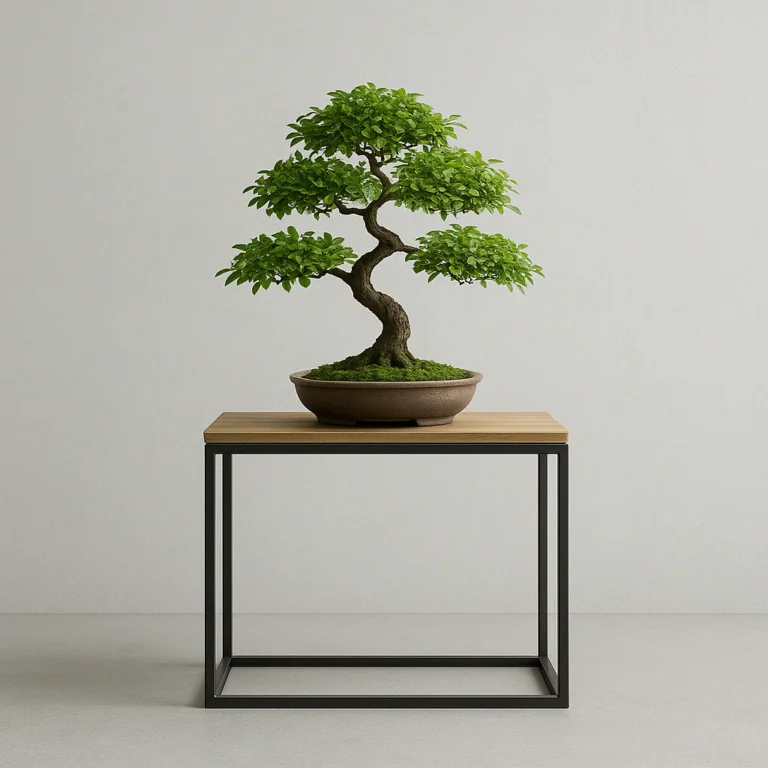
Metal Stands and Tables: Sleek and modern, metal options
(like powder-coated steel or aluminum) offer a contemporary look and excellent durability. They can be lighter than concrete but still very stable. -
Retractable Roof Benches: This is a game-changer for protection! As seen
on Pinterest, some growers consider installing retractable roofs on display benches to protect plants from elements while allowing flexibility. Adding corrugated clear plastic to the roof provides shelter while maintaining light exposure. -
Tiered Display Tables: Tables with multiple levels built into their design offer instant height variation and a dynamic presentation.
-
Repurposed Furniture: An old, sturdy outdoor side table or even a rustic wooden cart
can be transformed into a charming bonsai display. Just ensure it’s stable and weather-resistant. -
Integrated Garden Benches: Build your bonsai display bench directly into your garden landscaping, perhaps along a pathway or bordering a planting bed
. -
Portable Display Carts: For those who like to rearrange or need to move trees for seasonal protection, a sturdy display cart with wheels is invaluable.
Our Anecdote: One of our team members, Mark
, once spent an entire winter building an elaborate multi-tiered wooden bench system for his deciduous collection. He meticulously sanded, stained, and sealed every piece. The following summer, a freak microburst windstorm hit, and despite his best efforts,
one section toppled. The lesson? Even the most beautiful display needs to be anchored and secured if you live in a windy area! Don’t underestimate the power of nature.
Remember, the goal is to create a display
that not only looks fantastic but also supports the health and well-being of your bonsai. For more inspiration on creating beautiful arrangements, check out our Bonsai Inspiration and Ideas section.
🧱 12 Stunning
Ideas for Vertical Bonsai Gardens and Wall Displays
Limited ground space? Or perhaps you just want to add a dramatic, space-saving element to your outdoor bonsai exhibition? Vertical bonsai gardens and wall displays are your answer! This ingenious approach allows
you to elevate your collection, creating living art installations that draw the eye upwards. We’ve seen some truly breathtaking examples, and we’re here to share our top ideas for transforming your walls and fences into a vertical bonsai paradise.
Elevating Your Art: Creative Vertical Solutions
- Attached Platforms on Natural Walls: This is a fantastic way to integrate bonsai into an existing feature. Alex Lamb’s backyard, for instance, utilizes a natural wall with attached platforms to display
plants vertically. Imagine your favorite cascade juniper spilling gracefully from a rustic stone wall! - Modular Wall Planters: Brands like Gronomics or Woolly Pocket offer modular systems designed
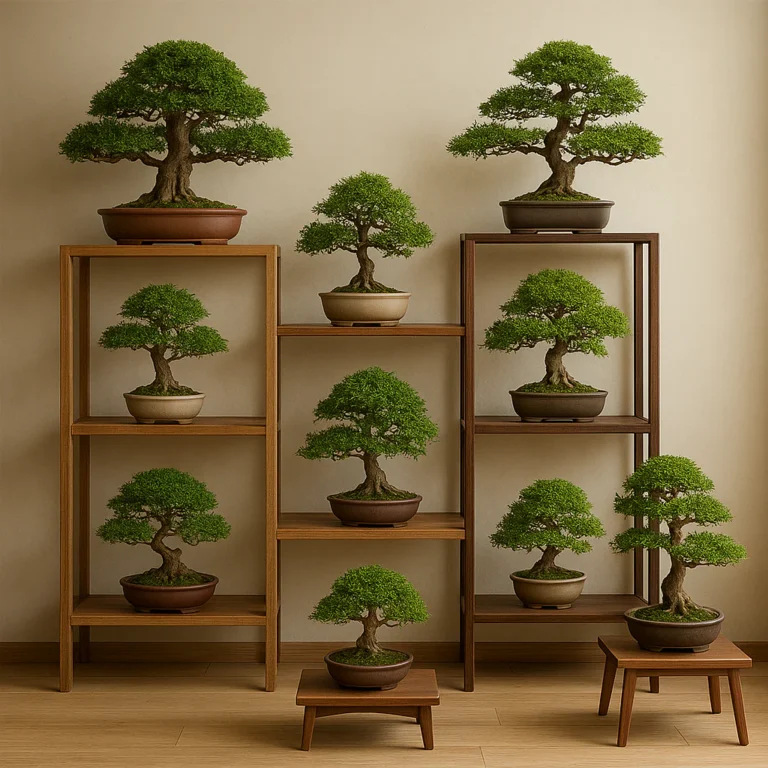
for vertical gardening. While often used for herbs or succulents, many can be adapted for smaller shohin bonsai or accent plants. - Tiered Wooden Shelving Units: Custom-built or pre-made wooden shelving units can be mounted
directly onto a sturdy fence or wall. Pinterest showcases various wooden shelves placed in the middle of a yard or filled with various potted plants to elevate and group displays. Ensure they are robust and securely fastened.
Metal Grid Panels with Hooks: Industrial-chic and highly versatile! Attach metal grid panels (like those used in retail displays) to a wall, then use S-hooks or specialized plant hangers to suspend your bonsai. This allows for easy
rearrangement.
5. Pallet Gardens: A popular DIY solution! Repurpose wooden pallets by adding shelves or pockets to create a rustic vertical display. Just ensure the wood is treated for outdoor use and free of harmful chemicals.
-
Living Wall Systems: For a truly immersive experience, integrate your bonsai into a larger living wall. While more complex, systems from companies like LiveWall or Green Living Technologies can create a lush backdrop that your
bonsai can peek out from. -
Arboretum-Inspired Vertical Displays: The Arboretum in Washington D.C. features a stunning vertical display, showcasing how even public gardens embrace this method. Take
inspiration from these grand designs and scale them for your own space. -
Hanging Planters and Kokedama: For smaller bonsai or accent plants, consider hanging them in macrame hangers or displaying traditional Japanese kokedama (moss balls) from a wall-mounted rod or hook.
-
Staggered Wall-Mounted Cubbies: Build or buy small, open-fronted wooden cubbies and mount them at varying heights and offsets on a wall.
Each cubby becomes a mini-stage for an individual bonsai. -
Ladder-Style Shelves: A decorative ladder propped against a wall can be fitted with sturdy shelves to create a charming, rustic vertical display.
-
Vertical Herb Garden Conversion: Many vertical herb garden kits feature individual pockets or small shelves. If the pockets are large enough, they can house shohin bonsai, creating a unique display.
-
Cable and
Clamp Systems: For a minimalist look, use stainless steel cables stretched vertically or horizontally, with clamps or rings to hold individual bonsai pots. This creates a floating effect.
Our Expert Tip: When designing a vertical display, always prioritize **stability and safety
**. Bonsai pots can be heavy, especially after watering. Ensure all mounting hardware is appropriate for the weight and the wall material. Also, consider accessibility for watering and maintenance. Reaching that top-tier bonsai for daily watering can quickly become a chore
if not planned correctly!
For more creative ideas and inspiration, delve into our Bonsai Inspiration and Ideas section.
<
a id=”-18-unique-methods-for-displaying-bonsai-on-poles-stumps-and-natural-features”>
🌿 18 Unique Methods for Displaying Bonsai on Poles
, Stumps, and Natural Features
Tired of the conventional? Want your bonsai to truly command attention and blend seamlessly with your garden’s natural elements? Then displaying them on poles, stumps, and other natural features is your ticket to
a truly captivating outdoor exhibition! This method, often seen in high-end professional gardens, is about creating focal points and adding dramatic vertical interest.
The Power of Elevation: Poles and Pillars
The use of vertical poles is a time
-honored tradition in bonsai display, especially for highlighting “masterpiece” trees and creating depth in a garden.
- Classic Wooden Poles: Old railroad ties or sturdy tree trunks (like those used at Shunkaen in Tokyo) provide a rustic, natural pedestal. These weathered wood pieces add character and a sense of age to the display.
- Sleek Concrete Pillars
: For a more modern or minimalist aesthetic, concrete pillars can be shaped, even quite thinly, to elevate your bonsai. Shunkaen also utilizes concrete pillars around its Koi pond. Their clean lines ensure the tree
remains the absolute focal point. - Natural Stone Slabs/Pillars: Stone offers unparalleled durability and a timeless elegance. A rough-hewn stone pillar or a carefully balanced slab can create a powerful statement.
Varying Heights for Depth: In limited spaces, placing front pillars lower than back pillars can create an illusion of greater depth, as demonstrated by the StreamLinkcom Garden.
5. Sec
ured Displays for Protection: In regions with heavy snow or storms, fixing trees to their display poles is crucial. Shinji Suzuki’s Garden in Obuse, Japan, is a testament to this, where trees are secured to protect them from harsh weather
.
6. Plain Background Emphasis: Paul Thompson’s Chinese Penjing Garden uses plain backgrounds and clean concrete pillars to emphasize the trees, which are often larger than their Japanese counterparts. This principle is vital: let the tree shine!
7. Reclaimed Wood Posts: Find unique, weathered posts from old fences or structures. Their imperfections add character.
8. Bamboo Poles: For a lighter
, more Asian-inspired feel, thick bamboo poles can be used as individual stands or grouped for a more dynamic display.
Embracing Nature’s Pedestals: Stumps and Logs
What could be more natural than displaying a tree
on another piece of wood?
- Weathered Tree Stumps: If you have an old tree stump in your garden, don’t remove it! Level the top and use it as a natural, organic pedestal for a
bonsai. The contrast between the living miniature and the decaying wood is truly poetic. - Hollowed-Out Logs: A thick, hollowed-out log can serve as a unique planter or a base for a smaller
bonsai, creating a rustic, woodland feel. - Driftwood Displays: Artfully arranged pieces of driftwood can provide a stunning, sculptural base for a bonsai, especially those with a windswept or cascade style.
1 - Root Ball Integration: For larger bonsai, especially cascade styles, consider placing them on a partially buried, gnarled root ball from another tree, allowing the bonsai’s roots to intertwine with the natural feature over time.
Integrating with the Landscape: Other Natural Features
- Boulder Perches: A large, flat-topped boulder can make an incredible, permanent display platform. The sheer mass of the stone provides stability and a striking contrast to the delicate
bonsai. - Rock Outcroppings: If your garden has natural rock formations, look for flat ledges or crevices where a bonsai pot can sit securely, making it appear as if the tree is growing directly from the rock
. - Water Feature Edges: Displaying a bonsai on the edge of a pond or stream adds a serene, reflective quality. Just be mindful of splashing and ensure the pot is stable.
- Moss
y Mounds: Create a raised, moss-covered mound in your garden and place a bonsai directly on top. This works beautifully for forest plantings or individual trees, giving them a sense of ancient growth. - Integrated into
a Dry Stream Bed: If you have a dry stream bed feature, a bonsai placed strategically within it can enhance the illusion of a natural landscape. - Living Tree Nooks: For very small shohin bonsai, a
natural “nook” or crotch in a larger, established garden tree can provide a charming, unexpected display spot. Just ensure the bonsai gets adequate light and water and isn’t overshadowed.
Our Anecdote: We once helped
a client integrate a magnificent, ancient juniper bonsai onto a centuries-old oak stump in their garden. It took careful planning to level the stump and ensure proper drainage, but the result was breathtaking. The juniper looked as if it had been growing there forever
, a testament to the seamless blend of art and nature.
When using natural features, always ensure the stability of the display and consider how the element will weather over time. The beauty lies in the harmony between your cultivated art and the raw
power of nature. For more inspiration on creating stunning outdoor displays, visit our Bonsai Display and Aesthetics section.
🎨 25 Artistic Arrangements: Group Plantings, Forests, and Landscape Displays
Beyond
individual tree displays, the true magic of outdoor bonsai often lies in creating larger, more complex artistic arrangements. We’re talking about crafting entire miniature landscapes, evoking vast forests, serene mountainsides, or tranquil meadows right in your own garden. This
is where your creativity truly blossoms, transforming a collection of individual trees into a cohesive, living masterpiece.
The Philosophy of Composition: More Than Just Trees
The core principle for any bonsai display, whether a single tree or a grand forest
, is to “have a mix of sizes, shapes, and colors” among the display elements so that “each element within the display needs to be different.” This creates visual harmony and prevents
repetition, a crucial lesson from the first YouTube video on bonsai display basics.
Group Plantings: The Power of Many
Group plantings, or yose-ue, involve arranging multiple trees in a single pot or
on a slab to create the illusion of a forest or grove.
-
Uneven Numbers Rule: Always use an odd number of trees (3, 5, 7, 9, etc.) for a more natural
and aesthetically pleasing composition. Nature rarely arranges things in perfect pairs! -
Varying Heights and Thicknesses: Just like in a real forest, some trees should be taller, some shorter, some thicker, some thinner. This
creates depth and realism. -
Root Flare Orientation: Angle the trees slightly inward towards the center of the group to create a sense of unity and direction.
-
Open Spaces: Don’t overcrowd!
Leave open spaces (like clearings in a forest) to allow the eye to rest and to suggest expansiveness. -
Dominant Tree: One tree should typically be the tallest and most prominent, acting as the focal point.
-
Moss and Groundcover: Add moss, small accent plants, or fine gravel to the surface to enhance the natural forest floor illusion.
-
Rock Integration: Incorporate carefully selected rocks or stones to mimic boulders
or mountain peaks within your miniature landscape. -
Slanted Slab Display: Plant your forest on a large, flat, slightly slanted slab to create the impression of a hillside grove.
Landscape Displays: Crafting Miniature Worlds
These arrangements
go beyond just trees, incorporating rocks, water features, and even miniature figurines to tell a story.
-
Saikei (Living Landscape): This Japanese art form combines living plants (often bonsai), rocks, and soil
to create realistic miniature landscapes. It’s less about the individual tree and more about the overall scene. -
Penjing (Chinese Tray Landscape): The ancient Chinese art, often more dramatic and sculptural than Japanese Saikei,
can feature fantastical rock formations, water, and multiple trees to depict grand natural scenes. -
Mountain Scene: Use tall, craggy rocks to represent mountains, with small, windswept pines or junipers clinging to their slopes.
-
Riverside/Lakeside Scene: Incorporate a shallow dish of water or a blue-colored gravel path to simulate a river or lake, with trees arranged along its banks.
-
Island Scene: A
single, well-placed bonsai on a small mound of earth surrounded by gravel can evoke a tiny island. -
Gorge or Valley Display: Use two larger rocks to create a “gorge,” with smaller trees nestled within the valley.
-
Accent Plant Focus: Sometimes, the landscape is the accent. Display a single, perfect accent plant (like a hosta or a fern) in a beautiful jita (flat stand) next to a larger
bonsai display. A jita “delineates that accent plant from the table,” ensuring each component has its own space.
Beyond the Traditional: Innovative Display Concepts
- Two-Point Display
: As explained in the video, this typically features an Ogata Bonsai (well above 45cm) as the main element, accompanied by a single accent plant. This creates a strong, focused
presentation. - Three-Point Display (San-Ten Kazari): Commonly used for Chuhin Bonsai (30cm to 45cm), this arrangement includes the Chuhin bonsai,
a smaller Shohin Bonsai placed to the side, and a central accent plant. This offers more visual complexity and balance. - Seven-Point Display: Most typically seen with Shohin Bons
ai (under 20cm), this arrangement features six Shohin bonsai and one accent plant. It’s a delightful way to showcase a collection of small trees. - Seasonal Story
telling: Arrange your trees to tell a seasonal story. Deciduous trees for autumn colors, evergreens for winter, flowering trees for spring. - Theme Displays: Create a display around a specific theme – “Windswept
Coast,” “Ancient Forest,” “Zen Garden.” - Container Harmony: Ensure the pots used in group plantings or landscape displays complement each other and the overall scene.
- Pathways and Bridges: For larger landscape
displays, miniature pathways made of fine gravel or tiny bridges can add incredible detail and invite the viewer’s eye to explore. - Miniature Figurines: Carefully chosen, subtle figurines (a tiny fisherman, a meditating monk) can add
a narrative element without distracting from the trees. - Lighting Effects: Strategically placed outdoor lighting can dramatically enhance your display, especially in the evening. Up-lighting can highlight the trunk and foliage, while subtle path lights can illuminate
the overall scene. - The “Borrowed Scenery” Effect (Shakkei): Position your outdoor bonsai display to frame a beautiful element of your existing garden or the natural landscape beyond. A distant mountain view, a mature tree
, or a vibrant flower bed can become part of your bonsai’s world.
Our Expert Tip: When creating these complex arrangements, step back frequently. View your creation from different angles and distances. What looks good up close might be cluttered
from afar. The goal is to create a sense of natural beauty and balance, where every element plays its part in the overall story.
Dive deeper into the aesthetics of bonsai and find more inspiration in our Bonsai Display and Aesthetics section!
🛡️ Seasonal Care: Winterizing and Summerizing Your Outdoor Bonsai Display
The beauty of outdoor bonsai display comes with a responsibility: protecting your living art from the whims of Mother Nature. Just like you wouldn’t wear
a swimsuit in a blizzard, your bonsai needs seasonal wardrobe changes, or rather, seasonal care adjustments! At Bonsai Garden™, we’ve learned through years of trial and error that proactive seasonal care is the cornerstone of a thriving outdoor collection.
The Chill Factor: Winterizing Your Outdoor Bonsai ❄️
Winter is arguably the most challenging season for outdoor bonsai, especially in temperate zones. Freezing temperatures, harsh winds, and heavy snow can be detrimental.
- Know
Your Species: Not all bonsai are created equal when it comes to cold hardiness. Tropical bonsai (like Ficus or Portulacaria afra) cannot tolerate freezing temperatures and must be brought indoors when nighttime temperatures consistently drop below 5
0°F (10°C). Temperate bonsai, however, need a period of dormancy. - Protect the Roots: This is the most vulnerable part of your bonsai.
- B
urying the Pot: For hardy species, burying the pot (up to the rim) in the ground, in a raised garden bed, or even in a larger container filled with mulch, sawdust, or sand provides excellent insulation.
Cold Frames/Greenhouses: An unheated cold frame or a temporary greenhouse offers fantastic protection from wind and extreme cold while still allowing dormancy.
- Unheated Garage/Shed: For very cold nights or extended
freezes, moving hardy bonsai into an unheated garage or shed can offer crucial protection. Ensure they still get some light on milder days if possible.
- Wind Protection: As mentioned earlier, strong winter winds can desiccate branches
and buds. Place your bonsai in a sheltered location, behind a wall, or use burlap screens. - Watering in Winter: This is tricky! While dormant, bonsai need significantly less water, but they still need some
. Check the soil moisture regularly. Water on milder days when temperatures are above freezing, ensuring the soil drains completely. Never water if the soil is frozen or if freezing temperatures are expected immediately after watering. - Snow as
Insulation: A light blanket of snow can actually act as an insulator for buried pots. However, heavy, wet snow can break branches, so gently brush off excess if it accumulates. - Pest Check: Before winterizing
, give your trees a thorough inspection for any lingering pests. You don’t want them overwintering with your bonsai!
Our Anecdote: One particularly brutal winter, a new team member forgot to bury a prized Japanese Maple
bonsai. The pot froze solid for weeks. While the tree survived, it struggled for two seasons to regain its vigor, a stark reminder of the importance of root protection!
Beating the Heat: Summerizing Your Outdoor Bonsai ☀️
Summer brings its own set of challenges: intense sun, high temperatures, and rapid drying.
- Strategic Shading: As discussed in our location section, many bonsai benefit from afternoon shade, especially deciduous species. Use shade cloth (30-50% is common), place them under larger trees, or move them to a naturally shaded spot.
- Increased Watering: This is paramount! In summer, you might need to water your bonsai once, twice, or even
three times a day, depending on the species, pot size, and weather. Check the soil moisture frequently. Remember, a dry bonsai is a dead bonsai! - Humidity Trays: Placing your bonsai pots on humidity trays (trays filled with gravel and water, ensuring the pot sits above the waterline) can increase local humidity around the tree, which is beneficial in dry climates.
- Air Circulation: While wind protection is important, good air circulation helps
prevent fungal issues in humid summer conditions. Ensure your trees aren’t too tightly packed. - Pest Vigilance: Summer is prime time for pests like spider mites, aphids, and scale. Regular inspection (daily if possible) is key to early detection and treatment.
- Fertilization Adjustments: You might reduce or stop fertilizing during the hottest parts of summer, especially if the tree is stressed. Resume when temperatures cool slightly.
7
. Repotting Caution: Avoid major repotting during the peak of summer heat, as it can be too stressful for the tree. Spring and fall are generally preferred.
Our Expert Tip: Think of your bonsai as
a living thermometer. Wilting leaves, rapid yellowing, or burnt edges are all signs that your tree is stressed and needs immediate attention. Adjust its location, watering, or shading accordingly.
Mastering seasonal care is a continuous learning process, but
with these guidelines, you’ll be well-equipped to guide your outdoor bonsai through the year. For more detailed information on maintaining the health of your trees, explore our Bonsai Care Basics and our Bonsai FAQs!
🐜 Pest Control and Maintenance for Outdoor Bonsai Exhibitions
Ah, the great outdoors! While it offers unparalleled natural beauty for your bonsai, it also introduces
a cast of characters you might rather not invite to the party: pests and diseases. Don’t despair! At Bonsai Garden™, we’ve faced every creepy crawly and mysterious spot imaginable. The key to a healthy outdoor bonsai exhibition
is vigilance and proactive maintenance.
The Unwanted Guests: Common Pests and How to Evict Them 🐛
Outdoor bonsai are susceptible to a wider range of pests than their indoor counterparts. Here are the usual suspects and our
battle-tested strategies:
- Aphids: These tiny, soft-bodied insects cluster on new growth, sucking sap and causing distorted leaves.
- Detection: Look for sticky honeydew, sooty mold, and
curled leaves. - Solution: A strong spray of water can dislodge them. For heavier infestations, use insecticidal soap (like Safer Brand Insecticidal Soap) or neem oil.
- CHECK
PRICE on: - Safer Brand Insecticidal Soap: Amazon | Walmart
- Spider Mites: Tiny arachnids that thrive in hot, dry conditions, causing stippling on leaves and sometimes
fine webbing.
- Detection: Yellowing leaves, tiny dots, and a magnifying glass will reveal the mites. Look for webbing, especially on undersides of leaves.
- Solution: Increase humidity (misting), spray with insecticidal soap or neem oil. Predatory mites can also be introduced.
- Scale Insects: Small, immobile pests that attach to stems and leaves, covered by a waxy shell. They also produce
honeydew.
- Detection: Small bumps on stems and leaves.
- Solution: For light infestations, physically scrape them off with a fingernail or soft brush. For heavier cases, horticultural oil (like Bonide All Seasons Horticultural & Dormant Spray Oil) or systemic insecticides can be effective.
- 👉 CHECK PRICE on:
- Bonide All Seasons Horticultural & Dormant Spray Oil: Amazon | Bonide Official Website
- Mealybugs: White, cottony pests that hide in crevices, sucking sap.
-
Detection: White, fuzzy masses on stems, leaf axils, and roots.
-
Solution: Dab with an alcohol-soaked cotton swab. Insecticidal soap or neem oil can also work.
- Caterpillars/Larvae: Chewing pests that can rapidly defoliate a bonsai
.
- Detection: Holes in leaves, missing leaves, and visible caterpillars or their droppings.
- Solution: Hand-picking is often the most effective. Bacillus thuringiensis (Bt) is an organic option
for caterpillar control.
- Ants: While not directly harmful to bonsai, ants often “farm” aphids and scale for their honeydew, indicating a pest problem.
- Detection: Trails of ants on
your bonsai. - Solution: Address the primary pest (aphids/scale). Use ant baits away from your bonsai.
The Silent Threat: Fungal and Bacterial Diseases 🦠
Diseases are less common than pests but can
be devastating. Good air circulation and proper watering are your best defenses.
- Powdery Mildew: White, powdery patches on leaves, especially in humid conditions with poor airflow.
- Solution: Improve air
circulation, reduce overhead watering, use a fungicide (like Garden Safe Fungicide3).
- Rust: Orange or brown pustules on leaves.
- Solution: Remove infected leaves, improve air circulation, use
a fungicide.
- Root Rot: The most common and often fatal disease, caused by overwatering and poor drainage.
- Solution: Prevention is key! Ensure excellent drainage and avoid overwatering. If detected
early, repotting into fresh, well-draining soil and pruning affected roots can save the tree.
Your Daily Patrol: Essential Maintenance Routines 🕵️ ♀️
Consistent, gentle care is your best defense against both pests and diseases.
- Daily Inspection: Make it a habit to look closely at your bonsai every day. Check the tops and undersides of leaves, stems, and the soil surface. Early detection is crucial!
- Watering Wisdom
: Water thoroughly when the soil surface begins to dry, allowing excess water to drain completely. Avoid constant wetness. - Good Air Circulation: Don’t crowd your bonsai. Ensure adequate space between trees to allow for airflow
, which discourages fungal growth. - Cleanliness is Key: Remove fallen leaves, dead branches, and weeds from the pot and display area. Debris can harbor pests and diseases.
- Proper Fertil
ization: Feed your bonsai according to its species and seasonal needs. Over-fertilization can stress a tree, making it more susceptible to pests. - Pruning and Wiring: Regular pruning and wiring not only shape your tree
but also remove potential hiding spots for pests and improve air circulation within the canopy. - Quarantine New Arrivals: Always isolate new bonsai for a few weeks before introducing them to your main collection to ensure they aren’t bringing
any unwanted guests.
Our Expert Tip: We advocate for an Integrated Pest Management (IPM) approach. This means using a combination of methods, starting with the least toxic (hand-picking, water sprays) and only escalating
to stronger treatments (organic pesticides, then chemical pesticides as a last resort) if absolutely necessary. Healthy trees are naturally more resistant to pests and diseases.
For more in-depth guidance on keeping your bonsai healthy and happy, delve into our
Bonsai Care Basics and our Bonsai FAQs!
🌧️ Dealing with Rain, Snow, and Extreme
Weather in Your Bonsai Garden
The romantic image of a bonsai braving the elements is powerful, but the reality is that extreme weather can be a formidable foe for your carefully cultivated trees. From torrential downpours to blizzards and
scorching heatwaves, your outdoor bonsai display needs robust protection. At Bonsai Garden™, we’ve learned to respect nature’s fury and adapt our strategies to ensure our trees not only survive but thrive through all seasons.
The Del
uge: Managing Heavy Rain ☔
While rain is generally good for bonsai, excessive or prolonged downpours can lead to problems.
- Drainage, Drainage, Drainage! This cannot be stressed enough. Ensure your pots have
excellent drainage holes and are sitting on pot feet or a surface that allows water to flow freely. If your soil mix is too heavy, it can become waterlogged, leading to root rot. - Elevate Your Display: Raising
your bonsai on benches, tables, or stands helps prevent water from pooling around the pots and improves airflow. - Sheltered Locations: During periods of heavy, continuous rain, moving sensitive species under an overhang, a patio roof
, or even a temporary canopy can prevent overwatering. - Monitor Soil Moisture: After heavy rain, even if the surface looks dry, check the soil deeper in the pot before watering again.
- Guard
Against Soil Erosion: Strong rain can wash away topsoil or fine akadama particles. A layer of moss or fine gravel on the soil surface can help mitigate this.
The White Blanket: Protecting from Snow and Ice 🌨️
Winter
‘s embrace can be beautiful, but snow and ice pose unique threats to outdoor bonsai.
- Root Insulation (Revisited): As discussed in our winterizing section, insulating the roots by burying the pot is your primary
defense against freezing. - Snow Load Management: While a light dusting of snow can act as insulation, heavy, wet snow can accumulate on branches, causing them to break or deform. Gently brush off excess snow with a soft broom
or your hand. - Ice Encapsulation: Freezing rain can coat branches in a layer of ice, making them brittle and heavy. Avoid disturbing iced-over trees, as branches are highly prone to snapping. Wait
for the thaw. - Wind-Driven Snow: Wind can pack snow into pots, leading to prolonged freezing. Ensure your trees are in sheltered locations to minimize this.
- Dormancy is Key: For
temperate species, allowing them to enter proper dormancy makes them more resilient to cold and snow.
The Extremes: Heatwaves and Cold Snaps 🔥🥶
These sudden, dramatic shifts in temperature demand immediate action.
Extreme Heat (Heatwaves)
- Maximum Shade: Move all but the most sun-loving species to full shade during heatwaves. Even conifers can suffer from heat stress.
- Increased Watering Frequency: You might need to water
multiple times a day. Check your trees constantly. - Humidity Boost: Use humidity trays or mist the foliage (early morning or late evening) to increase local humidity and cool the leaves.
- Avoid Fertil
izing: Do not fertilize during extreme heat, as it can stress the tree further. - Monitor for Pests: Spider mites thrive in hot, dry conditions, so be extra vigilant.
Extreme Cold (Cold Snaps)
- Immediate Shelter: Move all bonsai (even hardy ones) into an unheated garage, shed, cold frame, or temporary greenhouse if temperatures are predicted to drop significantly below their hardiness zone.
Root Protection: Reinforce root insulation if possible.
3. No Watering (if freezing): Do not water if temperatures are below freezing or expected to drop below freezing immediately after watering.
4. Wind
Protection: Ensure maximum wind protection, as wind chill exacerbates the effects of cold.
Our Expert Tip: Investing in a simple outdoor thermometer with minimum/maximum temperature readings can be incredibly helpful for monitoring conditions in your bonsai garden. Also
, pay attention to local weather forecasts and be prepared to act quickly. The difference between a thriving bonsai and a struggling one can often come down to timely intervention during extreme weather events.
Remember, protecting your trees from the elements is an ongoing commitment
, but the reward is a healthy, beautiful collection that graces your outdoor space year-round. For more general advice on keeping your bonsai healthy, explore our Bonsai Care Basics!
🔍 Troubleshooting: Why Your Outdoor Bonsai
is Struggling to Thrive
It’s a heartbreaking sight: your beloved outdoor bonsai, once vibrant and full of life, now looks… well, a bit sad. Yellowing leaves, wilting branches, stunted growth – these are all distress
signals. Don’t panic! At Bonsai Garden™, we’ve seen it all, and most struggles can be diagnosed and remedied with a bit of detective work. Let’s troubleshoot why your outdoor bonsai might be struggling to thrive.
The
Usual Suspects: Common Problems and Their Solutions
Before you jump to conclusions, let’s systematically investigate the most common culprits.
1. Watering Woes: Too Much or Too Little? 💧
This is,
by far, the number one reason for bonsai decline.
- Symptoms of Underwatering: Leaves wilting, turning crispy brown (especially at the edges), dropping prematurely. Soil is bone dry.
- Solution: Water
thoroughly until water drains from the bottom. For severely dry trees, immerse the entire pot in a bucket of water for 15-30 minutes until bubbles stop rising. Then, establish a consistent watering routine. - Symptoms of Over
watering (Root Rot): Yellowing leaves, soft and mushy trunk/branches, foul smell from the soil, stunted growth, sudden leaf drop. Soil stays constantly wet. - Solution: Immediately stop watering. Improve
drainage (check pot feet, clear drainage holes). For severe cases, repot into fresh, well-draining soil, pruning any rotten, black, or slimy roots. This is a critical situation, and quick action is needed.
- Light Imbalance: Too Much Sun or Not Enough? ☀️☁️
The right amount of light is crucial for photosynthesis and overall health.
- Symptoms of Too Much Sun/Heat Stress: Scorched or burnt leaves (brown or black patches), wilting during the hottest part of the day, rapid drying of soil.
- Solution: Move the bonsai to a location with afternoon shade, especially during heatwaves. Use shade cloth.
Symptoms of Not Enough Sun:** Pale, elongated leaves (etiolation), sparse foliage, weak growth, lack of flowering/fruiting.
- Solution: Gradually move the bonsai to a brighter location, increasing sun exposure over several days
to avoid shock.
3. Nutritional Deficiencies or Excesses: The Feeding Frenzy 🍽️
Bonsai need a balanced diet, but too much or too little can cause problems.
- Symptoms of
Nutrient Deficiency: Yellowing leaves (chlorosis), stunted growth, small leaves, weak branches. Specific deficiencies can cause distinct patterns (e.g., iron deficiency causes yellowing between veins). - Solution: Ensure you’re using a
balanced bonsai fertilizer according to the product’s instructions and your tree’s seasonal needs. Consider a slow-release granular fertilizer or a liquid feed. - Symptoms of Over-Fertilization (Fertilizer Burn): Bur
nt leaf tips or edges, sudden leaf drop, white crust on the soil surface. - Solution: Flush the soil thoroughly with plain water to wash out excess salts. Reduce or temporarily stop fertilizing.
4
. Pest and Disease Attacks: Uninvited Guests 🐛🦠
As discussed, outdoor bonsai are magnets for pests and can succumb to diseases.
- Symptoms: Visible insects (aphids, scale, mealybugs, spider mites), holes
in leaves, distorted growth, sticky residue (honeydew), powdery or fuzzy patches on leaves, discolored spots. - Solution: Identify the pest/disease and apply appropriate treatment (insecticidal soap, neem oil, horticultural oil, fungicides, or hand-picking). Isolate affected trees to prevent spread.
5. Environmental Stress: Wind, Cold, or Pollution 🌬️❄️💨
The elements can take a toll.
-
Symptoms
of Wind Burn: Dry, crispy leaf edges, especially on the windward side. -
Solution: Provide wind protection (sheltered location, windbreak).
-
Symptoms of Cold Damage: Blackened leaves, frost
bite on new growth, cracked bark, general decline after a cold snap. -
Solution: Ensure proper winter protection (insulating pots, moving to sheltered location). Prune damaged parts after the threat of frost has passed.
-
Symptoms of Pollution/Toxins: General decline, unusual leaf discoloration, stunted growth, especially in urban or industrial areas.
-
Solution: This is harder to control, but ensuring good air circulation and regular
watering to flush the soil can help.
6. Pot-Bound or Poor Soil: The Root of the Problem 🌱
Sometimes, the issue lies beneath the surface.
- Symptoms of Being Pot-Bound: Water
runs straight through the pot, roots growing out of drainage holes, stunted growth despite good care. - Solution: Repot the bonsai into fresh, well-draining bonsai soil, root pruning as necessary.
- Symptoms of
Poor Soil: Soil that retains too much water (heavy clay) or drains too quickly (pure sand), leading to watering imbalances. - Solution: Repot with a high-quality, well-draining bonsai soil mix (e.g., Bonsai Jack’s Inorganic Bonsai Soil Mix).
👉 CHECK PRICE on:
- Bonsai Jack’s Inorganic Bonsai Soil Mix: Amazon | Bonsai Jack Official Website
**
Our Expert Tip:** When troubleshooting, change one variable at a time and observe the results. Don’t try to fix everything at once, as you might mask the true problem or cause new issues. Keep a bonsai journal to track changes,
symptoms, and treatments – it’s an invaluable tool for learning!
If you’re still scratching your head, our Bonsai FAQs section might have the specific answer you’re looking for, or you can always reach out to our team at Bonsai Garden™ for personalized advice!
📸 Capturing the Beauty: Photography Tips for Your Outdoor Bonsai
You’ve poured your heart and soul into cultivating your outdoor bonsai, creating a stunning display. Now, how do you capture
that beauty to share with others, or simply to admire yourself? Photographing bonsai is an art in itself, and at Bonsai Garden™, we’ve learned a few tricks over the years to make your trees truly pop in pictures. Forget
blurry phone snaps; let’s get you taking gallery-worthy shots!
The Golden Rules of Bonsai Photography ✨
- The Right Light is Everything:
- Golden Hour is Your Friend: The
hour after sunrise and the hour before sunset offer soft, warm, diffused light that minimizes harsh shadows and highlights textures beautifully. - Overcast Days: A uniformly overcast sky acts like a giant softbox, providing even, gentle
light perfect for detailed shots without harsh contrasts. - Avoid Midday Sun: Direct, overhead midday sun creates harsh shadows and washes out colors. ❌
- Backlighting: Experiment with backlighting (light coming from behind the tree) during golden hour to create a dramatic silhouette or highlight fine leaf details.
- The Background Matters (A Lot!):
- Simplicity is Key: A plain, uncl
uttered background is paramount. A solid wall, a simple fence, or even a large sheet of plain fabric (black, white, or a neutral gray/green) will make your bonsai stand out.
Avoid Distractions: No busy patterns, distracting objects, or other plants competing for attention. ❌
- Depth of Field: Use a wide aperture (low f-number, e.g., f/2.8 or f/4) on your camera to blur the background (bokeh effect), further isolating your bonsai. Even many smartphones have “portrait mode” to achieve this.
- Perspective and Angle: See Your Tree Anew
📐
- Eye-Level Shot: As professional gardens prioritize, displaying trees at eye level makes them stand out. Photographing from eye level (or slightly below, looking up at the trunk) is
often the most flattering and natural perspective. - Rule of Thirds: Imagine your frame divided into nine equal sections by two horizontal and two vertical lines. Place your bonsai (or its main focal point) along these lines or
at their intersections for a more dynamic composition. - Experiment with Angles: Don’t just shoot straight on. Try slightly from the left, slightly from the right, or a low angle to emphasize the trunk’s girth
or nebari (root flare). - Include the Pot: The pot is an integral part of the bonsai’s aesthetic. Ensure it’s clean and well-presented in your shot.
- Focus
and Sharpness: Crystal Clear Details 🔍
- Pinpoint Focus: Ensure your focus is tack-sharp on the most important part of the tree – usually the trunk, nebari, or a prominent branch.
Tripod Stability: For maximum sharpness, especially in lower light, use a tripod. This eliminates camera shake.
- Clean Lens: A dirty lens is the enemy of sharp photos. Always clean your camera lens (or phone camera) before shooting.
- Compositional Elements: Telling a Story 🖼️
- Negative Space: Don’t be afraid of empty space around your bonsai. It allows the tree to breathe and prevents
the image from feeling cluttered. - Accent Plants: If your bonsai is part of a display with an accent plant, compose the shot to include both harmoniously. Remember the “two-point” or “three-point” display
principles from the video. - Details Shots: Don’t just shoot the whole tree. Get close-ups of interesting bark, delicate leaves, flowers, or fruit.
- Seasonal
Shots: Capture your bonsai through the seasons – the vibrant spring growth, lush summer foliage, fiery autumn colors, or stark winter silhouette.
Our Anecdote: Our head gardener, Elara, once spent an entire afternoon trying to
get the perfect shot of a cascading Bougainvillea bonsai. She tried every angle, every light. Finally, she realized the problem wasn’t the camera or the light; it was the distracting garden hose coiled in the background! Once moved
, the picture transformed. It’s often the small details that make the biggest difference.
So grab your camera (even your smartphone will do wonders with these tips!), head out to your outdoor bonsai display, and start capturing the incredible artistry you
‘ve cultivated. You’ll be amazed at the difference these simple techniques can make! For more on the visual appeal of bonsai, explore our Bonsai Display and Aesthetics section.
🛒 Top
-Rated Tools and Accessories for the Outdoor Bonsai Enthusiast
Alright, team, let’s talk gear! Just like a master chef needs the right knives, a dedicated outdoor bonsai enthusiast needs the right tools and accessories. These aren’t just
gadgets; they’re extensions of your hands, designed to help you nurture, shape, and protect your living masterpieces. At Bonsai Garden™, we’ve tried countless products, and we’re here to share our top-rated essentials
that truly make a difference in your outdoor bonsai journey.
The Essential Toolkit: Pruning, Wiring, and Repotting
1. Concave Cutters (Branch Cutters)
- Why You Need Them: These
are the workhorses for removing branches. Their unique concave shape allows for a clean cut that heals flush with the trunk, minimizing scarring. - Our Pick: Ryuga Concave Cutters (Stainless Steel). Known for their exceptional sharpness
, durability, and ergonomic design. They come in various sizes, but a 200-210mm size is a great all-rounder. - Rating: Design 9/10, Functionality 1
0/10, Durability 9/10, Value 8/10 - 👉 CHECK PRICE on:
- Ryuga Concave Cutters: Amazon | The Bonsai Supply
2. Wire Cutters
-
Why You Need Them: Essential for safely removing wiring without damaging bark. Regular pliers or snips can easily nick your tree.
-
Our Pick: Kaneshin Wire Cutters. A Japanese brand renowned for
precision and longevity. -
Rating: Design 8/10, Functionality 9/10, Durability 9/10, Value 8/10
-
👉 CHECK PRICE on:
-
Kaneshin Wire Cutters: Amazon | Bonsai Outlet
3. Knob Cutters
- Why You Need Them: For removing stubs of branches or roots, leaving a hollowed-out, concave wound
that heals quickly and cleanly. - Our Pick: TianBonsai Knob Cutters. A reliable option that offers good quality for the price.
- Rating: Design 8/10, Functionality
9/10, Durability 8/10, Value 8/10 - 👉 CHECK PRICE on:
- TianBonsai Knob Cutters: Amazon | Etsy
- Root Hooks / Root Rakes
-
Why You Need Them: Indispensable for teasing out roots during repotting, removing old soil, and preparing the root ball.
-
Our Pick: **
Standard Stainless Steel Root Hook**. Look for one with a comfortable handle. -
Rating: Design 7/10, Functionality 9/10, Durability 9/10, Value 9/10
-
👉 CHECK PRICE on:
5. Watering Can with Fine Rose
- Why You Need It: A gentle, even spray is crucial for watering bonsai, preventing soil erosion
and ensuring thorough saturation without disturbing the delicate surface. - Our Pick: Haws Indoor/Outdoor Watering Can (with fine rose attachment). A classic for a reason, known for its balance and precise watering.
Rating: Design 9/10, Functionality 10/10, Durability 8/10, Value 8/10
- 👉 CHECK PRICE on:
- Haws Watering Can
: Amazon | Haws Official Website
Display Enhancers: Making Your Bonsai Shine
6. Bonsai Display Stands (Daikon)
- Why You Need Them: Elevate your bonsai to eye level, making it the focal point and enhancing its aesthetic
. They come in various styles and materials. - Our Pick: Stone Lantern Bonsai Stands. Offers a range of beautiful, handcrafted wooden stands (daiza) that complement traditional bonsai.
- Rating: Design
10/10, Functionality 9/10, Durability 8/10, Value 7/10 - 👉 CHECK PRICE on:
- Bonsai Display Stands: Amazon | Stone Lantern Official Website
7. Humidity
Trays
- Why You Need Them: Especially useful in dry climates, these trays (filled with gravel and water) increase local humidity around your bonsai, benefiting many species.
- Our Pick: Plastic Bonsai Humidity Tr
ays. Simple, effective, and readily available in various sizes. - Rating: Design 7/10, Functionality 9/10, Durability 9/10, Value 9/10
👉 CHECK PRICE on:
- Bonsai Humidity Tray: Amazon | The Bonsai Supply
8. Shade Cloth
- Why You Need It: Essential for protecting sensitive species from scorching summer sun and reducing water evaporation.
- Our Pick:
Hydrofarm Black Woven Shade Cloth (30-50% density). Durable and effective for creating filtered light. - Rating: Design 7/10, Functionality 10/10, Durability
9/10, Value 9/10 - 👉 CHECK PRICE on:
- Hydrofarm Shade Cloth: Amazon | Hydrofarm Official Website
Maintenance Must-Haves: Keeping Things Tidy and Healthy
9. Soil Scoops and Sieves
Why You Need Them: For precise handling of bonsai soil and for sifting out fine particles, ensuring optimal drainage.
- Our Pick: Bonsai Soil Scoop Set & Sieve Set. Look for stainless steel options
for durability. - Rating: Design 8/10, Functionality 9/10, Durability 9/10, Value 8/10
- 👉 CHECK PRICE on:
Bonsai Soil Scoop:** Amazon | Bonsai Soil Sieve
10. Wound Sealant
-
Why You Need It: Applied to larger cuts, it protects the tree from disease and helps speed up healing, minimizing scarring.
-
Our Pick
: Cut Paste (Japanese brand) or Sealant by Green Dream. -
Rating: Design 8/10, Functionality 9/10, Durability N/A, Value 8/10
-
👉 CHECK PRICE on:
-
Bonsai Cut Paste: Amazon | The Bonsai Supply
Our Expert Tip: Don’t feel pressured to buy everything at once! Start with the essentials (concave cutters, wire cutters, a good watering can)
and build your collection gradually. Invest in quality tools; they’ll last longer and perform better, making your bonsai journey more enjoyable and your trees healthier.
For more comprehensive advice on maintaining your bonsai, explore our Bonsai Care Basics and our Bonsai for Beginners sections
!