Support our educational content for free when you buy through links on our site. Learn more

The defoliation bonsai technique can improve light and branching on a healthy, suitable tree—but timing and restraint matter more than how many leaves you remove. For many growers, selective or partial defoliation is the safer starting point; weak, recently repotted, or stressed bonsai should be left leafy.
We’ve seen the scissors come out as soon as a maple’s canopy looks crowded. But a dense crown isn’t automatically a problem, and removing leaves won’t magically create fine ramification. The real question is which parts of the tree need less vigor—and whether the tree has enough strength and growing season to respond.
That’s why good defoliation starts with observation, not snipping. Species, climate, growth stage, and aftercare all shape the result, so a technique that works beautifully one tree may be a poor bet for the one beside it.
Key Takeaways
- Defoliate only healthy, established trees of species known tolerate the technique.
- Wait until spring leaves have matured and hardened; use growth stage and local weather rather than a fixed calendar date.
- Partial or selective defoliation is often the more cautious choice, especially when tree vigor varies across the canopy.
- Remove leaves carefully without damaging buds or shoots, and follow species-specific guidance on leaf stalks.
- Aftercare matters: monitor soil moisture, light exposure, and new growth; avoid piling on other major work.
- Skip defoliation on weak, recently repotted, diseased, or underdeveloped bonsai.
Table of Contents
- ⚡️ Quick Tips and Facts: Bonsai Defoliation at a Glance
- 🌱 What Is the Defoliation Bonsai Technique?
- How Leaf Removal Affects Growth, Buds, and Ramification
- Full Defoliation vs. Partial Defoliation
- 📜 Background: The Origins of Bonsai Defoliation
- 🌳 Which Bonsai Trees Can Be Defoliated?
- Deciduous Species That Usually Respond Well
- Evergreen and Tropical Bonsai: Use Extra Caution
- Trees That Should Not Be Defoliated
- 🗓️ When to Defoliate a Bonsai: Timing by Species and Climate
- Best Season and Growth Stage
- How Local Weather and Growing Conditions Change the Timing
- 🎯 Why Defoliate a Bonsai? Benefits and Realistic Expectations
- Smaller Leaves, Better Light, and Improved Ramification
- When Defoliation Will Not Solve the Problem
- 🧭 Should You Defoliate? Tree Health and Readiness Checklist
- Signs Your Bonsai Is Strong Enough
- When to Skip Defoliation
- ✂️ How to Defoliate a Bonsai Tree: Step-by-Step Method
- Tools and Preparation
- 1. Check the Tree and Choose Full or Partial Defoliation
- 2. Remove Leaves Without Damaging Buds
- 3. Balance Strong and Weak Branches
- 4. Finish with Careful Aftercare
- 🍃 How to Partially Defoliate for Better Bonsai Ramification
- Which Leaves to Remove and Which to Keep
- Balancing Growth Across the Canopy
- 💧 Bonsai Defoliation Aftercare: Water, Light, and Fertilizer
- Watering and Sun Exposure After Leaf Removal
- Fertilizing, Protection, and Monitoring New Growth
- ⚠️ Defoliation Risks, Common Mistakes, and Recovery
- Overdefoliation and Repeated Defoliation
- Sunburn, Weak Growth, and Unexpected Leaf Drop
- What to Do If Your Bonsai Struggles
- 🔍 Defoliation vs. Leaf Pruning, Pinching, and Pruning
- 🌿 Defoliation and Other Bonsai Techniques
- How Defoliation Fits with Repoting and Root Pruning
- Combining Leaf Removal with Wiring and Structural Pruning
- 📅 Bonsai Defoliation Calendar and Seasonal Checklist
- 📝 Conclusion
- 🔗 Recommended Links
- ❓ FAQ: Defoliation Bonsai Technique
- Does defoliating a bonsai make its leaves smaller?
- Can you completely defoliate a bonsai?
- How often can you defoliate a bonsai?
- Should you remove the leaf stems too?
- Can you defoliate a bonsai in summer?
- How long does a bonsai take to grow new leaves after defoliation?
- Can a weak or recently repotted bonsai be defoliated?
- 📚 Reference Links
⚡️ Quick Tips and Facts: Bonsai Defoliation at a Glance
For more help choosing and caring for your tree, explore our Bonsai Garden guide and Bonsai Care Basics.
Defoliation removes some or most leaves from a suitable bonsai during active growth. Done at the right time on a healthy, developed tree, it can admit light to interior branches, help balance strong and weak areas, and encourage a second flush of growth. Done to a weak tree—or at the wrong time—it can set that tree back. This is a refinement technique, not a leafy shortcut to instant bonsai perfection. 🌿
| Quick question | Practical answer |
|---|---|
| What is it for? | Encouraging a new flush, improving light penetration, and refining ramification on suitable trees. |
| Which trees are common candidates? | Healthy, established deciduous species such as some maples and elms. Species response varies; confirm the species-specific guidance first. |
| When is it usually done? | During the growing season, after spring leaves have matured and hardened. The right window depends on species, climate, and tree condition. |
| Full or partial? | Partial defoliation is the more conservative choice for many trees and lets you preserve foliage on weak or shaded areas. |
| What should you avoid? | Defoliating trees that are weak, recently repotted, recovering from major work, diseased, or still building basic structure. |
| What should you leave behind? | Follow the species-appropriate method. Some guidance recommends keeping leaf stalks; other methods cut the petiole and allow it to dry. Don’t pull leaves or damage buds. |
| What’s the big aftercare rule? | Keep watering according to the tree’s actual needs, protect exposed foliage and bark from harsh sun when necessary, and watch for a healthy new flush. |
Our garden rule: Don’t ask only, “Can this species be defoliated?” Ask, “Is this particular tree healthy and developed enough to benefit?” That second question saves more trees.
🌱 What Is the Defoliation Bonsai Technique?
Defoliation is the selective removal of leaves from a bonsai, commonly during the growing season. Depending on the technique and the tree, a grower may remove a few leaves, a portion of the canopy, or nearly all leaves.
It is not the same as removing branches, pinching soft shoots, or cutting each leaf blade in half. Its purpose is to influence how the tree grows next—not simply to make the tree look tidy today.
How Leaf Removal Affects Growth, Buds, and Ramification
Leaves produce energy through photosynthesis. When you remove them, you temporarily reduce the tree’s photosynthetic surface. A healthy tree may respond by activating dormant or newly developing buds and producing another flush, but the response is not guaranteed. Species, weather, vigor, timing, and the tree’s stage of development all matter.
Defoliation can also let more light reach inner branches. That matters because heavily shaded interior growth may weaken, while a better-lit canopy can support more balanced development. Bonsai Empire describes defoliation as a way to “balance the strength” of a tree, such as reducing vigorous upper growth while leaving weaker lower areas untouched (Bonsai Empire’s defoliation guide).
The finer branching that bonsai growers call ramification develops over time through repeated cycles of growth, pruning, and selection. Defoliation may support that process in suitable trees, but it does not manufacture fine branches by itself. As Graham Potter puts it, “Bonsai is NOT about what we CUT OFF, it’s about what we grow, it’s about what we ADD to a tree” (Graham Potter’s defoliation discussion).
Full Defoliation vs. Partial Defoliation
The choice is not simply “bold” versus “cautious.” It is about matching the technique to your tree’s vigor, species, and design goal.
| Approach | What it means | Potential advantage | Main concern |
|---|---|---|---|
| Full defoliation | Removing nearly all leaves from a suitable tree | May create a strong second growth cycle and expose the branch structure for refinement | Greater stress; weak areas may fail to push new growth or may suffer dieback |
| Partial defoliation | Removing selected leaves while retaining others | Preserves some photosynthetic capacity and can target strong areas | Results can be uneven if the canopy is treated without a clear plan |
| Selective defoliation | Removing leaves only from specific branches or zones | Helps balance vigor and improve light penetration | Requires you to understand which parts of the tree are strong or weak |
Bonsai4Me explains that retained leaves can function as “sap drawers”, helping support branch health while removed foliage is replaced (partial defoliation and ramification). Bonsai Empire, by contrast, describes full defoliation as an option for appropriate trees and gives particular emphasis to retaining leaf stalks. These approaches are not necessarily contradictory: they describe different methods and different risk tolerances.
For many home growers, partial or selective defoliation is the sensible starting point. Full defoliation is best reserved for a vigorous, well-established tree of a species known tolerate it.
📜 Background: The Origins of Bonsai Defoliation
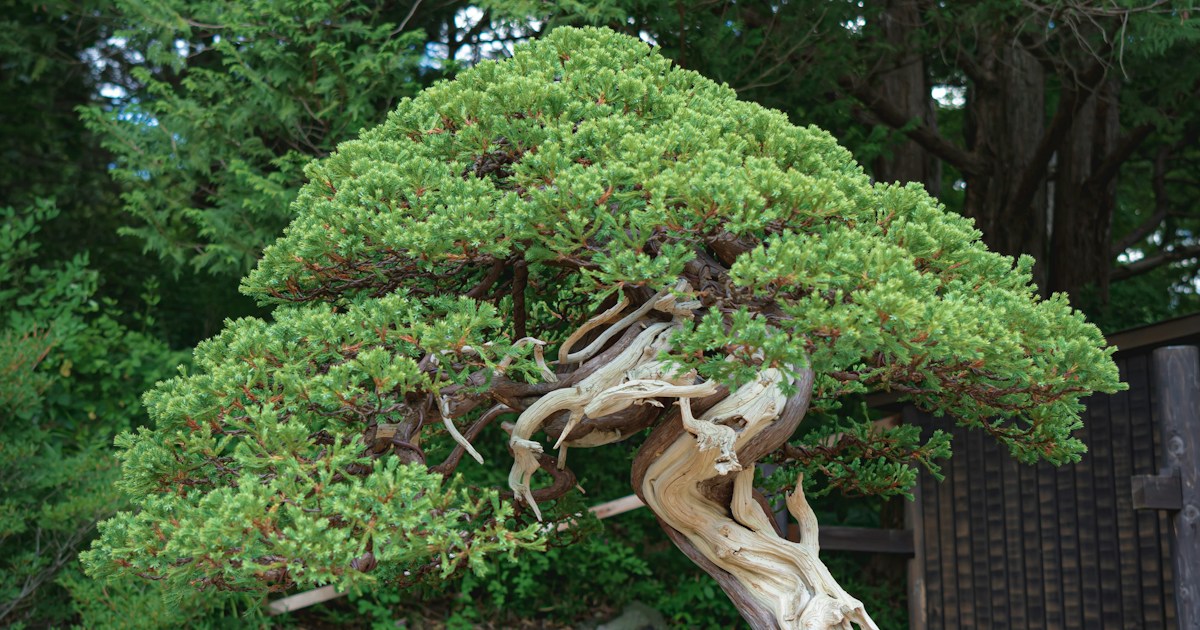
Defoliation is one of several techniques developed to manage the scale, density, and balance of a tree grown in a container. The goal is not to imitate a tree losing leaves in autumn; it is to influence growth while the tree is actively growing.
Modern bonsai references describe more than one approach. Some focus on removing all or most leaves to induce a second flush. Others recommend partial leaf removal to preserve vigor while admitting light and encouraging new shoots. The technique’s name may be shared, but the intended outcome and degree of leaf removal differ.
That distinction explains why advice can sound inconsistent. A method intended for a mature, highly ramified tree cannot automatically be applied to a young tree still building its trunk and primary branches. For background on broader care and styling, see our Bonsai for Beginners and Bonsai Inspiration and Ideas resources.
🌳 Which Bonsai Trees Can Be Defoliated?
Species suitability is only half the answer. A healthy, mature tree may tolerate a technique that would seriously weaken a younger or stressed specimen of the same species.
Bonsai Empire says that “most deciduous trees” can be defoliated, while also advising growers to check species-specific care information (Bonsai Empire). Graham Potter’s experience highlights how sharply results can vary between species and even between individual trees. So treat general lists as a starting point—not permission to defoliate every broadleaf tree in the garden.
Deciduous Species That Usually Respond Well
The species below are discussed in bonsai sources as possible candidates, but their suitability depends on the individual tree and the method used.
| Species or group | Practical perspective |
|---|---|
| Japanese maple (Acer palmatum) | Partial defoliation may improve light penetration and help protect interior growth. Avoid an aggressive approach on weak trees or intense heat. |
| Field maple (Acer campestre) | Graham Potter reports success with carefully timed defoliation and follow-up bud and branch selection. |
| Elm (Ulmus) | Some elms can respond vigorously, but species and growing conditions matter. Don’t assume all elms respond identically. |
| Linden (Tilia) | Bonsai4Me describes partial defoliation as a possible way to encourage ramification on vigorous trees. |
| Hornbeam (Carpinus) | Partial defoliation may be preferable; complete defoliation can produce an undesirable response in some trees. |
| Oak (Quercus) | Responses differ by species. Evergreen holm oak and deciduous oaks should not be treated as interchangeable. |
| Chestnut (Castanea) | The featured video describes partial removal on chestnut, while emphasizing adapting the technique to the tree’s vigor and canopy. |
The first video’s presenter removes foliage selectively from a chestnut and Japanese maple, emphasizing that the aim is to encourage a new flush and improve light in the canopy. In the chestnut example, roughly 50–60% of the leaves had been removed; in the Japanese maple example, the presenter discusses removing about 30–40% while taking care not to leave interior branches in deep shade. Those percentages are examples from individual trees, not universal prescriptions. Watch the featured video.
Evergreen and Tropical Bonsai: Use Extra Caution
Some broadleaf evergreens—including olive, boxwood, privet, and pyracantha—may be managed with partial leaf removal in particular circumstances. But evergreen species differ substantially from deciduous trees in growth rhythm and response. Timing advice for a field maple does not automatically apply to an olive or a tropical indoor bonsai.
Before trying leaf removal on an evergreen or tropical species:
- Check a reliable species-specific guide.
- Confirm the tree is actively growing and healthy.
- Use a conservative, selective approach unless you have evidence that the species and tree tolerate more.
- Avoid combining defoliation with other major stressors.
- Make sure its light, temperature, and watering needs are already being met.
Our Bonsai Care Basics section can help you review the essentials before attempting a refinement technique.
Trees That Should Not Be Defoliated
Skip defoliation if your tree is:
- Weak, sick, or struggling to grow.
- Recently repotted or recovering from root disturbance.
- Recovering from severe pruning, major wiring damage, pests, or disease.
- Still in early development and needing strong growth to build its structure.
- A species with a poor or uncertain response to leaf removal.
- Facing weather that leaves too little time for a new flush to mature.
Bonsai Empire advises against defoliating trees weakened by repoting, pruning, disease, or ongoing training (source). Graham Potter’s readiness test is memorable: “No back buds no bueno.” In other words, if a tree is not showing the strength and growth pattern needed to support the technique, don’t try to force it.
🗓️ When to Defoliate a Bonsai: Timing by Species and Climate
There is no universal calendar date. A date that works for an established tree in one climate may be too early—or dangerously late—in another.
The useful signals are the tree’s growth stage, the condition of its leaves, and the amount of warm growing season remaining. Bonsai Empire commonly points to June for many species, while Bonsai4Me describes midsummer timing around the pause after the spring flush. Graham Potter’s UK experience places the window roughly from late May to early July, depending on conditions. These are regional examples, not a worldwide schedule.
Best Season and Growth Stage
For deciduous species that tolerate defoliation, growers commonly wait until spring leaves have fully developed and hardened off. Soft, newly unfolding leaves are still vulnerable, and removing them before the tree has completed its spring growth can undermine the energy needed for the next stage.
Use this checklist rather than a date alone:
- The spring flush is complete.
- Leaves are mature and firm, not soft or still expanding.
- The tree is healthy and has shown strong growth.
- The tree has a suitable, established branch structure.
- There is enough warm weather ahead for new leaves to develop and harden.
A second flush needs time. Graham Potter describes a late-season hornbeam defoliation that failed to produce timely new leaves after cool weather arrived. That is a useful warning: a technique can be correctly performed and still fail if the weather turns against the tree (Graham Potter).
How Local Weather and Growing Conditions Change the Timing
Consider your local growing season—not the calendar used by a grower on another continent. A tree in a cool, cloudy climate may have a shorter reliable window for new growth than the same species in a warm region.
| Condition | Why it matters |
|---|---|
| Cool nights or an early autumn | New leaves may not have time to mature before growth slows. |
| Extreme summer heat | Exposed branches and bark may be more vulnerable to sun stress, especially after canopy removal. |
| Cloudy or low-light conditions | The tree may have less energy available for producing and hardening new leaves. |
| Strong spring growth | A vigorous tree may better positioned to respond than one that barely grew. |
| Species and local adaptation | Different species—and local populations—can have different growth rhythms. |
In short, defoliate by biological timing, not by copying someone else’s calendar. For local advice, a knowledgeable bonsai club or experienced grower can help interpret what your trees are doing in your climate.
🎯 Why Defoliate a Bonsai? Benefits and Realistic Expectations
Defoliation can serve several purposes, but it is not a guaranteed shortcut to tiny leaves or dense branching. Its most dependable value is often selective control: making a dense canopy more open, balancing vigorous and weak areas, or prompting a suitable tree to produce another flush.
Smaller Leaves, Better Light, and Improved Ramification
Possible benefits include:
- More light reaching inner branches, which may help maintain growth in shaded areas.
- A second flush of growth on suitable, vigorous trees.
- More opportunities for bud and shoot selection when new growth appears.
- Improved canopy balance by reducing strong growth in selected areas.
- Better access to the branch structure for inspection and styling.
Leaf size may decrease when a tree develops more growing points and spreads its available resources across more foliage—but defoliation alone does not reliably make leaves smaller. Branch density, species, health, growing conditions, and the overall refinement plan all contribute.
Bonsai4Me notes that partial defoliation can encourage shoots and improve ramification while retained leaves support the tree (Bonsai4Me). That is why we view it as one tool in a longer development plan—not a stand-alone leaf-size trick.
When Defoliation Will Not Solve the Problem
Defoliation will not:
- Build a strong trunk or primary branches as quickly as unrestricted growth can.
- Replace sound pruning, shoot selection, or species-appropriate care.
- Guarantee back-budding on a species or tree that does not reliably produce it.
- Correct poor light, bad watering, root problems, pests, or disease.
- Make every new leaf smaller than the old one.
- Turn a weak or underdeveloped bonsai into a refined tree overnight.
If your goal is a thicker trunk, allow appropriate growth rather than repeatedly removing foliage. If your goal is finer branching, focus on the long-term cycle of grow, select, prune, and repeat. Defoliation belongs later in that story.
🧭 Should You Defoliate? Tree Health and Readiness Checklist
Before picking up scissors, assess the tree as a whole. A full canopy can look like an invitation to defoliate; it can also be the tree’s hard-won energy supply.
Signs Your Bonsai Is Strong Enough
A candidate tree should generally show:
- Healthy, normal-colored foliage through the growing season.
- Vigorous spring growth appropriate for its species.
- A well-established root system and no recent major root work.
- A mature enough branch structure for the intended refinement.
- No active pest, disease, or serious environmental stress.
- A growing season long enough to support new leaves afterward.
Graham Potter recommends looking for strong water use while in leaf, good leaf retention, and natural back-budding as signs of vigor. These are useful observations, but they should be interpreted in context: water use changes with weather, pot size, and species.
When to Skip Defoliation
Do not defoliate to “fix” a tree that is already struggling. If leaves are yellowing unexpectedly, shoots are weak, branches are dying back, or the soil is staying wet for too long, find and address the underlying issue first.
| Situation | Safer choice |
|---|---|
| Recently repotted | Let the tree recover and rebuild root function before considering additional stress. |
| Weak spring growth | Preserve foliage and investigate growing conditions. |
| Early-stage development | Allow growth needed to build the trunk and main branches. |
| Unknown species or response | Research first; test conservatively only when the tree is strong. |
| Late season or approaching cold | Avoid prompting a flush that may not mature. |
If you’re unsure, leave the leaves on. A year of healthy growth is usually worth more than a gamble with the canopy.
✂️ How to Defoliate a Bonsai Tree: Step-by-Step Method
Start with a clear goal: are you opening a dense interior, reducing strong outer growth, or using a species-appropriate full-defoliation technique? Without a goal, it’s easy to remove leaves evenly just because they are there.
Tools and Preparation
Use clean, sharp tools designed for fine horticultural work. A small pair of Kikuwa bonsai scissors, Masakuni bonsai scissors, or a dedicated bonsai leaf cutter can make precise cuts easier. These are tool examples, not endorsements of one tool for every hand or budget.
Before you begin:
- Identify the species and confirm that defoliation is appropriate.
- Check that the tree is healthy and the timing is suitable.
- Decide which parts to reduce and which to protect.
- Clean the blades; sharp cuts are easier to control.
- Avoid combining the job with major root work or severe structural pruning.
Don’t buy a special tool thinking it replaces judgment. Clean scissors help; a good plan helps more.
1. Check the Tree and Choose Full or Partial Defoliation
Look at the whole canopy from several angles. Note:
- Which branches are strongest and extending fastest?
- Which inner or lower branches are shaded or weak?
- Where would more light improve the canopy?
- Are there shoots or buds you need to preserve?
- Is the tree developed enough for this refinement work?
For many growers, partial or selective removal is the safer starting point. Leave foliage on weak interior branches and avoid stripping the tree uniformly if its vigor is uneven.
2. Remove Leaves Without Damaging Buds
Use a species-appropriate method, and cut carefully:
- Hold the leaf gently so you can see its attachment point.
- Use sharp scissors to remove the leaf or petiole as recommended for that species and technique.
- Keep the blades clear of dormant buds, small shoots, and bark.
- Work slowly from one area to the next; pause to reassess rather than racing through the canopy.
- Do not tear leaves off or yank on the branch.
Advice differs on whether to leave leaf stalks. Bonsai Empire specifically says, “we do not remove the leaf-stalks,” recommending that the leaf itself be cut away while the stalk remains (Bonsai Empire). Graham Potter describes cutting the petiole, with the remaining stem drying and falling away. These are technique-specific instructions; follow the method recommended for your tree, and avoid damaging the bud at the leaf base.
For leaves attached directly to the branch, the handling method may also vary. Bonsai4Me describes a clean backward removal for some sessile-leaved species, while recommending scissors for species such as maple and linden that have petioles (Bonsai4Me). If you are inexperienced, scissors give you more control than pulling.
3. Balance Strong and Weak Branches
Don’t treat every branch equally. If the top or outer canopy is much stronger than the interior or lower branches, selective leaf removal may help admit light and reduce dominance. Preserve leaves on weak areas that need continued support.
A simple working map:
| Canopy area | Possible approach |
|---|---|
| Strong top or outer shoots | Consider selective leaf removal if the species and tree are ready. |
| Weak lower branches | Retain foliage to support growth. |
| Dense interior | Open selectively to improve light without stripping fragile growth. |
| Recently pruned or wired branches | Avoid adding unnecessary stress. |
In the featured video, the presenter removes foliage from vigorous outer growth while keeping some strong upper growth where needed to build structure. The lesson is not “remove the top” or “keep the top.” It is match the intervention to the design and vigor of that tree.
4. Finish with Careful Aftercare
Once the leaves are removed:
- Check the soil and water when needed; don’t follow a fixed schedule blindly.
- Protect the tree from harsh conditions if newly exposed leaves, bark, or branches are at risk.
- Avoid fertilizer or other interventions unless they fit the tree’s normal care plan.
- Monitor buds and shoots over the following weeks.
- If growth does not resume as expected, resist repeating the procedure or adding more stress.
The tree’s response is the real report card. A strong, timely flush is encouraging; stalled growth is a signal to focus on stability and care, not to double down.
🍃 How to Partially Defoliate for Better Bonsai Ramification
Partial defoliation is often a sensible way to manage a canopy while retaining some foliage. It is especially useful when you want to improve light penetration without putting every branch through the same degree of stress.
Which Leaves to Remove and Which to Keep
A common Bonsai4Me method for some deciduous species is to remove leaves behind the shoot tip while retaining a terminal leaf. The remaining leaf helps sustain the shoot while new growth develops. The exact method varies by species, so don’t apply this rule mechanically to every tree.
Consider:
- Keep leaves on weak shoots that need support.
- Reduce strong outer leaves that shade the interior.
- Leave some foliage near sensitive or developing areas.
- Avoid removing so much that the canopy loses all ability to support growth.
- Don’t cut every leaf in half as a substitute for proper leaf removal; that is a different technique.
The first video’s Japanese maple example makes the same practical point from another angle: removing a portion of vigorous foliage can allow more light inside, but stripping a densely foliated tree too aggressively may leave interior branches vulnerable.
Balancing Growth Across the Canopy
A bonsai canopy is not a flat hedge. Strong areas often dominate, while inner or lower growth can gradually weaken. Selective leaf removal can help even out that imbalance, but it should be paired with good light, appropriate pruning, and careful observation.
A useful sequence is:
- Identify the strongest shoots.
- Identify the weak or shaded areas worth preserving.
- Remove leaves selectively from vigorous regions.
- Keep enough foliage to support the weaker branches.
- Reassess light, growth, and canopy balance as new shoots develop.
Bonsai4Me’s approach emphasizes partial defoliation to maintain vigor while encouraging more branching (article). For growers who want to learn how styling decisions affect the overall composition, our Bonsai Display and Aesthetics category offers related reading.
💧 Bonsai Defoliation Aftercare: Water, Light, and Fertilizer
After defoliation, your watering routine may need attention because the tree has less leaf area and may use water differently. The answer is not “water less” or “water more” by default. Check the soil and the tree.
Watering and Sun Exposure After Leaf Removal
- Water thoroughly when the substrate and species indicate it is needed.
- Check moisture more frequently while the tree responds, especially in warm or windy weather.
- Avoid leaving the pot waterlogged.
- Protect the tree from scorching conditions if the sudden exposure creates a real risk.
- Don’t move a sun-loving outdoor species into deep shade without a reason.
Sources differ on shade. Bonsai Empire suggests shade after partial defoliation to protect newly exposed inner leaves in some conditions; Bonsai4Me recommends plenty of direct sunlight unless sun damage is a genuine risk. The sensible resolution is climate- and species-specific protection: use shade when harsh sun or exposed bark creates a hazard, but don’t deprive a healthy tree of the light it needs to grow.
Fertilizing, Protection, and Monitoring New Growth
Continue a suitable fertilizer routine for the species and season, but don’t use fertilizer to force a flush. A tree needs adequate light, functioning roots, and enough growing-season warmth. No bottle can compensate for missing those fundamentals.
Monitor:
- Bud swelling and new shoot development.
- Leaf color and normal growth.
- Soil moisture and drainage.
- Sun or wind damage on exposed areas.
- Signs of pests or disease.
Some growers use a protected greenhouse or sheltered position after defoliation; others keep the tree outdoors in its normal growing environment. Choose the setting that provides the right light, temperature, airflow, and protection for your species. Avoid a sudden change that adds more stress than the procedure itself.
⚠️ Defoliation Risks, Common Mistakes, and Recovery
Defoliation is a stress. A vigorous tree may respond well, but a weak tree can lose branches, fail to produce new leaves, or take a long time to recover. The risk is why we recommend restraint over bravado.
Overdefoliation and Repeated Defoliation
Removing leaves more than once in a growing season is not a safe routine for every tree. The video presenter says chestnut can tolerate two rounds in the example shown, but that is not a general rule. Double defoliation depends on species, tree vigor, climate, timing, and the success of the first flush.
Avoid:
- Repeating defoliation because the first result looks uneven.
- Removing all foliage from a tree with weak branches.
- Using leaf removal to compensate for poor light or neglected care.
- Assuming a tree that survived last year will automatically tolerate the same treatment this year.
- Copying a percentage from another grower without assessing your tree.
Sunburn, Weak Growth, and Unexpected Leaf Drop
A suddenly opened canopy can expose branches and bark to stronger sun. New leaves may also be tender and sensitive. Protection may be necessary during heat waves or in particularly intense sun, but excessive shade can also undermine the new flush.
If the tree does not produce new growth, possible causes include:
- Poor timing or an approaching cool season.
- Low vigor, root stress, or recent repoting.
- Unsuitable species or an overly aggressive technique.
- Insufficient light or a major weather change.
What to Do If Your Bonsai Struggles
If growth stalls or leaves wilt:
- Stop additional styling work.
- Check watering, drainage, light, and temperature.
- Protect the tree from extreme heat, wind, or cold as appropriate.
- Look for pests, disease, and signs of root or substrate trouble.
- Preserve any healthy foliage that remains.
- Seek species-specific help from an experienced grower if the decline continues.
Do not respond by immediately defoliating again, pruning harder, or feeding heavily. A stressed tree needs stable care and time to recover.
🔍 Defoliation vs. Leaf Pruning, Pinching, and Pruning
These techniques are related, but they do different jobs.
| Technique | What you remove | Typical purpose |
|---|---|---|
| Defoliation | Some or most leaves | Influence a new flush, improve light, or balance vigor in suitable trees |
| Leaf pruning | Individual leaves or leaf portions | Manage leaf size or light without necessarily removing the whole canopy |
| Pinching | Soft growing tips | Control extension and encourage branching, depending on species |
| Shoot pruning | New shoots or branches | Shape structure, manage extension, and select branch development |
| Structural pruning | Larger branches | Establish the tree’s basic design |
Defoliation does not replace pruning. In fact, some advanced methods coordinate defoliation with shoot selection and branch refinement. Graham Potter describes a broader sequence that includes leaf removal, pruning and selecting buds, and then managing the new flush. That more involved method is intended for developed trees and requires experience; it is not a reason to automatically prune every branch after defoliation.
🌿 Defoliation and Other Bonsai Techniques
The same tree can be affected by repoting, root pruning, wiring, shoot pruning, and defoliation. Stacking several demanding techniques in one short period can push the tree beyond what it can recover from.
How Defoliation Fits with Repoting and Root Pruning
Do not combine defoliation with recent repoting or substantial root pruning unless you have strong, species-specific guidance. Root work can reduce the tree’s ability to take up water and nutrients; leaf removal then adds another stress at the time the tree is trying to recover.
When in doubt, spread major work across seasons. Give the tree time to respond and regain vigor before considering another demanding technique. If you are still learning foundational care, our Bonsai for Beginners and Bonsai Care Basics guides are a better first stop than a pair of scissors.
Combining Leaf Removal with Wiring and Structural Pruning
Some experienced growers use the newly exposed branch structure to prune, select shoots, or wire. That can be efficient, but it increases the importance of timing and judgment. Freshly growing branches can be pliable—and easy to damage.
Before combining techniques:
- Make sure the tree is vigorous and established.
- Know which branches you intend to keep.
- Avoid unnecessary pruning or bending.
- Check wire frequently so it does not cut into growing branches.
- Prioritize the tree’s recovery over completing every styling task in one session.
Graham Potter’s method includes pruning and wiring as part of a structured refinement sequence. That is an advanced approach, not a requirement for every defoliation. For many trees, leaf removal alone is enough work for the day.
📅 Bonsai Defoliation Calendar and Seasonal Checklist
Use the calendar as a decision aid, not a fixed appointment. The correct timing shifts with species and climate.
| Stage | What to check | General action |
|---|---|---|
| Spring growth | Is the tree healthy and growing strongly? | Let the spring flush develop; don’t rush into leaf removal. |
| Leaves maturing | Are leaves fully formed and hardened? | Confirm species suitability and assess branch vigor. |
| Growing-season pause | Has extension slowed, with enough warm weather remaining? | Consider selective or species-appropriate defoliation only if the tree is ready. |
| After leaf removal | Are buds and shoots responding normally? | Maintain suitable water, light, and protection; avoid stacking major work. |
| Late growing season | Is there enough time for new growth to harden? | Avoid late defoliation if cool weather is approaching. |
| Autumn and dormancy | Did the tree recover and retain healthy growth? | Review the result; use it to guide next season’s plan. |
Before you start, ask three questions: Is this species suitable? Is this tree strong enough? Is there enough growing season left? If any answer is no—or you genuinely don’t know—keep the leaves on and learn more first.