Support our educational content for free when you buy through links on our site. Learn more

The secret to a stunning bonsai isn’t just following rigid rules, but understanding how to balance visual weight, asymetry, and naturalism to simulate centuries of growth in a single pot. These bonsai aesthetics principles transform a small tree into a living sculpture that tells a story of survival and time.
Imagine staring at a tiny pine that looks like it has weathered a hundred storms, its twisted trunk whispering tales of wind and snow. That illusion of age is the holy grail of our craft, and it’s achievable even with a sapling if you know where to look.
Most beginners focus solely on wiring branches, only to end up with a tree that looks like a plastic model. True mastery comes from seeing the “invisible hand” of nature and learning to hide your own.
Key Takeaways
- Visual Balance & Asymetry: Nature is rarely symetrical; use asymetrical designs to create dynamic movement and avoid a “staged” look.
- The Illusion of Age: Prioritize trunk taper, nebari (surface roots), and deadwood features to make a young tree appear ancient.
- Hiding the Artist: The ultimate goal is naturalism; scars, wire marks, and forced bends must be concealed or transformed into natural features.
- Proportion is King: Adhere to the Golden Ratio for trunk thickness and branch placement to ensure the tree looks miniature, not just small.
- Context Matters: Select a pot that complements the tree’s style and color, acting as the perfect frame for your living artwork.
Table of Contents
- ⚡️ Quick Tips and Facts
- 🌿 A Brief History of Bonsai Aesthetics: From Chinese Penjing to Japanese Zen
- 🎨 The Core Philosophy: Understanding Wabi-Sabi and the Art of Imperfection
- 📐 Mastering Visual Balance and Asymetry in Tree Design
- 📏 Proportion and Scale: The Golden Ratio in Miniaturization
- 🌳 Essential Structural Elements for Authentic Bonsai Aesthetics
- 1. Cultivating a Powerful Nebari (Surface Roots)
- 2. Achieving Fine Ramification and Branch Taper
- 3. The Art of Leaf Reduction and Foliage Pads
- 4. Integrating Deadwood: Jin, Shari, and Uro
- 🌲 Defining the Classic Bonsai Styles and Their Aesthetic Rules
- 1. Chokan: The Formal Upright Style
- 2. Moyogi: The Informal Upright Style
- 3. Shakan: The Slanted Style
- 4. Kengai: The Cascade Style
- 5. Han-Kengai: The Semi-Cascade Style
- 6. Bunjin: The Literati Style
- 7. Yose-ue: The Forest Planting Style
- 8. Seki-joju: The Root-Over-Rock Style
- 9. Ishizuke: The Rock-Planting Style
- 10. Hokidachi: The Broom Style
- 🖌️ The Invisible Hand: Hiding the Artist’s Touch for Naturalism
- 🧘 ♂️ Gravitas and Presence: Creating a Sense of Age and Stability
- 🔄 Flexibility in Rules: When to Break the Aesthetic Guidelines
- 🍂 Seasonal Aesthetics: Appreciating the Tree Through the Year
- 🏺 Pot Selection and Color Theory: Completing the Composition
- 🧪 The Science of Lignification and Texture Development
- 💡 Common Aesthetic Mistakes to Avoid
- 📚 Recommended Books and Resources on Bonsai Design
- ❓ Frequently Asked Questions About Bonsai Aesthetics
- 🔗 Reference Links and Further Reading
- 🏁 Conclusion: Finding Your Own Voice in the Garden
⚡️ Quick Tips and Facts
Before we dive into the deep end of trunk taper and deadwood carving, let’s hit the ground running with some golden nugets of wisdom that we’ve picked up over decades of soil-stained fingers and late-night wiring sessions at Bonsai Garden™.
- The “Front” is Non-Negotiable: Every single bonsai has a specific “front.” It’s the angle from which the tree looks its absolute best. The back? Often a chaotic mess of crossing branches and scars. Never display a tree without defining its front first.
- Age is the Goal: You aren’t just growing a small tree; you are simulating a centuries-old giant. If your tree looks like a cute sapling, you haven’t quite grasped the aesthetic yet. We want gravitas, not cuteness.
- The Rule of Thirds: Just like photography, the first major branch usually sits at the one-third mark up the trunk. Break this rule only if you are aiming for the ethereal, spindly look of a Bunjin (Literati) style.
- No Scars on the Front: If you prune a branch, the scar must be hidden at the back or disguised as natural damage. A visible scar on the front is like a typo in a masterpiece.
- Pot Matters: The pot is the frame for your painting. A mismatched pot can ruin a perfect tree. We’ll get into color theory later, but trust us: don’t put a delicate, flowering tree in a heavy, dark rectangular pot unless you know exactly what you’re doing.
Curious why some trees look “off” even when they follow all the rules? It often comes down to negative space. We’ll unravel the mystery of empty space and how it defines the tree’s shape in the “Core Philosophy” section.
For a deeper dive into the basics of keeping your tree alive while you work on its looks, check out our guide on Bonsai Care Basics. And if you’re just starting your journey, our Bonsai for Beginners section is your best friend.
🌿 A Brief History of Bonsai Aesthetics: From Chinese Penjing to Japanese Zen
You might think bonsai is purely Japanese, but the story starts way back in China with Penjing. These were miniature landscapes that often included rocks, water, and figurines, depicting entire worlds in a tray. The Chinese masters focused on fantasy and storytelling.
When these ideas traveled to Japan around the 12th century, the aesthetic shifted dramatically. The Japanese, influenced heavily by Zen Buddhism, stripped away the figurines and the fantasy. They wanted truth. They wanted to see the essence of a tree in a pot, stripped of distraction.
“The main aim of bonsai aesthetic practices is to create miniature trees with an air of age in their overall shapes, proportions, and details.” — Wikipedia
This shift birthed the concept of Wabi-Sabi: finding beauty in imperfection, impermanence, and the weathering of time. A scared trunk wasn’t a flaw; it was a story of survival. A twisted branch wasn’t a mistake; it was a battle with the wind.
At Bonsai Garden™, we often tell our students: “Don’t try to make a perfect tree. Try to make a real tree.” The history of bonsai is the history of learning to see the world through the eyes of a master who has watched a single tree for 20 years.
🎨 The Core Philosophy: Understanding Wabi-Sabi and the Art of Imperfection
So, what exactly is Wabi-Sabi? It’s a Japanese worldview centered on the acceptance of transience and imperfection. In bonsai, this translates to a few critical concepts:
- Asymetry: Nature is rarely symetrical. A perfectly round tree looks fake. A tree that leans, twists, and reaches for the light looks alive.
- Simplicity: Remove the unnecessary. No plastic flowers, no fake moss (unless it’s real moss), no clutter.
- Naturalness: The tree should look like it grew that way in the wild, not like it was forced into a shape by a human hand.
The “No Trace of the Artist” Rule
This is the holy grail of bonsai aesthetics. When you look at a masterpiece, you shouldn’t see the wire marks, the cut scars, or the forced bends. You should only see the tree.
- Scars: If you cut a branch, the wound must heal and blend in. We use concave cuters (like those from Spear & Jackson) to create hollow wounds that heal smoothly.
- Wiring: Wire is a temporary tool. Once the branch sets, the wire must come off. Leaving wire on too long leaves deep groves that ruin the bark’s texture.
- The Back: The “back” of the tree is where the artist’s mistakes are hidden. It’s the place where branches cross, where scars are visible, and where the tree might look a bit messy. Always present the front to the viewer.
Why do some trees look “staged” while others look wild? It’s often because the artist hasn’t mastered the art of hiding the work. We’ll discuss specific techniques for hiding scars in the “Deadwood” section.
For more inspiration on how to apply these philosophies to your own creations, visit our Bonsai Inspiration and Ideas category.
📐 Mastering Visual Balance and Asymetry in Tree Design
Balance in bonsai isn’t about making a tree look like a mirror image. It’s about visual weight. Imagine the tree as a seesaw. If the foliage is heavy on the left, you need something to counterbalance it on the right.
Static vs. Dynamic Balance
- Static Balance: Found in the Chokan (Formal Upright) style. The tree is symetrical, upright, and stable. It feels calm and dignified.
- Dynamic Balance: Found in Moyogi (Informal Upright) or Kengai (Cascade) styles. The tree leans, twists, or hangs. It feels like it’s in motion, fighting against gravity or wind.
The Role of Negative Space
This is the secret sauce that separates amateurs from pros. Negative space is the empty air between the branches and the trunk. It defines the shape of the tree just as much as the wood itself.
- Good Negative Space: Creates a sense of openness, age, and airiness. It allows the eye to travel through the tree.
- Bad Negative Space: Cluttered, random holes that make the tree look like a broccoli head.
Can you have too much negative space? Yes. If the gaps are too large, the tree looks sparse and weak. The key is ramification—the fine branching that fills the gaps with tiny twigs, creating a “cloud” of foliage.
📏 Proportion and Scale: The Golden Ratio in Miniaturization
One of the biggest mistakes beginners make is creating a tree with disproportionate elements. A thick trunk with tiny leaves? A thin trunk with massive branches? It looks wrong.
The Golden Ratio (1:1.618)
While nature doesn’t always follow math perfectly, the Golden Ratio is a great guideline for bonsai proportions:
- Trunk Taper: The trunk should taper from the base to the apex. A common rule is that the trunk diameter at the base should be roughly 1/6th to 1/8th of the tree’s height.
- Branch Placement: Branches should get smaller as they go up. The first branch is the largest, the second is slightly smaller, and so on.
- Leaf Size: Leaves must be reduced to match the scale of the tree. A full-sized maple leaf on a 6-inch tree looks ridiculous.
| Element | Ideal Proportion | Why It Matters |
|---|---|---|
| Trunk Diameter | 1/6 to 1/8 of tree height | Creates a sense of stability and age. |
| First Branch Height | 1/3 of tree height | Establishes the base of the foliage. |
| Branch Length | Decreases from bottom top | Mimics natural growth patterns. |
| Leaf Size | 1/3 to 1/2 of normal size | Ensures the tree looks miniature, not just small. |
What if my tree has huge leaves? Don’t panic! We’ll cover leaf reduction techniques in the “Essential Structural Elements” section. It’s a process, not a magic trick.
🌳 Essential Structural Elements for Authentic Bonsai Aesthetics
Now, let’s get our hands dirty. These are the physical components that make a bonsai look like a bonsai.
1. Cultivating a Powerful Nebari (Surface Roots)
Nebari is the visible root system at the base of the trunk. It’s the foundation of the tree. Without good nebari, the tree looks like it’s floating.
- Goal: Roots should radiate outward from the trunk in all directions (like spokes on a wheel).
- Avoid: Roots that cross over each other or grow straight down (taproots) without spreading.
- Technique: We often use air pruning or root pruning during repoting to encourage surface roots.
2. Achieving Fine Ramification and Branch Taper
Ramification is the process of splitting branches into smaller and smaller twigs. This creates the “cloud” effect.
- Taper: Branches must taper from thick at the base to thin at the tip.
- Technique: Regular pruning of new growth encourages back-budding (new buds on old wood), which leads to finer branching.
3. The Art of Leaf Reduction and Foliage Pads
Leaves must be small and to scale. Large leaves break the illusion of age.
- Defoliation: Cutting off all leaves in summer to force smaller, new leaves to grow.
- Pruning: Removing excess foliage to create distinct “pads” of green.
4. Integrating Deadwood: Jin, Shari, and Uro
Deadwood is the hallmark of age. It simulates lightning strikes, wind damage, or natural decay.
- Jin: Dead branches (usually at the top or sides).
- Shari: Deadwood on the trunk.
- Uro: Hollows or cavities in the trunk.
Is deadwood just for show? No. It adds texture and history. A tree with deadwood looks like it has survived storms and decades of harsh weather.
For detailed guides on how to perform these techniques safely, check out our Bonsai Care Basics section.
🌲 Defining the Classic Bonsai Styles and Their Aesthetic Rules
Bonsai styles are like genres in music. You can break the rules, but you need to know them first. Here are the classic styles and their specific aesthetic requirements.
1. Chokan: The Formal Upright Style
- Description: A straight, vertical trunk with symetrical branches.
- Aesthetic: Dignified, stable, and powerful.
- Rule: The trunk must be perfectly straight. Branches must alternate left and right, getting smaller as they go up.
2. Moyogi: The Informal Upright Style
- Description: A curved trunk that still ends upright.
- Aesthetic: Natural, dynamic, and graceful.
- Rule: The trunk curves in an “S” shape. Branches must follow the curve, never crossing the trunk line.
3. Shakan: The Slanted Style
- Description: The trunk leans significantly to one side.
- Aesthetic: Resilient, as if fighting against the wind.
- Rule: The roots on the leaning side must be exposed and strong to counterbalance the weight.
4. Kengai: The Cascade Style
- Description: The trunk grows downward, below the base of the pot.
- Aesthetic: Dramatic, waterfall-like.
- Rule: The apex must be lower than the bottom of the pot. The pot is usually tall and narrow to support the cascade.
5. Han-Kengai: The Semi-Cascade Style
- Description: Similar to Kengai, but the apex stays above the pot’s base.
- Aesthetic: Less dramatic, more balanced.
- Rule: The trunk curves downward but doesn’t go below the pot.
6. Bunjin: The Literati Style
- Description: A tall, slender trunk with very few branches, often with a twisted or curved shape.
- Aesthetic: Elegant, sparse, and intellectual.
- Rule: Branches are placed high up. The trunk is often bare for most of its length.
7. Yose-ue: The Forest Planting Style
- Description: Multiple trees planted in a single pot to mimic a forest.
- Aesthetic: Depth, perspective, and natural grouping.
- Rule: Trees must be of the same species. The largest tree is placed off-center (rule of thirds).
8. Seki-joju: The Root-Over-Rock Style
- Description: Roots grow over a rock and into the soil.
- Aesthetic: Tenacity, survival against odds.
- Rule: Roots must wrap tightly around the rock. No roots should be visible above the soil line.
9. Ishizuke: The Rock-Planting Style
- Description: Trees grow in the crevices of a rock.
- Aesthetic: Minimalist, rugged.
- Rule: Soil is minimal. The focus is on the interaction between root and stone.
10. Hokidachi: The Broom Style
- Description: A straight trunk that splits into many fine branches at the top, forming a round canopy.
- Aesthetic: Classic deciduous tree look (like an elm).
- Rule: The canopy must be symetrical and round. The trunk is straight.
Which style should you choose? It depends on your tree’s natural shape. Don’t force a straight trunk into a cascade style if it wants to be upright. Work with the tree, not against it.
🖌️ The Invisible Hand: Hiding the Artist’s Touch for Naturalism
We touched on this earlier, but it deserves its own section because it’s the difference between a “bonsai” and a “garden ornament.”
The Invisible Hand means that the viewer should never think, “Oh, someone wired that branch.” They should think, “Wow, that branch grew that way naturally.”
- Concealing Scars: Use jin and shari techniques to turn scars into deadwood features.
- Wire Removal: Always remove wire before it bites into the bark. If a scar forms, carve it into a natural-looking wound.
- Branch Placement: Avoid placing branches directly opposite each other (bilateral symmetry). Nature is random.
Why do some bonsai look “plastic”? Because the artist left visible wire marks or made cuts that are too obvious. The goal is seamlessness.
🧘 ♂️ Gravitas and Presence: Creating a Sense of Age and Stability
Gravitas is that feeling of weight, dignity, and age. A tree with gravitas looks like it has stood in the same spot for 10 years.
- Thick Trunk: A thick base implies age.
- Rough Bark: Smooth bark looks young. Rough, flaky, or cracked bark looks old.
- Low Center of Gravity: The tree should look grounded, not top-heavy.
- Deadwood: As mentioned, deadwood adds history.
How do you create age in a young tree? You can’t rush time, but you can simulate it. Use lignification techniques to thicken the trunk, and create deadwood features to add visual age.
🔄 Flexibility in Rules: When to Break the Aesthetic Guidelines
The rules are there to guide you, not to imprison you. Masters like Masahiko Kimura and Kunio Kobayashi often break the rules to create something unique.
- Breaking Symetry: Sometimes, a perfectly symetrical tree looks boring. A slight asymetry can add interest.
- Unusual Branch Placement: If a branch grows in a weird spot, maybe it’s a feature, not a bug.
- Species-Specific Rules: Some species, like pines, have different aesthetic requirements than maples.
When is it okay to break the rules? When you have a deep understanding of the rules and a clear artistic vision. Don’t break them just to be different; break them to create something better.
🍂 Seasonal Aesthetics: Appreciating the Tree Through the Year
A bonsai isn’t just a static object. It changes with the seasons.
- Spring: New leaves, flowers, and buds. The tree looks fresh and vibrant.
- Summer: Full foliage, dense pads. The tree looks lush and green.
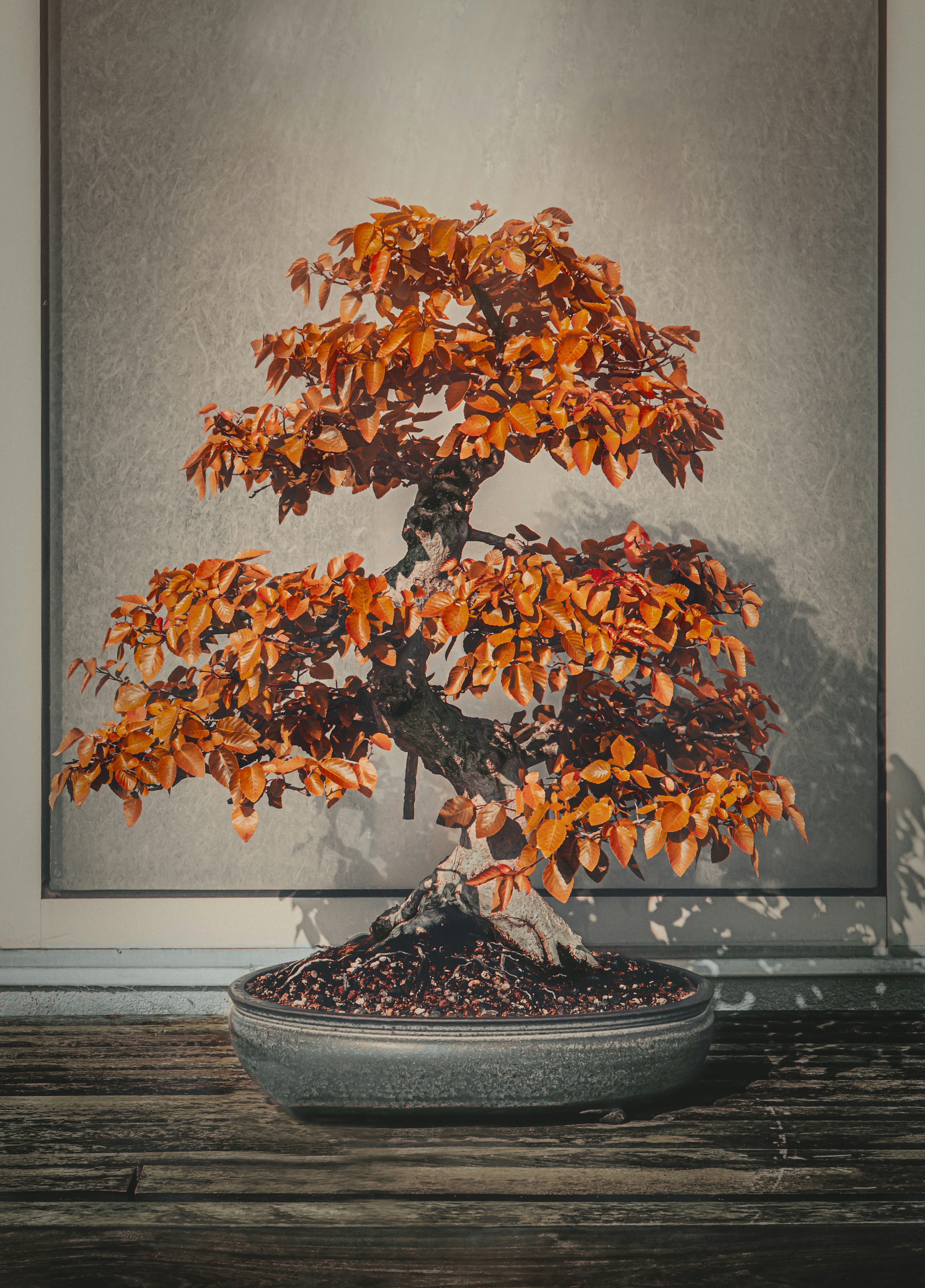
- Autumn: Changing leaf colors, fruit, and seed pods. The tree looks dramatic and colorful.
- Winter: Bare branches, deadwood, and structure. The tree looks skeletal and powerful.
Why is winter the best time to judge a tree? Because without leaves, you can see the structure, ramification, and nebari clearly. A tree that looks good in winter is a well-designed tree.
🏺 Pot Selection and Color Theory: Completing the Composition
The pot is the frame. If the frame is wrong, the picture is ruined.
- Color:
Earthenware (Red/Brown): Good for evergreens, conifers, and trees with dark bark.
Glazed (Blue/Green): Good for flowering trees, deciduous trees, and trees with light bark.
Un-glazed (Grey/Black): Good for rugged, old-looking trees. - Shape:
Rectangular: Formal, stable. Good for upright styles.
Oval: Natural, flowing. Good for informal styles.
Round: Soft, gentle. Good for delicate trees.
Square: Strong, geometric. Good formal styles.
What if I can’t find the perfect pot? Don’t settle for a bad one. A bad pot can ruin a great tree. It’s better to wait for the right pot than to force a mismatch.
🧪 The Science of Lignification and Texture Development
Lignification is the process of wood becoming hard and wody. This is crucial for creating the illusion of age.
- How it works: As the tree grows, the cells in the trunk and branches produce lignin, making them harder and thicker.
- Accelerating the process:
Sunlight: More sun = faster lignification.
Water Stress: Slight water stress can encourage the tree to thicken its trunk.
Pruning: Cutting back new growth forces the tree to thicken the remaining wood.
Can you speed up lignification? Yes, but be careful. Too much stress can kill the tree. It’s a delicate balance.
💡 Common Aesthetic Mistakes to Avoid
Even the best of us make mistakes. Here are the most common ones we see at Bonsai Garden™:
- Crossing Branches: Branches that cross in front of the trunk look messy.
- Parallel Branches: Branches that grow parallel to each other look unnatural.
- Too Many Branches: A tree with too many branches looks cluttered.
- Wrong Pot Size: A pot that is too big makes the tree look small and weak.
- Visible Scars: Scars on the front of the tree break the illusion.
- Ignoring the Back: Forgetting to check the back of the tree.
How do you fix these mistakes? Patience and pruning. It takes time to correct a bad design, but it’s worth it.
📚 Recommended Books and Resources on Bonsai Design
If you want to dive deeper, here are some of the best resources we recommend:
- “Principles of Bonsai Design” by David De Groot: A comprehensive guide to the rules and aesthetics.
- “The Art of Bonsai” by Peter Warren: A beautiful book with stunning photos and practical advice.
- “Bonsai Techniques” by John Naka: A classic book by one of the masters.
Where can I find more books? Check out our Recommended Links section for direct links to these titles.
❓ Frequently Asked Questions About Bonsai Aesthetics
How can I apply the principle of age to my bonsai design?
To apply the principle of age, focus on thickening the trunk, creating deadwood features (jin, shari), and ensuring fine ramification. The tree should look like it has survived storms and decades of growth. Avoid smooth bark and perfect symmetry.
What role does trunk taper play in bonsai aesthetics?
Trunk taper is crucial for creating the illusion of age. A trunk that tapers from thick at the base to thin at the top mimics a natural, mature tree. Without taper, the tree looks like a stick.
How do you balance visual weight in a bonsai tree?
Visual weight is balanced by distributing foliage, branches, and negative space. A heavy foliage pad one side should be counterbalanced by a branch or root on the other. The center of gravity should be low and stable.
How does asymetry contribute to bonsai design?
Asymetry creates a sense of movement and naturalism. A perfectly symetrical tree looks artificial. Asymetry mimics the way trees grow in nature, leaning and twisting in response to wind and light.
What are the three main principles of bonsai aesthetics?
The three main principles are:
- Balance: Visual weight distribution.
- Proportion: Elements must be to scale.
- Naturalism: The tree should look like it grew naturally.
How does trunk taper affect bonsai aesthetics?
Trunk taper affects the tree’s perceived age and stability. A well-tapered trunk looks old and strong, while a straight, uniform trunk looks young and weak.
What are the golden ratio guidelines for bonsai trunks?
The golden ratio suggests that the trunk diameter at the base should be roughly 1/6th to 1/8th of the tree’s height. This creates a pleasing proportion that mimics nature.
How do you achieve visual balance in a bonsai tree?
Achieve visual balance by ensuring that the foliage, branches, and roots are distributed evenly around the trunk. Use negative space to create a sense of openness and avoid clutter.
What is the rule of thirds in bonsai styling?
The rule of thirds suggests that the first major branch should be placed at the one-third mark up the trunk. This creates a pleasing composition and allows for proper foliage development.
Why is negative space important in bonsai composition?
Negative space defines the shape of the tree and creates a sense of age and openness. Without it, the tree looks like a solid mass of green.
How does asymetry apply to bonsai design?
Asymetry is used to create a sense of movement and naturalism. It prevents the tree from looking static and artificial.
What are the 5 main principles of bonsai aesthetics?
The five main principles are:
- Balance
- Proportion
- Naturalism
- Asymetry
- Age
🔗 Reference Links and Further Reading
For those who want to verify facts or dive deeper into the history and techniques of bonsai, here are some reputable sources:
- Wikipedia: Bonsai Aesthetics – A comprehensive overview of the core philosophy and guidelines.
- Bonsai Mirai Forum: Best Books on Bonsai Aesthetics – A discussion on the best resources for learning about bonsai design.
- Graziano Gardens: Bonsai for Beginners – A great resource for beginners looking to understand the basics.
Need more help? Check out our Bonsai FAQs for answers to common questions.
🏁 Conclusion: Finding Your Own Voice in the Garden
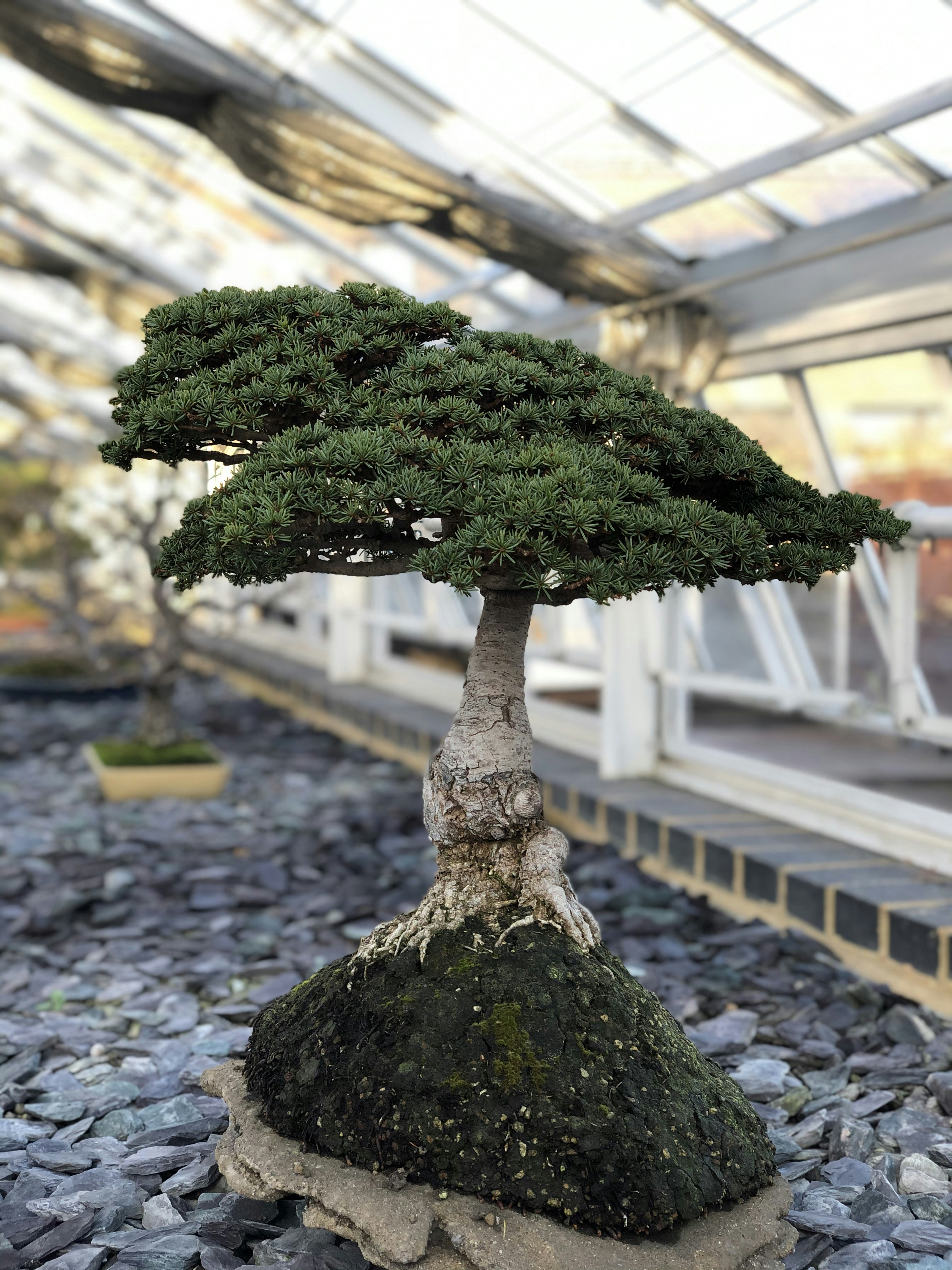
We’ve covered a lot of ground, from the history of Penjing to the nitty-gritty of lignification and deadwood. But here’s the thing: rules are meant to be broken.
The ultimate goal of bonsai aesthetics isn’t to create a perfect replica of a tree. It’s to create a connection between you, the tree, and the viewer. It’s about telling a story of survival, age, and beauty.
So, what’s your next step? Start by observing your tree. Look at its natural shape. Ask yourself: “What story does this tree want to tell?” Then, use the principles we’ve discussed to help it tell that story.
Remember, bonsai is a journey, not a destination. There’s always something new to learn, a new technique to master, and a new way to see the world.
Happy growing! 🌿✨