Support our educational content for free when you buy through links on our site. Learn more

The secret to a stunning bonsai wall isn’t just the shelf; it’s anchoring solid hardwood directly into wall studs to support the dynamic weight of wet soil. If you skip the engineering, your miniature masterpiece will crash to the floor, but get it right, and your floating shelves bonsai display becomes a living gallery that defies gravity.
We once watched a fellow grower’s prized 40-year-old Juniper take a plummeting dive because he trusted a hollow-core shelf rated for “decorative items” only. The shelf bowed, the bracket snapped, and the silence that followed was deafening. It was a harsh reminder that in the world of bonsai, aesthetics must never compromise structural integrity.
Did you know a standard 12-inch bonsai pot can weigh over 25 lbs when fully watered? That’s the weight of a large bag of dog food, suspended on a few inches of wood. Most store-bought shelves fail this test, designed for books, not living sculptures.
That’s why we’ve curated the ultimate guide to floating shelves bonsai display that actually works. From industrial pipe hybrids to custom live-edge slabs, we break down exactly which styles can handle the load and which will leave you sweeping up broken pottery.
Key Takeaways
- Safety First: Always anchor shelves directly into wall studs; drywall anchors alone cannot support the dynamic weight of watered bonsai.
- Material Matters: Choose solid hardwood or high-grade plywood over particle board to prevent warping from humidity and watering splashes.
- Light & Airflow: Maintain at least 12 inches of vertical spacing between shelves to prevent lower trees from being shaded and to ensure proper airflow.
- The Golden Rule: Your shelf’s weight capacity should be double the total wet weight of your heaviest display to ensure a safety margin.
- Aesthetic Balance: Use risers and negative space to create a dynamic composition rather than crowding the shelf with too many pots.
👉 Shop Top-Rated Heavy-Duty Floating Shelves:
- Industrial Pipe & Wood Shelves: Amazon | Wayfair
- Live Edge Solid Wood Shelves: Etsy | Amazon
- Adjustable Metal Bracket Systems: Home Depot | Lowe’s
Table of Contents
- ⚡️ Quick Tips and Facts
- 🌿 The Ancient Art Mets Modern Walls: A Brief History of Bonsai Display Evolution
- 🛠️ 10 Essential Floating Shelf Styles for Showcasing Your Miniature Trees
- 1. The Minimalist Single Plank: Less is More for Focal Pieces
- 2. The Multi-Tiered Ladder: Maximizing Vertical Space for Collections
- 3. The Corner Whisper: Utilizing Dead Space for Asymetrical Beauty
- 4. The Live Edge Statement: Bringing Nature’s Raw Texture Indors
- 5. The Industrial Pipe & Wood Hybrid: A Modern Urban Aesthetic
- 6. The Glass-Paneled Showcase: Protecting Delicate Foliage from Drafts
- 7. The Adjustable Bracket System: Flexibility for Growing Canopies
- 8. The Reclaimed Barnwood Charm: Rustic Warmth for Traditional Styles
- 9. The Teak & Mahogany Luxury: Water-Resistant Options for Humidity Lovers
- 10. The Custom Built-In Niche: Seamless Integration with Your Architecture
- 📐 7 Critical Measurements and Load-Bearing Secrets Every Gardener Must Know
- 🎨 5 Ways to Style Your Bonsai Wall for Maximum Visual Impact
- 🌡️ Balancing Light, Humidity, and Airflow on Wall-Mounted Displays
- 🔨 DIY vs. Store-Bought: Which Floating Shelf Route is Right for Your Collection?
- 🚫 6 Common Mounting Mistakes That Could Tople Your Precious Trees
- 🧐 What People Are Searching: Debunking Myths About Wall-Mounted Bonsai
- ❓ Frequently Asked Questions
- 🏆 Conclusion
- 🔗 Recommended Links
- 📚 Reference Links
⚡️ Quick Tips and Facts
Before we get our hands dirty (or rather, before we drill into your drywall), let’s hit the ground running with some non-negotiable truths about displaying your living sculptures on floating shelves. We’ve seen too many beautiful Ficus or Juniper specimens take a nosedive because the “floating” part was a bit too literal.
Here is the Bonsai Garden™ reality check:
- Weight is King: A standard 12-inch bonsai pot with soil and a medium-sized tree can easily weigh 15 to 25 lbs. A 24-inch shelf holding three of those? That’s nearly 75 lbs of dynamic load (plus the shelf itself). Most cheap, hollow-core floating shelves from big-box stores are rated for 10-15 lbs. Do not trust them.
- The “Hidden” Bracket Myth: True floating shelves rely on a solid internal frame (usually steel or heavy timber) anchored directly into wall studs. If the shelf just has a thin metal rod sticking out of the wall, it will bow under the weight of wet soil.
- Light vs. Depth: The deeper your shelf, the more likely your tree’s lower branches will be shaded by the shelf above it. For most species, a depth of 8 to 10 inches is the sweet spot. Anything deeper requires careful pruning or a staggered layout.
- Humidity Traps: While floating shelves look sleek, they can create a “micro-climate” where humidity gets trapped against the wall, potentially encouraging mold on the pot or the wall itself. Airflow is critical.
- The “Tool” Dilemma: As noted by Kyoto-based specialist Hiroshi Sato, your display should “whisper discipline, not shout inventory.” If you clutter your bonsai shelf with every pair of shears you own, you ruin the aesthetic. Keep tools to a maximum of 3 on the display shelf; store the rest in a cedar box below.
Pro Tip: Before you buy a single bracket, grab a stud finder. If you can’t hit a stud, you’ll need heavy-duty toggle bolts, but even then, studs are your best friend for anything over 10 lbs.
For more on the basics of keeping your trees healthy while they hang in the air, check out our guide on Bonsai Care Basics. And if you’re wondering how to integrate these displays into your home’s overall vibe, read our thoughts on Bonsai Display and Aesthetics.
🌿 The Ancient Art Mets Modern Walls: A Brief History of Bonsai Display Evolution
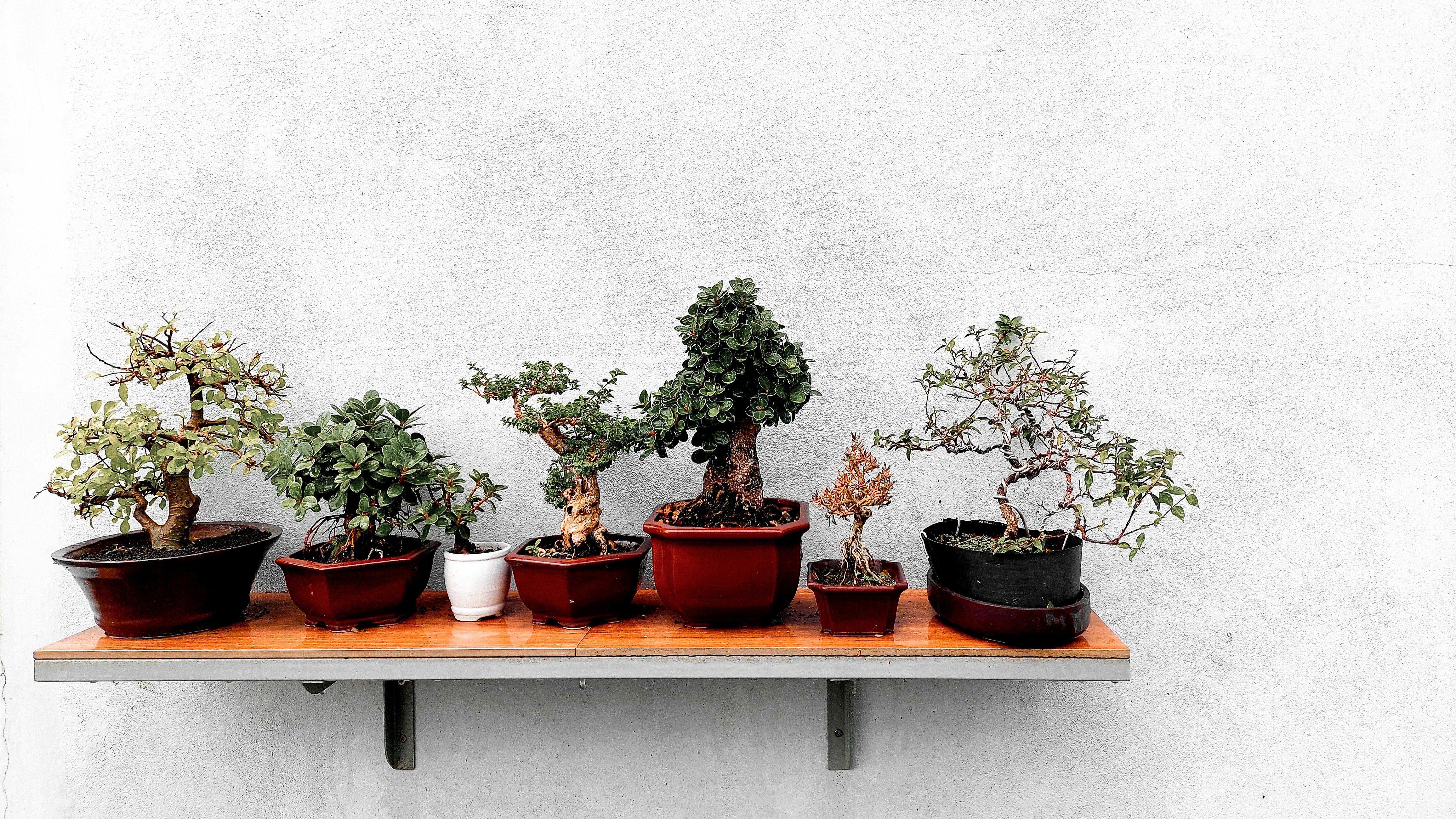
You might think putting a bonsai on a floating shelf is a modern, Instagram-friendly trend, but the concept of elevating our miniature trees is as old as the art form itself.
From the Hana-dana to the Floating Shelf
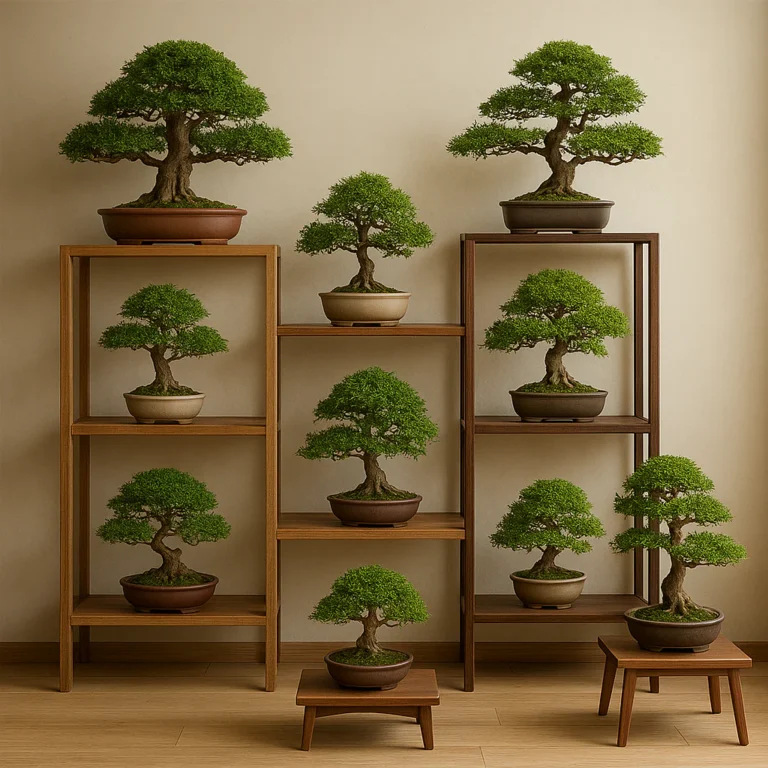
In traditional Japanese culture, bonsai were displayed on Hana-dana (flower shelves). These were often multi-tiered wooden structures, sometimes with glass doors, designed to protect the trees from wind and pests while showcasing them at eye level. The Hana-dana was a piece of furniture, a dedicated altar for the tree.
Fast forward to the 21st century, and our living spaces have shrunk. We don’t have room for a massive Hana-dana in a studio apartment. Enter the floating shelf. It’s the spiritual successor to the Hana-dana, stripped of the legs and the bulk, relying on the wall itself for support. It mimics the “floating” nature of the bonsai art form—where the tree appears to defy gravity, hovering in mid-air.
The Shift in Philosophy
Historically, the display was about protection. Today, it’s about integration. We want our bonsai to be part of the living room, the kitchen, or the home office, not hidden away in a greenhouse.
However, this shift brings a new challenge: structural integrity. Traditional Hana-dana had four legs distributing weight to the floor. Floating shelves transfer that entire load to a few inches of wood or metal embedded in the wall. This is why we see so many “floating shelf fails” online. The history of bonsai is one of patience; the history of floating shelves is one of engineering. You need both to succeed.
Did you know? The term “bonsai” literally means “planted in a container.” The container is part of the art. When you move that container to a floating shelf, you are essentially adding a second “container” (the shelf) to the composition. The shelf must complement, not compete.
For inspiration on how to blend these concepts, explore our Bonsai Inspiration and Ideas collection.
🛠️ 10 Essential Floating Shelf Styles for Showcasing Your Miniature Trees
Not all floating shelves are created equal. Some are designed for books, some for spices, and some are barely strong enough to hold a potted succulent. For bonsai, we need robust, aesthetically pleasing, and functional designs.
Here is our breakdown of the top 10 styles, rated on a scale of 1-10 for Design, Functionality, Load Capacity, and Ease of Installation.
| Shelf Style | Design Score | Functionality | Load Capacity | Ease of Install | Best For |
|---|---|---|---|---|---|
| 1. Minimalist Single Plank | 9 | 8 | 7 | 9 | Single focal trees (Shohin) |
| 2. Multi-Tiered Ladder | 8 | 9 | 8 | 6 | Collections, vertical gardens |
| 3. Corner Whisper | 7 | 7 | 6 | 7 | Asymetrical displays, small spaces |
| 4. Live Edge Statement | 10 | 6 | 7 | 5 | Traditional styles, rustic homes |
| 5. Industrial Pipe & Wood | 8 | 9 | 9 | 8 | Urban lofts, heavy pots |
| 6. Glass-Paneled Showcase | 6 | 5 | 5 | 4 | Delicate species, dust protection |
| 7. Adjustable Bracket System | 7 | 10 | 9 | 8 | Growing collections, flexibility |
| 8. Reclaimed Barnwood | 9 | 7 | 8 | 6 | Traditional, farmhouse aesthetics |
| 9. Teak & Mahogany Luxury | 8 | 8 | 9 | 7 | Humidity lovers, outdoor/indoor |
| 10. Custom Built-In Niche | 10 | 10 | 10 | 2 | Permanent installations, max weight |
1. The Minimalist Single Plank: Less is More for Focal Pieces
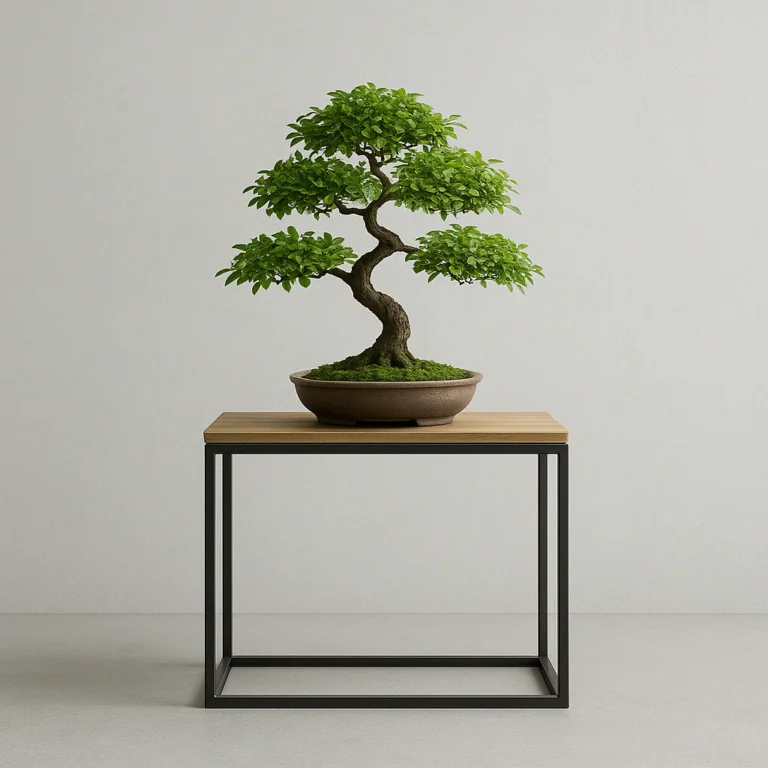
This is the classic “floating” look. A single slab of wood with no visible brackets.
- The Vibe: Clean, modern, and unobtrusive. It lets the tree be the star.
- The Catch: These often use a hidden steel rod. If the rod is too thin, the shelf will sag under a wet pot.
- Our Verdict: Perfect for a single Shohin or Mame bonsai. Avoid for large Ficus or Pine specimens unless the shelf is 2+ inches thick.
- Brand Spotlight: Look for the Vasagle Industrial Floating Shelf series on Amazon. They use a heavy-duty steel frame that actually holds weight.
👉 Shop Vasagle on: Amazon | Walmart | Vasagle Official
2. The Multi-Tiered Ladder: Maximizing Vertical Space for Collections
Why have one shelf when you can have three? Ladder-style floating shelves stack vertically.
- The Vibe: Dynamic and space-saving. Great for creating a “bonsai forest” effect.
- The Catch: The top shelf often blocks light for the bottom one. You must prune your trees accordingly.
- Our Verdict: Ideal for Shohin collections where light requirements are similar.
- Pro Tip: Stagger the depth. Make the top shelf shallower (6″) and the bottom deeper (10″) to ensure light penetration.
3. The Corner Whisper: Utilizing Dead Space for Asymetrical Beauty
Corner shelves are triangular or L-shaped, fitting snugly into a room’s corner.
- The Vibe: Unique and space-efficient. It turns a “dead zone” into a feature.
- The Catch: Finding a pot that fits the triangular shape can be tricky. Most bonsai pots are rectangular or oval.
- Our Verdict: Great for a single, statement tree. Not recommended for large collections.
4. The Live Edge Statement: Bringing Nature’s Raw Texture Indors
These shelves feature the natural, irregular edge of the wood.
- The Vibe: Organic, rustic, and deeply connected to the bonsai philosophy.
- The Catch: The uneven edge can make it hard to align pots perfectly. Also, live edge wood can warp if not properly sealed.
- Our Verdict: The best aesthetic match for traditional bonsai styles like Shohin or Bunjin.
- Brand Spotlight: Ash Deco offers stunning live-edge options that pair beautifully with bonsai.
👉 Shop Ash Deco on: Amazon | Ash Deco Official
5. The Industrial Pipe & Wood Hybrid: A Modern Urban Aesthetic
Combining black iron pipes with reclaimed wood.
- The Vibe: Grity, modern, and incredibly strong. The pipes provide visible support, which is great for heavy loads.
- The Catch: The industrial look might clash with a traditional Japanese aesthetic.
- Our Verdict: Perfect for modern bonsai styles or urban apartments. The visible pipes act as a psychological cue that “this shelf is strong.”
6. The Glass-Paneled Showcase: Protecting Delicate Foliage from Drafts
A floating shelf with a glass front or sides.
- The Vibe: Museum-like and protective.
- The Catch: Glass traps heat and humidity. If you live in a hot climate, this could cook your tree. Also, it blocks airflow.
- Our Verdict: Only use for indoor tropicals in climate-controlled rooms, and ensure there is a gap for air circulation.
7. The Adjustable Bracket System: Flexibility for Growing Canopies
Shelves that sit on brackets you can move up or down.
- The Vibe: Functional and adaptable.
- The Catch: The brackets are visible, which some purists dislike.
- Our Verdict: The practical choice for growers who are still shaping their trees and need to adjust heights as the canopy grows.
8. The Reclaimed Barnwood Charm: Rustic Warmth for Traditional Styles
Shelves made from old barn wood, often with a distressed finish.
- The Vibe: Timeless, warm, and earthy.
- The Catch: Older wood can have hidden rot or pests. Ensure it’s treated and sealed.
- Our Verdict: Excellent for Junipers and Pines that thrive in a rustic setting.
9. The Teak & Mahogany Luxury: Water-Resistant Options for Humidity Lovers
Shelves made from naturally water-resistant hardwoods.
- The Vibe: Luxurious and durable.
- The Catch: Expensive. Teak is pricey, but it won’t rot from watering splashes.
- Our Verdict: The best investment for humid environments or if you tend to over-water.
10. The Custom Built-In Niche: Seamless Integration with Your Architecture
A shelf built directly into the wall during construction or renovation.
- The Vibe: Architectural and permanent.
- The Catch: Requires professional installation and cannot be moved.
- Our Verdict: The ultimate display for a dedicated bonsai room.
Wait, which one should you pick? If you’re still unsure, keep reading. We’ll break down the load-bearing secrets that will save your tree from a painful fall.
📐 7 Critical Measurements and Load-Bearing Secrets Every Gardener Must Know
You’ve picked your style, but have you done the math? This is where the magic happens—or where the disaster strikes.
1. The “Wet Soil” Multiplier
A dry bonsai pot is light. A watered bonsai pot is heavy. Soil absorbs water like a sponge.
- Rule of Thumb: Add 30-40% to the dry weight of the pot and tree to get the wet weight.
- Example: A 10lb dry setup becomes 13-14 lbs when watered. If you have three trees, that’s 42 lbs of dynamic load.
2. The Stud is Non-Negotiable
Floating shelves must be anchored into wall studs.
- Studs: Usually spaced 16 or 24 inches apart.
- The Danger: If you anchor only into drywall with anchors, the shelf will pull out under the weight of a wet pot.
- Solution: Use a stud finder. If your shelf spans two studs, use a continuous steel bracket that screws into both.
3. Depth vs. Light Penetration
- Shallow (6-8″): Best for light penetration. Good for Shohin.
- Deep (10-12″): Better for large pots, but risks shading lower branches.
- The Fix: If you need depth, stagger your shelves. Don’t stack them directly above each other.
4. The Overhang Limit
How far can the shelf stick out from the wall?
- Standard: 8-10 inches is safe for most heavy-duty brackets.
- Danger Zone: Anything over 12 inches requires a cantilevered steel frame or a custom build. The leverage increases exponentially with depth.
5. The “Sag” Factor
Wood sags over time, especially under constant weight.
- Prevention: Use hardwood (Oak, Maple, Walnut) or plywood with a high-grade core. Avoid particle board or MDF; they will warp and crumble with humidity.
- Thickness: For a 24-inch span, use at least 1.5-inch thick wood.
6. The Wall Type Matters
- Drywall: Easy to drill, but needs studs.
- Brick/Concrete: Requires masonry bits and anchors. Much stronger, but harder to install.
- Plaster: Old houses often have lath and plaster. Be careful not to crack the wall.
7. The Safety Margin
Always aim for a shelf rated for 2x the weight you plan to put on it.
- Why? Because one day you might add a heavier pot, or the soil might be weter than usual.
- Our Recommendation: If your collection weighs 20 lbs, buy a shelf rated for 40 lbs.
Still worried about the weight? Let’s talk about how to style these shelves so they look amazing without compromising safety.
🎨 5 Ways to Style Your Bonsai Wall for Maximum Visual Impact
Now that your shelves are safe, let’s make them beautiful. Styling a bonsai wall is like composing a painting.
1. The Rule of Thirds
Don’t center every tree. Place the main focal tree at the left or right third of the shelf. Use a smaller accent plant or a suiseki stone on the opposite side to balance the visual weight.
2. Vary the Heights
Use risers or small wooden blocks under some pots to create height variation. This mimics the natural landscape and prevents the display from looking like a “parade of pots.”
3. The “Negative Space” Principle
Leave empty space on the shelf. A crowded shelf looks chaotic. A shelf with one beautiful tree and plenty of breathing room looks intentional.
4. Color Coordination
Match the pot color to the shelf or the wall.
- Red pots pop against a white shelf.
- Brown/Earth pots blend beautifully with a live edge wood shelf.
- Blue/Green pots stand out against a dark walnut shelf.
5. Lighting is the Secret Weapon
Install LED strip lights under the shelf above to cast a warm glow on the tree below.
- Tip: Use warm white (30K) LEDs to mimic sunlight. Avoid cool white, which makes the tree look sickly.
But what about the environment? A beautiful display is useless if the tree dies. Let’s discuss the critical balance of light, humidity, and airflow.
🌡️ Balancing Light, Humidity, and Airflow on Wall-Mounted Displays
This is the part where most people fail. They put a tree on a shelf, it looks great for a week, then it dies. Why? Micro-climates.
The Light Trap
If you stack shelves too close, the top shelf blocks light for the bottom one.
- Solution: Space shelves 12-18 inches apart vertically.
- Alternative: Use grow lights mounted above the top shelf, shining down through the gaps.
The Humidity Pocket
Watering a tree on a shelf can cause water to drip onto the shelf below, creating a damp spot that breeds mold.
- Solution: Use saucers under every pot.
- Pro Tip: Choose saucers that match the pot color to maintain the aesthetic.
The Airflow Block
If the shelf is too close to the wall, air can’t circulate behind the pot. This leads to root rot and pest infestations.
- Solution: Ensure there is at least 1 inch of space between the back of the pot and the wall.
- Design Hack: Use spacers or risers that lift the pot slightly off the shelf surface.
Ready to build? Whether you’re a DIY wizard or a “buy it ready-made” person, we’ve got you covered.
🔨 DIY vs. Store-Bought: Which Floating Shelf Route is Right for Your Collection?
The DIY Route
Pros:
- Customizable to exact dimensions.
- Can use solid hardwood for maximum strength.
- Cost-effective if you have tools.
- Quote from a DIY enthusiast: “I built my shelves with a T-shaped groove for hidden support. It’s rock solid.”
Cons:
- Requires tools (saw, drill, level).
- Risk of error (sloppy cuts, weak joints).
- Time-consuming.
The “Featured Video” Insight:
In the first YouTube video we analyzed, the creator demonstrated a T-shaped groove technique. By cutting a groove in the back of the shelf and inserting a wooden spacer, they created a hidden support structure that prevents saging. They also used a 10-degree bevel on the back edge for a clean look.
- Key Takeaway: If you DIY, do not skip the internal support. A hollow shelf will fail.
- Finish: Use Rubio Monocoat or a similar hard-wax oil for a durable, water-resistant finish that doesn’t look like plastic.
The Store-Bought Route
Pros:
- Instant gratification.
- Often comes with mounting hardware.
- Consistent quality (if you buy from a reputable brand).
Cons:
- Limited sizes.
- Often made of particle board or thin wood.
- Hidden brackets might not be strong enough for heavy bonsai.
Our Recommendation:
If you have 1-2 trees, a high-quality store-bought shelf (like Vasagle or Ash Deco) is fine. If you have a collection or large trees, DIY or custom-built is the only safe option.
But what if you mess up? Let’s talk about the common mistakes that lead to disaster.
🚫 6 Common Mounting Mistakes That Could Tople Your Precious Trees
We’ve seen it all. Here are the fatal errors to avoid:
- Anchoring Only into Drywall: This is the #1 cause of failure. Always hit a stud.
- Ignoring the Weight Limit: Buying a shelf rated for 10 lbs and putting 20 lbs on it.
- Using Particle Board: It swells and crumbles with humidity. Use solid wood or high-grade plywood.
- Skipping the Level: A croked shelf looks bad and puts uneven stress on the brackets.
- Overcrowding: Too many trees one shelf creates a “traffic jam” of roots and branches.
- Forgetting the Saucers: Water damage to your wall or floor is the last thing you want.
Still have questions? We’ve compiled the most common queries to help you navigate the rest of your journey.
🧐 What People Are Searching: Debunking Myths About Wall-Mounted Bonsai
Let’s bust some myths floating around the internet.
- Myth: “Floating shelves are just for decoration; they can’t hold real weight.”
Fact: With the right internal steel frame and stud anchoring, they can hold 50+ lbs. - Myth: “You can put any bonsai on a floating shelf.”
Fact: Only indoor species (Ficus, Jade, Chinese Elm) should be on indoor floating shelves. Outdoor species (Pine, Juniper) need outdoor conditions and cannot survive indoors on a shelf. - Myth: “Glass shelves are better because they let light through.”
Fact: Glass traps heat and humidity, which can kill the tree. Use open shelves for better airflow. - Myth: “You don’t need to worry about watering on a shelf.”
Fact: Watering on a shelf is harder. You need to be careful not to drip on the wall or the shelf below.
Curious about the specifics? Let’s dive into the FAQs.
❓ Frequently Asked Questions
Are there specific floating shelf designs that protect bonsai roots from drafts?
Yes. Shelves with a solid back panel or a glass enclosure can protect roots from cold drafts in winter. However, ensure there is ventilation to prevent mold. For most indoor bonsai, a standard open shelf with a saucer is sufficient.
How much weight can floating shelves hold for bonsai displays?
It depends on the mounting method.
- Drywall anchors only: 10-15 lbs (Not recommended for bonsai).
- Stud-mounted (standard): 30-50 lbs per shelf.
- Custom steel frame (stud-mounted): 10+ lbs.
- Rule: Always assume the shelf is rated for half of what the manufacturer claims to be safe.
What lighting works best for bonsai trees on floating shelves?
Full-spectrum LED grow lights are best. Place them 6-12 inches above the canopy. If using natural light, ensure the shelf is near a south-facing window. Avoid direct, scorching miday sun on indoor shelves.
How do I arrange multiple bonsai trees on a single floating shelf?
Use the Rule of Thirds. Place the largest tree at one end, a medium one in the middle, and a small one at the other. Vary the heights with risers. Leave negative space between them.
Can I use floating shelves for outdoor bonsai display?
Yes, but with caveats. You must use weather-resistant materials like teak, cedar, or metal. The mounting hardware must be stainless steel or galvanized to prevent rust. Ensure the shelf is rated for outdoor use.
What is the best way to secure floating shelves for heavy bonsai pots?
Use lag bolts directly into wood studs. If studs are not available, use toggle bolts rated for the weight, but studs are always preferred. For extra security, use a continuous steel bracket that spans multiple studs.
How do I choose the right floating shelves for displaying bonsai trees?
- Check the weight rating.
- Ensure it’s made of solid wood or high-grade plywood.
- Verify the mounting system (studs vs. anchors).
- Consider the depth (8-10 inches is ideal).
- Match the aesthetic to your home and tree style.
What weight capacity do floating shelves need for bonsai trees?
Calculate the wet weight of your heaviest pot and multiply by 1.5. If your heaviest tree is 20 lbs wet, you need a shelf rated for 30 lbs.
Can I use floating shelves outdoors for my bonsai collection?
Yes, but only if they are weather-proofed. Use teak, cedar, or powder-coated metal. Avoid untreated wood.
How do I secure floating shelves to hold heavy bonsai pots?
Lag bolts into studs are the gold standard. For concrete walls, use masonry anchors. Always use a level during installation.
What is the best height for floating shelves in a bonsai display?
The eye level is best. Place the main shelf at 5-6 feet from the floor. Lower shelves can be used for accent pieces.
How can I arrange multiple bonsai trees on floating shelves?
Follow the Rule of Thirds and vary heights. Use risers to create a dynamic composition.
Do floating shelves block enough light for growing bonsai trees?
They can if stacked too close. Ensure 12-18 inches of vertical spacing. Use grow lights if natural light is insufficient.
🏆 Conclusion
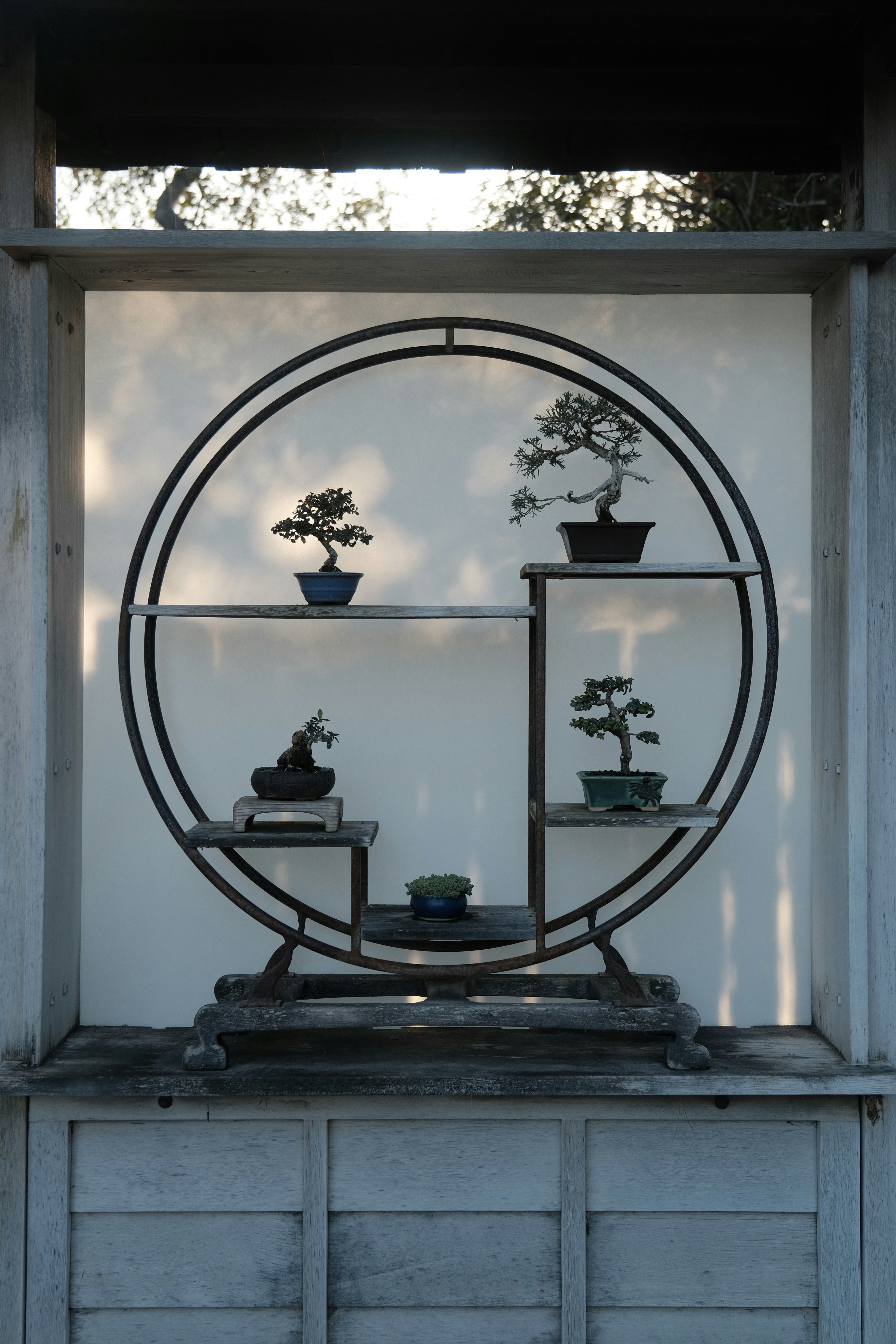
Displaying your bonsai on floating shelves is a beautiful way to integrate these living sculptures into your daily life. It’s a marriage of ancient art and modern engineering. But remember: safety first. A beautiful display is pointless if your tree takes a tumble.
Our Top Recommendation:
If you are a beginner, start with a high-quality, stud-mounted, solid wood shelf from a reputable brand like Vasagle or Ash Deco. If you are an advanced grower with a large collection, consider DIYing a custom shelf with a hidden steel frame and solid hardwood.
The Verdict:
- ✅ Do: Anchor into studs, use solid wood, leave space for light, and use saucers.
- ❌ Don’t: Trust drywall anchors for heavy pots, use particle board, or crowd your shelves.
As we said at the beginning, your shelf should whisper discipline, not shout inventory. With the right setup, your floating shelves will become a stunning focal point that honors the art of bonsai for years to come.
🔗 Recommended Links
👉 Shop for High-Quality Floating Shelves:
- Vasagle Industrial Floating Shelf: Amazon | Walmart | Vasagle Official
- Ash Deco Live Edge Wood Shelf: Amazon | Ash Deco Official
- Teak Outdoor Floating Shelf: Amazon | Wayfair
Books on Bonsai Display:
Tools for Styling:
- Concave Cuters: Amazon | Bonsai Empire
- Bonsai Saucers: Amazon
📚 Reference Links
- Bonsai Care Basics: Bonsai Garden™
- Bonsai for Beginners: Bonsai Garden™
- Bonsai Inspiration and Ideas: Bonsai Garden™
- Bonsai Display and Aesthetics: Bonsai Garden™
- Bonsai FAQs: Bonsai Garden™
- Hiroshi Sato’s Philosophy on Tool Styling: LifeTips Alibaba
- Facebook Community Discussion: Bonsai Wall Update with New Layout and Shelves
- DIY Floating Shelf Construction (Video Summary): YouTube Video