Support our educational content for free when you buy through links on our site. Learn more

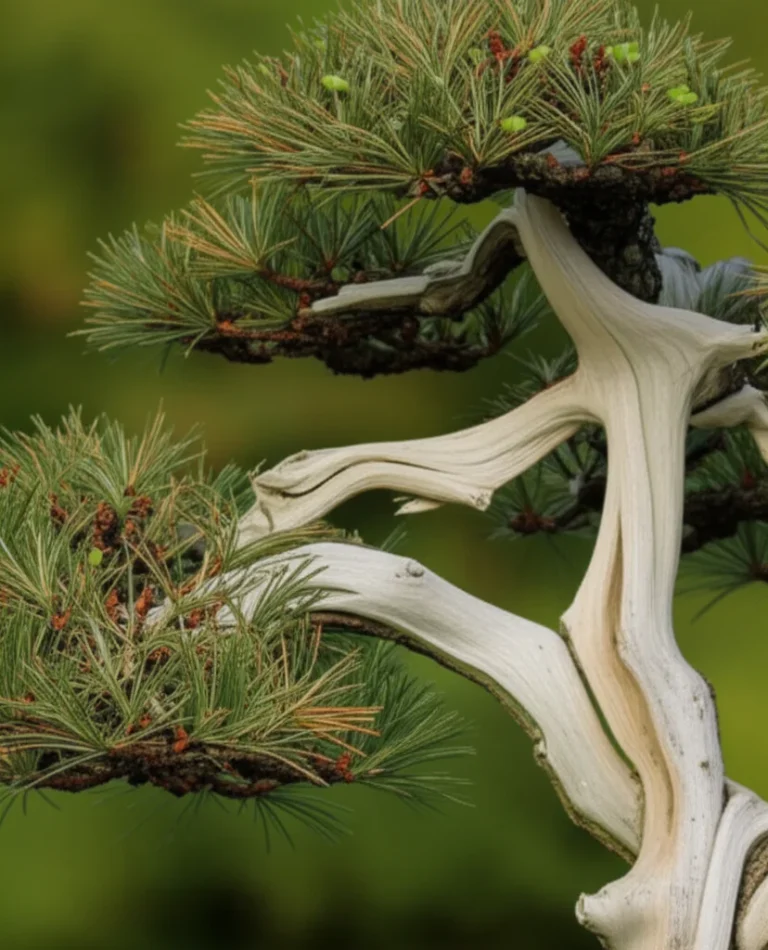
The Shari bonsai technique is a transformative art, allowing you
to imbue your miniature trees with the profound illusion of age, resilience, and a storied past. By intentionally creating striking deadwood strips on the main trunk, you can turn a young tree into a venerable masterpiece, reflecting centuries of struggle and
survival. Here at Bonsai Garden™, we’ve seen firsthand how a well-executed shari can elevate a bonsai from merely beautiful to truly breathtaking.
Imagine a majestic pine, its trunk scarred by lightning or years of harsh winds,
yet still thriving with vibrant foliage. That dramatic contrast between weathered, bleached wood and living bark is the essence of shari. It’s a testament to nature’s artistry, and with the right knowledge and tools, you can replicate this
powerful aesthetic in your own collection.
One of our head gardeners, Hiroshi, once spent an entire season studying a fallen ancient juniper in the mountains, meticulously sketching its deadwood patterns. He discovered that the most compelling shari wasn’
t just about the dead wood itself, but how it flowed seamlessly with the living veins, telling a complete story of life and death intertwined. This deep observation is what guides our approach to the Shari bonsai technique, ensuring every piece of dead
wood we create feels authentic and deeply rooted in nature’s wisdom.
Key Takeaways
Mastering the Shari bonsai technique is a rewarding journey that adds profound character and age to your trees. Remember these core principles:
Shari is trunk deadwood, a distinct art form from jin (dead branches) and uro (trunk hollows, often for deciduous trees). It’s about telling a story of resilience on the main trunk.
*
Choose the right species, with conifers like Junipers being ideal due to their durable wood and natural resistance to rot. Deciduous trees are generally less suitable for extensive shari.
- Utilize specialized tools such as
jin pliers, carving knives, and rotary tools for precise bark removal and shaping. - Preserve and protect your deadwood with horticultural lime sulfur, which bleaches the wood and prevents decay. Always apply with extreme caution to
avoid harming live veins or roots. - Prioritize live veins throughout the process; their preservation is critical for the tree’s survival and the overall aesthetic harmony of your shari design.
Table of Contents
- ⚡️ Quick Tips and Facts: Mastering Shari Bonsai
- 🌳 The Ancient Art of Deadwood: A Brief History of Shari in Bonsai
- What Exactly is Shari? Unveiling the Art of Trunk Deadwood
- Why Embrace Shari? The Rationale Behind Creating Aged Bonsai
- Shari vs. Jin vs. Uro: Deciphering Deadwood Differences in Bonsai Art
- The Elegant Jin: Deadwood Branches and Apexes
- The Enigmatic Uro: Hollows and Cavities in Bonsai Trunks
- The Majestic Shari: Creating Striking Trunk Deadwood Strips
- Choosing Your Canvas: Best Tree Species for Shari Creation
- Conifers: The Classic Choices for Dramatic Shari Effects
- Deciduous Trees: When Shari Can Still Shine
- The Art of Illusion: Natural vs. Artificial Shari Techniques
- Preparing for Perfection: Essential Tools and Materials for Shari Work
- Specialized Carving Tools: Nailing the Details of Deadwood
- Preservatives and Sealants: Protecting Your Masterpiece from Decay
- Safety First: Gear for Shari Artists and Bonsai Enthusiasts
- Step-by-Step Shari Creation: A Bonsai Garden™ Masterclass
-
2. Bark Removal: The Initial Strip Tease for Shari Development
-
3. Carving and Shaping the Deadwood: Adding Character and Naturalism
-
4. Whitening and Preserving: The Final Touches for Lasting Shari
-
5. Aftercare and Maintenance: Keeping Shari Pristine and Healthy
-
Common Pitfalls and How to Avoid Them: Shari Troubleshooting
-
Advanced Shari Techniques: Pushing the Boundaries of Bonsai Art
-
Driftwood Styles: Incorporating Natural Elements into Bonsai
-
Integrating Shari into Overall Bonsai Design: Harmony and Balance
-
Displaying Your Shari Masterpiece: Lighting and Background Considerations
⚡️ Quick Tips and Facts: Mastering Shari Bonsai
Welcome, fellow bonsai enthusiasts, to Bonsai Garden™! We’re thrilled
to share our passion and expertise in the captivating world of shari – the art of creating stunning deadwood on your bonsai’s trunk. This isn’t just about stripping bark; it’s about telling a story of resilience, age, and
natural beauty. Ready to transform your trees into living sculptures? Let’s dive in!
- What is Shari? ✅ It’s the intentional creation of deadwood strips on the main trunk of a living bonsai
, exposing the underlying wood. Think of it as a natural scar, telling tales of survival. - Why Shari? 🤩 It dramatically enhances the illusion of age, austerity, and a
tree’s struggle against the elements. It can also cleverly hide imperfections! - Best Species? 🌲 Conifers, especially Junipers like the Chinese Juniper, are prime candidates due to their durable
wood and ability to retain dead limbs. Deciduous trees? Not so much, as their deadwood tends to rot. - Key Principle? 💡
Preserve the live veins! You must carefully identify and protect the cambium strips that transport nutrients to the living branches. Interrupting these lifelines is a recipe for disaster. - Tools of
the Trade? 🛠️ You’ll need specialized carving tools, jin pliers, and, crucially, lime sulfur for preservation and bleaching. - Patience is a
Virtue! ⏳ Creating natural-looking shari is a gradual process that can take years. Don’t rush it; slow and steady wins the bonsai race! - Safety First!
⚠️ Lime sulfur is potent. Always use it carefully and keep it away from roots. If in doubt, seek expert guidance.
🌳 The Ancient Art of Deadwood: A Brief History of Shari in Bonsai
Imagine gazing upon an ancient tree
, battered by storms, sculpted by wind, yet still thriving. That raw, untamed beauty, the stark contrast between weathered wood and vibrant foliage, is what the art of shari seeks to capture in miniature. Here at Bonsai Garden
™, we’ve always been fascinated by the stories trees tell, and deadwood techniques are perhaps the most eloquent storytellers of all. If you’re curious about how we cultivate these living masterpieces, you can learn more about us at Bonsai Garden.
The practice of incorporating deadwood into bonsai isn’t a modern fad; it’s deeply rooted in the history and philosophy of bonsai itself
. For centuries, artists have observed nature’s handiwork – lightning strikes, falling branches, harsh winters – and sought to replicate these powerful effects. The goal? To evoke the profound sense of age, resilience, and the sheer will
to survive that characterizes old trees in their natural habitats. This illusion of age, austerity, and survival through adversity is a core aesthetic principle in bonsai. It’s about creating a miniature landscape that feels ancient, even if the
tree itself is relatively young.
What Exactly is Shari? Unveiling the
Art of Trunk Deadwood
So, what exactly are we talking about when we say “shari”? Simply put, shari is deadwood created on the main trunk of a living bonsai tree. It’s not
just any dead wood, though. Typically, it appears as a small, shallow, vertical strip on or near the front of the trunk, where it can be admired. While you could create sh
ari on the rear, it has limited visual value there and might even be hidden by branches, so we generally focus on the more visible areas. The magic lies in the fact that this exposed, non-living wood
remains beautifully surrounded by living bark, creating a striking visual tension.
Think of it as the tree’s battle scars, proudly displayed. These aren’t just random patches; they are carefully designed and crafted
elements that tell a story of the tree’s journey. Whether caused by a falling branch tearing bark, a lightning strike, or other external trunk damage in nature, shari can occur naturally or be deliberately created by carving away bark. It’s a testament to the tree’s enduring spirit, a stark contrast between life and the passage of time.
Why Embrace Shari? The Rationale Behind Creating Aged Bonsai
Why would we, as dedicated bonsai gardeners, intentionally create “dead” sections on our beloved trees? It might seem counterintuitive at first
, but the reasons are deeply rooted in the aesthetic principles of bonsai. The primary goal of shari is to enhance the illusion of age, austerity, and survival through adversity. When you see a bonsai with well
-executed shari, it instantly transports you to a windswept mountain peak or a harsh, ancient landscape, where trees have battled the elements for centuries. That’s the power of this technique!
Beyond this powerful illusion, shari serves
several practical purposes. It can be a clever way to hide defects such as an oversized or poorly positioned branch scar, transforming a flaw into a feature. We’ve even used it to help disguise the
original trunk after reducing a tree’s height, seamlessly integrating the new design with the old. Furthermore, retaining existing deadwood can preserve the tree’s overall shape and aged appearance, giving it a sense of history
and permanence. As one expert noted, “the unusual combination of large dead areas contrasting with small signs of life is compelling.” It’s this dynamic interplay between life and death,
strength and vulnerability, that makes shari so captivating.
Shari vs
. Jin vs. Uro: Deciphering Deadwood Differences in Bonsai Art
Alright, let’s clear up some common confusion! In the world of bonsai deadwood, “shari” often gets lumped in with its cousins, “jin
” and “uro.” While all three involve exposing non-living wood, they each have distinct characteristics and applications. Understanding these differences is crucial for any aspiring bonsai artist. Think of them as different chapters in a tree’s life story, each revealing
a unique aspect of its journey.
The Elegant Jin: Deadwood Branches and Apexes
Ah, jin! This is perhaps
the most widely recognized form of deadwood. Jin refers specifically to deadwood created on a branch or the trunk leader (apex). We achieve this by removing the bark completely from a selected branch or the
very top of the trunk, allowing the remaining wood to dry and die. The goal is to simulate a branch that has naturally died back due to harsh conditions, age, or damage.
Jin can be incredibly versatile.
A top jin, for instance, can effectively shorten a tree, improve its taper and proportions, or even redirect vigor to lower branches. It’s also a fantastic way to resolve an unattractive twin-leader
structure, giving the tree a more defined apex. We often use jin pliers to strip the bark and then carve the exposed wood to create a weathered, natural look. The first YouTube video in this article demonstrates the
process of creating jin, highlighting the use of branch cutters, a grafting knife, jin pliers, and lime sulfur solution to achieve that bleached, deadwood effect.
The Enigmatic Uro: Hollows and Cavities in Bonsai Trunks
Next up, we have uro. This technique focuses on creating
small, irregular hollows or indentations in the trunk. Uro imitates the natural wounds left when a deciduous or broadleaf branch dies and falls away, leaving a cavity that gradually weathers and deep
ens over time. These hollows add incredible character and depth, suggesting the passage of many seasons and the tree’s interaction with its environment.
Creating uro requires a delicate touch, often involving carving tools to
scoop out sections of wood and then refining the edges to look natural. It’s about creating a subtle detail that draws the eye in, hinting at hidden stories within the trunk.
The Majestic Shari: Creating Striking Trunk Deadwood Strips
And finally, our star: shari! As we’ve discussed, shari is
the deadwood created specifically on the main trunk of a living bonsai. Unlike jin, which focuses on branches, or uro, which creates hollows, shari involves stripping bark from the
trunk to expose vertical strips of deadwood. This technique is all about creating that dramatic, weathered appearance that mimics the effects of lightning, drought, or severe cold.
The key distinction
, as the Steemit article points out, is that “Shari, is the removal of bark from a tree,” referring to the trunk, while “Jin is the stripping bare of branches.” Shari is a powerful
visual element that can define the entire character of a bonsai, making it appear ancient and resilient. It’s a bold statement, and when done correctly, it’s absolutely breathtaking.
Choosing Your Canvas: Best Tree Species for Shari Creation
Not all trees are created equal when it comes to the art of shari. Just as a painter selects the
right canvas for their masterpiece, we bonsai artists must choose the appropriate tree species to ensure our deadwood creations are both stunning and sustainable. This is where understanding your tree’s natural tendencies becomes paramount. For more general guidance on selecting the right tree,
check out our Bonsai for Beginners section!
Conifers: The Classic Choices for Dramatic Shari Effects
When it comes to dramatic deadwood effects like shari, conifers are the undisputed champions. Why? Their wood is naturally durable, resistant to rot, and often develops a beautiful, silvery patina when exposed to the elements. They also tend to retain dead limbs that weather naturally, providing excellent inspiration for our designs.
Our absolute favorites for shari include:
- Junipers (Juniperus species): These are the rockstars of deadwood bonsai! Species like the Chinese Juniper (Juniperus chinensis) are highly
recommended because they can tolerate substantial work in one session and multiple applications over time. Their wood carves beautifully, and they develop that iconic bleached, ancient look. We’ve had incredible success with ‘Itoigawa
‘ foliage grafted onto Western Junipers, creating stunning contrasts between living veins and deadwood. - Pines (Pinus species): While perhaps not as dramatic as junipers for extensive shari, pines
can also develop wonderful deadwood, especially on older specimens. Their bark can be carefully removed to expose the underlying wood, which then weathers beautifully. - Spruces (Picea species): Similar to pines, spruces can
offer good opportunities for shari, particularly for creating more subtle, aged effects.
The key with conifers is their inherent ability to compartmentalize damage, meaning the deadwood areas remain stable while the live veins continue to thrive. This makes them incredibly
forgiving for shari work, allowing us to create intricate and long-lasting designs.
Deciduous Trees: When Shari Can
Still Shine
Now, for the tricky part: deciduous and broadleaf trees. Generally, these species are not ideal candidates for extensive shari. Why? Because deciduous trees naturally shed dead branches and
tend to heal over wounds, their deadwood is prone to rotting and falling away, often appearing unnatural. The Steemit article strongly advises against applying jin and shari techniques to deciduous bonsai for this very reason.
However, this doesn’t mean deadwood is entirely off-limits! For deciduous trees, we often focus on uro (hollows) or sabamiki (split trunks)
to create a sense of age and drama, as these effects are more consistent with their natural aging process. If you do attempt shari on a deciduous tree, it typically requires more deliberate shaping and rigorous preservation to prevent decay. It’s
a challenge, but for experienced artists, it can yield unique results. Just be prepared for a higher level of maintenance and a different aesthetic outcome compared to conifers.
The Art of Illusion: Natural vs. Artificial Shari Techniques
The beauty of shari lies in its ability to tell a story of time and resilience. But how does that story begin
? Does nature always have to take the lead, or can we, as bonsai artists, lend a helping hand? The answer, delightfully, is both! Shari can occur naturally, or it can be deliberately created through careful artistic intervention. The ultimate
goal, regardless of the origin, is to create an illusion so convincing that it’s hard to tell where nature ends and art begins.
In the wild, shari is often the result of dramatic events. Imagine a mighty oak struck
by lightning, leaving a scorched, dead strip down its trunk. Or a powerful gust of wind tearing a branch from a tree, ripping bark away and exposing the raw wood beneath. Even simple external trunk damage can
lead to natural shari formation. These natural occurrences create unique, often chaotic, patterns that speak volumes about the tree’s survival.
As bonsai artists, our job is to **mimic these natural processes
** with precision and artistry. We deliberately create shari by carefully carving away bark, exposing the underlying wood, and then shaping it to resemble the effects of natural weathering. This “artificial” shari isn’t about f
aking it; it’s about understanding the principles of natural decay and applying them thoughtfully to our miniature trees. We strive for realism, ensuring that our created deadwood looks as if it has been sculpted by the elements over decades, if not centuries.
It’s a delicate dance between control and chaos, where our hands guide the process to achieve a naturally aged aesthetic.
### Preparing for Perfection: Essential Tools and Materials for Shari Work
Before you embark on your shari journey, it’s crucial to gather the right arsenal of tools and materials. Think of yourself as a sculptor, and your bonsai
as the raw marble. You wouldn’t attempt a masterpiece with a butter knife, would you? The right equipment not only makes the process easier but also ensures the health and longevity of your tree. For more general bonsai care tips, visit
our Bonsai Care Basics section.
Specialized Carving Tools: Nailing the Details of Deadwood
This is where the real artistry happens! To create convincing shari, you’ll need tools that allow for precision and control.
Jin Pliers: These are your workhorses for stripping bark and creating those initial deadwood effects. They’re designed to grip and tear bark effectively. While the Steemit article notes that “this tool is
not cheap,” we at Bonsai Garden™ consider them an indispensable investment for serious deadwood work.
- 👉 Shop Jin Pliers on: Amazon | Etsy
- Grafting Knife: Essential for making clean cuts
and carefully shaving away bark and cambium layers, especially when defining the edges of your shari. A sharp grafting knife gives you incredible control. - 👉 Shop Grafting Knives on: Amazon | Walmart
- Branch Cutters: While primarily for removing unwanted branches, they’re crucial for making clean initial cuts before you start stripping bark for jin or shari.
- 👉 Shop Branch
Cutters on: Amazon | Walmart - Graving Chisels, Burins, and Blades: These specialized carving tools are fantastic for adding intricate detail and texture to the exposed wood, mimicking natural wood grain and weathering. We
use a variety of sizes and shapes to achieve different effects. - 👉 Shop Bonsai Carving Tools on: Amazon | Etsy
- Small Rotary Power Tools (e.g., Dremel): For more aggressive carving, grinding,
and shaping, a rotary tool with various bits can be a game-changer. It allows us to create deeper grooves and more dramatic contours quickly. - 👉 Shop Dremel Rotary Tools on: Amazon | Walmart |
Dremel Official Website - Gas Torch: A gas torch can be used sparingly to burn away fine fibers and raise the grain of the wood, adding to the weathered
appearance. Use with extreme caution! - Wire Brushes and Sanding Tools: After carving, these are essential for removing tool marks and further simulating the smooth, bleached effects of natural weathering. Sandpaper, as mentioned in the Steemit article, is used after bark removal to smooth the exposed wood.
- 👉 Shop Bonsai Wire Brushes on: Amazon
- 👉 Shop Sandpaper on: Amazon |
Walmart
Pres
ervatives and Sealants: Protecting Your Masterpiece from Decay
Exposing deadwood is only half the battle; you must also protect it from the elements and pests. This is where preservatives come in.
- Horticultural Lime Sulfur
: This is the most common and arguably the most important preservative for shari. It serves a dual purpose: it bleaches the wood uniformly to resemble aged, weathered timber, and it prev
ents rot and pest infestation. The Steemit article emphasizes its role in preventing infection and decay. - Application: Apply with an artistic paintbrush; a smaller
brush is generally safer and more precise. - Caution: Lime sulfur is potent! It can kill the tree if it contacts the roots, so extreme care is needed. The
Steemit article stresses that “lime sulfur work should be performed by experts.” - 👉 Shop Horticultural Lime Sulfur on: Amazon | Garden Supply Stores
- Wood Hardener/Se
aler (Optional): For very soft wood or specific effects, some artists might use a wood hardener before lime sulfur, though this is less common for traditional shari.
Safety First: Gear for Shari Artists and Bonsai Enthusiasts
Working with sharp tools and potent chemicals demands respect and proper safety measures.
- Gloves:
Always wear sturdy gloves, especially when handling lime sulfur, to protect your skin. - Eye Protection: Carving wood can send splinters flying. Protect your eyes with safety glasses or goggles.
- Mask/Respirator:
When using power tools or applying lime sulfur in enclosed spaces, a mask can protect you from dust and fumes. - First Aid Kit: Accidents happen. Have a basic first aid kit on hand for minor cuts and scrapes.
Remember
, “If you do not know how to do this, get an expert to do it for you—especially if you have an old, valuable tree.” Your safety and the health of your bonsai are paramount!
Step-by-Step Shari Creation: A Bonsai Garden™ Masterclass
Alright, you
‘ve got your tools, you’ve chosen your tree, and you’re brimming with anticipation! Now, let’s get down to the nitty-gritty of creating shari. This isn’t a race; it’s
a marathon of patience, precision, and artistic vision. As the Steemit article wisely states, “This practice takes years and there is a reason for that.” We’ll guide you through each crucial step, drawing
on our collective experience and the wisdom of other experts.
1. Planning Your Sh
ari Design: Vision and Aesthetics for Trunk Deadwood
This is arguably the most critical step, and one that often gets overlooked by eager beginners. Before you even touch a tool, you need a clear vision.
- Study Your
Tree’s Live Veins: This is paramount! As Taiga Urushibata, a renowned demonstrator, emphasizes, “The trick is to study the live veins on the tree carefully.” These are the strips
of living cambium that transport water and nutrients from the roots to the branches. You must identify them and plan your shari around them. We often use a small brush and water to make the bark wet, which can sometimes make
the live veins more visible. - Identify Your Goal: Are you aiming for a subtle strip to enhance age, or a dramatic, winding shari that tells a powerful story? Consider the tree’s overall style and how the shari will
integrate into it. For inspiration, explore our Bonsai Inspiration and Ideas section. - Mark Your Path: Once
you’ve identified the live veins you need to preserve, use a marker or chalk to lightly sketch the intended outline of your shari. The Steemit article advises to “determine the intended work path carefully” before starting. Remember, you can always remove more, but you can’t put bark back! - Start Small, Expand Gradually: This is a golden rule! “Begin with a small area and gradually widen it over time.” Attempting everything in one session is strongly discouraged, as it can interrupt nutrient flow and cause major damage. We’ve learned this the hard way!
- Consider Natural Flow: Think about how
shari would naturally occur. Would it follow a twist in the trunk? Would it be wider at the base, tapering upwards? Aim for naturalism.
2. Bark Removal: The Initial Strip Tease for Shari Development
With your plan firmly in mind, it’s time to get hands-on.
- Make
Incisions: Using a sharp grafting knife, carefully make two parallel incisions along the marked lines of your shari. Ensure these cuts only go through the bark and cambium layer, not into the wood itself, especially near live veins.
Peel the Bark: Now, the satisfying part! Use your jin pliers or the grafting knife to gently peel away the bark strip between your incisions. Work slowly and deliberately. The goal is to remove only those parts of the trunk
not linked to the branches above it.
- Expose the Wood: Once the bark is removed, you’ll see the pale, underlying wood. This is your canvas!
- Extend
Below the Soil Line (for realism): For a truly convincing appearance, allow the shari to continue naturally into the soil below the surface. This makes it look like the deadwood has been there for ages
, not just a recent addition.
3. Carving and Shaping the Dead
wood: Adding Character and Naturalism
This is where you sculpt the deadwood to tell its story.
- Initial Shaping: Use your jin pliers to tear and twist the exposed wood, creating rough textures and contours. Remember the
video’s demonstration of twisting and bending branches for jin to create dramatic movement; the principle applies to shari for naturalistic effects. - Refining with Carving Tools: Bring out your graving
chisels, burins, and rotary tools. Carve grooves, ridges, and hollows to mimic the effects of wind, water, and time. Think about how natural deadwood weathers – softer areas erode faster, leaving harder veins
prominent. - Creating Movement: Don’t make it flat! Introduce subtle curves and undulations to the shari, making it feel dynamic and alive (even though it’s dead!).
- Smoothing and Weather
ing: Use wire brushes and sandpaper to remove harsh tool marks and smooth the wood, giving it a naturally weathered appearance. The aim is to make it look like nature did the work.
4. Whitening and Preserving: The Final Touches for Lasting Shari
This step is crucial
for both aesthetics and longevity.
- Apply Lime Sulfur: Once you’re satisfied with the carving, it’s time for the magic of lime sulfur. Apply it carefully with a small artistic paintbrush to the exposed deadwood. This will bleach the wood to that characteristic silvery-white color and, more importantly, protect it from rot and pests.
- Allow to Dry: Let the treated
shari dry for a couple of days to fully cure. - Repeat if Necessary: For a more intense white or if you’re working on a particularly stubborn piece of wood, you might need to apply
multiple coats over time. - Caution with Lime Sulfur: We cannot stress this enough: keep lime sulfur away from living bark and roots! It can cause severe damage or even kill your tree.
If you’re unsure, “get an expert to do it for you.”
5. Aftercare and Maintenance: Keeping Shari Pristine and Healthy
Your shari isn’t a “set it and forget it” feature. It requires ongoing care.
- Regular Inspection: Period
ically check your shari for any signs of rot, fungal growth, or insect infestation. - Reapplication of Lime Sulfur: Over time, especially after about a year, shari and jin may develop a green shade due to algae
or moss. When this happens, gently scrub the affected area with a toothbrush and water, then reapply lime sulfur. This continued treatment and weathering help the deadwood develop a more natural,
aged appearance. - Cleaning: Use a toothbrush and water to remove any green discoloration that may develop.
- Adjusting Color (Optional): If the shari becomes
too white for your taste, a very diluted ink wash can be used to tone it down, though many, including the Steemit author, prefer the “bony look.”
Remember, “Creating the perfect Sh
ari or Jin takes a real steady hand, a lot of patience and many failed attempts.” Don’t be discouraged by initial imperfections; practice and observation are your best teachers!
Common Pitfalls and How to Avoid Them: Shari Troubleshooting
Even the most seasoned bonsai artists have faced challenges with shari. It
‘s a delicate balance of art and horticulture, and sometimes, things don’t go exactly as planned. But fear not! Learning from mistakes, both our own and those of others, is a crucial part of the journey. Here at
Bonsai Garden™, we’ve seen it all, and we’re here to help you navigate the potential pitfalls.
#### Over-Carving: Less is Often More in Bonsai Deadwood
This is a classic beginner’s trap! The excitement of carving can sometimes lead to an overzealous approach. We’ve all been there, getting
carried away with a Dremel tool, only to realize we’ve removed too much wood or created an unnatural, “sculpted” look.
❌ The Mistake: Removing too much wood, creating overly deep or uniform
grooves, or making the shari look manufactured rather than naturally weathered.
✅ The Fix: Start conservatively. “Begin with a small area and gradually widen it over time.” Focus on mimicking natural erosion
patterns. Observe deadwood in nature – it’s rarely perfectly symmetrical or deeply gouged everywhere. Remember, you can always remove more wood, but you can’t put it back! Sometimes, less really is more, allowing the natural
character of the wood to shine through.
Neglecting Preservation: The Rotting Risk for Your Shari
You
‘ve spent hours meticulously carving your shari, and it looks fantastic! But if you skip the preservation step, all that hard work could literally rot away. Exposed deadwood is highly susceptible to fungal decay and insect infestation.
❌ **
The Mistake:** Failing to apply lime sulfur or reapplying it regularly. This leaves the wood vulnerable to moisture, fungi, and pests, leading to unsightly rot and potential damage to the living parts of the tree.
✅ The Fix:
Always treat newly exposed shari with horticultural lime sulfur. Make it a routine part of your bonsai care. As the Steemit article advises, “Treat every newly exposed section with lime sulfur.”
Reapply it annually, or whenever you notice green discoloration or signs of decay. This is non-negotiable for the longevity of your deadwood. For more on protecting your trees, check out our Bonsai Care Basics section.
Poor Design: Lacking Naturalism in Your Shari Application
A shari that looks like a straight line or a random patch can detract from the overall aesthetic of your bonsai. The goal is to create an illusion of age
and natural damage, not just a stripped trunk.
❌ The Mistake: Creating shari that doesn’t flow with the tree’s natural lines, ignores the live veins, or appears to be arbitrarily placed. This can make the tree
look awkward or artificial.
✅ The Fix: Plan meticulously. “Determine the intended work path carefully.” Study the tree’s natural movement and the placement of its live veins. Envision how natural damage would occur. The shari should complement the tree’s form, enhancing its character rather than clashing with it. Allow the deadwood to extend below the soil line for realism.
Incorrect Species Choice: A Recipe for Shari Disaster
As we discussed earlier, not all trees are suitable for shari.
Trying to force the technique on an incompatible species is often a recipe for disappointment.
❌ The Mistake: Attempting extensive shari on deciduous trees, whose deadwood tends to rot quickly and look unnatural.
✅ The Fix: Stick to conifers, especially junipers, for dramatic shari effects. Their durable wood and natural resistance to decay make them ideal candidates. If you’
re working with deciduous trees, consider alternative deadwood techniques like uro or sabamiki, which are more appropriate for their characteristics. Always respect the limits of both the tree and your own skill.
By being
mindful of these common pitfalls, you’ll be well on your way to creating stunning, natural-looking shari that truly elevates your bonsai art!
Advanced Shari Techniques: Pushing the Boundaries of Bonsai Art
Once you’ve mastered the basics of shari, you might find yourself yearning to explore more complex and dramatic deadwood expressions
. This is where advanced techniques come into play, allowing us to create even more compelling narratives of survival and age. These methods often blend shari with other forms of deadwood, creating truly unique and powerful bonsai.
Sabamiki: The Split Trunk Illusion for Dramatic Effect
Have you ever seen an ancient tree that looks like its trunk has been violently
ripped apart, yet it still clings to life? That’s the essence of sabamiki, often translated as “hollowed trunk” or “split trunk.” This technique simulates severe damage, perhaps from a
lightning strike or a massive branch tearing away, leaving a deep, dramatic fissure in the trunk.
To create sabamiki, bark is stripped, and then the wood is drilled or carved out, creating a deep cavity or split. The challenge lies in ensuring that the wound does not completely interrupt the nutrient flow, or branches above it will inevitably die. We saw a fantastic example of a Bougainvillea bonsai with a large sabam
iki, showcasing how even some broadleaf trees can carry this dramatic effect. It’s a powerful statement, suggesting immense age and incredible resilience.
Tanuki (Phoenix Graft): The Living Deadwood Fusion
Now, this one’s a bit controversial in traditional circles, but undeniably captivating! Tanuki, also known as a ”
Phoenix Graft,” involves fixing a living tree—usually a vigorous, flexible young juniper—into a channel carved in a piece of deadwood. The deadwood, often a beautiful, naturally weathered piece, acts
as a “scaffold” or “host” for the living tree.
We use non-reactive nails or screws, wire, or clamps to secure the living tree into the carved channel. Over time, the
living tree grows into and around the deadwood, eventually disguising the composite construction and creating the illusion of a single, ancient tree with a magnificent dead trunk. While tanuki is not accepted in the traditional Japanese
bonsai tradition and would not be shown at a formal Japanese bonsai exhibition, it’s a popular and creative technique among many Western bonsai enthusiasts for its dramatic results. It allows us to create instant “ancient” trees using
found deadwood, offering a shortcut to the illusion of age.
Driftwood Styles: Incorporating Natural Elements into Bonsai
The term sharimiki (舎利幹) describes a bonsai with a sufficiently large area of dead trunk, often including dead branches, giving it a “driftwood style.” These trees develop a silvery
, weathered appearance, much like driftwood found on a beach or ancient remnants clinging to life in a harsh mountain landscape.
In these styles, the living-bark “veins” or lifelines connect the roots to the
live branches, while much of the surrounding trunk is barkless, dead, and beautifully weathered. The deadwood itself may be extensively carved into dramatic, weather-beaten forms, pushing the boundaries of conventional bonsai styles. Driftwood styles are all about embracing the raw, untamed beauty of nature and translating it into a living art form. They often feature dramatic movement and a strong sense of struggle and survival.
Integrating Shari into Overall Bonsai Design: Harmony and Balance
Creating stunning shari is one thing, but integrating it seamlessly into the
overall design of your bonsai is where true mastery lies. A beautifully executed shari should enhance, not overpower, the tree’s natural form and aesthetic. It’s about achieving harmony and balance, ensuring that every element contributes to the tree’s compelling
story. For more on how to display your finished masterpieces, check out our Bonsai Display and Aesthetics section.
Complementing Live Veins: The Yin and Yang of Shari Bonsai
The most striking
aspect of shari is the contrast between the stark, white deadwood and the vibrant, living veins of the tree. This is the yin and yang of shari bonsai, representing life and death, strength and vulnerability.
- Highlight
ing the Lifelines: The shari should naturally frame and draw attention to the live veins, emphasizing their journey from the roots to the branches. This creates a powerful visual narrative of survival. We’ve seen incredible examples, like a Western Juniper grafted with
‘Itoigawa’ foliage, where the contrast between the living veins and the deadwood is truly captivating. - Flow and Movement: Ensure the shari follows the natural flow and movement of the trunk
and branches. It shouldn’t look like an afterthought but rather an integral part of the tree’s history, as if sculpted by nature itself. - Balance: While shari is dramatic, it shouldn’t overwhelm the living parts of
the tree. There needs to be a harmonious balance between the dead and living elements to create a cohesive and aesthetically pleasing composition.
Pot Selection for Shari Bonsai: Framing the Art of Deadwood
The pot is more than just a container; it’s the frame for your living sculpture. For shari bonsai,
pot selection is particularly important to complement the rugged, aged aesthetic.
- Earthy Tones: We often lean towards pots in earthy, natural tones – browns, grays, and unglazed ceramics. These colors allow the white
of the shari and the green of the foliage to stand out without competition. - Subtle Shapes: Avoid overly ornate or brightly colored pots that might distract from the tree’s drama. Simple, classic shapes often work best, providing
a stable and understated base. - Texture: Sometimes, a pot with a slightly rougher texture can beautifully echo the weathered texture of the shari, creating a sense of unity.
Displaying Your Shari Masterpiece: Lighting and Background Considerations
How you display your shari bonsai can significantly impact its perceived beauty and the story it tells.
- Strategic Lighting: Lighting is key! Direct light can highlight the intricate details of the carved deadwood, emphasizing its texture and the contrast with the live veins. Experiment with different angles to find what best showcases your shari.
Uncluttered Background: A simple, uncluttered background allows the viewer’s eye to focus entirely on the tree. Avoid busy patterns or distracting elements that might detract from the bonsai’s impact.
- Eye-
Level Presentation: Whenever possible, display your shari bonsai at eye level. This allows for a more intimate viewing experience, inviting observers to appreciate the intricate details and the story embedded within the deadwood.
By thoughtfully considering these design elements, you can
ensure your shari bonsai not only stands out but also communicates its full artistic potential, captivating all who behold it.
### Our Personal Shari Journeys: Anecdotes from Bonsai Garden™
Here at Bonsai Garden™, shari isn’t just a technique; it’s a passion, a challenge, and sometimes, a source of
hilarious mishaps! We’ve all got our stories, from triumphant successes to “oops” moments that taught us invaluable lessons.
I remember my first serious attempt at shari on a small juniper. I was so excited, armed with my
new jin pliers and a bottle of lime sulfur. I’d watched countless videos and read all the books. My plan was meticulous! But in my youthful exuberance, I got a little too aggressive with the bark stripping. I thought,
“More deadwood, more age, right?” Wrong! I accidentally nicked a crucial live vein, and within weeks, a whole section of foliage started to yellow. My heart sank faster than a lead pot in a pond! It was a painful
lesson in patience and precision, reinforcing the wisdom of “only remove those parts of the trunk not linked to the branches above it.” That juniper eventually recovered, but it taught me that sometimes, less *
is* more, and respecting the tree’s vascular system is paramount.
Then there’s Sarah’s story about her prize-winning Ponderosa Pine. She’d been working on a subtle shari strip for years, gradually
refining it. One winter, she decided to reapply lime sulfur. Now, Sarah is usually meticulous, but that day, she was distracted by a particularly chatty squirrel outside the workshop. She accidentally dripped a tiny bit of lime sulfur
onto the soil near the roots. A few days later, the pine looked a bit droopy. We quickly flushed the soil, but it was a stark reminder that lime sulfur is potent and must be kept away from roots. The tree survived, thankfully, but Sarah now has a “no squirrels during lime sulfur application” rule!
And me? My biggest shari challenge was a gnarly old procumbens juniper with a trunk that looked like it
had been through a blender. It had so many twists and turns, and the live veins were a puzzle. I spent weeks just looking at it, sketching designs, and trying to visualize the shari. I even used a small
mirror to see the back of the trunk better! The Steemit article’s advice to “allow the Shari to continue naturally into the soil below the surface” was a game-changer for that tree. It took
me almost three years of gradual work, but the result was a shari that looked like it had been carved by a thousand years of wind and rain. It’s now one of my proudest pieces, a testament to the fact that ”
Creating the perfect Shari or Jin takes a real steady hand, a lot of patience and many failed attempts.”
These experiences, both good and slightly less good, have cemented our belief that shari is a journey,
not a destination. It’s about learning, adapting, and constantly refining your eye and your hand. And most importantly, it’s about connecting with your tree and helping it tell its unique, ancient story.