Support our educational content for free when you buy through links on our site. Learn more

Vertical plant stands for bonsai are best when they combine strong weight capacity, reliable drainage, adequate light, and anti-tip stability. A well-designed tiered stand saves valuable floor space while keeping each tree easy to inspect, water, and enjoy.
We have seen a narrow three-tier rack transform a cramped balcony into a practical shohin collection. We have also watched a flimsy decorative shelf woble under two wet ceramic pots, proving that bonsai displays need more than good looks and optimistic assembly instructions.
The smartest setup matches the stand to your bonsai’s size, pot weight, species, and growing location. Use broad, stable lower shelves for heavier trees, brighter upper tiers for light-hungry specimens, and trays wherever water might escape.
Vertical displays also create a design opportunity. With 101 ideas ranging from Japanese-inspired timber benches to modern metal racks, wall-mounted shelves, greenhouse systems, and compact balcony arrangements, you can make your collection look intentional without turning your home into a bonsai traffic jam.
Key Takeaways
- Choose stability first: Select a stand with a wide base, strong shelves, and a load rating well above the combined wet weight of your bonsai pots.
- Measure the full planter: Include pot width, feet, drip trays, foliage spread, and the space needed to lift each tree safely.
- Prioritize drainage: Use waterproof surfaces, removable trays, and slatted shelves to prevent root problems, stains, and water damage.
- Match tiers to light: Upper and lower shelves may receive very different light levels, so arrange trees by species requirements rather than appearance alone.
- Use outdoor-rated materials outdoors: Powder-coated steel, sealed hardwood, durable aluminum, and UV-resistant resin generally outperform untreated indoor furniture.
- Anchor tall displays: Wall straps, anti-tip brackets, non-slip feet, or a weighted base help protect bonsai, pets, people, and floors.
- Group trees intelligently: Keep bonsai with similar watering, humidity, temperature, and dormancy needs together.
- Leave room to work: A beautiful rack becomes frustrating when you cannot remove the middle tree without relocating the entire collection.
- Consider 101 styles: Explore ladder stands, shohin racks, rotating platforms, DIY timber shelves, grow-light systems, greenhouse benches, and space-saving balcony displays.
- Remember the stand supports care: It cannot replace sufficient light, proper bonsai soil, correct watering, pruning, pest checks, or seasonal protection.
Table of Contents
- ⚡️ Quick Tips and Facts About Vertical Plant Stands for Bonsai
- 🌿 What Are Vertical Bonsai Plant Stands?
- How Tiered Bonsai Displays Differ From Shelving Units
- Indoor, Outdoor, Frestanding, Wall-Mounted, and Hanging Options
- 🏯 The History of Bonsai Display Tables and Vertical Gardens
- Japanese Bonsai Display Traditions
- Modern Small-Space Bonsai Styling
- ✅ Why Use a Vertical Plant Stand for Bonsai?
- Save Floor Space in Apartments and Small Gardens
- Improve Light Exposure and Air Circulation
- Create a More Attractive Bonsai Display
- Protect Bonsai Pots From Wet Floors and Pests
- 📏 Choosing the Right Size and Tier Configuration
- Stand Height, Width, Depth, and Shelf Spacing
- Matching Shelf Capacity to Bonsai Pot Weight
- Best Vertical Stands for Shohin, Mame, and Medium Bonsai
- How Many Bonsai Trees Fit on a Tiered Stand?
- 🪵 Best Materials for Vertical Bonsai Stands
- Wooden Bonsai Stands
- Metal Bonsai Racks
- Wrought Iron and Steel Plant Stands
- Bamboo Bonsai Shelves
- Plastic, Resin, and Composite Stands
- Concrete, Stone, and Ceramic Display Platforms
- 🌦️ Indoor Versus Outdoor Vertical Bonsai Stands
- Weather-Resistant Finishes for Patios and Balconies
- Rust, UV Damage, Moisture, and Freeze Protection
- Safe Materials for Humid Rooms and Greenhouses
- Securing a Stand Against Wind and Curious Pets
- 🎨 101 Vertical Bonsai Plant Stand Ideas for Every Style
- 1. Minimalist and Scandinavian Bonsai Stand Ideas
- 2. Japanese-Inspired Tiered Bonsai Displays
- 3. Rustic Wood and Reclaimed Timber Stands
- 4. Modern Black Metal Plant Stand Designs
- 5. Industrial Pipe and Steel Bonsai Racks
- 6. Bamboo and Natural-Fiber Plant Shelves
- 7. Corner Vertical Bonsai Stand Arrangements
- 8. Narrow Balcony Bonsai Displays
- 9. Window-Side Bonsai Shelving Ideas
- 10. Wall-Mounted Bonsai Display Systems
- 11. Ladder-Style Bonsai Stands
- 12. A-Frame and Folding Plant Stand Ideas
- 13. Rotating Bonsai Display Stands
- 14. Multi-Level Bonsai Benches
- 15. Hanging Bonsai and Kokodama Displays
- 16. Bonsai Stands With Integrated Grow Lights
- 17. Greenhouse Tier Shelves for Bonsai
- 18. Shohin Bonsai Collection Racks
- 19. Mame Bonsai Miniature Displays
- 20. Seasonal Bonsai Accent Displays
- 21. Zen Garden-Inspired Vertical Arrangements
- 22. Bohemian and Eclectic Bonsai Displays
- 23. Mid-Century Modern Plant Stands
- 24. White, Natural, and Dark-Stained Wood Finishes
- 25. Custom DIY Vertical Bonsai Stand Projects
- 26. Recycled Furniture Bonsai Stand Ideas
- 27. Palet Wood and Crate Plant Shelves
- 28. Modular Bonsai Display Cubes
- 29. Stackable Bonsai Pot Platforms
- 30. Bonsai Stands With Storage Below
- 31. Plant Stands With Drip Trays
- 32. Bonsai Stands With Decorative Back Panels
- 33. Vertical Stands for Conifer Bonsai
- 34. Vertical Stands for Tropical Bonsai
- 35. Vertical Stands for Flowering Bonsai
- 36. Vertical Stands for Fruit Bonsai
- 37. Bonsai and Accent Plant Combinations
- 38. Displaying Bonsai With Suiseki and Figurines
- 39. Seasonal Rotation Stations
- 40. Bonsai Photography Display Setups
- 41. Entryway Bonsai Stand Arrangements
- 42. Living Room Bonsai Shelves
- 43. Home Office Bonsai Displays
- 44. Kitchen Window Herb and Bonsai Stands
- 45. Bathroom Bonsai Displays for Humidity-Loving Species
- 46. Conservatory and Sunroom Bonsai Racks
- 47. Retail Nursery Bonsai Display Stands
- 48. Bonsai Club Exhibition Shelves
- 49. Classroom and Workshop Plant Stands
- 50. Accessible Bonsai Stands for Easier Care
- 51. Child-Safe Bonsai Display Ideas
- 52. Cat- and Dog-Resistant Bonsai Stands
- 53. Anti-Tip Vertical Bonsai Racks
- 54. Small Balcony Wind-Safe Displays
- 55. Foldable Stands for Seasonal Storage
- 56. Portable Bonsai Display Tables
- 57. Lightweight Stands for Moving Collections
- 58. Heavy-Duty Commercial Bonsai Racks
- 59. Water-Resistant Apartment Plant Shelves
- 60. Tiered Stands for Bonsai Propagation
- 61. Bonsai Seedling and Cutting Displays
- 62. Quarantine Area Bonsai Shelves
- 63. Humidity Tray-Compatible Plant Stands
- 64. Bonsai Stands for Watering Stations
- 65. Vertical Stands for Bonsai Tools and Supplies
- 66. Bonsai Display Walls With Pegboards
- 67. Floating Shelf Bonsai Arrangements
- 68. Window Box and Railing Bonsai Displays
- 69. Staircase and Landing Bonsai Displays
- 70. Bonsai Stands for Conserving Natural Light
- 71. Layered Displays With Height Contrast
- 72. Displays Grouped by Bonsai Species
- 73. Displays Grouped by Pot Color
- 74. Displays Grouped by Tree Size
- 75. Displays With Negative Space and Visual Balance
- 76. Displays Using Matching Bonsai Pots
- 77. Displays Using Mixed Bonsai Pot Textures
- 78. Vertical Accent Displays With Moss
- 79. Displays With Companion Accent Plants
- 80. Displays With Decorative Gravel and Pebles
- 81. Displays With LED Strip Lighting
- 82. Displays With Full-Spectrum Grow Lights
- 83. Smart Plant Shelf Setups
- 84. Self-Watering Vertical Plant Stand Concepts
- 85. Rainwater-Friendly Outdoor Stands
- 86. Drainage-Focused Bonsai Shelf Designs
- 87. Humidity and Airflow-Optimized Displays
- 88. Bonsai Stands for Frost Protection
- 89. Bonsai Stands for Summer Shade Management
- 90. Compact Bonsai Displays for Dorm Rooms
- 91. RV and Tiny-Home Bonsai Stands
- 92. Office Reception Bonsai Displays
- 93. Restaurant and Café Bonsai Stands
- 94. Spa and Wellness Bonsai Displays
- 95. Wedding and Event Bonsai Displays
- 96. Gift-Worthy Bonsai Stand Arrangements
- 97. Budget-Friendly Vertical Bonsai Ideas
- 98. Premium Designer Bonsai Display Stands
- 99. Custom-Built Bonsai Shelving Systems
- 100. Statement-Making Bonsai Display Towers
- 101. Space-Saving Bonsai Stand Makeovers
- 🛒 Best Vertical Plant Stand Features to Look For
- Weight Capacity and Shelf Stability
- Drainage, Waterproofing, and Drip Management
- Adjustable Shelves and Modular Design
- Assembly Quality and Hardware
- Safety Rails, Anchors, and Anti-Tip Protection
- ⭐ Product Styles Compared: Which Bonsai Stand Fits Your Collection?
- Low-Profile Faceted Bonsai Tree Pot Displays
- Sculpted Padded Bonsai Planter Displays
- Low-Profile Ribed Bonsai Plant Pot Displays
- Two-Color Leg Bonsai Tree Pot Displays With Inner Inserts
- Braided-Texture Bonsai Planter Displays
- 💡 Lighting Vertical Bonsai Stands Correctly
- Natural Light Placement for Healthy Bonsai
- Choosing LED Grow Lights for Indoor Bonsai
- Preventing Leaf Scorch and Uneven Growth
- 💧 Watering and Drainage on Tiered Bonsai Shelves
- How to Water Bonsai Without Damaging Floors
- Drip Trays, Saucers, and Capillary Mats
- Avoiding Root Rot in Elevated Displays
- 🧰 DIY Vertical Bonsai Stand: Materials, Tools, and Build Plan
- Simple Wooden Tiered Bonsai Shelf
- Metal Rack Conversion for Bonsai
- Finishing, Sealing, and Waterproofing
- DIY Mistakes We Have Seen Too Often
- 🧼 Cleaning, Maintenance, and Seasonal Care
- Cleaning Bonsai Pots and Shelves
- Checking for Rust, Rot, and Loose Fasteners
- Rearranging Stands for Winter and Summer
- Pest Inspection on Elevated Bonsai Displays
- ❌ Common Vertical Bonsai Stand Mistakes
- Overcrowding Tiers and Blocking Light
- Ignoring Water Runoff
- Using an Unstable or Undersized Stand
- Placing Bonsai Near Heat Vents and Drafts
- Mixing Incompatible Bonsai Care Requirements
- 📊 Vertical Bonsai Stand Comparison Table
- Best Stand Types by Location
- Best Stand Types by Bonsai Size
- Best Stand Types by Material
- Best Stand Types by Maintenance Level
- 🛍️ How to Shop for Vertical Plant Stands for Bonsai
- Questions to Ask Before Buying
- Reading Product Specifications and Reviews
- When a Standard Plant Shelf Is Not Enough
- Where to Find Bonsai Stands and Display Tables
- 🌱 Arranging Bonsai on a Vertical Stand Like a Display Artist
- Create a Clear Focal Point
- Balance Height, Form, and Negative Space
- Group Trees by Light and Water Needs
- Rotate Trees for Even Growth
- 🔍 Troubleshooting Vertical Bonsai Displays
- Bonsai Losing Leaves on a Plant Stand
- Uneven Growth Between Tiers
- Mold, Algae, and Persistent Dampness
- Stand Wobling or Shelves Saging
- 🎁 Gift Ideas for Bonsai Lovers
- Choosing a Stand for a New Bonsai Grower
- Display Accessories That Pair Well With Bonsai
- Conclusion
- Recommended Links
- FAQ
- Are vertical plant stands good for bonsai trees?
- What is the best material for an outdoor bonsai stand?
- How much weight can a bonsai plant stand hold?
- How far apart should shelves be for bonsai?
- Can bonsai trees grow on a vertical plant stand indoors?
- How do you protect a vertical bonsai stand from wind?
- How do you water bonsai on a tiered shelf?
- Can you build a vertical bonsai stand yourself?
- What is the best vertical stand for shohin bonsai?
- How do you prevent a vertical bonsai stand from tipping?
- Reference Links
Welcome to Bonsai Garden™, where we have learned that a bonsai stand can beautiful, practical, or spectacularly annoying. The difference usually comes down to weight capacity, drainage, light, and stability.
A vertical plant stand for bonsai is not merely a shelf with ambitions. It changes how your trees receive light, airflow, water, and attention. Here are the facts we wish every new bonsai grower knew before assembling a six-tier rack in the corner and discovering that the bottom tree has become a shaded mushroom.
Quick facts at a glance
| Consideration | Our recommendation | Why it matters |
|---|---|---|
| Shelf depth | At least 2–4 in wider than the pot | Prevents tipping and allows safe handling |
| Weight rating | Choose a stand rated well above the wet pot weight | Waterlogged soil and ceramic pots are heavy |
| Shelf spacing | Leave room for foliage, tools, and watering | Crowded branches suffer and maintenance becomes awkward |
| Indoor lighting | Use a bright window or suitable grow light | A stand cannot compensate for inadequate light |
| Outdoor placement | Anchor tall stands securely | Wind turns elegant displays into expensive dominoes |
| Drainage | Use trays or a dedicated watering area | Protects floors, shelves, and lower-tier trees |
| Material | Powder-coated metal or sealed hardwood | Better resistance to moisture and repeated watering |
| Bonsai type | Group trees by climate and care needs | Tropical and temperate bonsai do not share identical routines |
The University of Florida IFAS bonsai guidance confirms that bonsai health depends on appropriate light, watering, drainage, and species-specific care. A stand supports those conditions; it does not create them.
Our five-minute buying checklist ✅
Before buying or building a vertical bonsai rack, check:
- The full wet weight, not just the empty pot.
- Whether each shelf can handle a shallow pot plus a drip tray.
- Whether the stand fits through doors, around corners, and into its final location.
- Whether the lowest tier receives enough light.
- Whether water can drain without damaging timber, flooring, or neighboring trees.
- Whether the structure can be anchored to a wall, railing, or greenhouse frame.
- Whether you can comfortably lift every tree without bruising foliage.
For foundational watering and repoting guidance, our Bonsai Care Basics collection is a useful companion.
A small stand can be a large improvement
We once placed three shohin bonsai on a narrow metal rack beside a south-facing window. The top tree flourished, the middle tree behaved politely, and the bottom tree stretched toward the light like it was trying to escape a basement. After raising the lower shelf and adding a full-spectrum lamp, growth became noticeably more even.
That little experiment taught us a crucial lesson: vertical display is not automatically vertical cultivation. A rack must be arranged around light and airflow, not just symmetry.
Vertical bonsai plant stands are tiered, ladder-style, stacked, or wall-mounted structures designed to display multiple bonsai trees in a limited footprint. They can be used indoors, outdoors, on balconies, in greenhouses, or in exhibition areas.
Unlike a conventional single bonsai display table, a vertical stand uses height to multiply usable display space. That makes it especially valuable for:
- Shohin bonsai collections
- Mame bonsai
- Starter trees
- Small apartments
- Balcony gardens
- Greenhouses
- Bonsai workshops and clubs
- Seasonal displays
A typical stand may use wood, steel, wrought iron, bamboo, resin, or a combination of materials. Some include wheels, drip trays, adjustable shelves, integrated grow lights, or safety rails.
The key distinction is simple:
A plant shelf stores plants. A bonsai display system should help you care for and appreciate them.
How tiered bonsai displays differ from shelving units
Ordinary shelving often assumes lightweight decorative objects. Bonsai shelves must cope with:
- Heavy ceramic containers
- Saturated substrate
- Frequent water exposure
- Uneven weight distribution
- Branches extending beyond the pot
- Regular lifting and rotation
- Outdoor wind and weather
- Fine foliage requiring light and ventilation
A ceramic bonsai pot can look modest while weighing considerably more after watering. The American Bonsai Society and [National Bonsai Foundation](https://www bonsai-nbf.org/) both emphasize display, cultivation, and appropriate bonsai handling, but neither recommends treating a delicate ornamental shelf as a structural growing bench.
Indoor, outdoor, frestanding, wall-mounted, and hanging options
Frestanding tiered racks
These are the most flexible option. You can move them, rotate them, and rearrange trees by season.
Best for:
- Apartment collections
- Indoor tropical bonsai
- Temporary displays
- Renters who cannot drill into walls
Watch for:
- Narrow bases
- Wobbly cross-bracing
- Shelf lips that block drainage
- Low weight ratings
Wall-mounted bonsai shelves
Wall-mounted systems save floor space and can look exceptionally clean. They also demand more planning.
Advantages:
- Excellent use of vertical wall space
- Less likely to be knocked over
- Useful beside windows
- Easy to arrange as a gallery wall
Drawbacks:
- Requires suitable anchors
- Can damage plaster or drywall
- Difficult to relocate
- Wall moisture protection becomes essential
Ladder-style plant stands
Ladder stands lean against a wall or use an A-frame structure. Their stepped shelves provide excellent visual layering.
They are often attractive, but the upper shelves can become awkward for watering. If you need a step stool every time you reach your bonsai, the display may be winning the argument.
Hanging systems
Hanging kokedama, accent plants, and lightweight mame displays can add height without consuming floor area. We do not recommend hanging heavy ceramic bonsai pots unless the mounting hardware, ceiling structure, and load calculations are unquestionably suitable.
Traditional bonsai display usually emphasizes a single tree on a low table, often accompanied by an accent plant or viewing stone. The aim is not to show every tree at once. It is to create a deliberate composition.
The [National Bonsai & Penjing Museum](https://www bonsai-nbf.org/national-bonsai-penjing-museum) presents bonsai within a broader cultural and horticultural tradition, while the Japan Bonsai Association offers insight into Japanese bonsai culture and regional practice.
Modern vertical plant stands borrow from several traditions:
- Japanese tokonoma-style presentation
- Chinese penjing arrangements
- European conservatory plant staging
- Urban vertical gardening
- Retail nursery shelving
- Contemporary interior plant design
The result is practical rather than strictly traditional. A multi-tier rack is excellent for a collection, but a formal bonsai exhibition may still call for a dedicated display table and carefully selected viewing height.
Japanese bonsai display traditions
Traditional display values include:
- A clear focal tree
- Deliberate asymetry
- Suitable pot and stand proportions
- Visual balance
- Seasonal relevance
- Negative space
- Controlled supporting elements
A vertical stand can follow those principles if you avoid making every shelf equally busy. Think of the rack as a small landscape: some areas need visual breathing room.
Our Bonsai Display and Aesthetics articles explore how pot color, tree silhouette, stands, and accent plants work together.
Modern small-space bonsai styling
In a small home, a vertical rack can become a living column of seasonal change:
- Evergreen conifers on the brightest, coolest shelves
- Tropical trees near indoor grow lights
- Flowering bonsai placed where blossoms can be enjoyed
- Recently repotted trees kept separate for monitoring
- Shohin grouped by watering frequency
The practical twist is that visual grouping and horticultural grouping are not always the same. A dramatic composition may place a thirsty flowering tree beside a drought-tolerant juniper. Beautiful, yes. Convenient, no.
Save floor space in apartments and small gardens
The main benefit is obvious: more trees per square foot.
A horizontal bench spreads outward. A vertical rack concentrates the collection upward, making it useful for:
- Balconies
- Window alcoves
- Courtyards
- Small patios
- Indoor plant corners
- Greenhouses
- Retail displays
However, floor-space savings should not come at the cost of access. Leave enough room around the stand to turn sideways, lift pots, and inspect leaves.
Space-planning rule of thumb
Measure:
- The stand’s footprint.
- The pot diameter.
- The total foliage width.
- The door and walkway clearance.
- The distance required to open windows or blinds.
- The space needed for watering equipment.
Then add a little breathing room. Bonsai are living sculptures, not books squeezed onto a shelf.
Improve light exposure and air circulation
Raising trees can improve access to natural light, especially when lower plants would otherwise sit behind taller specimens. Open-sided metal racks also allow more airflow than enclosed cabinets.
The Royal Horticultural Society explains how light intensity and placement affect houseplants. Bonsai are similarly sensitive to inadequate illumination, although requirements vary by species.
Important: a stand does not make a dark room bright. If the lower tiers are several feet from a window, consider a quality grow light and monitor heat.
Airflow benefits
Good air circulation helps foliage dry after watering and reduces stagnant, humid pockets. It can also make pest inspection easier.
But excessive airflow is harmful too. Position indoor bonsai away from:
- Heating vents
- Air-conditioning outlets
- Frequently opened exterior doors
- Strong fans
- Cold drafts
Outdoor trees need natural airflow, yet tall stands should be protected from sudden gusts.
Create a more attractive bonsai display
Vertical tiers naturally create:
- Height variation
- Layered silhouettes
- A stronger focal point
- Better visibility of small trees
- A gallery-like presentation
The visual trick is to vary tree height, pot shape, trunk movement, and foliage density. If every bonsai is centered on an identical shelf with matching pots, the collection can resemble a very serious queue.
Protect bonsai pots from wet floors and pests
Elevating pots can reduce contact with damp ground and make it easier to inspect for:
- Slugs
- Ants
- Root wevils
- Crawling insects
- Algae
- Persistent moisture
It does not eliminate pests. A stand can actually make inspection easier because you can see the underside of pots and the drainage holes.
The Royal Horticultural Society’s pest and disease resources are useful for identifying common problems.
The right dimensions depend on your trees, not the photograph on the product page. A stand that looks spacious with empty shelves can become crowded once branches spread.
Stand height, width, depth, and shelf spacing
Recommended planning dimensions
| Stand feature | Practical starting point | What to verify |
|---|---|---|
| Shelf depth | Pot depth plus clearance | Branches should not force the pot toward the edge |
| Shelf width | One large or several small pots | Check total weight across the whole shelf |
| Vertical spacing | Pot height plus canopy room | Leaves should not press into the shelf above |
| Base width | As wide as practical | Wider bases resist tipping |
| Access aisle | Enough for lifting and turning | Avoid placing stands flush against obstacles |
These are planning ranges, not universal rules. A cascading bonsai may need more clearance than a compact upright tree.
Pot clearance
Measure the widest part of the pot, including feet, handles, or decorative legs. Some low-profile planters have an outside width much larger than the selected inner planting diameter.
For example, VIVIERO 3D’s bonsai planter collection explains that outside dimensions include planter walls, legs or inserts, and the full tray or base assembly. Its stated maximum outside size is 31.7 cm / 12.48 in, which is a useful reminder to measure the complete planter, not just the planting cavity.
Matching shelf capacity to bonsai pot weight
Use this simple calculation:
- Weigh the empty pot.
- Estimate the dry substrate weight.
- Add the saturated substrate weight.
- Add the trunk, branches, and any tray.
- Multiply the result by a safety factor.
For a conservative household display, we prefer a stand whose stated capacity is comfortably above the expected load. Do not place one enormous glazed pot on a shelf rated only for lightweight nursery containers.
Load-distribution table
| Bonsai setup | Typical concern | Better stand feature |
|---|---|---|
| Mame bonsai | Small pots sliding or drying quickly | Narrow shelf lips and shallow tiers |
| Shohin bonsai | Many pots concentrated together | Strong, evenly supported shelves |
| Medium bonsai | Heavy ceramic container | Steel frame or hardwood bench |
| Wet recently watered tree | Suden weight increase | High load rating and stable feet |
| Cascade style | Uneven center of gravity | Deep shelf and rear restraint |
Best vertical stands for shohin, mame, and medium bonsai
Mame bonsai
Mame trees benefit from:
- Shallow shelves
- Close viewing distance
- Humidity management
- Strong but gentle lighting
- Small gaps that prevent pot loss
Avoid placing tiny pots directly beneath vigorous foliage that blocks rain or irrigation.
Shohin bonsai
Shohin is where vertical displays become especially useful. A single rack can hold numerous small trees, but grouping them by watering needs is essential.
We like to reserve one shelf for trees requiring daily observation. That shelf becomes the “morning inspection row,” where pests, dry substrate, and new shoots are easiest to spot.
Medium bonsai
Medium bonsai require deeper shelves and a more substantial frame. A tall, narrow stand is often unsuitable because the center of gravity rises as the tree grows.
For heavier trees, a broad multi-level bench or reinforced metal rack is safer than a decorative ladder stand.
How many bonsai trees fit on a tiered stand?
There is no responsible universal number. Count by pot diameter plus handling space, not by empty shelf length.
A safe arrangement usually includes:
- Clearance between pot rims
- Room for your fingers on both sides
- No foliage pressed against neighboring trees
- A clear path for removing the rear pot
- Space for drip trays
If you cannot remove the middle tree without moving four others, the stand is overfilled.
Wooden bonsai stands
Wood provides warmth and suits traditional bonsai aesthetics. Cedar, teak, oak, and treated softwoods are common choices.
Pros:
- Natural appearance
- Easy to customize
- Good visual match for ceramic pots
- Can be repaired or refinished
Cons:
- Water damage
- Rot
- Warping
- Mold
- Fastener corrosion
- Heavier construction
Choose sealed timber designed for repeated moisture exposure. Do not assume “wood-look” means waterproof.
Metal bonsai racks
Powder-coated steel and aluminum are popular for greenhouse and balcony collections.
Pros:
- High strength-to-weight ratio
- Slim profiles
- Easy cleaning
- Good shelf capacity
- Suitable for modular designs
Cons:
- Rust if coating is damaged
- Metal can heat in full sun
- Condensation may affect nearby pots
- Cheap welds can fail
The Gardener’s Supply Company plant stand range illustrates how metal plant structures can prioritize function, modularity, and weather resistance, though you should always confirm load ratings for the exact model.
Wrought iron and steel plant stands
Wrought iron offers decorative curves and substantial weight. It can be excellent outdoors when properly coated, but ornamental designs sometimes sacrifice shelf depth for appearance.
Inspect:
- Weld points
- Foot construction
- Coating thickness
- Drainage around joints
- Stability on uneven patios
Bamboo bonsai shelves
Bamboo is attractive, renewable, and lightweight. It is best suited to protected spaces unless treated and maintained carefully.
Use bamboo for:
- Indoor displays
- Covered balconies
- Lightweight shohin arrangements
- Decorative accent shelves
Avoid relying on thin bamboo for large, wet ceramic pots.
Plastic, resin, and composite stands
These resist rust and are often easy to clean. Their main weaknesses are ultraviolet degradation, flexing, and lower perceived quality.
A resin stand can work well for lightweight indoor bonsai, provided the shelves do not bow under load.
Concrete, stone, and ceramic display platforms
These materials are stable but difficult to move. They work best as low platforms rather than tall stands.
A stone base can anchor a display beautifully, but carrying it upstairs may turn an afternoon of gardening into a brief career in amateur masonry.
Indoor vertical stands
Indoor stands are ideal for tropical and subtropical bonsai such as:
- Ficus
- Carmona
- Schefflera
- Serissa
- Fukien tea
- Jade
They should provide:
- Bright light
- Easy drainage control
- Protection from heating and cooling drafts
- A surface that tolerates humidity
- Convenient access for inspection
The American Society for Horticultural Science provides horticultural research resources, while species-specific guidance should come from reputable botanical or extension sources.
Outdoor vertical stands
Outdoor bonsai often need seasonal exposure, including temperature changes and dormancy. Suitable outdoor stands must cope with:
- Rain
- Wind
- Frost
- UV radiation
- Mud
- Algae
- Repeated weting and drying
A tall stand may be less appropriate for cold-sensitive trees because it exposes pots to wind and temperature swings.
Weather-resistant finishes for patios and balconies
Look for:
- Powder-coated steel
- Stainless steel hardware
- Exterior-grade sealant
- UV-stable plastic
- Naturally durable hardwood
- Raised feet that avoid standing water
Inspect the stand after every harsh season. A tiny coating chip can become a rust colony with remarkable enthusiasm.
Securing a stand against wind and curious pets
Use:
- Wall brackets
- Anti-tip straps
- Heavy base weights
- Balcony clamps rated for the structure
- Non-slip feet
- Rear shelf lips
- Strategic placement behind wind screens
Never rely on a heavy bonsai pot alone to stabilize a tall rack. The pot may slide before the rack tips, damaging both tree and container.
The following ideas are designed as starting points rather than rigid formulas. Some are best for display, some for cultivation, and some for squeezing a collection into a space that previously held only one lonely fern.
1. Minimalist and Scandinavian Bonsai Stand Ideas
Use pale wood, simple lines, and generous negative space. Keep pots neutral and allow the tree silhouettes to do the talking.
2. Japanese-Inspired Tiered Bonsai Displays
Choose restrained materials, asymetrical spacing, and a clear focal tree. Add one accent plant or viewing stone rather than a decorative avalanche.
3. Rustic Wood and Reclaimed Timber Stands
Reclaimed wood can look wonderful, but clean it thoroughly and avoid timber treated with unknown chemicals.
4. Modern Black Metal Plant Stand Designs
Black powder-coated metal creates a quiet frame around green foliage and colorful glazed pots. It is especially effective in contemporary interiors.
5. Industrial Pipe and Steel Bonsai Racks
Threaded pipe, steel mesh, and timber shelves create a sturdy industrial look. Sand sharp edges and protect shelves from drainage water.
6. Bamboo and Natural-Fiber Plant Shelves
These work well in warm indoor rooms and covered outdoor spaces. Keep the styling light, with small trees and natural ceramic textures.
7. Corner Vertical Bonsai Stand Arrangements
A triangular or narrow rack can turn an unused corner into a collection zone. Check that the back shelves do not become permanently shaded.
8. Narrow Balcony Bonsai Displays
Choose a shallow, anchored rack with wind protection. Keep heavier pots on lower shelves.
9. Window-Side Bonsai Shelving Ideas
Place light-demanding trees nearest the glass, but allow air to circulate and avoid hot glass during summer.
10. Wall-Mounted Bonsai Display Systems
Use strong anchors and moisture-resistant shelf surfaces. Confirm the wall can support the combined load.
11. Ladder-Style Bonsai Stands
Ladder shelves provide attractive height variation. Add wall straps if the stand is narrow or placed where people walk.
12. A-Frame and Folding Plant Stand Ideas
Folding stands are practical for seasonal displays and workshops. Check hinge security before loading them.
13. Rotating Bonsai Display Stands
A rotating platform helps expose all sides of a tree during inspection and training. Use only with stable, low-center-of-gravity designs.
14. Multi-Level Bonsai Benches
These offer more shelf depth than decorative racks. They are excellent for collections that need regular watering access.
15. Hanging Bonsai and Kokedama Displays
Use hanging systems for lightweight accent displays. Avoid hanging heavy traditional bonsai pots without engineered support.
16. Bonsai Stands With Integrated Grow Lights
Integrated lights can solve uneven indoor illumination, but check heat, timer controls, and light coverage across every tier.
17. Greenhouse Tier Shelves for Bonsai
Greenhouse racks should resist humidity and allow airflow. Leave enough clearance for pruning and pest inspection.
18. Shohin Bonsai Collection Racks
Use several shallow tiers with excellent access. Group trees by watering frequency rather than pot color alone.
19. Mame Bonsai Miniature Displays
Small trees benefit from close observation. Use trays to prevent tiny pots from drying unpredictably.
20. Seasonal Bonsai Accent Displays
Rotate flowering trees, autumn foliage, and winter silhouettes through the most visible tier.
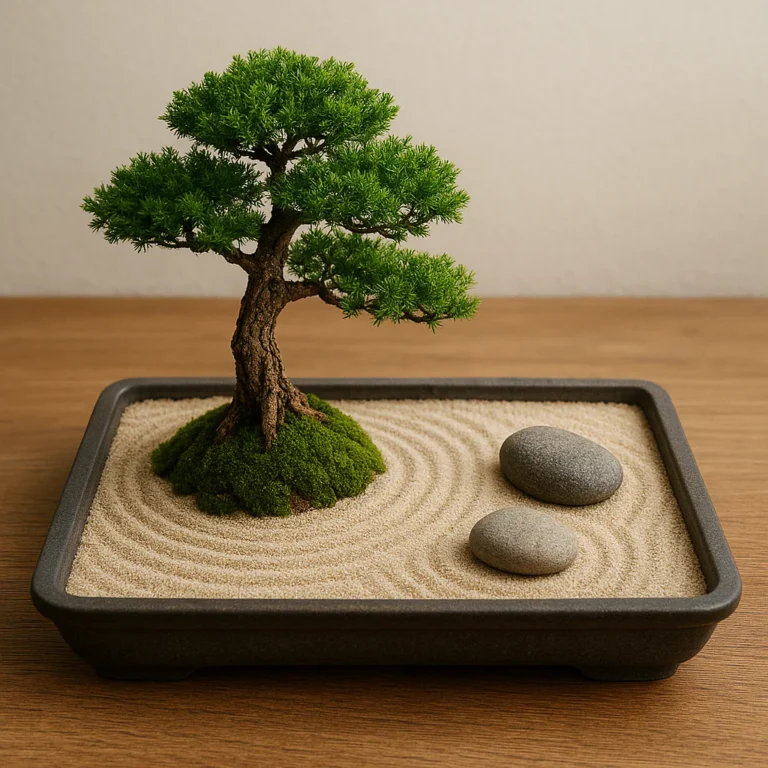
21. Zen Garden-Inspired Vertical Arrangements
Combine restrained pots, textured stone, and open space. The stand should support calm, not resemble a crowded garden center.
22. Bohemian and Eclectic Bonsai Displays
Mix textures carefully. Keep at least one repeating element, such as pot color or shelf material, to prevent visual chaos.
23. Mid-Century Modern Plant Stands
Tapered legs, walnut tones, and simple geometry suit compact indoor bonsai.
24. White, Natural, and Dark-Stained Wood Finishes
Light finishes brighten dark rooms; dark finishes emphasize pale trunks and vibrant foliage.
25. Custom DIY Vertical Bonsai Stand Projects
Build around actual pot sizes. Sketch the loaded rack before cutting timber.
26. Recycled Furniture Bonsai Stand Ideas
Repurpose bookcases, side tables, and baker’s racks after checking chemical finishes, stability, and water resistance.
27. Palet Wood and Crate Plant Shelves
Use only clean, identifiable pallet material. Avoid unknown treatments and splintered surfaces.
28. Modular Bonsai Display Cubes
Cubes can be stacked and rearranged, but anchor tall stacks and prevent water from pooling in enclosed corners.
29. Stackable Bonsai Pot Platforms
Individual platforms provide flexible spacing. Use non-slip pads and keep the stack low.
30. Bonsai Stands With Storage Below
Storage can hold wire, shears, labels, and watering tools. Keep chemicals and fertilizers away from living trees.
31. Plant Stands With Drip Trays
Drip trays protect floors but must be emptied regularly. Standing water can attract fungus gnats and stain wood.
32. Bonsai Stands With Decorative Back Panels
Back panels create a visual frame but may reduce ventilation. Use slats rather than solid boards when humidity is high.
33. Vertical Stands for Conifer Bonsai
Junipers and pines generally prefer strong outdoor light. A stand should not place them under dense overhangs.
34. Vertical Stands for Tropical Bonsai
Indoor racks with grow lights and humidity monitoring are useful, especially during cold weather.
35. Vertical Stands for Flowering Bonsai
Place flowering specimens at eye level and provide enough light for buds. Avoid moving them repeatedly once buds open.
36. Vertical Stands for Fruit Bonsai
Fruit-bearing trees need light, airflow, and careful watering. Keep fruiting branches clear of neighboring shelves.
37. Bonsai and Accent Plant Combinations
Pair trees with moss, grasses, or small companion plants, but avoid species that demand incompatible moisture levels.
38. Displaying Bonsai With Suiseki and Figurines
Use accessories sparingly. A viewing stone should support the composition, not compete with the trunk.
39. Seasonal Rotation Stations
Reserve a shelf for trees entering dormancy, flowering, or recovery after repoting.
40. Bonsai Photography Display Setups
Use a neutral background, controlled light, and a stable shelf. Remove clutter from lower tiers before taking photographs.
41. Entryway Bonsai Stand Arrangements
Choose compact, anchored furniture and avoid thorny or fragile species in high-traffic areas.
42. Living Room Bonsai Shelves
Place trees where you will actually notice changes in moisture, pests, and new growth.
43. Home Office Bonsai Displays
A small stand beside a bright window can make an excellent daily observation station. Keep water away from electronics.
44. Kitchen Window Herb and Bonsai Stands
Avoid grease, cooking heat, and fluctuating temperatures. Bonsai are not herbs wearing tiny costumes.
45. Bathroom Bonsai Displays for Humidity-Loving Species
Only use bathrooms with strong natural light and ventilation. Persistent humidity without airflow encourages disease.
46. Conservatory and Sunroom Bonsai Racks
Use shade cloth, ventilation, and temperature monitoring during hot weather.
47. Retail Nursery Bonsai Display Stands
Prioritize durability, customer access, drainage control, and clear plant labels.
48. Bonsai Club Exhibition Shelves
Use uniform heights and stable surfaces. Formal displays may need different stands from everyday cultivation racks.
49. Classroom and Workshop Plant Stands
Choose rounded edges, strong frames, and easy-clean surfaces. Label every tree and tool station.
50. Accessible Bonsai Stands for Easier Care
Keep frequently handled trees between comfortable waist and chest height. Ergonomics matter when a collection grows.
51. Child-Safe Bonsai Display Ideas
Anchor racks, avoid sharp pot edges, and keep fertilizer, wire, and tools out of reach.
52. Cat- and Dog-Resistant Bonsai Stands
Use anchoring, stable shelves, and pet-safe species research. A cat sees an open shelf and imagines a climbing wall.
53. Anti-Tip Vertical Bonsai Racks
Rear straps and wide bases are essential for tall arrangements. Test the unloaded structure before adding trees.
54. Small Balcony Wind-Safe Displays
Use low tiers, wind screens, and secure ties. Never place tall racks at an exposed balcony edge.
55. Foldable Stands for Seasonal Storage
Inspect folding joints each season and store them dry to prevent corrosion.
56. Portable Bonsai Display Tables
Choose handles, locking wheels, or lightweight construction. Portable does not mean suitable for rough ground.
57. Lightweight Stands for Moving Collections
Aluminum and reinforced resin reduce lifting strain, but verify rigidity under load.
58. Heavy-Duty Commercial Bonsai Racks
Commercial racks suit nurseries and large collections. Prioritize modular replacement parts and cleanable surfaces.
59. Water-Resistant Apartment Plant Shelves
Use saucers, waterproof mats, and sealed shelves. Landlords tend to dislike bonsai-shaped water stains.
60. Tiered Stands for Bonsai Propagation
Keep cutings and seedlings where light, humidity, and inspection are easy to control.
61. Bonsai Seedling and Cutting Displays
Use shallow trays and consistent labeling. Young plants benefit from organization more than decorative styling.
62. Quarantine Area Bonsai Shelves
Keep new or pest-affected trees separate from the main collection. A plain utility rack is often better than a beautiful shared display.
63. Humidity Tray-Compatible Plant Stands
Ensure trays fit without blocking airflow. Humidity trays should not leave pots sitting directly in water.
64. Bonsai Stands for Watering Stations
Use a utility rack near a sink, greenhouse bench, or outdoor hose. Drainage and cleanup should be effortless.
65. Vertical Stands for Bonsai Tools and Supplies
Add hooks or side storage for shears, wire, labels, and brushes. Keep sharp tools protected from accidental falls.
66. Bonsai Display Walls With Pegboards
Pegboards provide adjustable organization for tools and lightweight plants. Reinforce the wall before loading shelves.
67. Floating Shelf Bonsai Arrangements
Floating shelves look elegant but need strong anchors and careful load calculations. They suit small, lightweight bonsai best.
68. Window Box and Railing Bonsai Displays
Use purpose-built brackets and secure every container. Check building rules before attaching anything to a balcony railing.
69. Staircase and Landing Bonsai Displays
Keep escape routes clear and anchor stands against vibration. Avoid placing trees where they can be brushed by passing clothing.
70. Bonsai Stands for Conserving Natural Light
Arrange shorter trees toward the window and taller trees behind only if they do not cast heavy shade.
71. Layered Displays With Height Contrast
Combine low, spreading trees with upright silhouettes. Visual contrast prevents a flat, repetitive display.
72. Displays Grouped by Bonsai Species
Grouping by species makes care easier, especially when several trees share light and dormancy needs.
73. Displays Grouped by Pot Color
Color grouping can create a polished appearance, but do not sacrifice light or watering access for visual uniformity.
74. Displays Grouped by Tree Size
Use lower shelves for heavier trees and upper shelves for small, lightweight specimens.
75. Displays With Negative Space and Visual Balance
Leave empty shelf space where it improves access or highlights a special tree. Empty space is not wasted space; it is the punctuation mark.
76. Displays Using Matching Bonsai Pots
Matching pots create cohesion, especially for shohin collections. Confirm each pot suits the tree’s proportions.
77. Displays Using Mixed Bonsai Pot Textures
Mixing matte, glazed, ribed, and natural textures can be attractive if shelf materials remain visually quiet.
78. Vertical Accent Displays With Moss
Moss can soften the display, but monitor moisture and avoid keeping the entire collection constantly wet.
79. Displays With Companion Accent Plants
Use accent plants to express season and scale. Keep vigorous companions from crowding bonsai foliage.
80. Displays With Decorative Gravel and Pebles
Use gravel in trays or decorative dishes, not as a substitute for proper bonsai drainage.
81. Displays With LED Strip Lighting
LED strips can supplement light for small trees. Check output, heat, electrical safety, and coverage.
82. Displays With Full-Spectrum Grow Lights
Full-spectrum fixtures are useful indoors, especially for tropical bonsai. Use timers and maintain appropriate distance.
83. Smart Plant Shelf Setups
Add moisture meters, temperature sensors, and timers only where they simplify care. More gadgets do not automatically mean better horticulture.
84. Self-Watering Vertical Plant Stand Concepts
Self-watering systems can conflict with bonsai’s need for excellent drainage. Use cautiously and only with species and substrates suited to the system.
85. Rainwater-Friendly Outdoor Stands
Open shelves let rain reach pots naturally, but protect indoor surfaces and prevent water pooling beneath the rack.
86. Drainage-Focused Bonsai Shelf Designs
Slatted shelves, removable trays, and washable surfaces make repeated watering far easier.
87. Humidity and Airflow-Optimized Displays
Leave gaps between pots and avoid solid enclosures in humid climates.
88. Bonsai Stands for Frost Protection
A stand may raise pots away from cold ground, but it can also increase wind exposure. Use shelters or cold frames when appropriate.
89. Bonsai Stands for Summer Shade Management
Use movable racks and shade cloth to protect sensitive foliage during heatwaves.
90. Compact Bonsai Displays for Dorm Rooms
Select a small, stable shelf for suitable indoor species. Plan for grow-light access and safe watering.
91. RV and Tiny-Home Bonsai Stands
Use locking feet or straps and lightweight pots. Movement changes the risk profile entirely.
92. Office Reception Bonsai Displays
Choose durable species and low-maintenance arrangements. Keep water away from carpets and electrical equipment.
93. Restaurant and Café Bonsai Stands
Protect trees from cooking fumes, temperature swings, and accidental contact.
94. Spa and Wellness Bonsai Displays
Natural wood, stone, and restrained planting suit quiet interiors. Make sure humidity is controlled.
95. Wedding and Event Bonsai Displays
Use portable, stable stands and transport trees upright. Protect roots and foliage from prolonged heat.
96. Gift-Worthy Bonsai Stand Arrangements
A compact stand paired with suitable tools and care instructions makes a more useful gift than a fragile decorative shelf alone.
97. Budget-Friendly Vertical Bonsai Ideas
Look at utility racks, sturdy bookcases, and simple timber shelves. Verify safety before saving money.
98. Premium Designer Bonsai Display Stands
Designer furniture can elevate a collection, but confirm that aesthetics have not reduced shelf strength or drainage practicality.
99. Custom-Built Bonsai Shelving Systems
Custom builds make sense for large collections, unusual pots, or difficult spaces. Draft a full load plan first.
100. Statement-Making Bonsai Display Towers
Use one exceptional tree as the visual anchor and keep supporting shelves quiet.
101. Space-Saving Bonsai Stand Makeovers
Replace a crowded horizontal bench with staggered tiers, wall storage, and a dedicated watering station.
Weight capacity and shelf stability
A good stand should feel rigid before it is loaded. Test:
- Side-to-side movement
- Shelf flex
- Fastener tightness
- Foot stability
- Frame alignment
- Weld quality
Avoid stands that woble when you touch them. Watering a bonsai is not the time to discover that the entire display has a flair for interpretive dance.
Drainage, waterproofing, and drip management
Prioritize:
- Removable drip trays
- Slatted or perforated shelves
- Waterproof shelf coatings
- Drainage gaps
- Easy-clean surfaces
- Raised pot feet
Never allow pots to sit in standing water. The University of Minnesota Extension explains why drainage and appropriate watering are central to container plant health.
Adjustable shelves and modular design
Adjustability is valuable as trees grow. Look for:
- Multiple shelf positions
- Tool-free adjustment
- Replaceable supports
- Expandable modules
- Locking connectors
Modularity lets you create a quarantine tier, a propagation section, or a taller shelf for a cascade.
Assembly quality and hardware
Check user reviews for repeated comments about:
- Missing bolts
- Misaligned holes
- Splitting wood
- Weak welds
- Difficult instructions
- Shelves that bow over time
A single negative review may be an isolated assembly mistake. Ten reviews mentioning the same cracked bracket are a pattern.
Safety rails, anchors, and anti-tip protection
Tall stands need a broad base or anchoring system. This is especially important around:
- Children
- Pets
- Narrow walkways
- Balconies
- Earthquake-prone regions
- Uneven paving
The following are planter styles, not complete vertical plant stands. They matter because the planter’s outside dimensions, legs, tray, and weight affect shelf compatibility.
Rating table for planter styles
| Planter style | Design | Shelf compatibility | Drainage potential | Stability | Indoor use | Overall |
|---|---|---|---|---|---|---|
| Low-profile faceted | 9/10 | 8/10 | 9/10 | 8/10 | 9/10 | 8.6/10 |
| Sculpted padded | 9/10 | 7/10 | 8/10 | 7/10 | 9/10 | 8.0/10 |
| Low-profile ribed | 8/10 | 9/10 | 9/10 | 8/10 | 9/10 | 8.6/10 |
| Two-color legs with insert | 9/10 | 7/10 | 9/10 | 7/10 | 9/10 | 8.2/10 |
| Braided texture | 8/10 | 8/10 | 8/10 | 8/10 | 9/10 | 8.2/10 |
These are editorial ratings based on design logic and stated configuration options, not independent laboratory test results or verified customer-review averages.
Low-profile faceted bonsai tree pot displays
Faceted surfaces create sharp highlights and suit angular trunks or dramatic deadwood. The low profile can fit neatly on a tiered stand, but verify the complete outside width.
According to VIVIERO 3D, customers can select inner usable diameter, color, and drainage configuration. That flexibility is useful when pairing a planter with a compact shelf.
Best for: modern interiors and shohin displays.
Potential drawback: faceted geometry may reduce comfortable handholds during lifting.
Sculpted padded bonsai planter displays
Rounded, padded forms soften the display and contrast well with rugged bark. They suit living rooms and contemporary décor.
Best for: indoor starter trees and decorative collections.
Potential drawback: irregular outer shapes may waste shelf space.
Low-profile ribed bonsai plant pot displays
Ribing adds texture without dramatically increasing visual bulk. These are among the easiest styles to combine on a multi-level rack.
Best for: repeated arrangements and mixed pot collections.
Potential drawback: grooves can collect mineral deposits if water is allowed to dry on the surface.
Two-color leg bonsai tree pot displays with inner inserts
Legs raise the planting container and create shadow beneath it. This can improve visual lightness and keep the base away from wet surfaces.
Best for: statement displays and modern interiors.
Potential drawback: legs and inserts increase the total outside dimensions, so measure the full assembly.
Braided-texture bonsai planter displays
Braided texture adds a tactile, handcrafted impression. It works especially well with natural wood racks and neutral shelving.
Best for: rustic, bohemian, and naturalistic arrangements.
Potential drawback: textured surfaces require more careful cleaning.
👉 CHECK PRICE on:
- VIVIERO 3D Bonsai Planters: VIVIERO 3D Official Website | Amazon bonsai planters search
Lighting is the issue that quietly decides whether a vertical display thrives or merely looks optimistic.
Natural light placement for healthy bonsai
Place the most light-demanding trees closest to the brightest window or outdoors in a suitable location. Rotate pots periodically so growth does not become one-sided.
Use a light meter if possible. Human eyes are poor judges of plant light; a room that feels bright to us can be dim for a sun-loving bonsai.
Choosing LED grow lights for indoor bonsai
Look for:
- Full-spectrum output
- Adjustable intensity
- Timer function
- Adequate coverage across the entire tier
- Low heat production
- Safe mounting
- Replaceable components
Brands such as Barrina, SANSI, and Spider Farmer offer widely available grow-light options, although the correct model depends on shelf width and species.
Do not hang one small lamp over the top shelf and expect it to illuminate every lower tier evenly. Light intensity drops rapidly with distance.
Preventing leaf scorch and uneven growth
Monitor for:
- Bleached leaves
- Crispy margins
- Long internodes
- Weak new growth
- Canopy leaning
- Excessive heat near glass
A timer can make lighting consistent, but it cannot correct a fixture that is too weak, too close, or poorly distributed.
How to water bonsai without damaging floors
Use this sequence:
- Move the tree to a watering tray if practical.
- Water slowly over the entire soil surface.
- Wait for water to drain through the holes.
- Water again if the substrate repels the first application.
- Allow excess water to finish draining.
- Return the pot only when the bottom is no longer dripping heavily.
- Empty trays promptly.
The RHS bonsai care guidance supports thorough watering followed by attention to species and growing conditions.
Drip trays, saucers, and capillary mats
Drip trays are useful but should not become reservoirs. Capillary mats are more appropriate for some nursery and propagation systems than for every mature bonsai.
Use a tray that:
- Extends beyond the pot base
- Does not trap the pot in standing water
- Can be removed without disturbing neighboring trees
- Is easy to scrub
Avoiding root rot in elevated displays
Root rot usually reflects a combination of excessive moisture, poor drainage, unsuitable substrate, and insufficient airflow. A vertical stand can worsen the problem if trays hold water beneath multiple pots.
Check:
- Drainage holes are clear
- The pot is not sitting directly in water
- The substrate matches the species
- Watering frequency reflects actual moisture
- Shelves allow air beneath containers
A DIY stand makes sense when commercial shelves do not fit your pots or space. It is also a satisfying project, provided the structure is designed before the enthusiasm begins.
Simple wooden tiered bonsai shelf
Materials
- Exterior-grade timber
- Stainless or galvanized screws
- Waterproof wood adhesive
- Exterior sealant
- Non-slip feet
- Optional wall anchors
- Slatted shelf boards or drainage mats
Build steps
- Measure every pot and tray.
- Sketch shelf widths and vertical spacing.
- Calculate the total wet load.
- Choose a broad, stable base.
- Cut and sand the timber.
- Assemble the frame loosely.
- Check for square alignment.
- Tighten all fasteners.
- Apply exterior sealant.
- Add feet and anti-tip hardware.
- Load the stand gradually.
- Recheck for saging and movement.
Metal rack conversion for bonsai
Utility racks from brands such as Gorilla Rack, Seville Classics, and Muscle Rack can sometimes be adapted for bonsai.
Before using one, verify:
- Shelf coating tolerates water
- Wire decking does not destabilize small pots
- Feet remain level outdoors
- The structure can be anchored
- Each shelf is supported across its full width
Finishing, sealing, and waterproofing
Seal all end grain and joints. Water often enters from cut ends before it damages broad surfaces.
Avoid using an indoor-only varnish on a permanently exposed outdoor rack. Select finishes according to the stand’s location and maintenance plan.
DIY mistakes we have seen too often
❌ Shelves too shallow for drip trays
❌ No rear bracing
❌ Untreated wood placed outdoors
❌ Tall rack with a tiny base
❌ Screws driven into splitting timber
❌ No allowance for wet-pot weight
❌ Beautiful shelves positioned where watering is impossible
Cleaning bonsai pots and shelves
Monthly cleaning is a sensible baseline for indoor displays. Outdoor stands may need more frequent attention during wet weather.
Use:
- A soft brush
- Mild soap
- Clean water
- A separate cloth for pots and shelves
- Disinfectant only where appropriate and safe
Do not scrub delicate bark or moss unnecessarily.
Checking for rust, rot, and loose fasteners
Inspect:
- Welds
- Screw heads
- Shelf edges
- Feet
- Wall anchors
- Wood joints
- Drainage channels
Repair small coating damage early. Waiting until rust blisters through the frame is the structural equivalent of ignoring a dripping faucet because it has not yet flooded the kitchen.
Rearanging stands for winter and summer
Seasonal changes may require:
- Moving tropical bonsai indoors
- Lowering shelves to reduce wind exposure
- Adding shade cloth
- Increasing grow-light coverage
- Separating dormant trees
- Protecting pots from frost
Keep seasonal trees grouped by care requirements, not simply by which shelf looks prettiest.
Pest inspection on elevated bonsai displays
Inspect:
- Leaf undersides
- Branch junctions
- Soil surface
- Drainage holes
- Pot rims
- Shelf corners
Quarantine new trees before placing them on a shared stand. Our Bonsai for Beginners resources cover practical observation habits that prevent small problems becoming collection-wide disasters.
Overcrowding tiers and blocking light
A full rack can be less productive than a half-empty one if foliage overlaps. Keep enough room for inspection and pruning.
Ignoring water runoff
Water dripping from an upper shelf can saturate a lower pot, stain flooring, or spread pests. Use trays and water strategically.
Using an unstable or undersized stand
A narrow decorative stand may suit one lightweight plant but fail under several ceramic bonsai pots. Stability outranks style.
Placing bonsai near heat vents and drafts
Warm dry air can increase water loss and stress foliage. Cold drafts can harm tropical species.
Mixing incompatible bonsai care requirements
A juniper, ficus, and azalea may look handsome together. Their light, humidity, watering, and dormancy needs can be very different.
Best stand types by location
| Location | Recommended stand | Main advantage | Main caution |
|---|---|---|---|
| Apartment window | Narrow metal or sealed wood rack | Efficient light use | Protect floors from runoff |
| Balcony | Anchored powder-coated steel | Wind resistance | Check building rules |
| Greenhouse | Slatted metal shelving | Airflow and drainage | Humidity-related corrosion |
| Patio | Outdoor hardwood or coated steel | Durability | Secure against wind |
| Living room | Finished wood or decorative metal | Furniture-like appearance | Avoid heat vents |
| Workshop | Utility rack | Easy access and cleaning | Less formal appearance |
| Exhibition | Dedicated display bench | Refined presentation | Less storage capacity |
Best stand types by bonsai size
| Bonsai size | Suitable stand | Shelf priority |
|---|---|---|
| Mame | Shallow compact tiers | Pot security |
| Shohin | Multi-tier rack | Access and even light |
| Medium | Reinforced bench or steel rack | Load capacity |
| Large | Low, broad platform | Stability |
| Cascade | Deep shelf | Clearance and center of gravity |
Best stand types by material
| Material | Strength | Moisture resistance | Style | Best use |
|---|---|---|---|---|
| Powder-coated steel | High | High if coating intact | Modern | Outdoor and greenhouse |
| Aluminum | Medium-high | High | Minimalist | Portable indoor/outdoor |
| Hardwood | High | Medium with sealing | Traditional | Indoor and sheltered outdoor |
| Bamboo | Medium | Low-medium | Natural | Indoor and covered areas |
| Resin | Medium | High | Contemporary | Lightweight indoor displays |
| Stone | Very high | Very high | Formal | Low platforms |
Best stand types by maintenance level
| Maintenance tolerance | Best option |
|---|---|
| Very low | Powder-coated metal with trays |
| Moderate | Sealed hardwood |
| High | Untreated or decorative natural materials |
| Commercial use | Modular utility shelving |
| Exhibition use | Dedicated display furniture |
Questions to ask before buying
Ask:
- What is the maximum loaded shelf capacity?
- Is the rating per shelf or for the entire unit?
- Are the shelves adjustable?
- Can the frame be anchored?
- Is the finish suitable for wet environments?
- Are trays included?
- Can the stand fit the largest pot in your collection?
- Can you remove a lower tree without moving the upper ones?
- What happens if water spills?
- Are replacement parts available?
Reading product specifications and reviews
Look for reviews mentioning real use:
- “Used with ceramic pots”
- “Survived outdoor rain”
- “Shelves remained level”
- “Easy to anchor”
- “No rust after a season”
- “Assembly required two people”
Treat vague claims such as “heavy-duty” as marketing until supported by a measurable load rating.
When a standard plant shelf is not enough
Choose a dedicated bonsai bench or custom rack when:
- Pots are unusually heavy
- Trees are valuable or mature
- You grow outdoors in strong wind
- You need frequent watering
- The collection includes large bonsai
- You require quarantine or propagation areas
Where to find bonsai stands and display tables
Reliable places to compare include:
- Bonsai specialty nurseries
- Local garden centers
- Woodworkers and metal fabricators
- Amazon
- Etsy
- Walmart
- Greenhouse equipment suppliers
- Bonsai clubs and exhibitions
👉 CHECK PRICE on:
- Amazon tiered plant stands: Amazon
- Walmart plant stands: Walmart
- Etsy handmade bonsai stands: Etsy
- Gardener’s Supply Company: Official Website
- Bonsai Boy of New York: Official Website
- Brussel’s Bonsai: Official Website
Create a clear focal point
Place your strongest tree where the eye naturally lands. Usually that means:
- Around eye level
- Slightly off-center
- With empty space around the silhouette
- Away from competing decorative objects
Balance height, form, and negative space
Avoid placing three upright trees in a row. Mix:
- Upright forms
- Slanting forms
- Cascades
- Broad canopies
- Fine-leaved trees
- Coarse-barked specimens
Use empty shelves or open corners to make important trees feel more significant.
Group trees by light and water needs
This is the horticultural compromise that prevents many display failures.
Create zones such as:
- Bright, dry-loving trees
- Bright, moisture-loving trees
- Tropical indoor trees
- Recovering or recently repotted trees
- Quarantined trees
- Dormant outdoor trees
Rotate trees for even growth
Rotate containers gradually rather than making dramatic daily changes. Watch how the tree responds to its light source, and maintain consistent care.
Bonsai losing leaves on a plant stand
Possible causes include:
- Suden light changes
- Drafts
- Overwatering
- Underwatering
- Pest activity
- Temperature stress
- Relocation shock
Check the tree before blaming the stand. The stand may have changed the environment without causing the original problem.
Uneven growth between tiers
Upper tiers may receive stronger light, while lower shelves remain dim. Add supplemental lighting, rearrange species, or reduce foliage obstruction.
Mold, algae, and persistent dampness
Improve:
- Airflow
- Drainage
- Tray cleaning
- Watering intervals
- Shelf spacing
- Light exposure
Do not use humidity as an excuse for permanently wet soil.
Stand wobling or shelves saging
Unload the stand immediately and inspect:
- Loose fasteners
- Bent brackets
- Uneven feet
- Overloaded shelves
- Broken welds
- Wall-anchor failure
A saging shelf is a warning, not a rustic design feature.
Choosing a stand for a new bonsai grower
For beginners, choose:
- A stable two- or three-tier rack
- Moderate shelf depth
- Easy drainage control
- Clear assembly instructions
- A finish that tolerates mistakes
- Enough space for inspection
Avoid gifting a towering rack before knowing the recipient’s available light and tree sizes.
Display accessories that pair well with bonsai
Useful companions include:
- Drip trays
- Plant labels
- Fine-rose watering cans
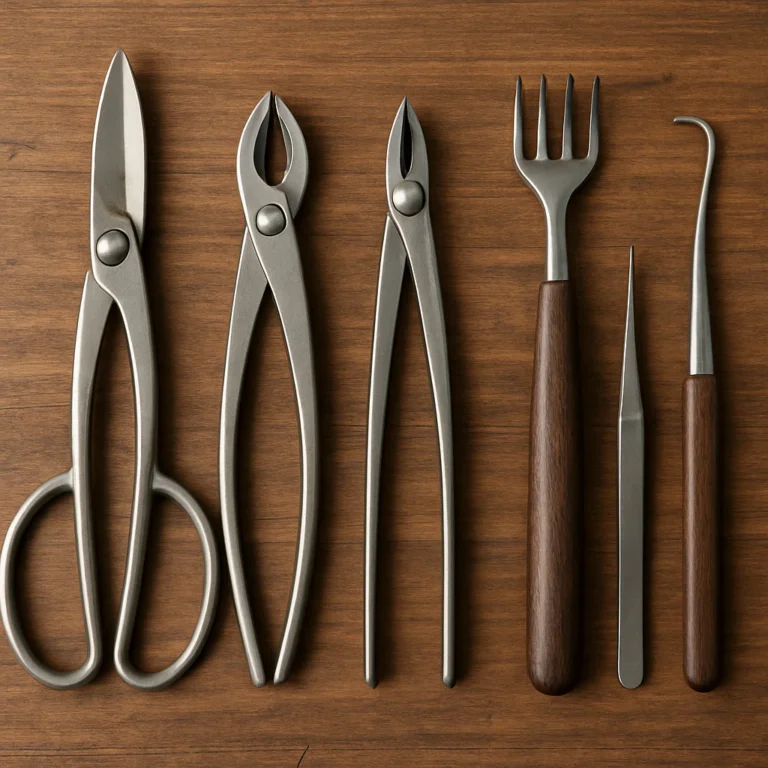
- Bonsai shears
- Concave cutters
- Moisture meters
- Grow-light timers
- Non-slip pads
- Wire storage
- A bonsai care book
Our Bonsai FAQs section can help a new grower turn a beautiful display into a healthy one.