Support our educational content for free when you buy through links on our site. Learn more

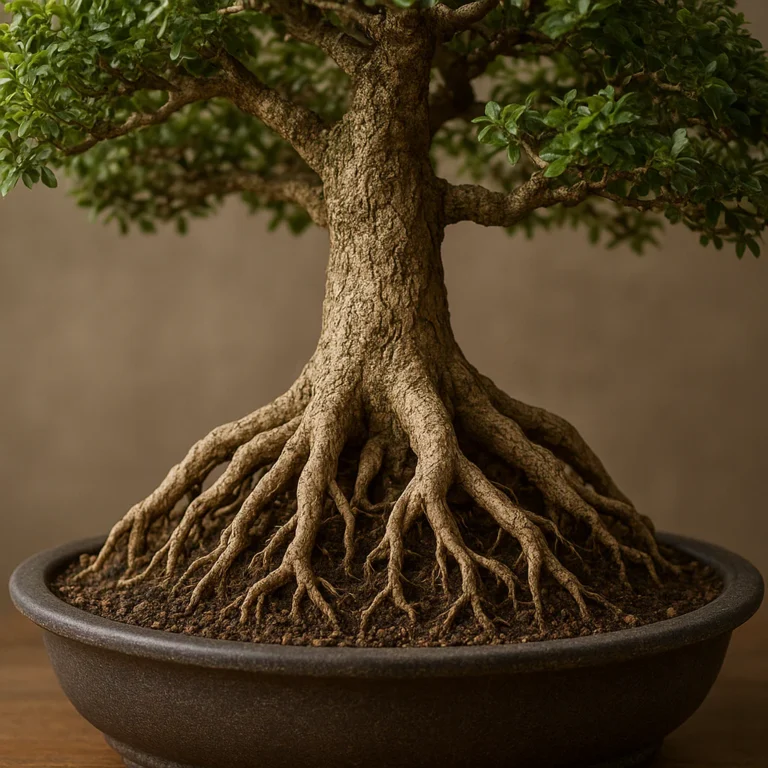
Nebari development bonsai is built by spreading healthy roots radially, pruning them gradually, and giving the tree room to grow. The strongest results come from starting early and improving the root flare over multiple repottings—not by exposing or cutting away too much at once.
At Bonsai Garden™, we’ve seen promising trees transformed by one small change: correcting a root that grows straight down before it becomes a thick, stubborn “peg.” On a young maple, that early adjustment can help create the balanced, ground-huging root spread that makes a trunk look older and more secure.
The trick is knowing which roots to keep, which to shorten, and when to leave a healthy tree alone. Here’s how to develop attractive surface roots while protecting the fine roots your bonsai needs to thrive.
Key Takeaways
- Begin with radial root placement. At repoting, gently spread suitable roots outward like spokes and shorten overly long or downward-growing roots gradually.
- Build nebari over time. Root pruning, training boards, sacrifice growth, and—in selected cases—root grafting can improve an uneven root flare.
- Match the method to the species and tree health. Maples and ficus often respond well to active root work; conifers generally call for a more cautious approach.
- Don’t chase exposed roots at the expense of vigor. Keep fine feeder roots, avoid excessive root removal, and protect newly exposed roots from drying.
- Think in seasons, not shortcuts. Consistent care across successive growth cycles is more reliable than attempting a dramatic one-time correction.
Table of Contents
- ⚡️ Quick Tips and Facts: Nebari Development Bonsai
- 🌳 What Nebari Means in Bonsai
- 📜 The History and Aesthetic of Bonsai Surface Roots
- 🔍 How to Assess Your Bonsai’s Nebari
- Signs of a Strong, Balanced Root Flare
- Common Nebari Problems and Their Causes
- 🧰 Tools and Materials for Root Flare Development
- 🌱 9 Techniques for Developing Better Bonsai Nebari
- 1. Start with Species-Appropriate Root Pruning
- 2. Spread Roots Radially at Repoting
- 3. Use a Root-Training Board or Tile
- 4. Grow Sacrifice Branches to Build Trunk Caliper
- 5. Layer or Graft Roots to Fill Gaps
- 6. Improve Nebari with Approach Grafting
- 7. Manage Soil, Water, and Fertilizer for Root Growth
- 8. Choose the Right Training Container
- 9. Refine Surface Roots Gradually
- 🪴 Nebari Development by Bonsai Species
- Japanese Maple Nebari
- Trident Maple and Other Maples
- Ficus Nebari
- Juniper and Other Conifers
- Pine Nebari
- 🗓️ Repoting and Root-Pruning Timing
- 🪵 Multiple Trunks, Root Grafts, and Nebari Design
- 🛠️ Step-by-Step Nebari Development at Repoting
- ⏳ How Long Nebari Development Takes
- ❌ Common Nebari Development Mistakes to Avoid
- 🩺 Troubleshooting Root Flare and Surface Root Problems
- 📸 Before-and-After Tracking: Measuring Nebari Progress
- 💬 Bonsai Nebari Development FAQ
- Can you improve nebari on an established bonsai?
- How often should you prune roots to improve nebari?
- Can every bonsai species develop exposed surface roots?
- Should bonsai roots be exposed above the soil?
- Can root grafting fix uneven nebari?
- What is the difference between nebari and a root flare?
- ✅ Conclusion: Build Nebari One Repoting at a Time
- 🔗 Recommended Links for Bonsai Root Development
- ❓ FAQ: Nebari Development Bonsai
- 📚 Reference Links