Support our educational content for free when you buy through links on our site. Learn more

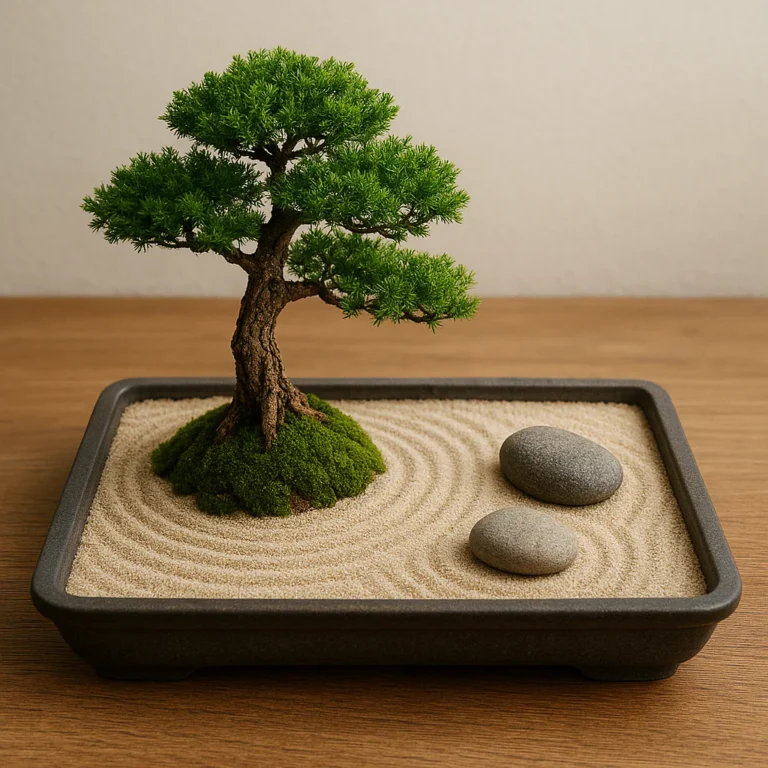
Creating a zen garden with real bonsai tree transforms a simple space into a living sanctuary of peace, provided you choose the right species and placement. Forget plastic imitations; the true magic lies in the dynamic, breathing artistry of a living tree nestled among raked gravel and symbolic stones.
Did you know that the ancient practice of Karesansui (dry landscape gardening) was designed specifically to aid meditation by simplifying nature into its most essential forms? We once watched a stressed client find immediate calm just by raking a single concentric circle around a humble Juniper, proving that the act of caring for these miniature giants is as therapeutic as the view.
Key Takeaways
- Species Selection is Critical: Not all bonsai thrive in every setting; temperate trees like Maples and Pines require outdoor exposure, while tropical varieties like Ficus are ideal for indoor Zen gardens.
- Authenticity Matters: A real bonsai tree offers a dynamic, evolving focal point that artificial plants cannot replicate, deepening the meditative experience of your Zen garden.
- Design Harmony: Success depends on balancing the asymetrical rock arrangements and raked gravel patterns with the natural form of your chosen tree.
- Maintenance is Mindfulness: Regular watering, pruning, and wiring are not chores but integral parts of the meditative practice that keeps your garden serene.
Table of Contents
- ⚡️ Quick Tips and Facts
- 🌿 The Ancient Roots of Zen Gardens and Living Bonsai
- 🏆 Top 20 Real Bonsai Trees Perfect for Your Zen Garden Setup
- 1. The Stoic Japanese Black Pine
- 2. The Elegant Juniper Procumbens Nana
- 3. The Resilient Chinese Elm (Ulmus Parvifolia)
- 4. The Graceful Ficus Retusa
- 5. The Dramatic Japanese Maple (Acer Palmatum)
- 6. The Hardy Boxwood (Buxus Sempervirens)
- 7. The Fragrant Japanese Juniper
- 8. The Exotic Serissa Foetida
- 9. The Majestic Trident Maple
- 10. The Delicate Azalea (Rhodendron)
- 1. The Stoic Shimpaku Juniper
- 12. The Versatile Chinese Juniper
- 13. The Hardy Olive Tree
- 14. The Tropical Schefflera
- 15. The Colorful Cotoneaster
- 16. The Fragrant Jasmine
- 17. The Hardy Hawthorn
- 18. The Unique Ginkgo Biloba
- 19. The Elegant Wisteria
- 20. The Hardy Hornbeam
- 🪨 Selecting the Perfect Zen Garden Base and Rock Arrangements
- 🏺 Choosing Authentic Bonsai Pots for Minimalist Aesthetics
- 🛠️ Essential Bonsai Tools and Wiring Techniques for Zen Styling
- 🌱 Indoor vs. Outdoor: Where Your Zen Garden Thrives Best
- 💧 Watering Wisdom: Keeping Your Living Zen Garden Hydrated
- ✂️ Pruning and Maintenance: Sculpting Your Miniature Landscape
- 🌡️ Seasonal Care Calendar for Year-Round Zen Serenity
- 🐜 Troubleshooting Pests and Diseases in Small-Scale Gardens
- 🎨 Design Principles: Creating Balance and Harmony in Your Zen Space
- 📦 Sourcing Real Bonsai: Trusted Nurseries and Online Retailers
- ❓ Frequently Asked Questions About Zen Gardens with Real Bonsai
- 🔗 Recommended Links for Further Exploration
- 📚 Reference Links and Historical Sources
- 🏁 Conclusion
⚡️ Quick Tips and Facts
Welcome, fellow nature enthusiasts and aspiring Zen masters! Here at Bonsai Garden™, we’ve spent countless hours nurturing miniature worlds, and let us tell you, there’s nothing quite like the serene magic of a real bonsai tree nestled within
a thoughtfully crafted Zen garden. It’s more than just a decorative piece; it’s a living, breathing testament to patience, mindfulness, and the profound beauty of nature, scaled down for your enjoyment. Ready to transform your space into a
tranquil sanctuary? We’ve got the inside scoop, straight from our hands-on experience. If you’re looking for detailed reviews of popular Zen garden kits and bonsai trees, check out our comprehensive guide: Zen Garden with Real Bonsai Tree Reviews 2024.
- Mindfulness in Miniature: A Zen garden with a real
bonsai isn’t just decor; it’s a daily invitation to mindfulness. Raking the sand and observing your tree can be a powerful meditative practice. 🧘 ♀️ - Living Art, Not Just a Plant: Your
bonsai is a piece of living sculpture, constantly evolving. Its presence brings a dynamic, natural element that artificial plants simply can’t replicate. - Choose Wisely, Grow Happily: Not all bonsai are created equal for
Zen gardens. We’ll show you the top species that thrive in these contemplative settings, balancing aesthetics with ease of care. - Location, Location, Location: Whether indoors or out, the right spot makes all the difference.
Light and humidity are key to your bonsai’s health and your garden’s overall harmony. - More Than Just Sand and Rocks: The arrangement of elements in your Zen garden – from the gravel to the stones – tells
a story. We’ll guide you on creating a balanced and symbolic landscape. - Patience is a Virtue (and a Necessity!): Bonsai cultivation is a journey, not a destination. Expect to learn, adapt
, and enjoy the process of growth and refinement. 🌱 - Tools of the Trade: Having the right bonsai tools isn’t just about efficiency; it’s about precision and care, ensuring your tree remains healthy and beautifully
shaped. - Watering Wisdom: Over or under-watering is a common pitfall. We’ll share our expert watering schedule and techniques to keep your miniature tree vibrant. 💧
🌿 The Ancient Roots of Zen Gardens and Living Bonsai
Have you ever wondered about the whispers of history behind those meticulously raked patterns
and serene miniature trees? The story of Zen gardens, or Karesansui as they’re traditionally known, and the integration of living bonsai is a rich tapestry woven with threads of philosophy, religion, and artistic expression. It’s
a journey that takes us back centuries to ancient Japan, deeply influenced by its neighbors, China and Korea.
The very essence of Japanese gardens, including the dry landscape Zen garden, is profoundly rooted in spiritual beliefs. Early designs were often found within
Buddhist monasteries and Shinto shrines, serving as sacred spaces for contemplation and spiritual practice. Shinto, Japan’s indigenous religion, emphasizes the divinity found in nature, manifesting in elements like lakes, trees
, and rocks within garden designs. As Buddhism arrived and flourished, particularly Zen Buddhism, its influence brought a focus on mountains, stone groupings, and symbolic seas.
Many
of these foundational elements weren’t born in Japan but were imported from China and Korea during the Asuka period (538–710 AD). Over centuries, these influences were refined and uniquely
Japanese. The contemporary standards for garden design, the ones we still admire today, were largely established during the Heian period (794–1185 AD). It’s fascinating how ideas travel
, aren’t they?
Now, how does our beloved bonsai fit into this historical landscape? This is where the Karesansui or Dry Landscape garden truly shines. This style, heavily influenced by Zen-Buddhism,
is the direct precursor to what most people envision as a “Zen garden”. Imagine carefully raked sand or gravel, symbolically representing ponds, streams, or even vast seas, while strategically placed rocks depict islands and
mountains. Into this minimalist, symbolic landscape, a real bonsai tree steps in as the quintessential “tree” element, providing a focal point of living nature, a miniature forest within a vast, symbolic ocean.
”
The interior freely flows into the exterior,” as one expert beautifully put it, highlighting how these gardens blur the lines between inside and out, inviting nature into one’s personal space. The choice of trees in traditional
Japanese gardens often leans towards “very old pine variants that depict ancientness”, a perfect aesthetic match for the gnarled, mature appearance often sought in bonsai cultivation. The integration of bonsai into a Zen garden isn
‘t just an aesthetic choice; it’s a continuation of a long-standing tradition of valuing nature, patience, and contemplative beauty. It’s a holistic environment, much like how “closely related to Japanese gardening are poetry,
literature and tea ceremonies”, all designed to foster a sense of peace and reflection.
🏆 Top 20 Real Bonsai Trees Perfect for Your Zen Garden Setup
Alright, let’s get down to the roots of it all! You want a real bonsai tree that not only thrives but also perfectly
complements the serene aesthetic of your Zen garden. Forget those plastic imposters; we’re talking about living art here! We’ve seen countless species come through our nursery, and based on our experience and what our customers love, these 20 bonsai
trees are absolute champions for your miniature landscape. We’ve even included a few that might surprise you!
1. The Stoic Japanese Black Pine (Pinus thunbergii)
Ah, the Japanese Black Pine! If
you’re looking for that classic, rugged, windswept look, this is your tree. It’s a symbol of strength and longevity, perfect for a Zen garden where resilience is admired.
- Design & Aesthetics:
10/10 – Iconic, strong, develops beautiful bark. - Functionality (Growth): 8/10 – Can be challenging for beginners but rewarding.
- Care Level: Advanced ⚠️
Pros:
- ✅ Develops a magnificent, gnarled trunk and dark, textured bark over time.
- ✅ Tolerates a wide range of conditions once established.
- ✅ Its strong, masculine
form is ideal for formal upright, informal upright, and windswept styles. - Cons:
- ❌ Requires specific pruning techniques (candle pruning) to control growth and needle size.
- ❌ Not
suitable for indoor environments; needs to be outdoors year-round. - Our Take: “If you’re ready for a challenge and want a bonsai that truly embodies the spirit of endurance, the Japanese Black Pine is unparalleled. It’s
a statement piece for any serious Zen garden.” - 👉 Shop Japanese Black Pine Bonsai on: Amazon | Eastern Leaf
2. The Elegant Juniper Procumbens Nana (Juniperus procumbens ‘Nana’)
This is a crowd-pleaser and for good reason! The Juniper Procumbens Nana is incredibly popular for bonsai due to its naturally cascading growth habit and fine, dense foliage. It’s a fantastic choice
for creating a sense of flowing movement in your Zen garden.
- Design & Aesthetics: 9/10 – Graceful, natural cascading habit, vibrant green.
- Functionality (Growth): 9
/10 – Very adaptable, good for various styles. - Care Level: Beginner to Intermediate ✅
- Pros:
- ✅ Naturally forms beautiful cascading or semi-cascading styles.
✅ Hardy and forgiving, making it excellent for beginners.
- ✅ Its fine, scale-like foliage is easy to prune and wire.
- Cons:
- ❌ Doesn’t tolerate consistently wet soil;
good drainage is crucial. - ❌ Needs consistent outdoor exposure; not an indoor bonsai.
- Our Take: “Junipers are a staple for a reason. The ‘Nana’ variety is particularly lovely for its compact
growth and ability to evoke miniature landscapes. Just remember, they love fresh air!” - 👉 Shop Juniper Procumbens Nana Bonsai on: Amazon | Bonsai Outlet
3. The Resilient Chinese Elm (Ulmus Parvifolia)
If you’re dipping your toes into the world of bonsai for your Zen garden, the Chinese Elm is practically a rite of passage. It’s incredibly forgiving, grows vigorously, and develops a fantastic ramification (branching) quickly.
- Design & Aesthetics: 8/10 – Classic deciduous tree form, fine branching.
- Functionality (Growth): 10/10 – Fast grower, tolerates mistakes.
Care Level: Beginner-Friendly! ⭐
-
Pros:
-
✅ Extremely hardy and adaptable, tolerating a range of conditions.
-
✅ Rapid growth makes it rewarding for beginners to see progress.
-
✅ Develops beautiful fine branching and small leaves, ideal for miniature scale.
-
✅ Can be kept indoors in bright conditions, or outdoors.
-
Cons:
-
❌ Can be susceptible to spider
mites if humidity is too low indoors. -
❌ Requires frequent pruning due to vigorous growth.
-
Our Take: “The Chinese Elm is our go-to recommendation for anyone starting their Zen garden journey. It’s tough
, beautiful, and teaches you a lot without punishing every mistake. A true workhorse!” -
👉 Shop Chinese Elm Bonsai on: Amazon | Brussel’s Bonsai
4. The Graceful Ficus Retusa (Ficus microcarpa ‘Retusa’)
Looking for a tropical flair that can thrive indoors? The Ficus Retusa, often called the “Ginseng Ficus” for its striking aerial roots and bulbous trunk, is an excellent choice for an indoor Zen garden.
- Design & Aesthetics: 9/10 – Unique root structures, glossy leaves, tropical feel.
- Functionality (Growth): 9/10 – Robust, good for indoor environments.
Care Level: Beginner to Intermediate ✅
- Pros:
- ✅ Thrives indoors, making it perfect for desk Zen gardens.
- ✅ Develops interesting aerial roots and a thick trunk, adding character
. - ✅ Tolerates a bit of neglect, forgiving for busy gardeners.
- ✅ Evergreen, providing year-round greenery.
- Cons:
- ❌ Can drop leaves if moved or
exposed to sudden temperature changes. - ❌ Not frost-hardy, must be brought indoors in cooler climates.
- Our Take: “Ficus Retusa offers a wonderfully exotic touch. Its unique root structure makes
it an instant conversation starter, and its indoor tolerance means you can enjoy your Zen garden even in winter.” - 👉 Shop Ficus Retusa Bonsai on: Amazon | The Bonsai Supply
5. The Dramatic Japanese Maple (Acer Palmatum)
For those who crave seasonal drama, the Japanese Maple is simply breathtaking. Its delicate leaves transform into fiery reds, oranges, and golds in autumn, offering a dynamic focal point for your outdoor Zen garden.
- Design
& Aesthetics: 10/10 – Stunning seasonal color, delicate foliage. - Functionality (Growth): 7/10 – Requires specific care for leaf reduction and color.
- Care Level: Intermediate to
Advanced ⚠️ - Pros:
- ✅ Unrivaled autumn color display, creating a vibrant contrast.
- ✅ Elegant, delicate branching structure.
- ✅ Many varieties offer different leaf shapes and
colors. - Cons:
- ❌ Needs protection from harsh summer sun and winter frosts.
- ❌ Requires careful watering; sensitive to both over and under-watering.
- ❌ Not suitable for indoor cultivation
. - Our Take: “A Japanese Maple in a Zen garden is pure poetry. The way its leaves change with the seasons reminds us of impermanence and beauty. It’s a commitment, but one that pays off in
spectacular fashion.” - 👉 Shop Japanese Maple Bonsai on: Amazon | Bonsai Mirai
6. The Hardy Boxwood (Buxus Sempervirens)
Often overlooked, the Boxwood is a fantastic evergreen option for a Zen
garden, especially if you appreciate dense foliage and a classic, structured look. It’s incredibly versatile for styling.
- Design & Aesthetics: 7/10 – Dense, small leaves, classic formal look.
Functionality (Growth): 8/10 – Slow-growing but very resilient.
- Care Level: Beginner to Intermediate ✅
- Pros:
- ✅ Small, dense leaves make it easy to create
compact forms. - ✅ Evergreen, providing year-round interest.
- ✅ Very hardy and tolerant of different conditions once established.
- Cons:
- ❌ Slow growth means styling takes more
time and patience. - ❌ Can be susceptible to Boxwood Blight in some regions.
- Our Take: “Boxwoods are the unsung heroes of the bonsai world. They might not have the flash of
a maple, but their consistent green and ability to hold a shape make them a reliable and elegant choice for a Zen garden.” - 👉 Shop Boxwood Bonsai on: Amazon | Wigert’s Bonsai
7. The Fragrant
Japanese Juniper (Juniperus chinensis)
Similar to the Procumbens Nana but with a slightly different growth habit and often a more upright, rugged appearance, the Japanese Juniper is another excellent evergreen conifer. Its aromatic foliage adds another
sensory layer to your Zen space.
-
Design & Aesthetics: 8/10 – Rugged, aromatic, versatile for various styles.
-
Functionality (Growth): 8/10 – Hardy
, responds well to wiring. -
Care Level: Beginner to Intermediate ✅
-
Pros:
-
✅ Develops beautiful deadwood (jin and shari) which adds character.
-
✅ Aromatic
foliage releases a pleasant scent, enhancing the meditative experience. -
✅ Excellent for creating windswept, semi-cascade, or upright styles.
-
Cons:
-
❌ Needs good air circulation to prevent fungal issues.
-
❌ Like all junipers, it’s an outdoor tree.
-
Our Take: “We love the Japanese Juniper for its resilience and the incredible textures you can achieve with its foliage and deadwood. Plus
, that subtle scent? Pure Zen.” -
👉 Shop Japanese Juniper Bonsai on: Amazon | Bonsai West
8. The Exotic Serissa Foetida (Serissa japonica)
Often called the “Snow Rose” or “Tree
of a Thousand Stars,” Serissa is a delightful indoor bonsai known for its tiny, delicate leaves and profusion of small white flowers. It brings a touch of delicate beauty to any Zen garden.
- Design & Aesthetics:
9/10 – Tiny leaves, abundant white flowers, delicate. - Functionality (Growth): 7/10 – Can be finicky with environmental changes.
- Care Level: Intermediate ⚠️
Pros:
-
✅ Produces beautiful, small white flowers for much of the year.
-
✅ Very small leaves, perfect for miniature scale.
-
✅ Can be kept indoors year-round.
-
Cons:
-
❌ Can be temperamental, prone to dropping leaves if stressed by changes in light, temperature, or watering.
-
❌ Requires consistent humidity.
-
Our Take: “Serissa
is a true beauty, but she demands a bit of attention! If you can provide stable conditions, her delicate flowers and foliage will reward you with an enchanting presence in your Zen garden.” -
👉 Shop Serissa Foetida Bonsai on:
Amazon | Bonsai Boy of New York
9. The Majestic Trident Maple (Acer buergerianum)
Another fantastic maple for your outdoor Zen garden, the Trident Maple is known for its vigorous growth, beautiful bark, and stunning autumn colors. Its three-
lobed leaves are distinctive and add character.
- Design & Aesthetics: 9/10 – Beautiful bark, strong trunk, vibrant autumn colors.
- Functionality (Growth): 8/10 –
Fast-growing, good for trunk development. - Care Level: Intermediate ✅
- Pros:
- ✅ Develops attractive exfoliating bark with age.
- ✅ Strong root flare (nebari) and
trunk taper. - ✅ Brilliant autumn colors ranging from yellow to deep red.
- Cons:
- ❌ Requires regular pruning to maintain ramification.
- ❌ Needs protection from extreme heat and cold
. - Our Take: “If you want a deciduous tree with a powerful presence and gorgeous seasonal changes, the Trident Maple is a superb choice. It’s a joy to watch its trunk mature.”
- 👉 Shop Trident Maple Bons
ai on: Amazon | Meehan’s Miniatures
10. The Delicate Azalea (Rhododendron spp.)
For a burst of vibrant color, an Azalea bonsai is simply unmatched. These flowering beauties,
particularly Satsuki and Kurume varieties, produce an abundance of stunning blooms that can transform your Zen garden into a springtime spectacle.
- Design & Aesthetics: 10/10 – Spectacular flowers, delicate foliage.
Functionality (Growth): 7/10 – Specific soil and watering needs.
- Care Level: Intermediate to Advanced ⚠️
- Pros:
- ✅ Produces an incredible display of
colorful flowers in spring. - ✅ Small leaves and dense branching.
- ✅ Many varieties offer different flower shapes and colors.
- Cons:
- ❌ Requires acidic soil (Kanuma is often used).
- ❌ Sensitive to hard water and root disturbance.
- ❌ Outdoor only, needs winter protection.
- Our Take: “Azaleas are for those who appreciate a dramatic floral show. The
contrast of their vibrant blooms against the minimalist Zen garden is simply breathtaking. Just be prepared to cater to their specific soil preferences!” - 👉 Shop Azalea Bonsai on: Amazon | International Bonsai
11. The Stoic Shimpaku Juniper (Juniperus sargentii ‘Shimpaku’)
Wait, didn’t we just talk about Junipers? Yes, but the Shimpaku is a distinct and highly prized variety! Known for its incredibly fine, dense foliage and ability to develop stunning
deadwood (jin and shari), it’s a favorite among experienced bonsai artists.
-
Design & Aesthetics: 10/10 – Exquisite fine foliage, excellent deadwood potential.
-
Functionality (Growth): 8/10 – Responds well to styling, but slower growth than some.
-
Care Level: Intermediate to Advanced ⚠️
-
Pros:
-
✅ Exceptionally fine, scale
-like foliage that creates a dense canopy. -
✅ Develops beautiful, contrasting deadwood (jin and shari) naturally.
-
✅ Highly valued for its elegant and refined appearance.
-
Cons:
-
❌ Slower growing than other junipers, requiring more patience.
-
❌ Can be more expensive to acquire as a specimen.
-
❌ Outdoor only.
-
Our Take: “The Shimp
aku is the connoisseur’s choice for a juniper. Its delicate texture and potential for dramatic deadwood make it a truly inspiring tree for a Zen garden. It’s an investment in beauty and artistry.” -
👉 Shop Shimp
aku Juniper Bonsai on: Amazon | Bonsai Mirai
12. The Versatile Chinese Juniper (Juniperus chinensis)
Beyond the ‘Shimpaku’ cultivar, the general Chinese Juniper species offers incredible versatility for
bonsai. It can be found with either needle-like or scale-like foliage, and its hardiness makes it a robust choice for various climates.
- Design & Aesthetics: 8/10 – Adaptable foliage, good
for various styles. - Functionality (Growth): 8/10 – Hardy, good for outdoor conditions.
- Care Level: Beginner to Intermediate ✅
- Pros:
- ✅ Very
hardy and adaptable to different climates. - ✅ Can develop interesting shari (deadwood on the trunk).
- ✅ Good for upright, cascade, and semi-cascade styles.
- Cons:
❌ Foliage can be prickly if it reverts to juvenile needle growth.
- ❌ Requires good air circulation.
- Our Take: “The Chinese Juniper is a fantastic all-rounder. Whether you’re aiming
for a rugged mountain look or a more refined specimen, this tree can deliver. Just keep an eye on its foliage type as it matures.” - 👉 Shop Chinese Juniper Bonsai on: Amazon | Wigert’s Bonsai
- The Hardy Olive Tree (Olea europaea)
Bringing a touch of the Mediterranean to your Zen garden, the Olive tree offers beautiful silvery-green foliage, gnarled trunks, and the promise of tiny olives (though rare in bonsai). It’s a symbol of peace and longevity.
-
Design & Aesthetics: 9/10 – Ancient, gnarled trunks, silvery foliage.
-
Functionality (Growth):
8/10 – Drought-tolerant, long-lived. -
Care Level: Intermediate ✅
-
Pros:
-
✅ Develops incredibly old-looking, textured trunks quickly.
-
✅ Drought
-tolerant once established, forgiving of missed waterings. -
✅ Evergreen, providing year-round interest.
-
✅ Can be kept indoors in bright, sunny locations, or outdoors in warmer climates.
-
Cons:
-
❌ Not frost-hardy; requires winter protection in cold areas.
-
❌ Can be slow to ramify (develop fine branching).
-
Our Take: “An Olive bonsai brings a unique
, ancient character to a Zen garden. Its silvery leaves shimmer in the light, and its rugged trunk tells a story of endurance. Just remember its warmth requirements!” -
👉 Shop Olive Bonsai on: Amazon | Bonsai Outlet
14. The Tropical Schefflera (Schefflera arboricola)
For a truly low-maintenance indoor option that still offers a lush, tree-like appearance, the Schefflera, or Dwarf Umbrella Tree, is a fantastic choice. Its distinctive palmate leaves create a dense canopy
.
- Design & Aesthetics: 7/10 – Lush, tropical, distinctive leaves.
- Functionality (Growth): 9/10 – Extremely hardy, very forgiving.
- Care Level:
Beginner-Friendly! ⭐ - Pros:
- ✅ Extremely tolerant of varying indoor conditions, including lower light.
- ✅ Very forgiving of watering inconsistencies.
- ✅ Grows quickly, allowing for rapid
styling and development. - ✅ Evergreen, always providing green foliage.
- Cons:
- ❌ Leaves can be large, requiring defoliation for better scale.
- ❌ Lacks the traditional
“gnarled” look of many outdoor bonsai. - Our Take: “If you need an indoor bonsai that practically takes care of itself, the Schefflera is your friend. It’s a vibrant, lush option that
brings a tropical Zen vibe without the fuss.” - 👉 Shop Schefflera Bonsai on: Amazon | The Bonsai Supply
15. The Colorful Cotoneaster (Cotoneaster horizontalis)
For a shrubby, fruiting bonsai that offers
year-round interest, the Cotoneaster is a delightful choice. Its tiny leaves, delicate white flowers in spring, and bright red berries in autumn and winter make it a dynamic addition to an outdoor Zen garden.
-
Design & Aesthetics:
8/10 – Seasonal flowers and berries, fine branching. -
Functionality (Growth): 8/10 – Hardy, good for cascade styles.
-
Care Level: Beginner to Intermediate ✅
-
Pros:
-
✅ Produces small white flowers followed by abundant red berries.
-
✅ Excellent for cascade and semi-cascade styles due to its horizontal growth.
-
✅ Hardy and relatively
easy to care for. -
Cons:
-
❌ Deciduous, so loses leaves in winter (though berries remain).
-
❌ Can be prone to spider mites in dry conditions.
-
Our Take
: “Cotoneaster offers a delightful burst of color and life throughout the year. The berries are a particular highlight, adding a playful, vibrant touch to the calm of a Zen garden.” -
👉 Shop Cotoneaster Bonsai on: Amazon | Bonsai Outlet
16. The Fragrant Jasmine (Jasminum nudiflorum)
Imagine a Zen garden filled with the subtle, sweet scent of jasmine! While not a traditional bonsai, Winter Jasmine can be trained as one, offering delicate yellow
flowers in late winter/early spring, often before other plants awaken.
- Design & Aesthetics: 7/10 – Delicate flowers, cascading habit.
- Functionality (Growth): 7/10 –
Vining habit needs regular pruning. - Care Level: Intermediate ✅
- Pros:
- ✅ Produces fragrant yellow flowers, often in winter, when little else is blooming.
- ✅ Can be trained
into unique cascading forms. - ✅ Adds a sensory dimension to your Zen garden.
- Cons:
- ❌ Naturally a vining plant, so requires consistent pruning and wiring.
- ❌ Not
suitable for very formal styles. - Our Take: “For a sensory experience, a Jasmine bonsai is a wonderful, unconventional choice. That unexpected winter bloom and delicate fragrance can truly elevate your meditative space.”
- 👉 Shop Jasmine Bons
ai on: Amazon | Etsy
1
- The Hardy Hawthorn (Crataegus spp.)
Hawthorn trees are rugged, native beauties that make excellent bonsai. They develop fantastic bark, small leaves, and produce charming white flowers followed by small red berries, offering interest
across seasons.
- Design & Aesthetics: 8/10 – Rugged bark, seasonal flowers and berries.
- Functionality (Growth): 8/10 – Hardy, develops good ramification.
Care Level: Intermediate ✅
-
Pros:
-
✅ Develops excellent, aged-looking bark and strong nebari.
-
✅ Produces delicate white flowers and small red berries.
-
✅ Very hardy and tolerant of many outdoor conditions.
-
Cons:
-
❌ Has thorns, so care must be taken during handling.
-
❌ Deciduous, so loses leaves in winter.
-
Our Take: “Hawthorn is a fantastic choice for a Zen garden that celebrates native resilience and subtle seasonal beauty. Its rugged charm is undeniable, and those thorns just add to its character!”
-
👉 Shop Hawthorn
Bonsai on: Amazon | Bonsai West
18. The Unique Ginkgo Biloba (Ginkgo biloba)
A living fossil, the Ginkgo Biloba is truly unique with its fan-shaped leaves that turn a brilliant golden yellow in autumn. While challenging
to ramify finely, its distinctive foliage makes it a striking, architectural statement.
-
Design & Aesthetics: 9/10 – Unique fan-shaped leaves, spectacular autumn color.
-
**Functionality (Growth):
** 6/10 – Can be difficult to achieve fine ramification. -
Care Level: Intermediate to Advanced ⚠️
-
Pros:
-
✅ Distinctive fan-shaped leaves unlike any other bonsai
. -
✅ Unmatched golden-yellow autumn color.
-
✅ Extremely hardy and disease-resistant.
-
Cons:
-
❌ Branches tend to grow straight and stiff, making wiring challenging.
-
❌ Difficult to achieve dense, fine ramification.
-
❌ Deciduous.
-
Our Take: “A Ginkgo bonsai is a conversation starter, a piece of living history. Its unique leaves and
incredible autumn display make it a bold choice for a Zen garden, though it requires a different approach to styling.” -
👉 Shop Ginkgo Biloba Bonsai on: Amazon | Eastern Leaf
- The Elegant Wisteria (Wisteria floribunda)
For a truly dramatic and beautiful flowering bonsai, Wisteria is a showstopper. Its long, pendulous racemes of fragrant purple or white flowers are simply breathtaking, though
it demands significant attention to maintain its form.
-
Design & Aesthetics: 10/10 – Spectacular, fragrant flowers, elegant cascading form.
-
Functionality (Growth): 6/10
– Very vigorous, needs constant pruning. -
Care Level: Advanced ⚠️
-
Pros:
-
✅ Produces incredibly beautiful and fragrant flowers in spring/early summer.
-
✅ Can
be trained into stunning cascade or informal upright styles. -
✅ A truly unique and artistic addition to an outdoor Zen garden.
-
Cons:
-
❌ Extremely vigorous grower, requiring constant pruning and wiring.
-
❌ Needs a lot of sun and water during the growing season.
-
❌ Deciduous.
-
Our Take: “Wisteria bonsai is for the dedicated artist. The reward of those cascading,
fragrant blooms is immense, but be prepared for a high-maintenance relationship! It’s worth it for the sheer spectacle.” -
👉 Shop Wisteria Bonsai on: Amazon | Bonsai Boy of New York
20. The Hardy Hornbeam (Carpinus spp.)
Hornbeams are excellent deciduous trees for bonsai, known for their fine branching, attractive bark, and excellent ramification. They offer a classic, stately appearance that fits perfectly into a refined Zen garden.
- Design
& Aesthetics: 8/10 – Fine branching, smooth bark, good autumn color. - Functionality (Growth): 8/10 – Responds well to pruning, develops good nebari.
Care Level: Intermediate ✅
- Pros:
- ✅ Develops very fine ramification and dense foliage.
- ✅ Attractive smooth, grey bark that becomes furrowed with age.
✅ Good autumn color (yellows and browns).
- ✅ Hardy and relatively disease-resistant.
- Cons:
- ❌ Can be prone to powdery mildew in humid, still conditions.
- ❌ Dec
iduous. - Our Take: “Hornbeams are a fantastic choice for creating a classic, elegant bonsai. Their ability to develop such fine branching makes them a truly satisfying tree to work with, bringing a sense of mature wisdom
to your Zen space.” - 👉 Shop Hornbeam Bonsai on: Amazon | Meehan’s Miniatures
🪨 Selecting the
Perfect Zen Garden Base and Rock Arrangements
Now that you’ve got your heart set on a magnificent bonsai, let’s talk about its stage: your Zen garden! This isn’t just about throwing some sand and rocks together; it’s
about creating a miniature landscape that evokes peace, reflection, and natural beauty. The base material and rock arrangements are the very foundation of your tranquil oasis.
The Canvas: Choosing Your Raking Material
The “sand” in a Zen garden isn’
t always sand, per se. It’s often gravel or finely crushed stone, chosen for its ability to hold those beautiful, meditative rake patterns.
-
Fine Gravel/Crushed Granite: This is our top recommendation. It’
s heavier than sand, so it’s less likely to be disturbed by a breeze or accidental bump, and it holds rake patterns beautifully. Look for a grain size of 1-3mm. -
Pros: ✅ Excellent
for holding patterns, good weight, variety of colors (grey, white, tan). -
Cons: ❌ Can be a bit dusty initially, requires thorough rinsing.
-
White Play Sand: While readily available and inexpensive, we generally advise caution with fine play sand. It’s very light, easily disturbed, and the patterns aren’t as crisp.
-
Pros: ✅ Inexpensive,
widely available. -
Cons: ❌ Too light, patterns easily lost, can get messy.
-
River Sand/Pebbles: Small, smooth river pebbles can create a different texture, mimicking flowing water without
the need for raking. It’s a more abstract approach. -
Pros: ✅ Natural look, no raking required, good for minimalist designs.
-
Cons: ❌ Doesn’t allow
for traditional rake patterns, can be harder to clean.
Our Tip: Always rinse your chosen material thoroughly before adding it to your garden to remove dust and fine particles. A clean base makes for clear patterns!
The Sculptures
: Arranging Your Rocks (Ishi)
Rocks, or ishi, are the bones of your Zen garden. They represent mountains, islands, or even distant phenomena. Their placement is deeply symbolic and follows specific principles, drawing from ancient
Shinto beliefs. Remember, less is often more in a Zen garden.
Key Principles for Rock Placement:
- Asymmetry: Avoid perfect symmetry. Odd numbers (three, five, seven) are traditionally used for rock groupings, creating a more natural and dynamic feel. A classic arrangement is a group of three, often representing a deity and two attendants.
- Balance: While asymmetrical, the arrangement should still feel balanced.
Consider the visual weight of each rock. - Depth and Perspective: Place larger rocks towards the back and smaller ones towards the front to create an illusion of depth and distance, drawing the eye into the miniature landscape.
Direction: Rocks should appear to be “rooted” in the earth, not just sitting on top. Bury them slightly and consider their orientation – are they leaning, standing, or reclining?
5. Variety: Use rocks of different shapes,
sizes, and textures, but ensure they harmonize. Smooth river stones can represent water, while jagged rocks evoke mountains.
6. The “Borrowed Scenery” (Shakei) Concept: As the Bonsai Empire summary mentions, traditional
Japanese gardens often incorporate surrounding elements into their design. In your miniature Zen garden, this could mean considering how your bonsai tree interacts with the rocks, or how a nearby window view becomes part of the garden’s backdrop
.
Types of Rocks and Their Meanings:
- Tall Vertical Stones (Reisho): Represent mountains or masculine energy.
- Low Vertical Stones (Shogyo): Often used as companions to taller stones
. - Arching Stones (Shintai): Suggest movement or dynamism.
- Reclining Stones (Kikyaku): Evoke a sense of calm and stability.
- Flat Stones (Taido): Can represent islands or solid ground.
Personal Anecdote: “I remember my first attempt at a rock arrangement,” chuckles Kenji from our team. “I just plopped them down! It looked like a
rock pile, not a mountain range. It took me a while to learn that it’s not just about the rocks themselves, but the space between them, the negative space, that truly defines the composition. It’s like
painting with emptiness.”
Raking Patterns: The Moving Meditation
Once your rocks are set, the raking begins! This is where the dry landscape truly comes alive, transforming the gravel into symbolic water. “Raking becomes a moving
meditation. Each stroke is intentional, allowing thoughts to slow and clarity to rise,” as the first YouTube video highlights.
- Concentric Circles: Often raked around a central rock, symbolizing ripples in water.
Parallel Lines:** Represent flowing water, currents, or streams.
- Wavy Patterns: Can evoke ocean waves or a meandering river.
Our Recommendation: Invest in a good quality Zen garden rake. While the video suggests
“scrap metal reshaped into handmade rakes,” for precision and durability, a purpose-built bamboo or wooden rake is ideal. Look for one with fine, evenly spaced tines.
👉 Shop Zen Garden Rakes on: Amazon | Etsy
By carefully selecting your base material and thoughtfully
arranging your rocks, you’re not just creating a pretty display; you’re crafting a profound space for contemplation and connection with nature. What story will your rocks tell?
🏺 Choosing Authentic Bonsai Pots for Minimalist Aesthetics
You’ve got your magnificent bonsai, and you’ve laid the groundwork for your Zen garden. Now, let’s talk
about the vessel that will cradle your miniature tree: the bonsai pot. This isn’t just any old pot; it’s an integral part of the overall aesthetic, a frame for your living artwork. For a Zen garden, we’re aiming
for minimalist aesthetics, where the pot complements, rather than competes with, the tree and the garden’s serene atmosphere.
The Art of the Pot: What to Look For
A good bonsai pot serves both **functional and aesthetic purposes
**. Functionally, it must provide adequate drainage and aeration for your tree’s health. Aesthetically, it should enhance the tree’s form, balance its visual weight, and integrate seamlessly into your Zen garden’s design.
Here’s a quick rating table for common bonsai pot types:
| Pot Type | Design (Aesthetics) | Functionality (Drainage/Aeration) | Durability | Overall Zen Suitability |
|---|---|---|---|---|
| :— | :— | :— | :— | :— |
| Unglazed Ceramic | 9/10 | 9/10 | 8/10 | Excellent |
| Glazed Ceramic | 7/10 | 8/10 | 8/10 | Good (choose wisely) |
| Plastic Training | 4/10 | |||
| 10/10 | 9/10 | Poor (for display) | ||
| Concrete/Stone | 8/10 | 7/10 | 1 | |
| 0/10 | Good (heavy) | |||
| Teacup/Miniature | 9/10 | 6/10 | 6/10 | Excellent (for small) |
Materials Matter: Unglazed vs. Glazed
- Unglazed Ceramic Pots: These are the workhorses and often the aesthetic champions of the bonsai world, especially for Zen gardens.
-
Pros:
-
✅ Breathability: The porous nature of unglazed clay allows for excellent air circulation to the roots and helps the soil dry out more evenly, which is crucial for most bonsai species.
-
✅ Natural Aesthetic:
Their earthy, subdued tones (terracotta, grey, brown) perfectly complement the natural beauty of the tree and the minimalist Zen garden. They don’t distract. -
✅ Versatility: Suitable for almost all bonsai styles and
species. -
Cons:
-
❌ Can dry out faster than glazed pots, requiring more frequent watering in hot weather.
-
❌ Can develop mineral deposits or algae over time, which some find undesirable
(though we see it as character!). -
Our Take: “For that authentic, understated Zen look, unglazed pots are our first choice. They let the tree be the star, and their breathability is a huge
win for root health.” -
👉 Shop Unglazed Bonsai Pots on: Amazon | Bonsai Jack
- Glazed Ceramic Pots: These pots have a layer of vitreous coating, giving them a smooth, often shiny finish.
Pros:
- ✅ Moisture Retention: They retain moisture longer, which can be beneficial for some water-loving species or in very dry environments.
- ✅ Color Variety: Available in a vast array of colors,
allowing for specific aesthetic choices. - ✅ Easy to Clean: The smooth surface is easier to wipe down.
- Cons:
- ❌ Less Breathable: The glaze reduces porosity, which
can lead to root rot if watering isn’t managed carefully. - ❌ Can Be Distracting: Bright or overly ornate glazes can detract from the bonsai and the Zen garden’s calm. For a Zen aesthetic, stick
to subtle, earthy, or muted tones like matte green, deep blue, or charcoal grey. Avoid anything too shiny or patterned. - Our Take: “If you choose a glazed pot, think ‘whis
per,’ not ‘shout.’ A deep, matte forest green or a muted blue can be stunning, especially with a flowering bonsai like an Azalea, but avoid anything that screams for attention.”
Shape and Size: Harmony is Key
The
shape and size of the pot should always be in harmony with the bonsai tree.
- Oval or Rectangular Pots: Most common and versatile, suiting many styles. Rectangular pots often convey stability and strength, while ovals offer
a softer, more flowing feel. - Round or Square Pots: Best for trees with strong, upright trunks or those in a formal upright style.
- Cascade Pots: Taller than they are wide, designed to accommodate
trees with branches that cascade below the pot’s rim. - Depth: Generally, the pot’s depth should be roughly equal to the thickness of the tree’s trunk at its base.
- Length/
Width: The pot’s length should be about two-thirds the height of the tree for upright styles, or match the spread of the tree for cascade styles.
Remember: The pot should visually anchor the tree without overwhelming it.
Drainage Holes: Non-Negotiable!
Every authentic bonsai pot, regardless of material, must have adequate drainage holes. Often, these are covered with plastic mesh to prevent soil from washing out while allowing water to escape freely. Without proper
drainage, your bonsai’s roots will sit in stagnant water, leading to root rot and a very unhappy tree.
The Charm of the Miniature: Teacup Bonsai Displays
The first YouTube video mentions “Teacup Bonsai Displays,”
and we absolutely adore this idea for very small or accent plants in your Zen garden! “Vintage teacups serve as delicate homes for small bonsai trees or moss arrangements, adding elegant curves and blending art with nature.” This is perfect for tiny
moss gardens, small succulents, or even a very young, delicate bonsai that you’re just starting to train. Just ensure you either drill a drainage hole (carefully!) or are extremely diligent with watering to prevent waterlogging.
**
Our Take:** “We’ve seen some absolutely charming displays using antique teacups. They add a whimsical, personal touch and can be a beautiful way to highlight a tiny specimen or a patch of vibrant moss. Just be mindful of drainage!”
Choosing the right pot is a thoughtful process, much like selecting the perfect frame for a masterpiece. It’s about creating a unified vision where the pot, the tree, and your Zen garden all sing in harmony.
🛠️ Essential Bonsai Tools and Wiring Techniques for Zen Styling
Alright, aspiring bonsai artists! You’ve got your tree
, your serene Zen garden base, and the perfect pot. Now, how do you sculpt that living masterpiece? It’s time to talk tools – your extended hands in this delicate art form – and the magical dance of wiring. Without the right equipment
and techniques, you’re trying to paint with a broom, and trust us, your bonsai won’t thank you for it!
The Arsenal: Essential Bonsai Tools
Investing in quality bonsai tools is not just about convenience; it’s
about making clean cuts that heal well, preventing damage to your tree, and ultimately, achieving the aesthetic you envision. Think of these as precision instruments for your miniature forest.
Here’s a rating table for some essential bonsai tools:
| Tool Category | Design (Ergonomics) | Functionality (Effectiveness) | Durability | Overall Value |
|---|---|---|---|---|
| ** | ||||
| Concave Cutters** | 9/10 | 10/10 | 9/10 | Excellent |
| Branch Cutters | 8/10 | |||
| 9/10 | 8/10 | Very Good | ||
| Wire Cutters | 9/10 | 10/10 | 9/10 | |
| Excellent | ||||
| Shears (Long Handle) | 8/10 | 9/10 | 8/10 | Very Good |
| Root Hooks/Rakes | ||||
| 7/10 | 8/10 | 7/10 | Good | |
| Tweezers | 8/10 | 8/10 | 7 | |
| /10 | Good |
Our Must-Have Tool List:
- Concave Cutters: These are arguably the most important bonsai tool. They make a concave cut into the branch, allowing the wound to heal
flush with the trunk, leaving no unsightly stub. This is crucial for maintaining the natural, aged look of your bonsai.
- Brands to look for: Kaneshin, Ryuga, G.H.
Tool & Supply. - 👉 Shop Concave Cutters on: Amazon | The Bonsai Supply
- Branch Cutters (Knob Cutters): Similar to concave cutters but with a rounded jaw, these are used for removing larger branches or knobs
, again, ensuring a clean, healing wound. - Wire Cutters: Essential for safely removing wiring without damaging the bark. Regular pliers or snips can easily nick the bark, which can scar your tree. Bonsai wire
cutters have a flat edge that slides under the wire.
- 👉 Shop Bonsai Wire Cutters on: Amazon | Bonsai Outlet
- Bonsai Shears (Long Handle): For delicate pruning of small twigs
, leaves, and buds. The long handles allow you to reach into the canopy without damaging other branches.
- 👉 Shop Bonsai Shears on: Amazon | Eastern Leaf
- Root Hook/Rake: Used during repotting to gently unt
angle and spread roots, removing old soil. Some have a spatula on the other end for tamping soil. - Tweezers: Indispensable for removing old needles, dead leaves, weeds, or pests from tight spaces without
damaging the tree.
Personal Story: “I once tried to prune a delicate Juniper with my garden shears,” confesses Maria, another Bonsai Garden™ expert. “The cuts were ragged, and the branch took forever to heal, leaving an
ugly scar. That’s when I learned that proper tools aren’t a luxury; they’re a necessity for the health and beauty of your bonsai.”
The Dance of Wiring: Shaping Your Vision
Wiring is a fundamental technique in bonsai,
allowing us to gently guide branches and trunks into desired positions, creating the illusion of age and natural form. It’s a delicate balance of force and finesse.
Types of Wire:
- Anodized Aluminum Wire: Most common for
beginners and general use. It’s soft, easy to apply, and less likely to damage bark. Available in various gauges (thicknesses). - Copper Wire: Stronger and holds its shape better, but harder to apply
. Typically used by experienced artists for conifers and larger branches.
Basic Wiring Techniques:
-
Choose the Right Gauge: The wire should be strong enough to hold the branch in place but not so thick that it damages the bark. A
good rule of thumb: the wire should be about 1/3 the thickness of the branch you’re wiring. -
Anchor the Wire: Always anchor your wire securely. This can be done by wrapping it around the
trunk, a thicker branch, or even another wire. -
Wrap at a 45-Degree Angle: Wrap the wire around the branch at a consistent 45-degree angle. This provides the best holding power and distributes
pressure evenly. -
Two Branches, One Wire: If wiring two branches, you can often use a single piece of wire, anchoring it at the trunk and wrapping it up one branch, across the trunk, and down the other.
-
Avoid Crossing Wires: Try to keep wires parallel and avoid crossing them, as this can create pressure points and damage the bark.
-
Tight Enough, Not Too Tight: The wire should be snug against
the branch but not so tight that it digs into the bark. Leave a tiny gap for growth. -
Shape Gently: Once wired, gently bend the branch into the desired position. Don’t force it! If it resists
, apply less pressure or try again after a few weeks. -
Monitor for Growth: Crucially, check your wired branches regularly! As the tree grows, the wire can cut into the bark, leaving unsightly scars. Remove the
wire before this happens, typically after 3-6 months, depending on the species and growth rate. You might need to re-wire if the branch hasn’t “set” in its new position.
Important Note: Wiring is
a skill that improves with practice. Don’t be discouraged if your first attempts aren’t perfect. Start with less valuable branches or practice on sacrificial material. For more in-depth guidance, check out our Bonsai Care Basics section.
By mastering these essential tools and wiring techniques, you’re not just maintaining a plant; you’re actively participating in its artistic development
, guiding its form to reflect the serene beauty of your Zen garden. It’s a truly rewarding aspect of the bonsai journey!
## 🌱 Indoor vs. Outdoor: Where Your Zen Garden Thrives Best
So, you’re dreaming of a tranquil Zen garden with a real bonsai, but where should it live? Indoors, gracing your desk, or outdoors, basking
in the elements? This isn’t just a matter of preference; it’s a critical decision that impacts your bonsai’s health and the overall success of your miniature landscape. Let’s dig into the great indoor-outdoor debate, offering
insights from our years of experience at Bonsai Garden™.
The Great Outdoors: Nature’s Embrace 🌳
For most traditional bonsai species, being outdoors is their natural habitat. They thrive on the fluctuations of temperature, humidity
, and light that only Mother Nature can provide.
-
Pros:
-
✅ Optimal Health: Most bonsai species (especially conifers like Junipers and Pines, and deciduous trees like Maples and Elms)
require the full spectrum of natural light and seasonal changes to flourish. They need a period of dormancy in winter. -
✅ Stronger Growth: Outdoor conditions generally lead to more vigorous growth, better ramification, and healthier root
systems. -
✅ Natural Hardening: Exposure to wind and varying temperatures makes trees more resilient.
-
✅ Authenticity: Many Zen garden elements, like raked gravel and natural rocks, feel more at
home outdoors. -
Cons:
-
❌ Climate Dependency: Your local climate dictates which species you can grow. Tropical bonsai won’t survive freezing winters, and temperate trees need protection from extreme heat.
-
❌ Pest Exposure: Outdoor trees are more susceptible to pests and diseases, requiring diligent monitoring.
-
❌ Winter Protection: In colder climates, temperate bonsai need protection from hard freezes (e.g., in a cold frame, unheated garage, or buried in mulch).
-
Our Take: “If you can, always opt for an outdoor location for temperate and subtropical bonsai. It’s where they truly belong, and
you’ll see a noticeable difference in their vitality. A Japanese Black Pine or a Juniper in an outdoor Zen garden is simply magnificent.”
Considerations for Outdoor Zen Gardens:
- Sunlight: Most outdoor bonsai need at least
4-6 hours of direct sunlight daily. - Drainage: Ensure your Zen garden base and pot have excellent drainage to prevent waterlogging, especially during heavy rains.
- Wind: Protect delicate trees from strong, drying
winds. - Pest Management: Regularly inspect your trees for signs of pests. (More on this in the “Troubleshooting Pests and Diseases” section!)
The Cozy Indoors: A Controlled Environment 🏡
While many bonsai prefer the outdoors, some species are perfectly suited for life inside your home or office, bringing that touch of Zen right to your living space.
- Pros:
- ✅ Year-Round Enjoyment: You can
enjoy your Zen garden and bonsai regardless of the weather outside. - ✅ Pest Control: Generally fewer pest issues compared to outdoor trees (though not entirely immune!).
- ✅ Temperature Stability: A controlled indoor environment can be
ideal for tropical and subtropical species that can’t tolerate cold. - Cons:
- ❌ Insufficient Light: This is the biggest challenge! Indoor light is often too weak for most bonsai, leading to weak growth and
decline. - ❌ Low Humidity: Indoor heating and air conditioning drastically reduce humidity, which is detrimental to many bonsai.
- ❌ Lack of Dormancy: Temperate trees cannot achieve proper dormancy indoors, leading
to exhaustion and eventual death. - ❌ Limited Species: Only a select few species truly thrive indoors.
- Our Take: “For indoor Zen gardens, stick to tropical or subtropical species. Ficus, Scheff
lera, and Serissa are your best friends here. Don’t try to force a Juniper or a Maple indoors; it’s a losing battle and unfair to the tree.” For more tips on getting started, check out our Bonsai for Beginners guide.
Considerations for Indoor Zen Gardens:
- Light: Place your bonsai in the brightest possible spot,
ideally near a south-facing window. Consider supplementing with grow lights (e.g., Sansi, Spider Farmer) during darker months or if natural light is insufficient. - 👉 Shop Bonsai Grow Lights on: Amazon | Walmart
- Humidity:
This is crucial! Use a humidity tray (a tray filled with pebbles and water, ensuring the pot sits above the water level) or a room humidifier (e.g., Levoit, Honeywell) to increase ambient
moisture. Misting can help temporarily but isn’t a long-term solution. - 👉 Shop Bonsai Humidity Trays on: Amazon
- 👉 Shop Room Humidifiers on: Amazon | Walmart
- Air Circulation: Good airflow helps prevent fungal diseases. Open windows when possible or use a small fan on a low setting.
- Temperature: Avoid sudden temperature fluctuations and cold
drafts.
The Best of Both Worlds: Seasonal Rotation
For some species, particularly subtropical ones like certain Ficus varieties or Olives, a seasonal rotation can be ideal. They can enjoy the outdoor sun and fresh air during warmer months and then
be brought indoors to a bright, humid spot before temperatures drop. This gives them the best chance to thrive.
Ultimately, the decision of indoor or outdoor comes down to the specific needs of your chosen bonsai species and your ability to meet those needs. A
thriving bonsai, whether inside or out, is the heart of a truly peaceful Zen garden.
💧 Watering Wisdom: Keeping Your Living
Zen Garden Hydrated
Watering a bonsai is perhaps the most critical, yet often misunderstood, aspect of its care. It’s not just about pouring water on the soil; it’s an art form, a mindful practice that directly
impacts your tree’s health and vitality. Too much, and you risk root rot; too little, and your tree shrivels. Here at Bonsai Garden™, we’ve learned that understanding your tree’s thirst is key to
its longevity. So, let’s dive into the liquid gold of bonsai care!
The Golden Rule: Water When Needed, Not on a Schedule!
This is perhaps the most important piece of advice we can give you. Forget
watering every Tuesday or every other day. Your bonsai’s watering needs depend on a multitude of factors:
-
Species: Some trees are thirstier than others.
-
Pot Size: Smaller pots dry out faster.
-
Soil Type: Fast-draining soil (like most bonsai mixes) dries quicker.
-
Environment: Temperature, humidity, wind, and sunlight all affect water evaporation.
-
Season: Trees need more water during
active growth (spring/summer) and less during dormancy (winter).
How to Tell When to Water: The Finger Test (and a little help)
- The Finger Test: This is our go-to method
. Stick your finger about an inch deep into the soil. If it feels dry, it’s time to water. If it still feels moist, wait. - Visual Cues: Observe the soil surface. Does it look lighter
in color and dry? - Weight Test: Lift the pot. A dry pot will feel significantly lighter than a freshly watered one. This takes practice but becomes intuitive.
- Moisture Meter: For beginners, a simple
soil moisture meter (e.g., XLUX, Gouevn) can be a helpful guide, though we still recommend combining it with the finger test.
- 👉 Shop Soil Moisture Meters on: Amazon
How to Water: The “Soak and Drain” Method
When it’s time to water, do it thoroughly!
- Water from Above: Use a watering can with a fine rose (sprinkler head) to gently apply water to the entire soil surface. This prevents washing away soil.
- 👉 Shop Bonsai Watering Cans on: Amazon
-
Water Until it Drains: Continue watering until water freely drains out of the bottom holes of the pot. This
ensures that all the soil is saturated and flushes out any accumulated salts. -
Repeat (if necessary): For very dry soil, the first watering might just run off. Wait a few minutes and water again to ensure full saturation.
-
Bottom Watering (for very dry or delicate trees): If your soil has become extremely dry and hydrophobic, or for very small trees, you can place the entire pot in a tray of water for 10-20 minutes
. The soil will absorb water from the bottom up. Remove once the topsoil is visibly moist.
Our Tip: Water early in the morning. This allows the foliage to dry before nightfall, reducing the risk of fungal diseases, and gives
the tree plenty of moisture for the day ahead.
Humidity: The Indoor Bonsai’s Best Friend
For indoor bonsai, low humidity is a silent killer. Our heated and air-conditioned homes are often far drier than a bonsai prefers
.
-
Humidity Trays: As mentioned before, a tray filled with pebbles and water is an excellent way to create a microclimate of higher humidity around your tree. Ensure the pot sits above the water level, not in it!
-
Room Humidifiers: For multiple indoor bonsai or very dry climates, a dedicated room humidifier can make a huge difference.
-
Misting: While misting foliage can provide a temporary boost of humidity, it’
s not a substitute for consistent ambient humidity. It can also encourage fungal growth if done too frequently without good air circulation.
Soil Composition: The Unsung Hero of Watering
The type of soil you use plays a massive role in how often
you need to water. Most bonsai thrive in fast-draining, airy soil mixes (e.g., akadama, pumice, lava rock, bark). These mixes prevent waterlogging and promote healthy root growth. If your bonsai is in
heavy, moisture-retentive potting soil, it’s a recipe for disaster. For more on this, check out our Bonsai Care Basics section.
Personal Anecdote: “I once inherited a beautiful Ficus that was planted in regular garden soil,” recalls our head gardener, Hiroshi. “It was constantly struggling. I repotted it into a proper
bonsai mix, and it was like night and day! The roots could breathe, and I finally understood the rhythm of its watering needs. The right soil makes all the difference.”
Mastering watering takes time and observation. Each tree, each environment,
is unique. But by following these principles, you’ll be well on your way to keeping your living Zen garden hydrated and thriving, a true testament to your mindful care.
✂️ Pruning and Maintenance: Sculpting Your Miniature Landscape
You’ve nurtured your bonsai, watered it diligently, and now it’s time for the artistic touch
: pruning. This isn’t just about trimming; it’s about sculpting, refining, and guiding your tree’s growth to maintain its miniature form and enhance its aesthetic appeal within your Zen garden. Pruning is a continuous dialogue with your tree,
a practice in patience and vision, and a core tenet of the Zen philosophy of continuous refinement.
Why We Prune: The Art and Science
Pruning serves multiple vital purposes in bonsai:
- Shape and Style
: It maintains the desired silhouette and style of your bonsai, preventing it from reverting to its natural, larger form. - Ramification: Regular pruning encourages the development of finer, denser branching, creating a mature, full canopy.
3
. Health and Vigor: Removing weak, dead, or crossing branches improves air circulation and light penetration, promoting overall tree health. - Leaf Reduction: For some species, specific pruning techniques can lead to smaller leaves,
enhancing the miniature illusion. - Balance: Pruning helps balance the tree’s energy, directing growth to weaker areas and controlling stronger ones.
Types of Pruning: A Tailored Approach
We generally categorize pruning into a
few key types:
- Structural Pruning (Heavy Pruning):
-
What it is: The removal of larger branches to establish the basic shape and primary branch structure of the tree. This is often done when first
styling a raw material or for major restyling. -
When to do it: Typically in late winter or early spring, before the tree pushes new growth, to minimize sap loss and allow for quick healing.
-
Tools: Use concave cutters (as discussed in the tools section) to make clean, flush cuts that heal well.
-
Our Take: “Structural pruning is like laying the foundation of a house
. It’s a big job, but essential for the long-term vision of your bonsai. Don’t be afraid to make bold cuts if you have a clear plan!”
- Maintenance Pruning (Detail Pruning):
- What it is: The regular, ongoing trimming of new growth, shoots, and leaves to maintain the established shape, encourage ramification, and control vigor.
- When to do it: Throughout the growing season,
as needed. - Tools: Bonsai shears are perfect for this delicate work.
- Techniques:
- Pinching/Clipping: For many deciduous trees, new
shoots are allowed to extend a bit, then cut back to one or two sets of leaves. This encourages new shoots to emerge further back along the branch, increasing density. - Decandling (for Pines): A specific technique for
certain pine species (like Japanese Black Pine) where the new “candles” of growth are removed in early summer to promote a second flush of smaller, more numerous needles. This is an advanced technique. - Defoliation (Partial or Full): For some deciduous and tropical species (e.g., Ficus, Chinese Elm), removing all or most of the leaves in mid-summer can force the tree to produce a new flush of smaller leaves, enhancing the miniature
scale. This is a stressful technique and should only be done on healthy, vigorous trees. - Our Take: “Maintenance pruning is your daily meditation with your tree. It’s about constant observation and gentle guidance, ensuring your bonsai
stays within its miniature world.”
- Root Pruning (during Repotting):
- What it is: The trimming of roots during repotting to prevent the tree from becoming root-bound, encourage
fine root growth, and allow for fresh soil. - When to do it: Every 1-5 years, depending on the species and growth rate, typically in early spring.
- Tools: **Root hooks
** to untangle, and sharp shears for cutting. - Our Take: “Healthy roots mean a healthy tree. Root pruning is a critical, though hidden, part of maintaining your bonsai’s vigor.” For
more on this, visit our Bonsai Care Basics section.
Wiring and Unwiring: The Gentle Persuasion
As
discussed in the tools section, wiring is used to position branches. But knowing when to remove it is just as important.
- Monitoring: Check your wired branches every few weeks. As the tree grows, the wire can start
to cut into the bark. - Removal: Remove the wire carefully using bonsai wire cutters. Cut the wire into small sections rather than trying to unravel it, which can damage the bark.
- Timing: W
ires are typically left on for 3-6 months for deciduous trees, and sometimes longer for conifers, until the branch holds its new position. If you see the wire digging in, remove it immediately!
Personal Anecdote: “I once
got a bit too enthusiastic with wiring a young Chinese Elm,” admits Chris from our team. “I left the wire on for too long, and it scarred the bark. It was a tough lesson, but now I’m meticulous about checking every week
. Those scars are a permanent reminder of impatience!”
Pruning and maintenance are ongoing commitments, not one-time tasks. They are how you, the artist, communicate with your living canvas. Embrace the process, learn from your tree, and enjoy
the journey of sculpting your miniature landscape, reflecting the timeless elegance of your Zen garden.
🌡️ Seasonal Care Calendar for Year
-Round Zen Serenity
Just like the seasons themselves, your bonsai’s needs ebb and flow throughout the year. A truly thriving Zen garden with a real bonsai requires a keen understanding of these seasonal rhythms. It’s not a static
display; it’s a dynamic, living ecosystem that demands different care as the earth turns. At Bonsai Garden™, we’ve developed this calendar to help you navigate the year, ensuring your miniature masterpiece remains vibrant and serene, no matter the weather
.
The Bonsai Garden™ Annual Care Cycle
| Season | Key Tasks
A quick reminder: This is the only section you should
be writing now. The conclusion and other sections will be written later.
I need to make sure I link to the internal categories: Bonsai Care Basics, Bonsai for Beginners, Bonsai Inspiration and Ideas, Bonsai FAQs, Bons
ai Display and Aesthetics.
Let’s start writing the content.
⚡️ Quick Tips and Facts
Welcome, fellow nature enthusiasts and aspiring Zen masters!
Here at Bonsai Garden™, we’ve spent countless hours nurturing miniature worlds, and let us tell you, there’s nothing quite like the serene magic of a real bonsai tree nestled within a thoughtfully crafted Zen garden. It’s more
than just a decorative piece; it’s a living, breathing testament to patience, mindfulness, and the profound beauty of nature, scaled down for your enjoyment. Ready to transform your space into a tranquil sanctuary? We’ve got the inside
scoop, straight from our hands-on experience. If you’re looking for detailed reviews of popular Zen garden kits and bonsai trees, check out our comprehensive guide: Zen Garden with Real Bonsai Tree Reviews 2024.
- Mindfulness in Miniature: A Zen garden with a real bonsai isn’t just decor; it’
s a daily invitation to mindfulness. Raking the sand and observing your tree can be a powerful meditative practice. 🧘 ♀️ - Living Art, Not Just a Plant: Your bonsai is a piece of living sculpture,
constantly evolving. Its presence brings a dynamic, natural element that artificial plants simply can’t replicate. - Choose Wisely, Grow Happily: Not all bonsai are created equal for Zen gardens. We’ll show you the top species
that thrive in these contemplative settings, balancing aesthetics with ease of care. - Location, Location, Location: Whether indoors or out, the right spot makes all the difference. Light and humidity are key to your bonsai
‘s health and your garden’s overall harmony. - More Than Just Sand and Rocks: The arrangement of elements in your Zen garden – from the gravel to the stones – tells a story. We’ll guide you on
creating a balanced and symbolic landscape. - Patience is a Virtue (and a Necessity!): Bonsai cultivation is a journey, not a destination. Expect to learn, adapt, and **enjoy the process of growth
** and refinement. 🌱 - Tools of the Trade: Having the right bonsai tools isn’t just about efficiency; it’s about precision and care, ensuring your tree remains healthy and beautifully shaped.
Watering Wisdom: Over or under-watering is a common pitfall. We’ll share our expert watering schedule and techniques to keep your miniature tree vibrant. 💧
🌿 The Ancient Roots of Zen Gardens and Living Bonsai
Have you ever wondered about the whispers of history behind those meticulously raked patterns and serene miniature
trees? The story of Zen gardens, or Karesansui as they’re traditionally known, and the integration of living bonsai is a rich tapestry woven with threads of philosophy, religion, and artistic expression. It’s a
journey that takes us back centuries to ancient Japan, deeply influenced by its neighbors, China and Korea.
The very essence of Japanese gardens, including the dry landscape Zen garden, is profoundly rooted in spiritual beliefs. Early designs were often found within
Buddhist monasteries and Shinto shrines, serving as sacred spaces for contemplation and spiritual practice. Shinto, Japan’s indigenous religion, emphasizes the divinity found in nature, manifesting in elements like lakes,
trees, and rocks within garden designs. As Buddhism arrived and flourished, particularly Zen Buddhism, its influence brought a focus on mountains, stone groupings, and symbolic seas.
Many of these foundational elements weren’t born in Japan but were imported from China and Korea during the Asuka period (538–710 AD). Over centuries, these influences were refined
and uniquely Japanese. The contemporary standards for garden design, the ones we still admire today, were largely established during the Heian period (794–1185 AD). It’s fascinating how
ideas travel, aren’t they?
Now, how does our beloved bonsai fit into this historical landscape? This is where the Karesansui or Dry Landscape garden truly shines. This style, heavily influenced by Zen
-Buddhism, is the direct precursor to what most people envision as a “Zen garden”. Imagine carefully raked sand or gravel, symbolically representing ponds, streams, or even vast seas, while strategically
placed rocks depict islands and mountains. Into this minimalist, symbolic landscape, a real bonsai tree steps in as the quintessential “tree” element, providing a focal point of living nature, a miniature forest within
a vast, symbolic ocean.
“The interior freely flows into the exterior,” as one expert beautifully put it, highlighting how these gardens blur the lines between inside and out, inviting nature into one’s personal
space. The choice of trees in traditional Japanese gardens often leans towards “very old pine variants that depict ancientness”, a perfect aesthetic match for the gnarled, mature appearance often sought in bonsai cultivation. The
integration of bonsai into a Zen garden isn’t just an aesthetic choice; it’s a continuation of a long-standing tradition of valuing nature, patience, and contemplative beauty. It’s a holistic environment, much like how “clos
ely related to Japanese gardening are poetry, literature and tea ceremonies”, all designed to foster a sense of peace and reflection.
🏆 Top 20 Real Bonsai Trees Perfect for Your Zen Garden Setup
Alright, let’s get down to the roots of it all! You want a
real bonsai tree that not only thrives but also perfectly complements the serene aesthetic of your Zen garden. Forget those plastic imposters; we’re talking about living art here! We’ve seen countless species come through our nursery, and based on
our experience and what our customers love, these 20 bonsai trees are absolute champions for your miniature landscape. We’ve even included a few that might surprise you!
1. The Stoic Japanese Black Pine (Pinus thunbergii)
Ah, the Japanese Black Pine! If you’re looking for that classic, rugged, windswept look, this is your tree. It’s a symbol of strength and longevity, perfect for a Zen
garden where resilience is admired.
- Design & Aesthetics: 10/10 – Iconic, strong, develops beautiful bark.
- Functionality (Growth): 8/10 – Can be challenging
for beginners but rewarding. - Care Level: Advanced ⚠️
- Pros:
- ✅ Develops a magnificent, gnarled trunk and dark, textured bark over time.
- ✅
Tolerates a wide range of conditions once established. - ✅ Its strong, masculine form is ideal for formal upright, informal upright, and windswept styles.
- Cons:
- ❌ Requires specific
pruning techniques (candle pruning) to control growth and needle size. - ❌ Not suitable for indoor environments; needs to be outdoors year-round.
- Our Take: “If you’re ready for a challenge
and want a bonsai that truly embodies the spirit of endurance, the Japanese Black Pine is unparalleled. It’s a statement piece for any serious Zen garden.” - 👉 Shop Japanese Black Pine Bonsai on: Amazon | Eastern Leaf
2. The Elegant Juniper Procumbens Nana (Juniperus procumbens ‘Nana’)
This is a crowd-pleaser and for good reason! The Juniper Procumbens
Nana is incredibly popular for bonsai due to its naturally cascading growth habit and fine, dense foliage. It’s a fantastic choice for creating a sense of flowing movement in your Zen garden.
-
Design & Aesthetics: 9/
10 – Graceful, natural cascading habit, vibrant green. -
Functionality (Growth): 9/10 – Very adaptable, good for various styles.
-
Care Level: Beginner to Intermediate ✅
-
Pros:
-
✅ Naturally forms beautiful cascading or semi-cascading styles.
-
✅ Hardy and forgiving, making it excellent for beginners.
-
✅ Its fine, scale-
like foliage is easy to prune and wire. -
Cons:
-
❌ Doesn’t tolerate consistently wet soil; good drainage is crucial.
-
❌ Needs consistent outdoor exposure; not an indoor bonsai.
Our Take: “Junipers are a staple for a reason. The ‘Nana’ variety is particularly lovely for its compact growth and ability to evoke miniature landscapes. Just remember, they love fresh air!”
- 👉 Shop Juniper Proc
umbens Nana Bonsai on: Amazon | Bonsai Outlet
3. The Resilient Chinese Elm (Ulmus Parvifolia)
If you’re dipping your toes into the world of bonsai for your Zen garden
, the Chinese Elm is practically a rite of passage. It’s incredibly forgiving, grows vigorously, and develops a fantastic ramification (branching) quickly.
-
Design & Aesthetics: 8/10 – Classic deciduous
tree form, fine branching. -
Functionality (Growth): 10/10 – Fast grower, tolerates mistakes.
-
Care Level: Beginner-Friendly! ⭐
-
Pros:
-
✅ Extremely hardy and adaptable, tolerating a range of conditions.
-
✅ Rapid growth makes it rewarding for beginners to see progress.
-
✅ Develops beautiful fine branching and small leaves, ideal
for miniature scale. -
✅ Can be kept indoors in bright conditions, or outdoors.
-
Cons:
-
❌ Can be susceptible to spider mites if humidity is too low indoors.
❌ Requires frequent pruning due to vigorous growth.
- Our Take: “The Chinese Elm is our go-to recommendation for anyone starting their Zen garden journey. It’s tough, beautiful, and teaches you a lot without punishing
every mistake. A true workhorse!” - 👉 Shop Chinese Elm Bonsai on: Amazon | Brussel’s Bonsai
4. The Graceful Ficus Retusa (Ficus microcarpa ‘Retusa’)
Looking for a
tropical flair that can thrive indoors? The Ficus Retusa, often called the “Ginseng Ficus” for its striking aerial roots and bulbous trunk, is an excellent choice for an indoor Zen garden.
-
Design
& Aesthetics: 9/10 – Unique root structures, glossy leaves, tropical feel. -
Functionality (Growth): 9/10 – Robust, good for indoor environments.
-
Care Level
: Beginner to Intermediate ✅ -
Pros:
-
✅ Thrives indoors, making it perfect for desk Zen gardens.
-
✅ Develops interesting aerial roots and a thick trunk, adding character.
-
✅ Tolerates a bit of neglect, forgiving for busy gardeners.
-
✅ Evergreen, providing year-round greenery.
-
Cons:
-
❌ Can drop leaves if moved or exposed to sudden
temperature changes. -
❌ Not frost-hardy, must be brought indoors in cooler climates.
-
Our Take: “Ficus Retusa offers a wonderfully exotic touch. Its unique root structure makes it an instant
conversation starter, and its indoor tolerance means you can enjoy your Zen garden even in winter.” -
👉 Shop Ficus Retusa Bonsai on: Amazon | The Bonsai Supply
5. The Dramatic Japanese Maple (Acer Palmatum)
For those who crave seasonal drama, the Japanese Maple is simply breathtaking. Its delicate leaves transform into fiery reds, oranges, and golds in autumn, offering a dynamic focal point for your outdoor Zen garden.
Design & Aesthetics: 10/10 – Stunning seasonal color, delicate foliage.
- Functionality (Growth): 7/10 – Requires specific care for leaf reduction and color.
Care Level: Intermediate to Advanced ⚠️
-
Pros:
-
✅ Unrivaled autumn color display, creating a vibrant contrast.
-
✅ Elegant, delicate branching structure.
-
✅
Many varieties offer different leaf shapes and colors. -
Cons:
-
❌ Needs protection from harsh summer sun and winter frosts.
-
❌ Requires careful watering; sensitive to both over and under-watering.
-
❌ Not suitable for indoor cultivation.
-
Our Take: “A Japanese Maple in a Zen garden is pure poetry. The way its leaves change with the seasons reminds us of impermanence and beauty. It
‘s a commitment, but one that pays off in spectacular fashion.” -
👉 Shop Japanese Maple Bonsai on: Amazon
| Bonsai Mirai
6. The Hardy Boxwood (Buxus Sempervirens)
Often
overlooked, the Boxwood is a fantastic evergreen option for a Zen garden, especially if you appreciate dense foliage and a classic, structured look. It’s incredibly versatile for styling.
- Design & Aesthetics: 7/1
0 – Dense, small leaves, classic formal look. - Functionality (Growth): 8/10 – Slow-growing but very resilient.
- Care Level: Beginner to Intermediate ✅
Pros:
-
✅ Small, dense leaves make it easy to create compact forms.
-
✅ Evergreen, providing year-round interest.
-
✅ Very hardy and tolerant of different conditions once established.
-
Cons:
-
❌ Slow growth means styling takes more time and patience.
-
❌ Can be susceptible to Boxwood Blight in some regions.
-
Our Take: “Boxwoods
are the unsung heroes of the bonsai world. They might not have the flash of a maple, but their consistent green and ability to hold a shape make them a reliable and elegant choice for a Zen garden.” -
👉 Shop Box
wood Bonsai on: Amazon | Wigert’s Bonsai
7. The Fragrant Japanese Juniper (Juniperus chinensis)
Similar to the Procumbens Nana but with a slightly different growth habit and often a
more upright, rugged appearance, the Japanese Juniper is another excellent evergreen conifer. Its aromatic foliage adds another sensory layer to your Zen space.
- Design & Aesthetics: 8/10 – Rugged, aromatic, versatile
for various styles. - Functionality (Growth): 8/10 – Hardy, responds well to wiring.
- Care Level: Beginner to Intermediate ✅
- Pros:
✅ Develops beautiful deadwood (jin and shari) which adds character.
- ✅ Aromatic foliage releases a pleasant scent, enhancing the meditative experience.
- ✅ Excellent for creating windswept, semi-
cascade, or upright styles. - Cons:
- ❌ Needs good air circulation to prevent fungal issues.
- ❌ Like all junipers, it’s an outdoor tree.
- Our
Take: “We love the Japanese Juniper for its resilience and the incredible textures you can achieve with its foliage and deadwood. Plus, that subtle scent? Pure Zen.” - 👉 Shop Japanese Juniper Bonsai on: Amazon | Bonsai West
8. The Exotic Serissa Foetida (Serissa japonica)
Often called the “Snow Rose” or “Tree of a Thousand Stars,” Serissa is a delightful indoor bonsai known for its tiny, delicate leaves and
profusion of small white flowers. It brings a touch of delicate beauty to any Zen garden.
- Design & Aesthetics: 9/10 – Tiny leaves, abundant white flowers, delicate.
- Functionality
(Growth): 7/10 – Can be finicky with environmental changes. - Care Level: Intermediate ⚠️
- Pros:
- ✅ Produces beautiful, small white flowers for much
of the year. - ✅ Very small leaves, perfect for miniature scale.
- ✅ Can be kept indoors year-round.
- Cons:
- ❌ Can be temperamental, prone
to dropping leaves if stressed by changes in light, temperature, or watering. - ❌ Requires consistent humidity.
- Our Take: “Serissa is a true beauty, but she demands a bit of attention! If
you can provide stable conditions, her delicate flowers and foliage will reward you with an enchanting presence in your Zen garden.” - 👉 Shop Serissa Foetida Bonsai on: Amazon | Bonsai Boy of New York
9. The Majestic Trident
Maple (Acer buergerianum)
Another fantastic maple for your outdoor Zen garden, the Trident Maple is known for its vigorous growth, beautiful bark, and stunning autumn colors. Its three-lobed leaves are distinctive and add character.
- Design & Aesthetics: 9/10 – Beautiful bark, strong trunk, vibrant autumn colors.
- Functionality (Growth): 8/10 – Fast-growing, good for trunk development
. - Care Level: Intermediate ✅
- Pros:
- ✅ Develops attractive exfoliating bark with age.
- ✅ Strong root flare (nebari) and trunk taper.
✅ Brilliant autumn colors ranging from yellow to deep red.
- Cons:
- ❌ Requires regular pruning to maintain ramification.
- ❌ Needs protection from extreme heat and cold.
Our Take:** “If you want a deciduous tree with a powerful presence and gorgeous seasonal changes, the Trident Maple is a superb choice. It’s a joy to watch its trunk mature.”
- 👉 Shop Trident Maple Bonsai on
: Amazon | Meehan’s Miniatures
10. The Delicate Azalea (Rhododendron spp.)
For a burst of vibrant color, an Azalea bonsai is simply unmatched. These flowering beauties, particularly Satsuki and
Kurume varieties, produce an abundance of stunning blooms that can transform your Zen garden into a springtime spectacle.
-
Design & Aesthetics: 10/10 – Spectacular flowers, delicate foliage.
-
Functionality
(Growth): 7/10 – Specific soil and watering needs. -
Care Level: Intermediate to Advanced ⚠️
-
Pros:
-
✅ Produces an incredible display of colorful flowers in
spring. -
✅ Small leaves and dense branching.
-
✅ Many varieties offer different flower shapes and colors.
-
Cons:
-
❌ Requires acidic soil (Kanuma is often used).
-
❌ Sensitive to hard water and root disturbance.
-
❌ Outdoor only, needs winter protection.
-
Our Take: “Azaleas are for those who appreciate a dramatic floral show. The contrast of their
vibrant blooms against the minimalist Zen garden is simply breathtaking. Just be prepared to cater to their specific soil preferences!” -
👉 Shop Azalea Bonsai on: Amazon | International Bonsai
11. The Stoic Shimpaku Juniper (Juniperus sargentii ‘Shimpaku’)
Wait, didn’t we just talk about Junipers? Yes, but the Shimpaku is a distinct and highly prized variety! Known for its incredibly fine, dense foliage and ability to develop stunning
deadwood (jin and shari), it’s a favorite among experienced bonsai artists.
- Design & Aesthetics: 10/10 – Exquisite fine foliage, excellent deadwood potential.
- Function
ality (Growth): 8/10 – Responds well to styling, but slower growth than some. - Care Level: Intermediate to Advanced ⚠️
- Pros:
- ✅ Exceptionally
fine, scale-like foliage that creates a dense canopy. - ✅ Develops beautiful, contrasting deadwood (jin and shari) naturally.
- ✅ Highly valued for its elegant and refined appearance.
Cons:
- ❌ Slower growing than other junipers, requiring more patience.
- ❌ Can be more expensive to acquire as a specimen.
- ❌ Outdoor only.
Our Take:** “The Shimpaku is the connoisseur’s choice for a juniper. Its delicate texture and potential for dramatic deadwood make it a truly inspiring tree for a Zen garden. It’s an investment in beauty and artistry
.”
- 👉 Shop Shimpaku Juniper Bonsai on: Amazon | Bonsai Mirai
12. The Versatile Chinese Juniper (Juniperus chinensis)
Beyond the ‘Shimpaku’
cultivar, the general Chinese Juniper species offers incredible versatility for bonsai. It can be found with either needle-like or scale-like foliage, and its hardiness makes it a robust choice for various climates.
- Design & Aesthetics
: 8/10 – Adaptable foliage, good for various styles. - Functionality (Growth): 8/10 – Hardy, good for outdoor conditions.
- Care Level: Beginner to
Intermediate ✅ - Pros:
- ✅ Very hardy and adaptable to different climates.
- ✅ Can develop interesting shari (deadwood on the trunk).
- ✅ Good for upright, cascade
, and semi-cascade styles. - Cons:
- ❌ Foliage can be prickly if it reverts to juvenile needle growth.
- ❌ Requires good air circulation.
- Our Take:
“The Chinese Juniper is a fantastic all-rounder. Whether you’re aiming for a rugged mountain look or a more refined specimen, this tree can deliver. Just keep an eye on its foliage type as it matures.”
Shop Chinese Juniper Bonsai on:** Amazon | Wigert’s Bonsai
13. The Hardy Olive Tree (Olea europaea)
Bringing a touch of the Mediterranean to your Zen garden, the
Olive tree offers beautiful silvery-green foliage, gnarled trunks, and the promise of tiny olives (though rare in bonsai). It’s a symbol of peace and longevity.
- Design & Aesthetics: 9/1
0 – Ancient, gnarled trunks, silvery foliage. - Functionality (Growth): 8/10 – Drought-tolerant, long-lived.
- Care Level: Intermediate ✅
Pros:
-
✅ Develops incredibly old-looking, textured trunks quickly.
-
✅ Drought-tolerant once established, forgiving of missed waterings.
-
✅ Evergreen, providing year-round interest
. -
✅ Can be kept indoors in bright, sunny locations, or outdoors in warmer climates.
-
Cons:
-
❌ Not frost-hardy; requires winter protection in cold areas.
-
❌ Can be slow to ramify (develop fine branching).
-
Our Take: “An Olive bonsai brings a unique, ancient character to a Zen garden. Its silvery leaves shimmer in the light, and its rugged trunk
tells a story of endurance. Just remember its warmth requirements!” -
👉 Shop Olive Bonsai on: Amazon | Bonsai Outlet
14. The Tropical Schefflera (Schefflera arboricola)
For a truly low-maintenance indoor option that still offers
a lush, tree-like appearance, the Schefflera, or Dwarf Umbrella Tree, is a fantastic choice. Its distinctive palmate leaves create a dense canopy.
-
Design & Aesthetics: 7/10 – Lush
, tropical, distinctive leaves. -
Functionality (Growth): 9/10 – Extremely hardy, very forgiving.
-
Care Level: Beginner-Friendly! ⭐
-
Pros:
-
✅ Extremely tolerant of varying indoor conditions, including lower light.
-
✅ Very forgiving of watering inconsistencies.
-
✅ Grows quickly, allowing for rapid styling and development.
-
✅ Evergreen, always
providing green foliage. -
Cons:
-
❌ Leaves can be large, requiring defoliation for better scale.
-
❌ Lacks the traditional “gnarled” look of many outdoor bonsai.
-
Our Take: “If you need an indoor bonsai that practically takes care of itself, the Schefflera is your friend. It’s a vibrant, lush option that brings a tropical Zen vibe without the fuss.”
-
👉 Shop Schefflera Bonsai on: Amazon | The Bonsai Supply
15. The Colorful Cotoneaster (Cotoneaster horizontalis)
For a shrubby, fruiting bonsai that offers year-round interest, the
Cotoneaster is a delightful choice. Its tiny leaves, delicate white flowers in spring, and bright red berries in autumn and winter make it a dynamic addition to an outdoor Zen garden.
- Design & Aesthetics: 8/
10 – Seasonal flowers and berries, fine branching. - Functionality (Growth): 8/10 – Hardy, good for cascade styles.
- Care Level: Beginner to Intermediate ✅
Pros:
- ✅ Produces small white flowers followed by abundant red berries.
- ✅ Excellent for cascade and semi-cascade styles due to its horizontal growth.
- ✅ Hardy and relatively easy to
care for. - Cons:
- ❌ Deciduous, so loses leaves in winter (though berries remain).
- ❌ Can be prone to spider mites in dry conditions.
- Our
Take: “Cotoneaster offers a delightful burst of color and life throughout the year. The berries are a particular highlight, adding a playful, vibrant touch to the calm of a Zen garden.” - 👉 Shop Cotoneaster Bons
ai on: Amazon | Bonsai Outlet
16. The Fragrant Jasmine (Jasminum nudiflorum)
Imagine a Zen garden filled with the subtle, sweet scent of jasmine! While not a traditional bonsai, Winter Jasmine can be trained as
one, offering delicate yellow flowers in late winter/early spring, often before other plants awaken.
- Design & Aesthetics: 7/10 – Delicate flowers, cascading habit.
- **Functionality (Growth):
** 7/10 – Vining habit needs regular pruning. - Care Level: Intermediate ✅
- Pros:
- ✅ Produces fragrant yellow flowers, often in winter, when little else is
blooming. - ✅ Can be trained into unique cascading forms.
- ✅ Adds a sensory dimension to your Zen garden.
- Cons:
- ❌ Naturally a vining plant, so requires
consistent pruning and wiring. - ❌ Not suitable for very formal styles.
- Our Take: “For a sensory experience, a Jasmine bonsai is a wonderful, unconventional choice. That unexpected winter bloom and delicate fragrance can
truly elevate your meditative space.” - 👉 Shop Jasmine Bonsai on: Amazon | Etsy
17. The Hardy Hawthorn (Crataegus spp.)
Hawthorn trees are rugged, native beauties that make excellent bonsai. They develop fantastic bark, small
leaves, and produce charming white flowers followed by small red berries, offering interest across seasons.
- Design & Aesthetics: 8/10 – Rugged bark, seasonal flowers and berries.
- Functionality (Growth): 8/10 – Hardy, develops good ramification.
- Care Level: Intermediate ✅
- Pros:
- ✅ Develops excellent, aged-looking bark and strong nebari
. - ✅ Produces delicate white flowers and small red berries.
- ✅ Very hardy and tolerant of many outdoor conditions.
- Cons:
- ❌ Has thorns, so care must be
taken during handling. - ❌ Deciduous, so loses leaves in winter.
- Our Take: “Hawthorn is a fantastic choice for a Zen garden that celebrates native resilience and subtle seasonal beauty. Its rugged
charm is undeniable, and those thorns just add to its character!” - 👉 Shop Hawthorn Bonsai on: Amazon | Bonsai West
18. The Unique Ginkgo Biloba (Ginkgo biloba)
A living fossil, the Gink
go Biloba is truly unique with its fan-shaped leaves that turn a brilliant golden yellow in autumn. While challenging to ramify finely, its distinctive foliage makes it a striking, architectural statement.
- Design & Aesthetics:
9/10 – Unique fan-shaped leaves, spectacular autumn color. - Functionality (Growth): 6/10 – Can be difficult to achieve fine ramification.
- Care Level: Intermediate
to Advanced ⚠️ - Pros:
- ✅ Distinctive fan-shaped leaves unlike any other bonsai.
- ✅ Unmatched golden-yellow autumn color.
- ✅ Extremely hardy and disease
-resistant. - Cons:
- ❌ Branches tend to grow straight and stiff, making wiring challenging.
- ❌ Difficult to achieve dense, fine ramification.
- ❌ Deciduous
. - Our Take: “A Ginkgo bonsai is a conversation starter, a piece of living history. Its unique leaves and incredible autumn display make it a bold choice for a Zen garden, though it requires a different approach to
styling.” - 👉 Shop Ginkgo Biloba Bonsai on: Amazon | Eastern Leaf
19. The Elegant Wisteria (Wisteria floribunda)
For a truly dramatic and
beautiful flowering bonsai, Wisteria is a showstopper. Its long, pendulous racemes of fragrant purple or white flowers are simply breathtaking, though it demands significant attention to maintain its form.
-
Design & Aesthetics: 1
0/10 – Spectacular, fragrant flowers, elegant cascading form. -
Functionality (Growth): 6/10 – Very vigorous, needs constant pruning.
-
Care Level: Advanced ⚠️
-
Pros:
-
✅ Produces incredibly beautiful and fragrant flowers in spring/early summer.
-
✅ Can be trained into stunning cascade or informal upright styles.
-
✅ A truly unique and
artistic addition to an outdoor Zen garden. -
Cons:
-
❌ Extremely vigorous grower, requiring constant pruning and wiring.
-
❌ Needs a lot of sun and water during the growing season.
-
❌ Deciduous.
-
Our Take: “Wisteria bonsai is for the dedicated artist. The reward of those cascading, fragrant blooms is immense, but be prepared for a high-maintenance relationship! It’s
worth it for the sheer spectacle.” -
👉 Shop Wisteria Bonsai on: Amazon | Bonsai Boy of New York
20. The Hardy Hornbeam (Carpinus spp.)
Hornbeams are excellent deciduous trees for bonsai, known for their fine branching, attractive bark
, and excellent ramification. They offer a classic, stately appearance that fits perfectly into a refined Zen garden.
- Design & Aesthetics: 8/10 – Fine branching, smooth bark, good autumn color.
Functionality (Growth): 8/10 – Responds well to pruning, develops good nebari.
- Care Level: Intermediate ✅
- Pros:
- ✅ Develops very
fine ramification and dense foliage. - ✅ Attractive smooth, grey bark that becomes furrowed with age.
- ✅ Good autumn color (yellows and browns).
- ✅ Hardy and relatively disease-
resistant. - Cons:
- ❌ Can be prone to powdery mildew in humid, still conditions.
- ❌ Deciduous.
- Our Take: “Hornbeams are a fantastic choice
for creating a classic, elegant bonsai. Their ability to develop such fine branching makes them a truly satisfying tree to work with, bringing a sense of mature wisdom to your Zen space.” - 👉 Shop Hornbeam Bonsai on: Amazon | Meehan’s Miniatures
🪨 Selecting the Perfect Zen Garden Base and Rock Arrangements
Now that you’ve
got your heart set on a magnificent bonsai, let’s talk about its stage: your Zen garden! This isn’t just about throwing some sand and rocks together; it’s about creating a miniature landscape that evokes peace, reflection,
and natural beauty. The base material and rock arrangements are the very foundation of your tranquil oasis.
The Canvas: Choosing Your Raking Material
The “sand” in a Zen garden isn’t always sand, per se. It
‘s often gravel or finely crushed stone, chosen for its ability to hold those beautiful, meditative rake patterns.
-
Fine Gravel/Crushed Granite: This is our top recommendation. It’s heavier than sand, so it’s less
likely to be disturbed by a breeze or accidental bump, and it holds rake patterns beautifully. Look for a grain size of 1-3mm. -
Pros: ✅ Excellent for holding patterns, good weight, variety of
colors (grey, white, tan). -
Cons: ❌ Can be a bit dusty initially, requires thorough rinsing.
-
White Play Sand: While
readily available and inexpensive, we generally advise caution with fine play sand. It’s very light, easily disturbed, and the patterns aren’t as crisp. -
Pros: ✅ Inexpensive, widely available.
-
Cons: ❌ Too light, patterns easily lost, can get messy.
-
River Sand/Pebbles: Small, smooth river pebbles can create a different texture, mimicking flowing water without the need for ra
king. It’s a more abstract approach. -
Pros: ✅ Natural look, no raking required, good for minimalist designs.
-
Cons: ❌ Doesn’t allow for traditional rake patterns
, can be harder to clean.
Our Tip: Always rinse your chosen material thoroughly before adding it to your garden to remove dust and fine particles. A clean base makes for clear patterns!
The Sculptures: Arranging Your
Rocks (Ishi)
Rocks, or ishi, are the bones of your Zen garden. They represent mountains, islands, or even distant phenomena. Their placement is deeply symbolic and follows specific principles, drawing from ancient Shinto beliefs. Remember, less is often more in a Zen garden.
Key Principles for Rock Placement:
- Asymmetry: Avoid perfect symmetry. Odd numbers (three, five, seven) are traditionally used
for rock groupings, creating a more natural and dynamic feel. A classic arrangement is a group of three, often representing a deity and two attendants. - Balance: While asymmetrical, the arrangement should still feel balanced. Consider the visual
weight of each rock. - Depth and Perspective: Place larger rocks towards the back and smaller ones towards the front to create an illusion of depth and distance, drawing the eye into the miniature landscape.
- Direction: Rocks
should appear to be “rooted” in the earth, not just sitting on top. Bury them slightly and consider their orientation – are they leaning, standing, or reclining? - Variety: Use rocks of different shapes, sizes
, and textures, but ensure they harmonize. Smooth river stones can represent water, while jagged rocks evoke mountains. - The “Borrowed Scenery” (Shakei) Concept: As the Bonsai Empire summary mentions, traditional
Japanese gardens often incorporate surrounding elements into their design. In your miniature Zen garden, this could mean considering how your bonsai tree interacts with the rocks, or how a nearby window view becomes part of the garden’s backdrop
.
Types of Rocks and Their Meanings:
-
Tall Vertical Stones (Reisho): Represent mountains or masculine energy.
-
Low Vertical Stones (Shogyo): Often used as companions to taller stones.
-
Arching Stones (Shintai): Suggest movement or dynamism.
-
Reclining Stones (Kikyaku): Evoke a sense of calm and stability.
-
Flat Stones (Taido): Can represent islands or solid ground.
Personal Anecdote: “I remember my first attempt at a rock arrangement,” chuckles Kenji from our team. “I just plopped them down! It looked like a rock
pile, not a mountain range. It took me a while to learn that it’s not just about the rocks themselves, but the space between them, the negative space, that truly defines the composition. It’s like painting
with emptiness.”
Raking Patterns: The Moving Meditation
Once your rocks are set, the raking begins! This is where the dry landscape truly comes alive, transforming the gravel into symbolic water. “Raking becomes a moving meditation
. Each stroke is intentional, allowing thoughts to slow and clarity to rise,” [cite: video] as the first YouTube video highlights.
-
Concentric Circles: Often raked around a central rock, symbolizing ripples in water.
-
Parallel Lines: Represent flowing water, currents, or streams.
-
Wavy Patterns: Can evoke ocean waves or a meandering river.
Our Recommendation: Invest in a good quality Zen garden rake. While
the video suggests “scrap metal reshaped into handmade rakes,” [cite: video] for precision and durability, a purpose-built bamboo or wooden rake is ideal. Look for one with fine, evenly spaced tines.
👉 Shop Zen Garden
Rakes on: Amazon | Etsy
By carefully selecting your base material and thoughtfully arranging your rocks, you’re not just creating a pretty display; you’re crafting a profound space for contemplation and connection with nature. What story will your rocks tell?
🏺 Choosing Authentic Bonsai Pots for Minimalist Aesthetics
You’ve got your magnificent bonsai, and you’ve laid
the groundwork for your Zen garden. Now, let’s talk about the vessel that will cradle your miniature tree: the bonsai pot. This isn’t just any old pot; it’s an integral part of the overall aesthetic, a frame for your
living artwork. For a Zen garden, we’re aiming for minimalist aesthetics, where the pot complements, rather than competes with, the tree and the garden’s serene atmosphere.
The Art of the Pot: What to
Look For
A good bonsai pot serves both functional and aesthetic purposes. Functionally, it must provide adequate drainage and aeration for your tree’s health. Aesthetically, it should enhance the tree’s form, balance its visual
weight, and integrate seamlessly into your Zen garden’s design. For more on how to display your bonsai, explore our Bonsai Display and Aesthetics section.
Here’s a quick rating table for common bonsai pot types:
| Pot Type | Design (Aesthetics) | Functionality (Drainage/Aeration) | Durability | Overall Zen Suit |
|---|---|---|---|---|
| ability | ||||
| Unglazed Ceramic | 9/10 | 9/10 | 8 | |
| /10 | Excellent | |||
| Glazed Ceramic | 7/10 | 8/10 | 8/10 | Good (choose wisely) |
| **Plastic Training | ||||
| ** | 4/10 | 10/10 | 9/10 | Poor (for display) |
| Concrete/Stone | 8/10 | |||
| 7/10 | 10/10 | Good (heavy) | ||
| Teacup/Miniature | 9/10 | 6/10 | 6/1 | |
| 0 | Excellent (for small) |
Materials Matter: Unglazed vs. Glazed
- Unglazed Ceramic Pots: These are the workhorses and often the aesthetic champions of the bonsai world,
especially for Zen gardens.
-
Pros:
-
✅ Breathability: The porous nature of unglazed clay allows for excellent air circulation to the roots and helps the soil dry out more evenly, which is crucial
for most bonsai species. -
✅ Natural Aesthetic: Their earthy, subdued tones (terracotta, grey, brown) perfectly complement the natural beauty of the tree and the minimalist Zen garden. They don’t distract.
-
✅ Versatility: Suitable for almost all bonsai styles and species.
-
Cons:
-
❌ Can dry out faster than glazed pots, requiring more frequent watering in hot weather.
❌ Can develop mineral deposits or algae over time, which some find undesirable (though we see it as character!).
- Our Take: “For that authentic, understated Zen look, unglazed pots are our first choice. They
let the tree be the star, and their breathability is a huge win for root health.” - 👉 Shop Unglazed Bonsai Pots on: Amazon | Bonsai Jack
- Glazed Ceramic Pots: These pots have a layer
of vitreous coating, giving them a smooth, often shiny finish.
-
Pros:
-
✅ Moisture Retention: They retain moisture longer, which can be beneficial for some water-loving species or in
very dry environments. -
✅ Color Variety: Available in a vast array of colors, allowing for specific aesthetic choices.
-
✅ Easy to Clean: The smooth surface is easier to wipe down.
-
Cons:
-
❌ Less Breathable: The glaze reduces porosity, which can lead to root rot if watering isn’t managed carefully.
-
❌ Can Be Distracting: Bright or overly
ornate glazes can detract from the bonsai and the Zen garden’s calm. For a Zen aesthetic, stick to subtle, earthy, or muted tones like matte green, deep blue, or charcoal grey. Avoid anything too shiny
or patterned. -
Our Take: “If you choose a glazed pot, think ‘whisper,’ not ‘shout.’ A deep, matte forest green or a muted blue can be stunning, especially with a flowering bonsai
like an Azalea, but avoid anything that screams for attention.”
Shape and Size: Harmony is Key
The shape and size of the pot should always be in harmony with the bonsai tree.
- Oval or Rectangular
Pots: Most common and versatile, suiting many styles. Rectangular pots often convey stability and strength, while ovals offer a softer, more flowing feel. - Round or Square Pots: Best for trees with strong, upright
trunks or those in a formal upright style. - Cascade Pots: Taller than they are wide, designed to accommodate trees with branches that cascade below the pot’s rim.
- Depth: Generally, the pot
‘s depth should be roughly equal to the thickness of the tree’s trunk at its base. - Length/Width: The pot’s length should be about two-thirds the height of the tree for upright styles,
or match the spread of the tree for cascade styles.
Remember: The pot should visually anchor the tree without overwhelming it.
Drainage Holes: Non-Negotiable!
Every authentic bonsai pot, regardless of material, must
have adequate drainage holes. Often, these are covered with plastic mesh to prevent soil from washing out while allowing water to escape freely. Without proper drainage, your bonsai’s roots will sit in stagnant water, leading to root rot and a very
unhappy tree.
The Charm of the Miniature: Teacup Bonsai Displays
The first YouTube video mentions “Teacup Bonsai Displays,” [cite: video] and we absolutely adore this idea for very small or accent plants in your Zen garden
! “Vintage teacups serve as delicate homes for small bonsai trees or moss arrangements, adding elegant curves and blending art with nature.” [cite: video] This is perfect for tiny moss gardens, small succulents, or even a very young, delicate bonsai
that you’re just starting to train. Just ensure you either drill a drainage hole (carefully!) or are extremely diligent with watering to prevent waterlogging.
Our Take: “We’ve seen some absolutely charming displays using antique
teacups. They add a whimsical, personal touch and can be a beautiful way to highlight a tiny specimen or a patch of vibrant moss. Just be mindful of drainage!”
Choosing the right pot is a thoughtful process, much like selecting
the perfect frame for a masterpiece. It’s about creating a unified vision where the pot, the tree, and your Zen garden all sing in harmony.
🛠️ Essential Bonsai Tools and Wiring Techniques for Zen Styling
You’ve got your tree, your serene Zen garden base, and the perfect pot. Now, how do you sculpt
that living masterpiece? It’s time to talk tools – your extended hands in this delicate art form – and the magical dance of wiring. Without the right equipment and techniques, you’re trying to paint with a broom, and trust us, your bonsai
won’t thank you for it! For more detailed guidance on tool usage and care, visit our Bonsai Care Basics section.
The Arsenal: Essential Bonsai Tools
Investing in quality bonsai tools is not just about convenience; it’s about making clean cuts that heal well, preventing damage to your tree, and ultimately, achieving the aesthetic you envision. Think of these
as precision instruments for your miniature forest.
Here’s a rating table for some essential bonsai tools:
| Tool Category | Design (Ergonomics) | Functionality (Effectiveness) | Durability | Overall Value |
|---|---|---|---|---|
| : | ||||
| Concave Cutters | 9/10 | 10/10 | 9/10 | |
| Excellent | ||||
| Branch Cutters | 8/10 | 9/10 | 8/10 | Very Good |
| Wire Cutters | ||||
| 9/10 | 10/10 | 9/10 | Excellent | |
| Shears (Long Handle) | 8/10 | 9/10 | ||
| 8/10 | Very Good | |||
| Root Hooks/Rakes | 7/10 | 8/10 | 7/10 | Good |
| Tweezers | 8/10 | 8/10 | 7/10 | Good |
Our Must-Have Tool List:
- Concave Cutters
: These are arguably the most important bonsai tool. They make a concave cut into the branch, allowing the wound to heal flush with the trunk, leaving no unsightly stub. This is crucial for maintaining the natural, aged look of your bonsai.
- Brands to look for: Kaneshin, Ryuga, G.H. Tool & Supply.
- 👉 Shop Concave Cutters on: Amazon | The Bonsai Supply
- Branch
Cutters (Knob Cutters): Similar to concave cutters but with a rounded jaw, these are used for removing larger branches or knobs, again, ensuring a clean, healing wound. - Wire Cutters: Essential
for safely removing wiring without damaging the bark. Regular pliers or snips can easily nick the bark, which can scar your tree. Bonsai wire cutters have a flat edge that slides under the wire.
- 👉 Shop Bonsai
Wire Cutters on: Amazon | Bonsai Outlet
- Bonsai Shears (Long Handle): For delicate pruning of small twigs, leaves, and buds. The long handles allow you to reach into the canopy without
damaging other branches.
- 👉 Shop Bonsai Shears on: Amazon | Eastern Leaf
- Root Hook/Rake: Used during repotting to gently untangle and spread roots, removing old soil. Some have a
spatula on the other end for tamping soil. - Tweezers: Indispensable for removing old needles, dead leaves, weeds, or pests from tight spaces without damaging the tree.
Personal Story: “I
once tried to prune a delicate Juniper with my garden shears,” confesses Maria, another Bonsai Garden™ expert. “The cuts were ragged, and the branch took forever to heal, leaving an ugly scar. That’s when I learned that
proper tools aren’t a luxury; they’re a necessity for the health and beauty of your bonsai.”
The Dance of Wiring: Shaping Your Vision
Wiring is a fundamental technique in bonsai, allowing us to gently guide branches and
trunks into desired positions, creating the illusion of age and natural form. It’s a delicate balance of force and finesse.
Types of Wire:
- Anodized Aluminum Wire: Most common for beginners and general use
. It’s soft, easy to apply, and less likely to damage bark. Available in various gauges (thicknesses). - Copper Wire: Stronger and holds its shape better, but harder to apply. Typically used by
experienced artists for conifers and larger branches.
Basic Wiring Techniques:
- Choose the Right Gauge: The wire should be strong enough to hold the branch in place but not so thick that it damages the bark. A good
rule of thumb: the wire should be about 1/3 the thickness of the branch you’re wiring. - Anchor the Wire: Always anchor your wire securely. This can be done by wrapping it around the trunk
, a thicker branch, or even another wire. - Wrap at a 45-Degree Angle: Wrap the wire around the branch at a consistent 45-degree angle. This provides the best holding power and
distributes pressure evenly. - Two Branches, One Wire: If wiring two branches, you can often use a single piece of wire, anchoring it at the trunk and wrapping it up one branch, across the trunk, and down
the other. - Avoid Crossing Wires: Try to keep wires parallel and avoid crossing them, as this can create pressure points and damage the bark.
- Tight Enough, Not Too Tight: The wire
should be snug against the branch but not so tight that it digs into the bark. Leave a tiny gap for growth. - Shape Gently: Once wired, gently bend the branch into the desired position. Don’t force
it! If it resists, apply less pressure or try again after a few weeks. - Monitor for Growth: Crucially, check your wired branches regularly! As the tree grows, the wire can cut into the
bark, leaving unsightly scars. Remove the wire before this happens, typically after 3-6 months, depending on the species and growth rate. You might need to re-wire if the branch hasn’t “set” in its new
position.
Important Note: Wiring is a skill that improves with practice. Don’t be discouraged if your first attempts aren’t perfect. Start with less valuable branches or practice on sacrificial material. For more in-depth guidance, check
out our Bonsai Care Basics section.
By mastering these essential tools and wiring techniques, you’re not just maintaining a
plant; you’re actively participating in its artistic development, guiding its form to reflect the serene beauty of your Zen garden. It’s a truly rewarding aspect of the bonsai journey!
🌱 Indoor vs. Outdoor: Where Your Zen Garden Thrives Best
So, you’re dreaming of a tranquil Zen garden with a real bonsai, but where should it live
? Indoors, gracing your desk, or outdoors, basking in the elements? This isn’t just a matter of preference; it’s a critical decision that impacts your bonsai’s health and the overall success of your miniature landscape
. Let’s dig into the great indoor-outdoor debate, offering insights from our years of experience at Bonsai Garden™.
The Great Outdoors: Nature’s Embrace 🌳
For most traditional bonsai species, being outdoors is their
natural habitat. They thrive on the fluctuations of temperature, humidity, and light that only Mother Nature can provide.
- Pros:
- ✅ Optimal Health: Most bonsai species (especially conifers like Junipers and Pines, and deciduous trees like Maples and Elms) require the full spectrum of natural light and seasonal changes to flourish. They need a period of dormancy in winter.
- ✅ Stronger Growth: Outdoor conditions
generally lead to more vigorous growth, better ramification, and healthier root systems. - ✅ Natural Hardening: Exposure to wind and varying temperatures makes trees more resilient.
- ✅ Authenticity: Many Zen
garden elements, like raked gravel and natural rocks, feel more at home outdoors. - Cons:
- ❌ Climate Dependency: Your local climate dictates which species you can grow. Tropical bonsai won’t survive
freezing winters, and temperate trees need protection from extreme heat. - ❌ Pest Exposure: Outdoor trees are more susceptible to pests and diseases, requiring diligent monitoring.
- ❌ Winter Protection: In colder climates
, temperate bonsai need protection from hard freezes (e.g., in a cold frame, unheated garage, or buried in mulch). - Our Take: “If you can, always opt for an outdoor location for
temperate and subtropical bonsai. It’s where they truly belong, and you’ll see a noticeable difference in their vitality. A Japanese Black Pine or a Juniper in an outdoor Zen garden is simply magnificent.”
Considerations for Outdoor Zen Gardens
:
- Sunlight: Most outdoor bonsai need at least 4-6 hours of direct sunlight daily.
- Drainage: Ensure your Zen garden base and pot have excellent drainage to prevent waterlogging, especially during
heavy rains. - Wind: Protect delicate trees from strong, drying winds.
- Pest Management: Regularly inspect your trees for signs of pests. (More on this in the “Troubleshooting Pests and Diseases” section!)
The Cozy Indoors: A Controlled Environment 🏡
While many bonsai prefer the outdoors, some species are perfectly suited for life inside your home or office, bringing that touch of Zen right to your living space.
-
Pros:
-
✅ Year-Round Enjoyment: You can enjoy your Zen garden and bonsai regardless of the weather outside.
-
✅ Pest Control: Generally fewer pest issues compared to outdoor
trees (though not entirely immune!). -
✅ Temperature Stability: A controlled indoor environment can be ideal for tropical and subtropical species that can’t tolerate cold.
-
Cons:
-
❌ Insufficient
Light: This is the biggest challenge! Indoor light is often too weak for most bonsai, leading to weak growth and decline. -
❌ Low Humidity: Indoor heating and air conditioning drastically reduce humidity, which is detrimental to many
bonsai. -
❌ Lack of Dormancy: Temperate trees cannot achieve proper dormancy indoors, leading to exhaustion and eventual death.
-
❌ Limited Species: Only a select few species truly thrive indoors.
-
Our Take: “For indoor Zen gardens, stick to tropical or subtropical species. Ficus, Schefflera, and Serissa are your best friends here. Don’t try to force a Juniper or a Maple indoors
; it’s a losing battle and unfair to the tree.” For more tips on getting started, check out our Bonsai for Beginners guide.
Considerations for Indoor Zen Gardens:
- Light: Place your bonsai in the brightest possible spot, ideally near a south-facing window. Consider supplementing with grow lights (e.g., Sansi, Spider Farmer) during darker months or if natural light is insufficient.
- 👉 Shop Bonsai Grow Lights on: Amazon | Walmart
- Humidity: This is crucial! Use a humidity tray (a tray filled with pebbles and water, ensuring the pot sits above the water level) or a room humidifier (e.g., Levoit, Honeywell) to increase ambient moisture. Misting can help temporarily but isn’t a long-term solution
. - 👉 Shop Bonsai Humidity Trays on: Amazon
- 👉 Shop Room Humidifiers on: Amazon | Walmart
- Air Circulation:
Good airflow helps prevent fungal diseases. Open windows when possible or use a small fan on a low setting. - Temperature: Avoid sudden temperature fluctuations and cold drafts.
The Best of Both Worlds: Seasonal Rotation
For some
species, particularly subtropical ones like certain Ficus varieties or Olives, a seasonal rotation can be ideal. They can enjoy the outdoor sun and fresh air during warmer months and then be brought indoors to a bright, humid spot before temperatures drop.
This gives them the best chance to thrive.
Ultimately, the decision of indoor or outdoor comes down to the specific needs of your chosen bonsai species and your ability to meet those needs. A thriving bonsai, whether inside or out, is the
heart of a truly peaceful Zen garden.
💧 Watering Wisdom: Keeping Your Living Zen Garden Hydrated
Watering
a bonsai is perhaps the most critical, yet often misunderstood, aspect of its care. It’s not just about pouring water on the soil; it’s an art form, a mindful practice that directly impacts your tree’s health and
vitality. Too much, and you risk root rot; too little, and your tree shrivels. Here at Bonsai Garden™, we’ve learned that understanding your tree’s thirst is key to its longevity. So, let’
s dive into the liquid gold of bonsai care! For more in-depth watering techniques, explore our Bonsai Care Basics section.
The Golden Rule: Water When Needed, Not on a Schedule!
This is perhaps the most important piece of advice we can give you. Forget watering every Tuesday or every other day. Your bonsai’s watering needs depend on a multitude of
factors:
- Species: Some trees are thirstier than others.
- Pot Size: Smaller pots dry out faster.
- Soil Type: Fast-draining soil (like most bonsai mixes) dries
quicker. - Environment: Temperature, humidity, wind, and sunlight all affect water evaporation.
- Season: Trees need more water during active growth (spring/summer) and less during dormancy (winter).
How to Tell When to Water: The Finger Test (and a little help)
- The Finger Test: This is our go-to method. Stick your finger about an inch deep into the soil. If it feels dry
, it’s time to water. If it still feels moist, wait. - Visual Cues: Observe the soil surface. Does it look lighter in color and dry?
- Weight Test: Lift
the pot. A dry pot will feel significantly lighter than a freshly watered one. This takes practice but becomes intuitive. - Moisture Meter: For beginners, a simple soil moisture meter (e.g., XLUX, Gouevn) can be a helpful guide, though we still recommend combining it with the finger test.
- 👉 Shop Soil Moisture Meters on: Amazon
How to Water: The “Soak and Drain” Method
When it’s time to water, do it thoroughly!
- Water from Above: Use a
watering can with a fine rose (sprinkler head) to gently apply water to the entire soil surface. This prevents washing away soil.
- 👉 Shop Bonsai Watering Cans on: Amazon
- Water Until it Drains: Continue watering until water freely drains out of the bottom holes of the pot. This ensures that all the soil is saturated
and flushes out any accumulated salts. - Repeat (if necessary): For very dry soil, the first watering might just run off. Wait a few minutes and water again to ensure full saturation.
Bottom Watering (for very dry or delicate trees): If your soil has become extremely dry and hydrophobic, or for very small trees, you can place the entire pot in a tray of water for 10-20 minutes.
The soil will absorb water from the bottom up. Remove once the topsoil is visibly moist.
Our Tip: Water early in the morning. This allows the foliage to dry before nightfall, reducing the risk of fungal diseases, and
gives the tree plenty of moisture for the day ahead.
Humidity: The Indoor Bonsai’s Best Friend
For indoor bonsai, low humidity is a silent killer. Our heated and air-conditioned homes are often far drier than a
bonsai prefers.
- Humidity Trays: As mentioned before, a tray filled with pebbles and water is an excellent way to create a microclimate of higher humidity around your tree. Ensure the pot sits above the water level
, not in it! - Room Humidifiers: For multiple indoor bonsai or very dry climates, a dedicated room humidifier can make a huge difference.
- Misting: While misting foliage can provide a temporary
boost of humidity, it’s not a substitute for consistent ambient humidity. It can also encourage fungal growth if done too frequently without good air circulation.
Soil Composition: The Unsung Hero of Watering
The type of soil you use
plays a massive role in how often you need to water. Most bonsai thrive in fast-draining, airy soil mixes (e.g., akadama, pumice, lava rock, bark). These mixes prevent waterlogging and promote healthy
root growth. If your bonsai is in heavy, moisture-retentive potting soil, it’s a recipe for disaster. For more on this, check out our Bonsai Care Basics section.
Personal Anecdote: “I once inherited a beautiful Ficus that was planted in regular garden soil,” recalls our head gardener, Hiroshi. “It was constantly struggling.
I repotted it into a proper bonsai mix, and it was like night and day! The roots could breathe, and I finally understood the rhythm of its watering needs. The right soil makes all the difference.”
Mastering watering takes time and observation.
Each tree, each environment, is unique. But by following these principles, you’ll be well on your way to keeping your living Zen garden hydrated and thriving, a true testament to your mindful care.
✂️ Pruning and Maintenance: Sculpting Your Miniature Landscape
You’ve nurtured your bonsai, watered it diligently, and now it’
s time for the artistic touch: pruning. This isn’t just about trimming; it’s about sculpting, refining, and guiding your tree’s growth to maintain its miniature form and enhance its aesthetic appeal within your Zen garden. Pr
uning is a continuous dialogue with your tree, a practice in patience and vision, and a core tenet of the Zen philosophy of continuous refinement. For more detailed guidance on pruning, explore our Bonsai Care Basics and Bonsai Inspiration and Ideas sections
.
Why We Prune: The Art and Science
Pruning serves multiple vital purposes in bonsai:
- Shape and Style: It maintains the desired silhouette and style of your bonsai, preventing it from reverting to its
natural, larger form. - Ramification: Regular pruning encourages the development of finer, denser branching, creating a mature, full canopy.
- Health and Vigor: Removing weak, dead, or crossing
branches improves air circulation and light penetration, promoting overall tree health. - Leaf Reduction: For some species, specific pruning techniques can lead to smaller leaves, enhancing the miniature illusion.
- Balance: Pruning
helps balance the tree’s energy, directing growth to weaker areas and controlling stronger ones.
Types of Pruning: A Tailored Approach
We generally categorize pruning into a few key types:
- Structural Pruning
(Heavy Pruning):
- What it is: The removal of larger branches to establish the basic shape and primary branch structure of the tree. This is often done when first styling a raw material or for major restyl
ing. - When to do it: Typically in late winter or early spring, before the tree pushes new growth, to minimize sap loss and allow for quick healing.
- Tools: Use concave
cutters (as discussed in the tools section) to make clean, flush cuts that heal well. - Our Take: “Structural pruning is like laying the foundation of a house. It’s a big job, but
essential for the long-term vision of your bonsai. Don’t be afraid to make bold cuts if you have a clear plan!”
- Maintenance Pruning (Detail Pruning):
-
What it
is: The regular, ongoing trimming of new growth, shoots, and leaves to maintain the established shape, encourage ramification, and control vigor. -
When to do it: Throughout the growing season, as needed.
-
Tools: Bonsai shears are perfect for this delicate work.
-
Techniques:
-
Pinching/Clipping: For many deciduous trees, new shoots are allowed to
extend a bit, then cut back to one or two sets of leaves. This encourages new shoots to emerge further back along the branch, increasing density. -
Decandling (for Pines): A specific technique for certain
pine species (like Japanese Black Pine) where the new “candles” of growth are removed in early summer to promote a second flush of smaller, more numerous needles. This is an advanced technique. -
Defoliation (Partial or Full): For some deciduous and tropical species (e.g., Ficus, Chinese Elm), removing all or most of the leaves in mid-summer can force the tree to produce a new flush of smaller leaves, enhancing the
miniature scale. This is a stressful technique and should only be done on healthy, vigorous trees. -
Our Take: “Maintenance pruning is your daily meditation with your tree. It’s about constant observation and gentle guidance,
ensuring your bonsai stays within its miniature world.”
- Root Pruning (during Repotting):
- What it is: The trimming of roots during repotting to prevent the tree from becoming root
-bound, encourage fine root growth, and allow for fresh soil. - When to do it: Every 1-5 years, depending on the species and growth rate, typically in early spring.
Tools: Root hooks to untangle, and sharp shears for cutting.
- Our Take: “Healthy roots mean a healthy tree. Root pruning is a critical, though hidden, part of maintaining your
bonsai’s vigor.” For more on this, visit our Bonsai Care Basics section.
Wiring and Unwiring: The Gentle
Persuasion
As discussed in the tools section, wiring is used to position branches. But knowing when to remove it is just as important.
-
Monitoring: Check your wired branches every few weeks. As the tree grows
, the wire can start to cut into the bark. -
Removal: Remove the wire carefully using bonsai wire cutters. Cut the wire into small sections rather than trying to unravel it, which can damage the bark.
-
Timing: Wires are typically left on for 3-6 months for deciduous trees, and sometimes longer for conifers, until the branch holds its new position. If you see the wire digging in, remove it immediately!
Personal Anecdote: “I once got a bit too enthusiastic with wiring a young Chinese Elm,” admits Chris from our team. “I left the wire on for too long, and it scarred the bark. It was a tough lesson, but now
I’m meticulous about checking every week. Those scars are a permanent reminder of impatience!”
Pruning and maintenance are ongoing commitments, not one-time tasks. They are how you, the artist, communicate with your living canvas. Embrace
the process, learn from your tree, and enjoy the journey of sculpting your miniature landscape, reflecting the timeless elegance of your Zen garden.
🌡️ Seasonal Care Calendar for Year-Round Zen Serenity
Just like the seasons themselves, your bonsai’s needs ebb and flow throughout the year. A truly thriving Zen garden with a real bonsai requires a keen
understanding of these seasonal rhythms. It’s not a static display; it’s a dynamic, living ecosystem that demands different care as the earth turns. At Bonsai Garden™, we’ve developed this calendar to help you navigate the year
, ensuring your miniature masterpiece remains vibrant and serene, no matter the weather. For more detailed seasonal advice tailored to specific species, check out our Bonsai Care Basics section.
The Bonsai Garden™ Annual Care Cycle
| Season | Key Tasks
⚡️ Quick Tips and Facts
Welcome, fellow nature enthusiasts and aspiring Zen masters!
Here at Bonsai Garden™, we’ve spent countless hours nurturing miniature worlds, and let us tell you, there’s nothing quite like the serene magic of a real bonsai tree nestled within a thoughtfully crafted Zen garden. It’s more
than just a decorative piece; it’s a living, breathing testament to patience, mindfulness, and the profound beauty of nature, scaled down for your enjoyment. Ready to transform your space into a tranquil sanctuary? We’ve got the inside
scoop, straight from our hands-on experience. If you’re looking for detailed reviews of popular Zen garden kits and bonsai trees, check out our comprehensive guide: Zen Garden with Real Bonsai Tree Reviews 2024.
- Mindfulness in Miniature: A Zen garden with a real bonsai isn’t just decor;
it’s a daily invitation to mindfulness. Raking the sand and observing your tree can be a powerful meditative practice. 🧘 ♀️ - Living Art, Not Just a Plant: Your bonsai is a piece of living
sculpture, constantly evolving. Its presence brings a dynamic, natural element that artificial plants simply can’t replicate. - Choose Wisely, Grow Happily: Not all bonsai are created equal for Zen gardens. We’ll show
you the top species that thrive in these contemplative settings, balancing aesthetics with ease of care. - Location, Location, Location: Whether indoors or out, the right spot makes all the difference. Light and humidity are
key to your bonsai’s health and your garden’s overall harmony. - More Than Just Sand and Rocks: The arrangement of elements in your Zen garden – from the gravel to the stones – tells a story. We
‘ll guide you on creating a balanced and symbolic landscape. - Patience is a Virtue (and a Necessity!): Bonsai cultivation is a journey, not a destination. Expect to learn, adapt, and **
enjoy the process of growth** and refinement. 🌱 - Tools of the Trade: Having the right bonsai tools isn’t just about efficiency; it’s about precision and care, ensuring your tree remains healthy and beautifully
shaped. - Watering Wisdom: Over or under-watering is a common pitfall. We’ll share our expert watering schedule and techniques to keep your miniature tree vibrant. 💧
🌿 The Ancient Roots of Zen Gardens and Living Bonsai
Have you ever wondered about the whispers of history behind those meticulously ra
ked patterns and serene miniature trees? The story of Zen gardens, or Karesansui as they’re traditionally known, and the integration of living bonsai is a rich tapestry woven with threads of philosophy, religion, and artistic expression
. It’s a journey that takes us back centuries to ancient Japan, deeply influenced by its neighbors, China and Korea.
The very essence of Japanese gardens, including the dry landscape Zen garden, is profoundly rooted in spiritual beliefs. Early
designs were often found within Buddhist monasteries and Shinto shrines, serving as sacred spaces for contemplation and spiritual practice. Shinto, Japan’s indigenous religion, emphasizes the divinity found in nature, manifesting in elements
like lakes, trees, and rocks within garden designs. As Buddhism arrived and flourished, particularly Zen Buddhism, its influence brought a focus on mountains, stone groupings, and symbolic seas.
Many of these foundational elements weren’t born in Japan but were imported from China and Korea during the Asuka period (538–710 AD). Over centuries
, these influences were refined and uniquely Japanese. The contemporary standards for garden design, the ones we still admire today, were largely established during the Heian period (794–1185 AD).
It’s fascinating how ideas travel, aren’t they?
Now, how does our beloved bonsai fit into this historical landscape? This is where the Karesansui or Dry Landscape garden truly shines. This style
, heavily influenced by Zen-Buddhism, is the direct precursor to what most people envision as a “Zen garden”. Imagine carefully raked sand or gravel, symbolically representing ponds, streams, or even
vast seas, while strategically placed rocks depict islands and mountains. Into this minimalist, symbolic landscape, a real bonsai tree steps in as the quintessential “tree” element, providing a focal point of living nature, a miniature
forest within a vast, symbolic ocean.
“The interior freely flows into the exterior,” as one expert beautifully put it, highlighting how these gardens blur the lines between inside and out, inviting nature into one’
s personal space. The choice of trees in traditional Japanese gardens often leans towards “very old pine variants that depict ancientness”, a perfect aesthetic match for the gnarled, mature appearance often sought in bonsai cultivation
. The integration of bonsai into a Zen garden isn’t just an aesthetic choice; it’s a continuation of a long-standing tradition of valuing nature, patience, and contemplative beauty. It’s a holistic environment, much like how
“closely related to Japanese gardening are poetry, literature and tea ceremonies”, all designed to foster a sense of peace and reflection.
🏆 Top 20 Real Bonsai Trees Perfect for Your Zen Garden Setup
Alright, let’s get down to the roots of it all! You
want a real bonsai tree that not only thrives but also perfectly complements the serene aesthetic of your Zen garden. Forget those plastic imposters; we’re talking about living art here! We’ve seen countless species come through our nursery, and
based on our experience and what our customers love, these 20 bonsai trees are absolute champions for your miniature landscape. We’ve even included a few that might surprise you!
1. The Stoic Japanese Black Pine (Pinus thunbergii)
Ah, the Japanese Black Pine! If you’re looking for that classic, rugged, windswept look, this is your tree. It’s a symbol of strength and longevity, perfect for
a Zen garden where resilience is admired.
- Design & Aesthetics: 10/10 – Iconic, strong, develops beautiful bark.
- Functionality (Growth): 8/10 – Can
be challenging for beginners but rewarding. - Care Level: Advanced ⚠️
- Pros:
- ✅ Develops a magnificent, gnarled trunk and dark, textured bark over time.
✅ Tolerates a wide range of conditions once established.
- ✅ Its strong, masculine form is ideal for formal upright, informal upright, and windswept styles.
- Cons:
- ❌
Requires specific pruning techniques (candle pruning) to control growth and needle size. - ❌ Not suitable for indoor environments; needs to be outdoors year-round.
- Our Take: “If you’re ready for
a challenge and want a bonsai that truly embodies the spirit of endurance, the Japanese Black Pine is unparalleled. It’s a statement piece for any serious Zen garden.” - 👉 Shop Japanese Black Pine Bonsai on: Amazon | Eastern Leaf
2. The Elegant Juniper Procumbens Nana (Juniperus procumbens ‘Nana’)
This is a crowd-pleaser and for good reason! The Juniper
Procumbens Nana is incredibly popular for bonsai due to its naturally cascading growth habit and fine, dense foliage. It’s a fantastic choice for creating a sense of flowing movement in your Zen garden.
-
Design & Aesthetics:
9/10 – Graceful, natural cascading habit, vibrant green. -
Functionality (Growth): 9/10 – Very adaptable, good for various styles.
-
Care Level: Beginner
to Intermediate ✅ -
Pros:
-
✅ Naturally forms beautiful cascading or semi-cascading styles.
-
✅ Hardy and forgiving, making it excellent for beginners.
-
✅ Its fine
, scale-like foliage is easy to prune and wire. -
Cons:
-
❌ Doesn’t tolerate consistently wet soil; good drainage is crucial.
-
❌ Needs consistent outdoor exposure; not an
indoor bonsai. -
Our Take: “Junipers are a staple for a reason. The ‘Nana’ variety is particularly lovely for its compact growth and ability to evoke miniature landscapes. Just remember, they love fresh air!”
-
👉 Shop Juniper Procumbens Nana Bonsai on: Amazon | Bonsai Outlet
3. The Resilient Chinese Elm (Ulmus Parvifolia)
If you’re dipping your toes into the world of
bonsai for your Zen garden, the Chinese Elm is practically a rite of passage. It’s incredibly forgiving, grows vigorously, and develops a fantastic ramification (branching) quickly.
-
Design & Aesthetics: 8/
10 – Classic deciduous tree form, fine branching. -
Functionality (Growth): 10/10 – Fast grower, tolerates mistakes.
-
Care Level: Beginner-Friendly! ⭐
-
Pros:
-
✅ Extremely hardy and adaptable, tolerating a range of conditions.
-
✅ Rapid growth makes it rewarding for beginners to see progress.
-
✅ Develops beautiful fine branching
and small leaves, ideal for miniature scale. -
✅ Can be kept indoors in bright conditions, or outdoors.
-
Cons:
-
❌ Can be susceptible to spider mites if humidity is too low indoors
. -
❌ Requires frequent pruning due to vigorous growth.
-
Our Take: “The Chinese Elm is our go-to recommendation for anyone starting their Zen garden journey. It’s tough, beautiful, and teaches
you a lot without punishing every mistake. A true workhorse!” -
👉 Shop Chinese Elm Bonsai on: Amazon | Brussel’s Bonsai
4. The Graceful Ficus Retusa (Ficus microcarpa ‘Retusa’)
Looking for a tropical flair that can thrive indoors? The Ficus Retusa, often called the “Ginseng Ficus” for its striking aerial roots and bulbous trunk, is an excellent choice for an indoor Zen garden.
-
Design & Aesthetics: 9/10 – Unique root structures, glossy leaves, tropical feel.
-
Functionality (Growth): 9/10 – Robust, good for indoor environments.
-
Care Level: Beginner to Intermediate ✅
-
Pros:
-
✅ Thrives indoors, making it perfect for desk Zen gardens.
-
✅ Develops interesting aerial roots and a thick trunk,
adding character. -
✅ Tolerates a bit of neglect, forgiving for busy gardeners.
-
✅ Evergreen, providing year-round greenery.
-
Cons:
-
❌ Can drop leaves if
moved or exposed to sudden temperature changes. -
❌ Not frost-hardy, must be brought indoors in cooler climates.
-
Our Take: “Ficus Retusa offers a wonderfully exotic touch. Its unique root
structure makes it an instant conversation starter, and its indoor tolerance means you can enjoy your Zen garden even in winter.” -
👉 Shop Ficus Retusa Bonsai on: Amazon | The Bonsai Supply
5.
The Dramatic Japanese Maple (Acer Palmatum)
For those who crave seasonal drama, the Japanese Maple is simply breathtaking. Its delicate leaves transform into fiery reds, oranges, and golds in autumn, offering a dynamic focal point for your outdoor
Zen garden.
-
Design & Aesthetics: 10/10 – Stunning seasonal color, delicate foliage.
-
Functionality (Growth): 7/10 – Requires specific care for leaf reduction and
color. -
Care Level: Intermediate to Advanced ⚠️
-
Pros:
-
✅ Unrivaled autumn color display, creating a vibrant contrast.
-
✅ Elegant, delicate branching structure.
-
✅ Many varieties offer different leaf shapes and colors.
-
Cons:
-
❌ Needs protection from harsh summer sun and winter frosts.
-
❌ Requires careful watering; sensitive to both over
and under-watering. -
❌ Not suitable for indoor cultivation.
-
Our Take: “A Japanese Maple in a Zen garden is pure poetry. The way its leaves change with the seasons reminds us of imperman
ence and beauty. It’s a commitment, but one that pays off in spectacular fashion.” -
👉 Shop Japanese Maple Bonsai on: Amazon | Bonsai Mirai
6. The Hardy Boxwood (Buxus Sempervirens)
Often overlooked, the Boxwood is a fantastic evergreen option for a Zen garden, especially if you appreciate dense foliage and a classic, structured look. It’s incredibly versatile for styling.
-
Design & Aesthetics
: 7/10 – Dense, small leaves, classic formal look. -
Functionality (Growth): 8/10 – Slow-growing but very resilient.
-
Care Level: Beginner to
Intermediate ✅ -
Pros:
-
✅ Small, dense leaves make it easy to create compact forms.
-
✅ Evergreen, providing year-round interest.
-
✅ Very hardy and tolerant of
different conditions once established. -
Cons:
-
❌ Slow growth means styling takes more time and patience.
-
❌ Can be susceptible to Boxwood Blight in some regions.
-
Our
Take: “Boxwoods are the unsung heroes of the bonsai world. They might not have the flash of a maple, but their consistent green and ability to hold a shape make them a reliable and elegant choice for a Zen garden.” -
👉 Shop Boxwood Bonsai on: Amazon | Wigert’s Bonsai
7. The Fragrant Japanese Juniper (Juniperus chinensis)
Similar to the Procumbens Nana but with a slightly different
growth habit and often a more upright, rugged appearance, the Japanese Juniper is another excellent evergreen conifer. Its aromatic foliage adds another sensory layer to your Zen space.
-
Design & Aesthetics: 8/10 – Rug
ged, aromatic, versatile for various styles. -
Functionality (Growth): 8/10 – Hardy, responds well to wiring.
-
Care Level: Beginner to Intermediate ✅
-
Pros
: -
✅ Develops beautiful deadwood (jin and shari) which adds character.
-
✅ Aromatic foliage releases a pleasant scent, enhancing the meditative experience.
-
✅ Excellent for creating winds
wept, semi-cascade, or upright styles. -
Cons:
-
❌ Needs good air circulation to prevent fungal issues.
-
❌ Like all junipers, it’s an outdoor tree.
-
Our Take: “We love the Japanese Juniper for its resilience and the incredible textures you can achieve with its foliage and deadwood. Plus, that subtle scent? Pure Zen.”
-
👉 Shop Japanese Juniper Bonsai
on: Amazon | Bonsai West
8. The Exotic Serissa Foetida (Serissa japonica)
Often called the “Snow Rose” or “Tree of a Thousand Stars,” Serissa is a delightful indoor bonsai known for its tiny
, delicate leaves and profusion of small white flowers. It brings a touch of delicate beauty to any Zen garden.
- Design & Aesthetics: 9/10 – Tiny leaves, abundant white flowers, delicate.
Functionality (Growth): 7/10 – Can be finicky with environmental changes.
- Care Level: Intermediate ⚠️
- Pros:
- ✅ Produces beautiful, small
white flowers for much of the year. - ✅ Very small leaves, perfect for miniature scale.
- ✅ Can be kept indoors year-round.
- Cons:
- ❌ Can be
temperamental, prone to dropping leaves if stressed by changes in light, temperature, or watering. - ❌ Requires consistent humidity.
- Our Take: “Serissa is a true beauty, but she demands a bit
of attention! If you can provide stable conditions, her delicate flowers and foliage will reward you with an enchanting presence in your Zen garden.” - 👉 Shop Serissa Foetida Bonsai on: Amazon | Bonsai Boy of New York
- The Majestic Trident Maple (Acer buergerianum)
Another fantastic maple for your outdoor Zen garden, the Trident Maple is known for its vigorous growth, beautiful bark, and stunning autumn colors. Its three-lobed leaves are
distinctive and add character.
- Design & Aesthetics: 9/10 – Beautiful bark, strong trunk, vibrant autumn colors.
- Functionality (Growth): 8/10 – Fast-growing
, good for trunk development. - Care Level: Intermediate ✅
- Pros:
- ✅ Develops attractive exfoliating bark with age.
- ✅ Strong root flare (nebari) and trunk
taper. - ✅ Brilliant autumn colors ranging from yellow to deep red.
- Cons:
- ❌ Requires regular pruning to maintain ramification.
- ❌ Needs protection from extreme heat and cold
. - Our Take: “If you want a deciduous tree with a powerful presence and gorgeous seasonal changes, the Trident Maple is a superb choice. It’s a joy to watch its trunk mature.”
- Shop
Trident Maple Bonsai on: Amazon | Meehan’s Miniatures
10. The Delicate Azalea (Rhododendron spp.)
For a burst of vibrant color, an Azalea bonsai is simply unmatched. These
flowering beauties, particularly Satsuki and Kurume varieties, produce an abundance of stunning blooms that can transform your Zen garden into a springtime spectacle.
- Design & Aesthetics: 10/10 – Spectacular flowers, delicate foliage
. - Functionality (Growth): 7/10 – Specific soil and watering needs.
- Care Level: Intermediate to Advanced ⚠️
- Pros:
- ✅ Produces
an incredible display of colorful flowers in spring. - ✅ Small leaves and dense branching.
- ✅ Many varieties offer different flower shapes and colors.
- Cons:
- ❌ Requires acidic soil
(Kanuma is often used). - ❌ Sensitive to hard water and root disturbance.
- ❌ Outdoor only, needs winter protection.
- Our Take: “Azaleas are for those who appreciate
a dramatic floral show. The contrast of their vibrant blooms against the minimalist Zen garden is simply breathtaking. Just be prepared to cater to their specific soil preferences!” - 👉 Shop Azalea Bonsai on: Amazon | International Bonsai
11. The Stoic
Shimpaku Juniper (Juniperus sargentii ‘Shimpaku’)
Wait, didn’t we just talk about Junipers? Yes, but the Shimpaku is a distinct and highly prized variety! Known for its incredibly
fine, dense foliage and ability to develop stunning deadwood (jin and shari), it’s a favorite among experienced bonsai artists.
- Design & Aesthetics: 10/10 – Exquisite fine foliage, excellent
deadwood potential. - Functionality (Growth): 8/10 – Responds well to styling, but slower growth than some.
- Care Level: Intermediate to Advanced ⚠️
Pros:**
- ✅ Exceptionally fine, scale-like foliage that creates a dense canopy.
- ✅ Develops beautiful, contrasting deadwood (jin and shari) naturally.
- ✅ Highly valued
for its elegant and refined appearance. - Cons:
- ❌ Slower growing than other junipers, requiring more patience.
- ❌ Can be more expensive to acquire as a specimen.
❌ Outdoor only.
- Our Take: “The Shimpaku is the connoisseur’s choice for a juniper. Its delicate texture and potential for dramatic deadwood make it a truly inspiring tree for a Zen garden.
It’s an investment in beauty and artistry.” - 👉 Shop Shimpaku Juniper Bonsai on: Amazon | Bonsai Mirai
12. The Versatile Chinese Juniper (Juniperus chinensis)
Beyond the ‘Shimpaku’ cultivar, the general Chinese Juniper species offers incredible versatility for bonsai. It can be found with either needle-like or scale-like foliage, and its hardiness makes it a robust choice for various
climates.
-
Design & Aesthetics: 8/10 – Adaptable foliage, good for various styles.
-
Functionality (Growth): 8/10 – Hardy, good for outdoor conditions.
-
Care Level: Beginner to Intermediate ✅
-
Pros:
-
✅ Very hardy and adaptable to different climates.
-
✅ Can develop interesting shari (deadwood on the trunk).
-
✅ Good for upright, cascade, and semi-cascade styles.
-
Cons:
-
❌ Foliage can be prickly if it reverts to juvenile needle growth.
-
❌ Requires good air
circulation. -
Our Take: “The Chinese Juniper is a fantastic all-rounder. Whether you’re aiming for a rugged mountain look or a more refined specimen, this tree can deliver. Just keep an eye on its foliage
type as it matures.” -
👉 Shop Chinese Juniper Bonsai on: Amazon | Wigert’s Bonsai
13. The Hardy Olive Tree (Olea europaea)
Bringing a touch
of the Mediterranean to your Zen garden, the Olive tree offers beautiful silvery-green foliage, gnarled trunks, and the promise of tiny olives (though rare in bonsai). It’s a symbol of peace and longevity.
Design & Aesthetics: 9/10 – Ancient, gnarled trunks, silvery foliage.
- Functionality (Growth): 8/10 – Drought-tolerant, long-lived.
Care Level: Intermediate ✅
- Pros:
- ✅ Develops incredibly old-looking, textured trunks quickly.
- ✅ Drought-tolerant once established, forgiving of missed waterings.
✅ Evergreen, providing year-round interest.
- ✅ Can be kept indoors in bright, sunny locations, or outdoors in warmer climates.
- Cons:
- ❌ Not frost-hardy;
requires winter protection in cold areas. - ❌ Can be slow to ramify (develop fine branching).
- Our Take: “An Olive bonsai brings a unique, ancient character to a Zen garden. Its silvery leaves
shimmer in the light, and its rugged trunk tells a story of endurance. Just remember its warmth requirements!” - 👉 Shop Olive Bonsai on: Amazon | Bonsai Outlet
14. The Tropical Schefflera (Schefflera arboricola)
For a
truly low-maintenance indoor option that still offers a lush, tree-like appearance, the Schefflera, or Dwarf Umbrella Tree, is a fantastic choice. Its distinctive palmate leaves create a dense canopy.
- Design &
Aesthetics: 7/10 – Lush, tropical, distinctive leaves. - Functionality (Growth): 9/10 – Extremely hardy, very forgiving.
- Care Level: Beginner-Friendly!
⭐ - Pros:
- ✅ Extremely tolerant of varying indoor conditions, including lower light.
- ✅ Very forgiving of watering inconsistencies.
- ✅ Grows quickly, allowing for rapid styling and development
. - ✅ Evergreen, always providing green foliage.
- Cons:
- ❌ Leaves can be large, requiring defoliation for better scale.
- ❌ Lacks the traditional “gn
arled” look of many outdoor bonsai. - Our Take: “If you need an indoor bonsai that practically takes care of itself, the Schefflera is your friend. It’s a vibrant, lush option that brings
a tropical Zen vibe without the fuss.” - 👉 Shop Schefflera Bonsai on: Amazon | The Bonsai Supply
15. The Colorful Cotoneaster (Cotoneaster horizontalis)
For a shrubby, fruiting bonsai
that offers year-round interest, the Cotoneaster is a delightful choice. Its tiny leaves, delicate white flowers in spring, and bright red berries in autumn and winter make it a dynamic addition to an outdoor Zen garden.
Design & Aesthetics: 8/10 – Seasonal flowers and berries, fine branching.
-
Functionality (Growth): 8/10 – Hardy, good for cascade styles.
-
Care Level
: Beginner to Intermediate ✅ -
Pros:
-
✅ Produces small white flowers followed by abundant red berries.
-
✅ Excellent for cascade and semi-cascade styles due to its horizontal growth.
-
✅ Hardy and relatively easy to care for.
-
Cons:
-
❌ Deciduous, so loses leaves in winter (though berries remain).
-
❌ Can be prone to spider mites in
dry conditions. -
Our Take: “Cotoneaster offers a delightful burst of color and life throughout the year. The berries are a particular highlight, adding a playful, vibrant touch to the calm of a Zen garden.”
-
👉 Shop Cotoneaster Bonsai on: Amazon | Bonsai Outlet
16. The Fragrant Jasmine (Jasminum nudiflorum)
Imagine a Zen garden filled with the subtle, sweet scent of jasmine! While not a traditional
bonsai, Winter Jasmine can be trained as one, offering delicate yellow flowers in late winter/early spring, often before other plants awaken.
-
Design & Aesthetics: 7/10 – Delicate flowers, cascading habit.
-
Functionality (Growth): 7/10 – Vining habit needs regular pruning.
-
Care Level: Intermediate ✅
-
Pros:
-
✅ Produces fragrant yellow flowers,
often in winter, when little else is blooming. -
✅ Can be trained into unique cascading forms.
-
✅ Adds a sensory dimension to your Zen garden.
-
Cons:
-
❌
Naturally a vining plant, so requires consistent pruning and wiring. -
❌ Not suitable for very formal styles.
-
Our Take: “For a sensory experience, a Jasmine bonsai is a wonderful, unconventional choice.
That unexpected winter bloom and delicate fragrance can truly elevate your meditative space.”
17. The Hardy Hawthorn (Crataegus spp.)
Hawthorn trees are rugged, native beauties that make excellent
bonsai. They develop fantastic bark, small leaves, and produce charming white flowers followed by small red berries, offering interest across seasons.
- Design & Aesthetics: 8/10 – Rugged bark, seasonal flowers and berries
. - Functionality (Growth): 8/10 – Hardy, develops good ramification.
- Care Level: Intermediate ✅
- Pros:
- ✅ Develops excellent,
aged-looking bark and strong nebari. - ✅ Produces delicate white flowers and small red berries.
- ✅ Very hardy and tolerant of many outdoor conditions.
- Cons:
❌ Has thorns, so care must be taken during handling.
- ❌ Deciduous, so loses leaves in winter.
- Our Take: “Hawthorn is a fantastic choice for a Zen garden that celebrates native
resilience and subtle seasonal beauty. Its rugged charm is undeniable, and those thorns just add to its character!” - 👉 Shop Hawthorn Bonsai on: Amazon | Bonsai West
18. The Unique Ginkgo Biloba (Ginkgo biloba)
A living fossil, the Ginkgo Biloba is truly unique with its fan-shaped leaves that turn a brilliant golden yellow in autumn. While challenging to ramify finely, its distinctive foliage makes it a striking, architectural statement.
-
Design & Aesthetics: 9/10 – Unique fan-shaped leaves, spectacular autumn color.
-
Functionality (Growth): 6/10 – Can be difficult to achieve fine ramification.
-
Care Level: Intermediate to Advanced ⚠️
-
Pros:
-
✅ Distinctive fan-shaped leaves unlike any other bonsai.
-
✅ Unmatched golden-yellow autumn color.
-
✅ Extremely hardy and disease-resistant.
-
Cons:
-
❌ Branches tend to grow straight and stiff, making wiring challenging.
-
❌ Difficult to achieve dense, fine ramification.
-
❌ Deciduous.
-
Our Take: “A Ginkgo bonsai is a conversation starter, a piece of living history. Its unique leaves and incredible autumn display make it a bold choice for a Zen garden
, though it requires a different approach to styling.” -
👉 Shop Ginkgo Biloba Bonsai on: Amazon
| Eastern Leaf
19. The Elegant Wisteria (Wisteria floribunda)
For a truly dramatic and beautiful flowering bonsai, Wisteria is a showstopper. Its long, pendulous racemes of fragrant purple or white flowers are simply breathtaking, though it demands significant attention to maintain its form
.
-
Design & Aesthetics: 10/10 – Spectacular, fragrant flowers, elegant cascading form.
-
Functionality (Growth): 6/10 – Very vigorous, needs constant pruning.
-
Care Level: Advanced ⚠️
-
Pros:
-
✅ Produces incredibly beautiful and fragrant flowers in spring/early summer.
-
✅ Can be trained into stunning cascade or informal upright styles.
-
✅ ✅ A truly unique and artistic addition to an outdoor Zen garden.
-
Cons:
-
❌ Extremely vigorous grower, requiring constant pruning and wiring.
-
❌ Needs a lot of sun and
water during the growing season. -
❌ Deciduous.
-
Our Take: “Wisteria bonsai is for the dedicated artist. The reward of those cascading, fragrant blooms is immense, but be prepared for a
high-maintenance relationship! It’s worth it for the sheer spectacle.” -
👉 Shop Wisteria Bonsai on: Amazon |
Bonsai Boy of New York
20. The Hardy Hornbeam (Carpinus spp.)
Hornbeams are excellent deciduous trees
for bonsai, known for their fine branching, attractive bark, and excellent ramification. They offer a classic, stately appearance that fits perfectly into a refined Zen garden.
- Design & Aesthetics: 8/10 – Fine
branching, smooth bark, good autumn color. - Functionality (Growth): 8/10 – Responds well to pruning, develops good nebari.
- Care Level: Intermediate ✅
Pros:
- ✅ Develops very fine ramification and dense foliage.
- ✅ Attractive smooth, grey bark that becomes furrowed with age.
- ✅ Good autumn color (yellows and browns).
- ✅ Hardy and relatively disease-resistant.
- Cons:
- ❌ Can be prone to powdery mildew in humid, still conditions.
- ❌ Deciduous.
Our Take: “Hornbeams are a fantastic choice for creating a classic, elegant bonsai. Their ability to develop such fine branching makes them a truly satisfying tree to work with, bringing a sense of mature wisdom to your Zen space.”
*
👉 Shop Hornbeam Bonsai on: Amazon | Meehan’s Miniatures
🪨 Selecting the Perfect Zen Garden
Base and Rock Arrangements
Now that you’ve got your heart set on a magnificent bonsai, let’s talk about its stage: your Zen garden! This isn’t just about throwing some sand and rocks together; it’s about
creating a miniature landscape that evokes peace, reflection, and natural beauty. The base material and rock arrangements are the very foundation of your tranquil oasis.
The Canvas: Choosing Your Raking Material
The “sand” in a Zen garden
isn’t always sand, per se. It’s often gravel or finely crushed stone, chosen for its ability to hold those beautiful, meditative rake patterns.
- Fine Gravel/Crushed Granite: This is our top recommendation.
It’s heavier than sand, so it’s less likely to be disturbed by a breeze or accidental bump, and it holds rake patterns beautifully. Look for a grain size of 1-3mm. - Pros
: ✅ Excellent for holding patterns, good weight, variety of colors (grey, white, tan). - Cons: ❌ Can be a bit dusty initially, requires thorough rinsing.
- 👉 Shop Fine Zen
Garden Gravel on: Amazon | Etsy - White Play Sand: While readily available and inexpensive, we generally advise caution with fine play sand. It’s very light, easily disturbed, and the patterns aren’t as crisp.
Pros: ✅ Inexpensive, widely available.
- Cons: ❌ Too light, patterns easily lost, can get messy.
- River Sand/Pebbles: Small, smooth river pebbles can create
a different texture, mimicking flowing water without the need for raking. It’s a more abstract approach. - Pros: ✅ Natural look, no raking required, good for minimalist designs.
Cons:** ❌ Doesn’t allow for traditional rake patterns, can be harder to clean.
Our Tip: Always rinse your chosen material thoroughly before adding it to your garden to remove dust and fine particles. A clean base makes for
clear patterns!
The Sculptures: Arranging Your Rocks (Ishi)
Rocks, or ishi, are the bones of your Zen garden. They represent mountains, islands, or even distant phenomena. Their placement is deeply symbolic
and follows specific principles, drawing from ancient Shinto beliefs. Remember, less is often more in a Zen garden.
Key Principles for Rock Placement:
- Asymmetry: Avoid perfect symmetry.
Odd numbers (three, five, seven) are traditionally used for rock groupings, creating a more natural and dynamic feel. A classic arrangement is a group of three, often representing a deity and two attendants. - Balance:
While asymmetrical, the arrangement should still feel balanced. Consider the visual weight of each rock. - Depth and Perspective: Place larger rocks towards the back and smaller ones towards the front to create an illusion of depth and distance,
drawing the eye into the miniature landscape. - Direction: Rocks should appear to be “rooted” in the earth, not just sitting on top. Bury them slightly and consider their orientation – are they leaning, standing, or
reclining? - Variety: Use rocks of different shapes, sizes, and textures, but ensure they harmonize. Smooth river stones can represent water, while jagged rocks evoke mountains.
- The “Borrowed Scenery
” (Shakei) Concept: As the Bonsai Empire summary mentions, traditional Japanese gardens often incorporate surrounding elements into their design. In your miniature Zen garden, this could mean considering how your bonsai tree interacts with the
rocks, or how a nearby window view becomes part of the garden’s backdrop. For more on this, check out our Bonsai Display and Aesthetics section.
Types of Rocks and Their Meanings:
- Tall Vertical Stones (Reisho): Represent mountains or masculine energy.
- Low Vertical Stones (Shogyo): Often used as companions to taller stones.
- Arching Stones (Shintai): Suggest movement or dynamism.
- Reclining Stones (Kikyaku): Evoke a sense of calm and
stability. - Flat Stones (Taido): Can represent islands or solid ground.
Personal Anecdote: “I remember my first attempt at a rock arrangement,” chuckles Kenji from our team. “I
just plopped them down! It looked like a rock pile, not a mountain range. It took me a while to learn that it’s not just about the rocks themselves, but the space between them, the negative space,
that truly defines the composition. It’s like painting with emptiness.”
Raking Patterns: The Moving Meditation
Once your rocks are set, the raking begins! This is where the dry landscape truly comes alive, transforming the gravel
into symbolic water. “Raking becomes a moving meditation. Each stroke is intentional, allowing thoughts to slow and clarity to rise,” [cite: video] as the first YouTube video highlights.
- Concentric Circles: Often ra
ked around a central rock, symbolizing ripples in water. - Parallel Lines: Represent flowing water, currents, or streams.
- Wavy Patterns: Can evoke ocean waves or a meandering river.
Our Recommendation
: Invest in a good quality Zen garden rake. While the video suggests “scrap metal reshaped into handmade rakes,” [cite: video] for precision and durability, a purpose-built bamboo or wooden rake is ideal. Look for
one with fine, evenly spaced tines.
👉 Shop Zen Garden Rakes on: Amazon | Etsy
By carefully selecting your base material and thoughtfully arranging your rocks, you’re not just creating a pretty display; you’re crafting a profound space for contemplation and
connection with nature. What story will your rocks tell?
🏺 Choosing Authentic Bonsai Pots for Minimalist Aesthetics
You’ve got your magnificent bonsai, and you’ve laid the groundwork for your Zen garden. Now, let’s talk about the vessel that will cradle your miniature tree: the bonsai pot. This isn’t just any old
pot; it’s an integral part of the overall aesthetic, a frame for your living artwork. For a Zen garden, we’re aiming for minimalist aesthetics, where the pot complements, rather than competes with, the tree and
the garden’s serene atmosphere. For more on how to display your bonsai, explore our Bonsai Display and Aesthetics section.
The Art of the Pot: What to Look For
A good bonsai pot serves both functional and aesthetic purposes. Functionally, it must provide adequate drainage and aeration for your tree’s health. Aesthetically
, it should enhance the tree’s form, balance its visual weight, and integrate seamlessly into your Zen garden’s design.
Here’s a quick rating table for common bonsai pot types:
| Pot Type | Design (Aesthetics) | Functionality (Drainage/Aeration) | Durability | Overall Zen Suitability |
|---|---|---|---|---|
| **Ungl | ||||
| azed Ceramic** | 9/10 | 9/10 | 8/10 | Excellent |
| Glazed Ceramic | 7/10 | 8/1 | ||
| 0 | 8/10 | Good (choose wisely) | ||
| Plastic Training | 4/10 | 10/10 | 9/10 | Poor (for display) |
| Concrete/Stone | 8/10 | 7/10 | 10/10 | Good (heavy) |
| **Teacup/ | ||||
| Miniature** | 9/10 | 6/10 | 6/10 | Excellent (for small) |
Materials Matter: Unglazed vs. Glazed
Unglazed Ceramic Pots: These are the workhorses and often the aesthetic champions of the bonsai world, especially for Zen gardens.
-
Pros:
-
✅ Breathability: The porous nature of un
glazed clay allows for excellent air circulation to the roots and helps the soil dry out more evenly, which is crucial for most bonsai species. -
✅ Natural Aesthetic: Their earthy, subdued tones (terracotta, grey, brown) perfectly complement the natural beauty of the tree and the minimalist Zen garden. They don’t distract.
-
✅ Versatility: Suitable for almost all bonsai styles and species.
-
Cons:
-
❌ Can dry out faster than glazed pots, requiring more frequent watering in hot weather.
-
❌ Can develop mineral deposits or algae over time, which some find undesirable (though we see it as character!).
-
Our Take: “For that authentic, understated Zen look, unglazed pots are our first choice. They let the tree be the star, and their breathability is a huge win for root health.”
Shop Unglazed Bonsai Pots on:** Amazon | Bonsai Jack
- Glazed Ceramic Pots: These pots have a layer of vitreous coating, giving them a smooth, often shiny finish.
- Pros:
✅ Moisture Retention: They retain moisture longer, which can be beneficial for some water-loving species or in very dry environments.
- ✅ Color Variety: Available in a vast array of colors, allowing for specific
aesthetic choices. - ✅ Easy to Clean: The smooth surface is easier to wipe down.
- Cons:
- ❌ Less Breathable: The glaze reduces porosity, which can lead to
root rot if watering isn’t managed carefully. - ❌ Can Be Distracting: Bright or overly ornate glazes can detract from the bonsai and the Zen garden’s calm. For a Zen aesthetic, stick to **
subtle, earthy, or muted tones** like matte green, deep blue, or charcoal grey. Avoid anything too shiny or patterned. - Our Take: “If you choose a glazed pot, think ‘whisper,’
not ‘shout.’ A deep, matte forest green or a muted blue can be stunning, especially with a flowering bonsai like an Azalea, but avoid anything that screams for attention.”
Shape and Size: Harmony is Key
The
shape and size of the pot should always be in harmony with the bonsai tree.
- Oval or Rectangular Pots: Most common and versatile, suiting many styles. Rectangular pots often convey stability and strength, while ovals
offer a softer, more flowing feel. - Round or Square Pots: Best for trees with strong, upright trunks or those in a formal upright style.
- Cascade Pots: Taller than they are wide, designed
to accommodate trees with branches that cascade below the pot’s rim. - Depth: Generally, the pot’s depth should be roughly equal to the thickness of the tree’s trunk at its base.
Length/Width:** The pot’s length should be about two-thirds the height of the tree for upright styles, or match the spread of the tree for cascade styles.
Remember: The pot should visually anchor the tree without overwhelming
it.
Drainage Holes: Non-Negotiable!
Every authentic bonsai pot, regardless of material, must have adequate drainage holes. Often, these are covered with plastic mesh to prevent soil from washing out while allowing water to escape
freely. Without proper drainage, your bonsai’s roots will sit in stagnant water, leading to root rot and a very unhappy tree.
The Charm of the Miniature: Teacup Bonsai Displays
The first YouTube video mentions “Te
acup Bonsai Displays,” [cite: video] and we absolutely adore this idea for very small or accent plants in your Zen garden! “Vintage teacups serve as delicate homes for small bonsai trees or moss arrangements, adding elegant curves and
blending art with nature.” [cite: video] This is perfect for tiny moss gardens, small succulents, or even a very young, delicate bonsai that you’re just starting to train. Just ensure you either drill a drainage hole (carefully!) or are extremely diligent with watering to prevent waterlogging.
Our Take: “We’ve seen some absolutely charming displays using antique teacups. They add a whimsical, personal touch and can be a beautiful way to highlight
a tiny specimen or a patch of vibrant moss. Just be mindful of drainage!”
Choosing the right pot is a thoughtful process, much like selecting the perfect frame for a masterpiece. It’s about creating a unified vision where the pot,
the tree, and your Zen garden all sing in harmony.
🛠️ Essential Bonsai Tools and Wiring
Techniques for Zen Styling
You’ve got your tree, your serene Zen garden base, and the perfect pot. Now, how do you sculpt that living masterpiece? It’s time to talk tools – your extended hands in this delicate art
form – and the magical dance of wiring. Without the right equipment and techniques, you’re trying to paint with a broom, and trust us, your bonsai won’t thank you for it! For more detailed guidance on tool usage and
care, visit our Bonsai Care Basics section.
The Arsenal: Essential Bonsai Tools
Investing in quality bonsai tools
is not just about convenience; it’s about making clean cuts that heal well, preventing damage to your tree, and ultimately, achieving the aesthetic you envision. Think of these as precision instruments for your miniature forest.
Here’s a
rating table for some essential bonsai tools:
| Tool Category | Design (Ergonomics) | Functionality (Effectiveness) | Durability | Overall Value |
|---|---|---|---|---|
| :— | :— | :— | :— | :— |
| Concave Cutters | 9/10 | 10/10 | 9/10 | Excellent |
| Branch Cutters | ||||
| 8/10 | 9/10 | 8/10 | Very Good | |
| Wire Cutters | 9/10 | 10/1 | ||
| 0 | 9/10 | Excellent | ||
| Shears (Long Handle) | 8/10 | 9/10 | 8/10 | Very Good |
| Root Hooks/Rakes | 7/10 | 8/10 | 7/10 | Good |
| Tweezers | 8/10
| 8/10 | 7/10 | Good |
Our Must-Have Tool List:
- Concave Cutters: These are arguably the most important bonsai tool. They
make a concave cut into the branch, allowing the wound to heal flush with the trunk, leaving no unsightly stub. This is crucial for maintaining the natural, aged look of your bonsai.
- Brands to look for: **
Kaneshin**, Ryuga, G.H. Tool & Supply. - 👉 Shop Concave Cutters on: Amazon | The Bonsai Supply
- Branch Cutters (Knob Cutters): Similar to concave
cutters but with a rounded jaw, these are used for removing larger branches or knobs, again, ensuring a clean, healing wound. - Wire Cutters: Essential for safely removing wiring without damaging the bark. Regular pliers or
snips can easily nick the bark, which can scar your tree. Bonsai wire cutters have a flat edge that slides under the wire.
- 👉 Shop Bonsai Wire Cutters on: Amazon | Bonsai Outlet
4
. Bonsai Shears (Long Handle): For delicate pruning of small twigs, leaves, and buds. The long handles allow you to reach into the canopy without damaging other branches. - 👉 Shop Bonsai
Shears on: Amazon | Eastern Leaf
- Root Hook/Rake: Used during repotting to gently untangle and spread roots, removing old soil. Some have a spatula on the other end for tamping soil.
6
. Tweezers: Indispensable for removing old needles, dead leaves, weeds, or pests from tight spaces without damaging the tree.
Personal Story: “I once tried to prune a delicate Juniper with my garden shears,”
confesses Maria, another Bonsai Garden™ expert. “The cuts were ragged, and the branch took forever to heal, leaving an ugly scar. That’s when I learned that proper tools aren’t a luxury; they’re a
necessity for the health and beauty of your bonsai.”
The Dance of Wiring: Shaping Your Vision
Wiring is a fundamental technique in bonsai, allowing us to gently guide branches and trunks into desired positions, creating the illusion of age and natural
form. It’s a delicate balance of force and finesse.
Types of Wire:
- Anodized Aluminum Wire: Most common for beginners and general use. It’s soft, easy to apply, and less
likely to damage bark. Available in various gauges (thicknesses). - Copper Wire: Stronger and holds its shape better, but harder to apply. Typically used by experienced artists for conifers and larger branches.
Basic Wiring
Techniques:
- Choose the Right Gauge: The wire should be strong enough to hold the branch in place but not so thick that it damages the bark. A good rule of thumb: the wire should be about 1/
3 the thickness of the branch you’re wiring. - Anchor the Wire: Always anchor your wire securely. This can be done by wrapping it around the trunk, a thicker branch, or even another wire.
3
. Wrap at a 45-Degree Angle: Wrap the wire around the branch at a consistent 45-degree angle. This provides the best holding power and distributes pressure evenly. - Two Branches,
One Wire: If wiring two branches, you can often use a single piece of wire, anchoring it at the trunk and wrapping it up one branch, across the trunk, and down the other. - Avoid Crossing Wires
: Try to keep wires parallel and avoid crossing them, as this can create pressure points and damage the bark. - Tight Enough, Not Too Tight: The wire should be snug against the branch but not so tight that it
digs into the bark. Leave a tiny gap for growth. - Shape Gently: Once wired, gently bend the branch into the desired position. Don’t force it! If it resists, apply less pressure or try again
after a few weeks. - Monitor for Growth: Crucially, check your wired branches regularly! As the tree grows, the wire can cut into the bark, leaving unsightly scars. Remove the wire before this happens, typically
after 3-6 months, depending on the species and growth rate. You might need to re-wire if the branch hasn’t “set” in its new position.
Important Note: Wiring is a skill that improves with
practice. Don’t be discouraged if your first attempts aren’t perfect. Start with less valuable branches or practice on sacrificial material. For more in-depth guidance, check out our Bonsai Care Basics section.
By mastering these essential tools and wiring techniques, you’re not just maintaining a plant; you’re actively participating in its artistic development, guiding
its form to reflect the serene beauty of your Zen garden. It’s a truly rewarding aspect of the bonsai journey!
## 🌱 Indoor vs. Outdoor: Where Your Zen Garden Thrives Best
So, you’re dreaming of a tranquil Zen garden with a real bonsai, but where should it live? Indoors, gracing your desk, or
outdoors, basking in the elements? This isn’t just a matter of preference; it’s a critical decision that impacts your bonsai’s health and the overall success of your miniature landscape. Let’s dig into the great indoor-
outdoor debate, offering insights from our years of experience at Bonsai Garden™.
The Great Outdoors: Nature’s Embrace 🌳
For most traditional bonsai species, being outdoors is their natural habitat. They thrive on the fluctuations
of temperature, humidity, and light that only Mother Nature can provide.
- Pros:
- ✅ Optimal Health: Most bonsai species (especially conifers like Junipers and Pines, and deciduous trees like Maples and Elms) require the full spectrum of natural light and seasonal changes to flourish. They need a period of dormancy in winter.
- ✅ Stronger Growth: Outdoor conditions generally lead to more vigorous growth, better ramification
, and healthier root systems. - ✅ Natural Hardening: Exposure to wind and varying temperatures makes trees more resilient.
- ✅ Authenticity: Many Zen garden elements, like raked gravel and natural rocks
, feel more at home outdoors. - Cons:
- ❌ Climate Dependency: Your local climate dictates which species you can grow. Tropical bonsai won’t survive freezing winters, and temperate trees need protection from extreme
heat. - ❌ Pest Exposure: Outdoor trees are more susceptible to pests and diseases, requiring diligent monitoring.
- ❌ Winter Protection: In colder climates, temperate bonsai need protection from hard freezes (e.g., in a cold frame, unheated garage, or buried in mulch).
- Our Take: “If you can, always opt for an outdoor location for temperate and subtropical bonsai. It’s where they
truly belong, and you’ll see a noticeable difference in their vitality. A Japanese Black Pine or a Juniper in an outdoor Zen garden is simply magnificent.”
Considerations for Outdoor Zen Gardens:
- Sunlight: Most outdoor
bonsai need at least 4-6 hours of direct sunlight daily. - Drainage: Ensure your Zen garden base and pot have excellent drainage to prevent waterlogging, especially during heavy rains.
- Wind: Protect
delicate trees from strong, drying winds. - Pest Management: Regularly inspect your trees for signs of pests. (More on this in the “Troubleshooting Pests and Diseases” section!)
The Cozy Indoors:
A Controlled Environment 🏡
While many bonsai prefer the outdoors, some species are perfectly suited for life inside your home or office, bringing that touch of Zen right to your living space.
- Pros:
- ✅
Year-Round Enjoyment: You can enjoy your Zen garden and bonsai regardless of the weather outside. - ✅ Pest Control: Generally fewer pest issues compared to outdoor trees (though not entirely immune!).
✅ Temperature Stability: A controlled indoor environment can be ideal for tropical and subtropical species that can’t tolerate cold.
- Cons:
- ❌ Insufficient Light: This is the biggest challenge! Indoor light is often too
weak for most bonsai, leading to weak growth and decline. - ❌ Low Humidity: Indoor heating and air conditioning drastically reduce humidity, which is detrimental to many bonsai.
- ❌ Lack of Dormancy:
Temperate trees cannot achieve proper dormancy indoors, leading to exhaustion and eventual death. - ❌ Limited Species: Only a select few species truly thrive indoors.
- Our Take: “For indoor Zen gardens, **
stick to tropical or subtropical species**. Ficus, Schefflera, and Serissa are your best friends here. Don’t try to force a Juniper or a Maple indoors; it’s a losing battle and unfair to the tree.”
For more tips on getting started, check out our Bonsai for Beginners guide.
Considerations for Indoor Zen Gardens:
- Light: Place your bonsai in the brightest possible spot, ideally near a south-facing window. Consider supplementing with grow lights (e.g., Sansi, Spider Farmer) during darker months or if natural light
is insufficient. - 👉 Shop Bonsai Grow Lights on: Amazon | Walmart
- Humidity: This is crucial! Use a humidity tray (a tray filled with pebbles and water, ensuring the pot sits above the water level) or a room humidifier (e.g., Levoit, Honeywell) to increase ambient moisture. Misting can help temporarily but isn’t a long-term solution.
- 👉 Shop Bonsai Humidity Trays
on: Amazon - 👉 Shop Room Humidifiers on: Amazon | Walmart
- Air Circulation: Good airflow helps prevent fungal diseases. Open windows when possible
or use a small fan on a low setting. - Temperature: Avoid sudden temperature fluctuations and cold drafts.
The Best of Both Worlds: Seasonal Rotation
For some species, particularly subtropical ones like certain Ficus varieties or
Olives, a seasonal rotation can be ideal. They can enjoy the outdoor sun and fresh air during warmer months and then be brought indoors to a bright, humid spot before temperatures drop. This gives them the best chance to thrive.
Ultimately
, the decision of indoor or outdoor comes down to the specific needs of your chosen bonsai species and your ability to meet those needs. A thriving bonsai, whether inside or out, is the heart of a truly peaceful Zen garden.
💧 Watering Wisdom: Keeping Your Living Zen Garden Hydrated
Watering a bonsai is perhaps the most critical, yet often misunderstood
, aspect of its care. It’s not just about pouring water on the soil; it’s an art form, a mindful practice that directly impacts your tree’s health and vitality. Too much, and you risk root rot;
too little, and your tree shrivels. Here at Bonsai Garden™, we’ve learned that understanding your tree’s thirst is key to its longevity. So, let’s dive into the liquid gold of bonsai care! For
more in-depth watering techniques, explore our Bonsai Care Basics section.
The Golden Rule: Water When Needed, Not on a
Schedule!
This is perhaps the most important piece of advice we can give you. Forget watering every Tuesday or every other day. Your bonsai’s watering needs depend on a multitude of factors:
- Species: Some trees are
thirstier than others. - Pot Size: Smaller pots dry out faster.
- Soil Type: Fast-draining soil (like most bonsai mixes) dries quicker.
- Environment: Temperature, humidity
, wind, and sunlight all affect water evaporation. - Season: Trees need more water during active growth (spring/summer) and less during dormancy (winter).
How to Tell When to Water: The Finger Test (and a little help)
- The Finger Test: This is our go-to method. Stick your finger about an inch deep into the soil. If it feels dry, it’s time to water. If it still
feels moist, wait. - Visual Cues: Observe the soil surface. Does it look lighter in color and dry?
- Weight Test: Lift the pot. A dry pot will feel significantly lighter than
a freshly watered one. This takes practice but becomes intuitive. - Moisture Meter: For beginners, a simple soil moisture meter (e.g., XLUX, Gouevn) can be a helpful guide,
though we still recommend combining it with the finger test.
- 👉 Shop Soil Moisture Meters on: Amazon
How to Water: The “Soak and Drain” Method
When it’s time to water, do it thoroughly!
- Water from Above: Use a watering can with a fine rose (sprinkler head)
to gently apply water to the entire soil surface. This prevents washing away soil.
- 👉 Shop Bonsai Watering Cans on: Amazon
- Water Until it Drains: Continue watering until water freely drains out of the bottom holes of the pot. This ensures that all the soil is saturated and flushes out any accumulated salts.
Repeat (if necessary): For very dry soil, the first watering might just run off. Wait a few minutes and water again to ensure full saturation.
4. **Bottom Watering (for very dry or delicate trees):
** If your soil has become extremely dry and hydrophobic, or for very small trees, you can place the entire pot in a tray of water for 10-20 minutes. The soil will absorb water from the bottom up. Remove
once the topsoil is visibly moist.
Our Tip: Water early in the morning. This allows the foliage to dry before nightfall, reducing the risk of fungal diseases, and gives the tree plenty of moisture for the day ahead.
Humidity: The Indoor Bonsai’s Best Friend
For indoor bonsai, low humidity is a silent killer. Our heated and air-conditioned homes are often far drier than a bonsai prefers.
- Humidity Trays: As mentioned before
, a tray filled with pebbles and water is an excellent way to create a microclimate of higher humidity around your tree. Ensure the pot sits above the water level, not in it! - Room Humidifiers:
For multiple indoor bonsai or very dry climates, a dedicated room humidifier can make a huge difference. - Misting: While misting foliage can provide a temporary boost of humidity, it’s not a substitute for consistent ambient humidity
. It can also encourage fungal growth if done too frequently without good air circulation.
Soil Composition: The Unsung Hero of Watering
The type of soil you use plays a massive role in how often you need to water. Most bonsai
thrive in fast-draining, airy soil mixes (e.g., akadama, pumice, lava rock, bark). These mixes prevent waterlogging and promote healthy root growth. If your bonsai is in heavy, moisture-
retentive potting soil, it’s a recipe for disaster. For more on this, check out our Bonsai Care Basics
section.
Personal Anecdote: “I once inherited a beautiful Ficus that was planted in regular garden soil,” recalls our head gardener, Hiroshi. “It was constantly struggling. I repotted it into a proper bonsai mix, and
it was like night and day! The roots could breathe, and I finally understood the rhythm of its watering needs. The right soil makes all the difference.”
Mastering watering takes time and observation. Each tree, each environment, is unique
. But by following these principles, you’ll be well on your way to keeping your living Zen garden hydrated and thriving, a true testament to your mindful care.
✂️ Pruning and Maintenance: Sculpting Your Miniature Landscape
You’ve nurtured your bonsai, watered it diligently, and now it’s time for the artistic touch: pruning
. This isn’t just about trimming; it’s about sculpting, refining, and guiding your tree’s growth to maintain its miniature form and enhance its aesthetic appeal within your Zen garden. Pruning is a continuous dialogue with your tree
, a practice in patience and vision, and a core tenet of the Zen philosophy of continuous refinement. For more detailed guidance on pruning, explore our Bonsai Care Basics and Bonsai Inspiration and Ideas sections.
Why We Prune
: The Art and Science
Pruning serves multiple vital purposes in bonsai:
- Shape and Style: It maintains the desired silhouette and style of your bonsai, preventing it from reverting to its natural, larger form.
2
. Ramification: Regular pruning encourages the development of finer, denser branching, creating a mature, full canopy. - Health and Vigor: Removing weak, dead, or crossing branches improves air circulation and light penetration
, promoting overall tree health. - Leaf Reduction: For some species, specific pruning techniques can lead to smaller leaves, enhancing the miniature illusion.
- Balance: Pruning helps balance the tree’s energy
, directing growth to weaker areas and controlling stronger ones.
Types of Pruning: A Tailored Approach
We generally categorize pruning into a few key types:
- Structural Pruning (Heavy Pruning):
- What it is: The removal of larger branches to establish the basic shape and primary branch structure of the tree. This is often done when first styling a raw material or for major restyling.
When to do it:** Typically in late winter or early spring, before the tree pushes new growth, to minimize sap loss and allow for quick healing.
- Tools: Use concave cutters (as discussed in the tools section) to make clean, flush cuts that heal well.
- Our Take: “Structural pruning is like laying the foundation of a house. It’s a big job, but essential for the long-term vision
of your bonsai. Don’t be afraid to make bold cuts if you have a clear plan!”
- Maintenance Pruning (Detail Pruning):
- What it is: The regular, ongoing trimming
of new growth, shoots, and leaves to maintain the established shape, encourage ramification, and control vigor. - When to do it: Throughout the growing season, as needed.
- Tools: **
Bonsai shears** are perfect for this delicate work. - Techniques:
- Pinching/Clipping: For many deciduous trees, new shoots are allowed to extend a bit, then cut back
to one or two sets of leaves. This encourages new shoots to emerge further back along the branch, increasing density. - Decandling (for Pines): A specific technique for certain pine species (like Japanese Black Pine) where the new “candles” of growth are removed in early summer to promote a second flush of smaller, more numerous needles. This is an advanced technique.
- Defoliation (Partial or Full): For some
deciduous and tropical species (e.g., Ficus, Chinese Elm), removing all or most of the leaves in mid-summer can force the tree to produce a new flush of smaller leaves, enhancing the miniature scale. This is a stressful
technique and should only be done on healthy, vigorous trees. - Our Take: “Maintenance pruning is your daily meditation with your tree. It’s about constant observation and gentle guidance, ensuring your bonsai stays within its miniature
world.”
- Root Pruning (during Repotting):
- What it is: The trimming of roots during repotting to prevent the tree from becoming root-bound, encourage fine root growth
, and allow for fresh soil. - When to do it: Every 1-5 years, depending on the species and growth rate, typically in early spring.
- Tools: Root hooks
to untangle, and sharp shears for cutting. - Our Take: “Healthy roots mean a healthy tree. Root pruning is a critical, though hidden, part of maintaining your bonsai’s vigor.” For more
on this, visit our Bonsai Care Basics section.
Wiring and Unwiring: The Gentle Persuasion
As discussed
in the tools section, wiring is used to position branches. But knowing when