Support our educational content for free when you buy through links on our site. Learn more

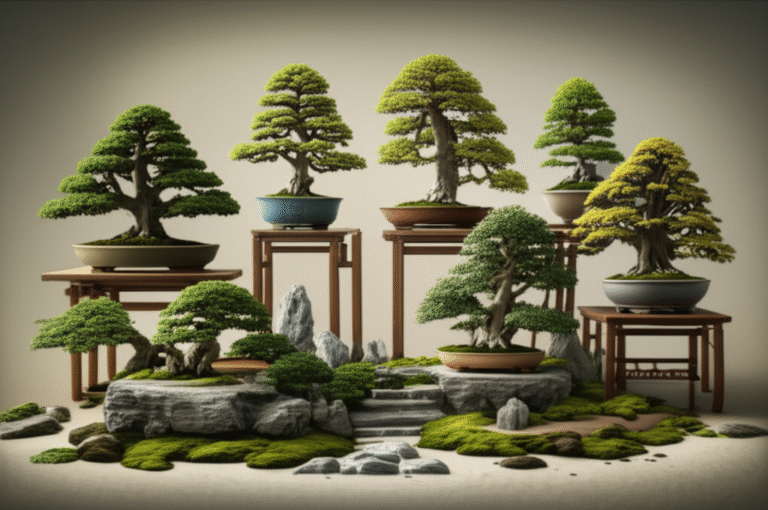
Have you ever walked into a room and felt instantly captivated by a beautifully displayed bonsai? It’s not just the tree itself—it’s the art of display that transforms a simple plant into a striking centerpiece. At Bonsai Garden™, we’ve gathered insights that will elevate your bonsai display game to new heights!
Imagine walking through a serene garden, where every bonsai tells a story through its placement, pot, and surrounding elements. Did you know that the right display can enhance your bonsai’s health and longevity? In this article, we’ll explore 15 essential rules that will guide you in showcasing your miniature tree masterpieces like a pro. From choosing the right pot to understanding the importance of lighting, we’ll cover everything you need to know to create a stunning bonsai display that will leave your guests in awe.
Key Takeaways
- Less is More: A few well-placed bonsai can have a greater impact than a cluttered collection.
- Choose the Right Pot: The pot should complement your bonsai’s size and style for maximum effect.
- Lighting Matters: Proper lighting enhances the beauty of your bonsai and supports its health.
- Create Balance: Use negative space to allow your bonsai to stand out and be appreciated.
- Seasonal Displays: Adapt your display to reflect the changing seasons for added visual interest.
Ready to level up your bonsai display? Shop our curated selection of bonsai pots and accessories to find the perfect pieces that will enhance your beautiful trees! 🌱
Table of Contents
- Quick Tips and Facts for Bonsai Display
- The Art of Bonsai Display: A Historical Perspective
- Essential Rules for Displaying Your Bonsai Like a Pro
- Choosing the Right Pot: A Key to Stunning Displays
- The Importance of Lighting in Bonsai Presentation
- Creating Balance: The Visual Harmony of Bonsai Arrangements
- Seasonal Considerations: When and How to Display Your Bonsai
- Showcasing Different Bonsai Styles: A Guide to Variety
- Common Mistakes to Avoid When Displaying Bonsai
- Leave a Comment: Share Your Bonsai Display Experiences
- Shop Tools and Accessories for Perfecting Your Display
- Subscribe to Our Emails for Bonsai Tips and Tricks
- Author: Joshua Hooson – Your Bonsai Buddy
- Conclusion: Mastering the Art of Bonsai Display
- Recommended Links for Further Reading
- FAQ: Your Bonsai Display Questions Answered
- Reference Links for Bonsai Enthusiasts
1. Quick Tips and Facts for Bonsai Display
Outdoor bonsai display ideas can be as simple or elaborate as you like, but there are a few quick tips and facts to keep in mind:
- Less is more: A few well-chosen bonsai, displayed with care, will have a greater impact than a cluttered collection.
- Consider the setting: The style of your bonsai should complement its surroundings. A formal upright bonsai might look out of place in a rustic garden setting, while a cascading bonsai could be right at home.
- Don’t be afraid to experiment: There are no hard and fast rules when it comes to bonsai display. Try different arrangements and see what looks best to you.
- Rotate your bonsai: Bonsai need sunlight to thrive. If you’re displaying your bonsai indoors, be sure to rotate them regularly so that all sides of the tree get adequate light.
- Choose the right pot: The pot is an important part of the overall bonsai aesthetic. Select a pot that complements the size, shape, and style of your tree. More on that later! 😉
2. The Art of Bonsai Display: A Historical Perspective
Bonsai, the art of cultivating miniature trees in containers, originated in China over a thousand years ago. Historical records indicate that these early bonsai, known as “pun-sai,” were initially enjoyed by the elite members of society. Eventually, bonsai cultivation spread to Japan, where it evolved into the highly refined art form we know and love today.
The Japanese aesthetic principles of Wabi-sabi (finding beauty in imperfection) and Miyabi (elegant simplicity) played a pivotal role in shaping the art of bonsai display. These principles emphasize the importance of balance, harmony, and a deep appreciation for the natural world.
3. Essential Rules for Displaying Your Bonsai Like a Pro
While bonsai is an art form open to interpretation, certain guidelines can help you create stunning and harmonious displays. Don’t worry, these aren’t set-in-stone rules, but rather helpful suggestions to elevate your bonsai game.
Choosing the Right Display Area:
- Focal Point: Your bonsai should be the star of the show! Choose a location where it can take center stage without being overshadowed by other objects.
- Background: A plain background, like a neutral-colored wall or a simple screen, will make your bonsai stand out.
- Eye Level: Display your bonsai at eye level or slightly below. This allows for optimal viewing of the tree’s structure and foliage.
The Power of One:
- Solo Display: Sometimes, a single, well-chosen bonsai can make the most dramatic statement. This is especially effective for larger or particularly striking specimens.
4. Choosing the Right Pot: A Key to Stunning Displays
The pot is more than just a vessel for your bonsai; it’s an integral part of the overall design. Here’s what to consider:
Size Matters:
- Proportion: The pot should be in proportion to the tree. A general rule of thumb is to choose a pot that’s about two-thirds the width of the tree’s canopy.
- Depth: The depth of the pot should be roughly equal to the diameter of the trunk at its base.
Shape and Style:
- Matching Styles: The shape and style of the pot should complement the style of your bonsai. For example:
- Formal upright bonsai: Look best in rectangular or oval pots.
- Informal upright bonsai: Suit oval, round, or slightly irregular pots.
- Cascading bonsai: Often displayed in tall, narrow pots.
Color Palette:
- Complementary Colors: Choose a pot color that complements the color of your bonsai’s foliage or flowers. For example:
- Evergreen bonsai: Look stunning in unglazed pots or pots with muted earth tones.
- Deciduous bonsai: Can be paired with a wider range of colors, including glazed pots with brighter hues.
5. The Importance of Lighting in Bonsai Presentation
Light is essential for the health and vitality of your bonsai, but it also plays a crucial role in how your tree is perceived.
Natural Light:
- Outdoor Display: Whenever possible, display your bonsai outdoors in a location where it can receive adequate sunlight. Different bonsai species have different light requirements, so be sure to research the needs of your specific tree.
- Indoor Display: If you’re displaying your bonsai indoors, choose a bright location, preferably near a south-facing window.
Artificial Light:
- Supplemental Lighting: You can supplement natural light with artificial grow lights, especially during the winter months when daylight hours are shorter.
- Highlighting Features: Strategically placed spotlights can be used to highlight specific features of your bonsai, such as its trunk, branches, or foliage.
6. Creating Balance: The Visual Harmony of Bonsai Arrangements
One of the key principles of bonsai display is achieving visual balance. This doesn’t necessarily mean symmetry, but rather a sense of equilibrium and harmony.
Asymmetrical Balance:
- Rule of Thirds: Imagine dividing your display area into thirds both horizontally and vertically. Placing your bonsai slightly off-center, at one of the intersecting points, can create a more dynamic and visually appealing arrangement.
The Power of Negative Space:
- Breathing Room: Don’t overcrowd your display. Leave some empty space around your bonsai to allow the viewer’s eye to rest and appreciate the tree’s form.
7. Seasonal Considerations: When and How to Display Your Bonsai
The changing seasons offer unique opportunities to showcase the beauty of your bonsai.
Spring:
- New Growth: Spring is a time of renewal and growth. Highlight your bonsai’s fresh, vibrant foliage by displaying it against a backdrop of spring flowers or a lush green lawn.
Summer:
- Outdoor Enjoyment: Summer is the perfect time to move your bonsai outdoors to a patio, balcony, or garden. Create a serene oasis by surrounding your bonsai with water features, stones, or other natural elements.
Autumn:
- Vibrant Colors: As the leaves of deciduous bonsai transform into brilliant hues of red, orange, and yellow, consider displaying them against a backdrop of autumnal colors.
Winter:
- Indoor Display: During the winter months, when temperatures drop, it’s essential to protect your bonsai from frost. Bring them indoors and create a cozy display in your living room or study.
8. Showcasing Different Bonsai Styles: A Guide to Variety
There are numerous bonsai styles, each with its own unique characteristics and aesthetic appeal. Understanding these styles can help you create more informed and impactful displays.
Formal Upright Style (Chokkan):
- Characteristics: Characterized by a straight, upright trunk that tapers gradually from base to apex. The branches are symmetrical and well-balanced.
- Display: Formal upright bonsai are often displayed on their own, as they command attention with their strong, elegant lines.
Informal Upright Style (Moyogi):
- Characteristics: Similar to the formal upright style, but with a more natural, flowing trunk line. The branches are also asymmetrical, giving the tree a more relaxed appearance.
- Display: Informal upright bonsai can be displayed on their own or in small groups.
Slanting Style (Shakan):
- Characteristics: As the name suggests, slanting style bonsai have a trunk that leans at an angle. This style is often used to represent trees that have grown in exposed, windy locations.
- Display: Slanting style bonsai look best when displayed in a way that emphasizes their dynamic, asymmetrical form.
9. Common Mistakes to Avoid When Displaying Bonsai ❌
Even experienced bonsai enthusiasts can make mistakes when it comes to display. Here are a few common pitfalls to avoid:
- Overcrowding: Avoid cramming too many bonsai into a small space. This will only create a cluttered and unappealing look.
- Ignoring Scale: Choose bonsai and display elements that are in proportion to each other. A tiny bonsai will be lost in a large, ornate pot, while a massive bonsai will dwarf a delicate display table.
- Poor Lighting: Bonsai need adequate light to thrive. If you’re displaying your bonsai indoors, make sure it’s getting enough natural or artificial light.
- Neglecting Maintenance: Even when displayed, bonsai still require regular watering, fertilizing, and pruning. Don’t let your display become an excuse to neglect your trees!
10. Leave a Comment: Share Your Bonsai Display Experiences 💬
We’d love to hear from you! Share your bonsai display tips, stories, and questions in the comments section below. Let’s learn from each other and celebrate the art of bonsai together! 👇
11. Shop Tools and Accessories for Perfecting Your Display 🛒
Want to take your bonsai display to the next level? Check out our curated selection of tools and accessories designed to help you create stunning and professional-looking displays. Shop Now at Bonsai Garden™!
12. Subscribe to Our Emails for Bonsai Tips and Tricks ✉️
Don’t miss out on our latest bonsai care tips, design inspiration, and exclusive offers. Subscribe to our email newsletter today!
13. Author: Joshua Hooson – Your Bonsai Buddy 🌟
Joshua Hooson, a seasoned bonsai enthusiast at Bonsai Garden™, brings his passion for these miniature masterpieces to this comprehensive guide. With years of experience nurturing and styling bonsai, Joshua’s insights are invaluable for both beginners and experienced hobbyists.
14. Conclusion: Mastering the Art of Bonsai Display 🏆
In conclusion, displaying your bonsai is an art that combines aesthetics, nature, and a dash of personal flair. By following the essential rules we’ve discussed—such as choosing the right pot, considering lighting, and creating balance—you can transform your bonsai into a stunning centerpiece. Remember, while there are guidelines to help you, the beauty of bonsai lies in its uniqueness and the personal touch you bring to it.
Positives of effective bonsai display include enhanced visibility of your tree’s beauty, improved health through proper lighting and positioning, and the joy of sharing your passion with others. However, negatives can arise from neglecting maintenance or overcrowding your display area, which can detract from the overall impact.
So, whether you’re a seasoned bonsai artist or just starting your journey, embrace these guidelines and let your creativity flourish. Your bonsai deserves to shine!
15. Recommended Links for Further Reading 📚
16. FAQ: Your Bonsai Display Questions Answered ❓
What is the rule of 3 in bonsai trees?
The Rule of Three Explained
The “rule of three” in bonsai refers to the principle of having three main branches that create a balanced and harmonious structure. These branches are typically positioned to enhance the tree’s visual appeal and create depth. The first branch is placed about one-third of the way up the trunk, while the second and third branches follow, creating a triangular formation that invites the viewer’s eye.
What are the fundamentals of bonsai display?
Key Fundamentals
The fundamentals of bonsai display include:
- Proportion: Ensure the pot size complements the tree’s size.
- Balance: Create visual harmony, often through asymmetrical arrangements.
- Lighting: Provide adequate light to enhance the tree’s features.
- Background: Use a neutral backdrop to make your bonsai stand out.
How to display your bonsai?
Displaying Your Bonsai
To display your bonsai effectively:
- Choose a suitable location—preferably at eye level.
- Select the right pot to complement your tree’s style.
- Consider the lighting—natural light is best.
- Create balance—leave negative space around the bonsai.
- Rotate your bonsai for even exposure to light.
What is the golden rule of bonsai?
The Golden Rule
The golden rule of bonsai is to create a design that reflects nature while maintaining a sense of proportion and balance. This means ensuring that your bonsai has a well-defined trunk, harmonious branch placement, and a pleasing overall shape that mimics the natural growth patterns found in nature.
Why is negative space important in bonsai display?
Importance of Negative Space
Negative space refers to the empty areas around your bonsai that allow the viewer’s eye to rest. It is crucial because it enhances the overall composition, draws attention to the tree, and creates a sense of tranquility. Without negative space, the display can feel cluttered and overwhelming.
What materials are best for bonsai pots?
Best Materials for Bonsai Pots
The best materials for bonsai pots include:
- Ceramic: Offers excellent aesthetics and drainage.
- Plastic: Lightweight and affordable, but may not provide the same aesthetic appeal.
- Clay: Traditional choice, allowing for good air circulation and moisture control.
17. Reference Links for Bonsai Enthusiasts 🔗
By following these insights and recommendations, you can create a bonsai display that not only showcases your trees beautifully but also reflects your unique style and dedication to this incredible art form. Happy bonsai displaying! 🌳✨