Support our educational content for free when you buy through links on our site. Learn more

Have you ever gazed at an ancient bonsai and wondered how those weathered, ghost-white branches came to be? That striking contrast between vibrant green foliage and bleached, rugged wood is the magic of the Jin bonsai technique—an art form that captures the raw beauty of nature’s harshest elements. At Bonsai Garden™, we’ve spent years perfecting this technique, transforming ordinary trees into living stories of survival and resilience.
In this comprehensive guide, we’ll unravel the mysteries behind Jin, Shari, and Uro—the trio of deadwood styles that bring your bonsai to life with age and character. From choosing the right species and tools to step-by-step carving instructions and finishing touches with lime sulfur, we cover everything you need to know. Plus, we share insider tips on avoiding common mistakes and maintaining your masterpiece for decades to come. Ready to turn your bonsai into a miniature mountain survivor? Let’s dive in!
Key Takeaways
- Jin technique simulates natural weathering by stripping bark and creating deadwood on branches or leaders, adding dramatic age and character.
- Conifers like Juniper and Pine are ideal species due to their rot-resistant wood and beautiful grain for deadwood artistry.
- Essential tools include Jin pliers, carving chisels, rotary tools, and lime sulfur for preservation and whitening of deadwood.
- Timing and precision are critical—perform Jin in early spring or late summer and avoid damaging live sap veins to keep your bonsai healthy.
- Jin, Shari, and Uro each serve unique aesthetic roles: Jin for dead branches, Shari for trunk deadwood, and Uro for hollow scars.
- Maintenance involves annual lime sulfur treatment and careful cleaning to protect deadwood from rot and decay.
Unlock the secrets of Jin and elevate your bonsai artistry to new heights!
Table of Contents
- ⚡️ Quick Tips and Facts About Jin Bonsai Technique
- 🌳 The Art and History of Jin in Bonsai: Origins and Evolution
- 🔍 Understanding Jin, Shari, and Uro: The Deadwood Techniques Explained
- 🪓 How to Create Stunning Deadwood on Your Bonsai: Tools and Safety Tips
- 1️⃣ Step-by-Step Guide to Crafting Jin on Your Bonsai Tree
- 2️⃣ Mastering Shari: Techniques to Reveal the Tree’s Inner Story
- 3️⃣ Creating Uro: Subtle Deadwood Details for Realistic Bonsai
- 🌿 Choosing the Right Bonsai Species for Jin and Deadwood Artistry
- 🛠️ Essential Tools and Materials for Jin Bonsai Technique: What We Use
- 💡 Common Mistakes to Avoid When Creating Jin and How to Fix Them
- 🎨 Enhancing Your Jin with Lime Sulfur and Other Finishing Touches
- 🌞 Caring for Your Bonsai After Jin Creation: Maintenance and Protection
- 📸 Inspiring Jin Bonsai Examples: Real Trees, Real Stories
- 🧰 DIY vs Professional Jin Creation: When to Call in the Experts
- 🌐 Online Resources and Communities for Jin Bonsai Enthusiasts
- 🔚 Conclusion: Bringing Your Bonsai to Life with Jin Technique
- 🔗 Recommended Links for Jin Bonsai Tools and Tutorials
- ❓ FAQ: Your Burning Questions About Jin Bonsai Answered
- 📚 Reference Links and Further Reading on Jin and Deadwood Techniques
At Bonsai Garden, we believe every tree tells a story, but sometimes that story needs a little “deadly” drama to truly shine. If you’ve ever looked at a gnarled, ancient pine clinging to a cliffside and wondered how to capture that raw survival energy in a ceramic pot, you’re in the right place. We’re diving deep into the Jin bonsai technique, the art of turning living branches into skeletal masterpieces.
⚡️ Quick Tips and Facts About Jin Bonsai Technique
Before we grab the pliers, let’s look at the “cheat sheet” for deadwood success.
| Feature | Detail |
|---|---|
| Primary Goal | To simulate age, struggle, and natural weathering. |
| Best Species | Conifers (Juniper, Pine, Spruce) are king. |
| Timing | Early spring or late summer for optimal healing. |
| Key Chemical | Lime Sulfur for bleaching and preservation. |
| Risk Level | High (it’s permanent!), so practice on “sacrificial” branches first. |
| Symbolism | Resilience, divinity, and the passage of time. |
- Fact: The word Jin (神) actually translates to “god” or “divine” in Japanese, reflecting the spiritual awe of ancient trees.
- Pro Tip: Never create a Jin on a branch you might need for the tree’s future sap flow. Once it’s dead, it’s dead! ❌
- LSI Keyword: Deadwood artistry is essential for the Sharimiki (driftwood) style.
🌳 The Art and History of Jin in Bonsai: Origins and Evolution
The history of deadwood isn’t just about aesthetics; it’s about survival. In the high mountains of Japan, trees endure lightning strikes, heavy snow, and brutal winds. These forces strip bark and snap limbs, leaving behind bleached white wood. According to Wazakura Japan, this technique embodies the philosophy of Wabi-sabi—finding beauty in imperfection and the natural cycle of growth and decay.
We often get asked in our Bonsai Care Basics classes: “Why would I want to kill part of my tree?” The answer lies in the contrast. The vibrant green foliage against the stark, bone-white wood creates a visual tension that screams “ancient.” While traditional Japanese masters have used these techniques for centuries, modern enthusiasts have pushed the boundaries using power tools to create intricate, flowing designs.
🔍 Understanding Jin, Shari, and Uro: The Deadwood Techniques Explained
Don’t get your terms twisted! While they all involve deadwood, they serve different roles in your tree’s “biography.”
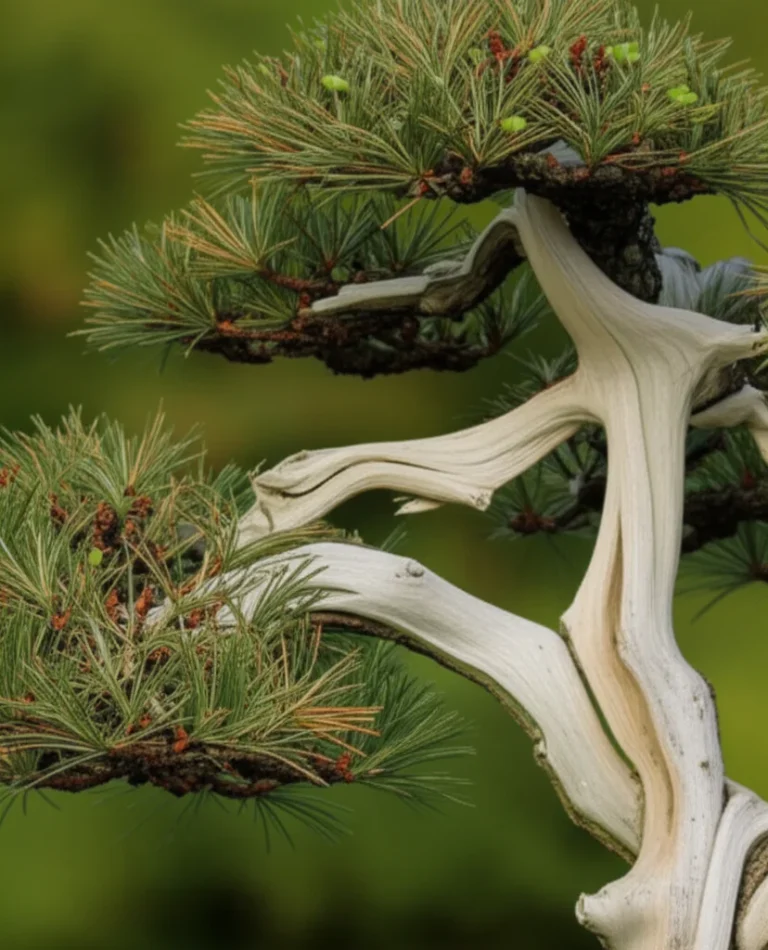
- Jin: This is a dead branch or a dead top (leader). It looks like a spike or a weathered limb.
- Shari: This is a strip of deadwood on the main trunk. It’s like the tree’s “spine” being exposed to the elements.
- Uro: These are hollowed-out “scars” or holes, often found where a branch once lived.
Bonsai Empire notes that while Jin and Shari are staples for evergreens, Uro is the go-to for deciduous trees like Maples or Elms, as their wood tends to rot rather than bleach. If you’re just starting, check out our Bonsai for Beginners guide to see which style fits your current collection.
🪓 How to Create Stunning Deadwood on Your Bonsai: Tools and Safety Tips
Creating deadwood is essentially controlled trauma. You need the right gear to ensure the “trauma” looks like Mother Nature’s work and not a DIY disaster.
Safety First: Always wear eye protection when using power tools or lime sulfur. That stuff is caustic! 🧪
The Tool Kit:
- Jin Pliers: Essential for crushing and stripping bark.
- Graving Tools/Chisels: For detail work and grain texture.
- Dremel or Die Grinder: For large-scale carving.
- Wire Brushes: To clean the wood and highlight the grain.
👉 CHECK PRICE on:
- Wazakura Jin Pliers: Amazon | Wazakura Official
- TianBonsai Carving Set: Amazon | Etsy
- Dremel 4300 High-Performance Kit: Amazon | Walmart
1️⃣ Step-by-Step Guide to Crafting Jin on Your Bonsai Tree
Ready to make the cut? Follow our “Bonsai Garden™” method for a natural look.
- Select the Victim: Choose a branch that doesn’t fit the design or is already dying.
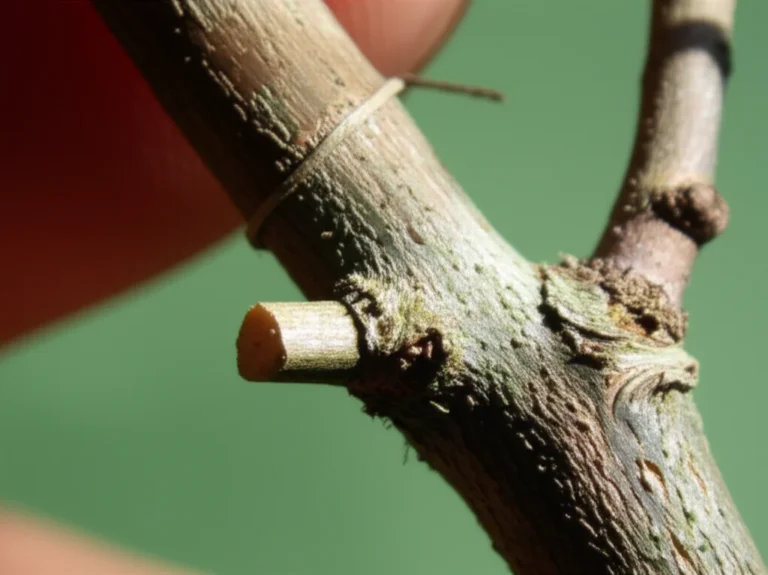
- The Score: Use your Jin pliers to score the bark at the base of where you want the Jin to start. Crucial Tip: As seen in our featured video, do not peel too far into the trunk, or you’ll disrupt the sap flow to the rest of the tree!
- The Strip: Grip the branch with the pliers and twist. The bark should peel away in strips.
- The Taper: Don’t leave a blunt end. Use the pliers to “shatter” the tip of the wood, mimicking a branch that snapped in a storm.
- Refinement: Use a carving tool to follow the natural grain. Nature doesn’t do straight lines, and neither should you. ✅
2️⃣ Mastering Shari: Techniques to Reveal the Tree’s Inner Story
Shari is more advanced because you are working directly on the lifeline of the tree—the trunk.
- Find the Live Vein: Before you strip any bark, you must identify where the sap is flowing. If you cut off the “highway” to the top of the tree, the whole thing dies. ❌
- The Path: Draw your intended Shari with a marker first. It should flow with the movement of the tree.
- The Removal: Use a sharp knife to cut the edges, then peel the bark away.
- The “Bridge”: Ensure there is always a continuous strip of bark (the live vein) connecting the roots to the foliage.
For more on trunk aesthetics, browse our Bonsai Inspiration and Ideas section.
3️⃣ Creating Uro: Subtle Deadwood Details for Realistic Bonsai
Uro are the “secret sauce” for making a young tree look like a centenarian. These are hollows created where branches have rotted away.
- Placement: Usually at the site of a large pruning scar.
- The Technique: Use a round-nose bit on a Dremel to hollow out the center of the scar.
- The Look: Make the edges irregular. A perfect circle looks like a drill hole; a jagged oval looks like a 50-year-old wound.
- Maintenance: Unlike Jin, Uro in deciduous trees can trap water and cause unwanted rot. We recommend sealing the inside of the hollow with a wood preserver but leaving the edges natural.
🌿 Choosing the Right Bonsai Species for Jin and Deadwood Artistry
Not all trees are created equal when it comes to “playing dead.”
| Species Type | Suitability for Jin/Shari | Why? |
|---|---|---|
| Juniper | ⭐⭐⭐⭐⭐ | Extremely rot-resistant wood; beautiful grain. |
| Pine | ⭐⭐⭐⭐ | High resin content preserves the wood naturally. |
| Spruce/Larch | ⭐⭐⭐⭐ | Great for “top jin” (dead leaders). |
| Deciduous (Maple/Elm) | ⭐⭐ | Wood rots quickly; better for Uro than Jin. |
| Tropicals (Ficus) | ⭐ | Soft wood rots almost immediately in humid air. |
Expert Insight: Wikipedia notes that while deadwood is technically possible on deciduous trees, it’s rarely seen in traditional Japanese displays because it doesn’t last. We recommend sticking to Conifers if you want your Jin to last decades. Check our Bonsai Species Guide for more specifics.
🛠️ Essential Tools and Materials for Jin Bonsai Technique: What We Use
We’ve tested dozens of brands at the nursery. Here’s how the heavy hitters stack up for deadwood creation.
| Brand | Design | Durability | Functionality | Overall Rating |
|---|---|---|---|---|
| Wazakura Japan | 9/10 | 10/10 | 9/10 | 9.3 |
| TianBonsai | 8/10 | 8/10 | 9/10 | 8.3 |
| Dremel (Rotary) | 10/10 | 9/10 | 10/10 | 9.7 |
| Kaneshin | 10/10 | 10/10 | 10/10 | 10.0 |
Kaneshin is the “Ferrari” of bonsai tools—expensive, but they will outlive you. For most hobbyists, Wazakura offers the best balance of quality and price.
👉 Shop Tools on:
- Kaneshin Tools: Brand Official | Etsy
- Bonsai Aesthetics (Jim Gremel): Amazon
💡 Common Mistakes to Avoid When Creating Jin and How to Fix Them
We’ve seen some “horror movies” in our time. Avoid these pitfalls:
- The “Telephone Pole” Look: Making the Jin perfectly straight. ✅ Fix: Use a torch to heat the wood slightly and bend it, or use pliers to “shatter” the straight lines.
- Killing the Tree: Cutting the live vein. ❌ Fix: There is no fix! Always trace your sap flow with a damp cloth first; the live veins will stay dark while the dead areas dry quickly.
- Over-Carving: Making it look like a wood carving rather than a tree. ✅ Fix: Less is more. Start small. You can always take more wood off, but you can’t glue it back on!
🎨 Enhancing Your Jin with Lime Sulfur and Other Finishing Touches
Once you’ve carved your masterpiece, it will look like “fresh” wood (yellow or tan). To get that ghostly white look, you need Lime Sulfur.
- Clean the Wood: Use a wire brush to remove any loose fibers.
- Wet the Wood: This helps the sulfur soak in evenly.
- Apply: Use a small paintbrush to apply the lime sulfur.
- The Magic: It will look orange at first—don’t panic! 😱 As it dries and reacts with the air, it turns bone-white.
- Contrast: Some artists add a drop of black ink to the sulfur to create “shadows” in the deep cracks of the wood.
👉 CHECK PRICE on:
🌞 Caring for Your Bonsai After Jin Creation: Maintenance and Protection
Deadwood isn’t “set it and forget it.” Because it’s dead, it’s susceptible to rot and fungus.
- Annual Treatment: Re-apply lime sulfur once a year to keep the wood white and protected.
- Cleaning: Use a soft toothbrush and water to remove algae or moss that grows on the deadwood.
- Hardening: If the wood feels soft, you can use a “wood hardener” (like Minwax) before applying lime sulfur.
Got more questions? Our Bonsai FAQs cover everything from pest control to winterizing your newly carved trees.
📸 Inspiring Jin Bonsai Examples: Real Trees, Real Stories
We once worked on a San Jose Juniper that had been neglected for a decade. It had a massive, leggy branch that ruined the silhouette. Instead of cutting it off, we turned it into a 10-inch “Top Jin.” Suddenly, the tree didn’t look like a “neglected shrub”—it looked like a survivor of a mountain peak.
The Sharimiki style (driftwood) is the ultimate expression of this. Look at the works of Masahiko Kimura, the “Magician,” who pioneered using power tools to create deadwood that looks like flowing water. His trees often have more deadwood than living foliage, yet they feel incredibly alive.
🧰 DIY vs Professional Jin Creation: When to Call in the Experts
Should you DIY?
- DIY: If the branch is small (pencil thickness) and the tree is common nursery stock. It’s the best way to learn!
- Professional: If the tree is a high-value specimen or if the Shari requires working near a critical live vein.
We’ve seen enthusiasts lose 20-year-old trees because they got too “Dremel-happy.” If you’re nervous, attend a workshop or consult a pro.
🌐 Online Resources and Communities for Jin Bonsai Enthusiasts
Don’t go it alone! The bonsai community is full of “deadwood junkies” who love to share tips.
- BonsaiNut Forum: Great for technical carving discussions.
- Reddit r/Bonsai: Perfect for quick feedback on your Jin progress.
- Mirai Live: Ryan Neil offers some of the most advanced deadwood tutorials in the world.
But wait—once you’ve created this beautiful white deadwood, how do you make sure the living part of the tree stays healthy enough to support it? And what happens if the lime sulfur touches the soil? We’ll resolve those “living” mysteries in our final thoughts.
(Note: Refer to the San Jose Juniper Jin technique video for a visual demonstration of the scoring and peeling process mentioned in Section 1.)
🔚 Conclusion: Bringing Your Bonsai to Life with Jin Technique
There you have it—the Jin bonsai technique is much more than just stripping bark or carving deadwood. It’s a celebration of resilience, a nod to nature’s harsh realities, and an artistic tool that brings your bonsai’s story to life. From the delicate peeling of a branch to the dramatic exposure of a tree’s inner “spine,” Jin adds character, age, and soul to your miniature forest.
But remember, this technique is a double-edged sword. Done right, it elevates your bonsai to museum-worthy status. Done wrong, it can kill your tree or leave it looking like a botched DIY project. That’s why we recommend starting small, practicing on sacrificial branches, and investing in quality tools like Wazakura Jin Pliers and Kaneshin carving sets. And don’t forget the magic of lime sulfur—the secret to that iconic ghost-white finish.
As for the unanswered question about lime sulfur touching soil—avoid it at all costs! It’s caustic and can harm roots. Always apply carefully with a brush and keep the soil covered or protected.
In short: Jin is an art and a science. Master it, and your bonsai will whisper tales of storms weathered and centuries endured.
🔗 Recommended Links for Jin Bonsai Tools and Tutorials
-
Wazakura Jin Pliers:
Amazon | Wazakura Official Website -
Kaneshin Bonsai Tools:
Kaneshin Official | Etsy -
Recommended Books:
“Bonsai Techniques I & II” by John Yoshio Naka — Amazon
“The Art of Bonsai Design” by Colin Lewis — Amazon
❓ FAQ: Your Burning Questions About Jin Bonsai Answered
How does Jin technique affect the health of a bonsai tree?
The Jin technique involves killing a branch or section of the tree by stripping bark and cambium. While this deadwood adds aesthetic value, it does not harm the overall health of the bonsai if done correctly. The key is to avoid damaging the live veins that transport sap. If the live vein is severed, the tree or branch may die prematurely. Proper timing (early spring or late summer) also helps the tree heal faster.
What types of bonsai trees are suitable for Jin technique?
Evergreens, especially Junipers, Pines, and Spruces, are ideal for Jin because their wood is naturally rot-resistant and bleaches beautifully. Deciduous trees like Maples can develop deadwood but tend to rot faster, making Jin less practical. For deciduous species, Uro (hollows) are often a better deadwood option.
When is the best time to apply Jin technique on a bonsai?
The best time is early spring or late summer. This timing ensures the tree is actively growing and can heal wounds quickly. Avoid winter or dormant periods, as the tree’s healing processes slow down, increasing the risk of infection or die-back.
Can Jin technique help improve the natural look of bonsai trees?
Absolutely! Jin adds a dramatic contrast between living and dead wood, simulating natural weathering from storms, lightning, or drought. It enhances the tree’s character, age, and story, making it look like a miniature ancient survivor.
Are there specific tree species best suited for Jin technique?
Yes, conifers like Juniper, Pine, and Spruce are best suited due to their durable wood and natural resistance to decay. These species also respond well to lime sulfur treatment, which preserves and whitens the deadwood.
What is the difference between Jin and Shari in bonsai?
- Jin refers to deadwood on branches or the tree’s leader (top). It looks like a weathered, bare branch.
- Shari is deadwood on the main trunk, often a vertical strip where bark has been removed to expose the wood beneath.
Both techniques simulate natural damage but differ in location and scale.
How does Jin technique enhance the appearance of bonsai?
Jin creates visual tension by contrasting vibrant foliage with stark, bleached wood. It symbolizes survival against harsh elements and adds a sense of age and drama. This technique can transform a young, plain bonsai into a compelling storybook tree.
Can Jin technique be applied to all types of bonsai trees?
While technically possible, Jin is not recommended for all species. Softwoods and tropical species often rot quickly after bark removal. Deciduous trees generally don’t hold Jin well unless combined with other deadwood techniques like Uro. Always consider species characteristics before applying Jin.
What tools are needed for Jin bonsai technique?
Essential tools include:
- Jin pliers for stripping bark and breaking branches.
- Carving chisels and graving tools for shaping and detailing.
- Rotary tools (e.g., Dremel) for larger or more precise carving.
- Wire brushes for cleaning and texturing.
- Lime sulfur for preservation and bleaching.
How do you create a Jin on a bonsai tree?
- Select a branch to become Jin.
- Score the bark at the base with Jin pliers.
- Peel away bark and cambium carefully.
- Break or taper the deadwood tip for natural look.
- Carve and texture the wood to mimic natural grain.
- Treat with lime sulfur for preservation and whitening.
What is the Jin technique in bonsai art?
Jin is a deadwood technique where parts of a bonsai’s branches or leader are intentionally killed and stripped of bark to simulate natural aging and weathering. It represents the tree’s struggle and survival, adding depth and realism to bonsai design.
📚 Reference Links and Further Reading on Jin and Deadwood Techniques
- Bonsai Empire: Deadwood Techniques (Jin, Shari, Uro)
- Wikipedia: Deadwood Bonsai Techniques
- Wazakura Japan: Bonsai Techniques: Jin (神) and Shari (舎利)
- Kaneshin Bonsai Tools Official Website
- Wazakura Official Website
- Bonsai Garden™ Bonsai Care Basics
- Bonsai Garden™ Bonsai Species Guide
- Bonsai Garden™ Bonsai Inspiration and Ideas
We hope this guide inspires you to embrace the Jin bonsai technique and bring that touch of wild, weathered beauty to your own bonsai collection. Remember, every scar tells a story—what will yours say? 🌲✨