Support our educational content for free when you buy through links on our site. Learn more

The best bonsai wire cutters match the wire’s thickness and reach the coil without pressing their jaws against bark. Use a dedicated, correctly rated wire cutter, then remove training wire in short sections rather than unwinding it around a branch.
We learned this lesson during a wiring session with a stubborn coil tucked into a dense canopy: a larger cutter handled the thick wire, but its bulky head was awkward near delicate shoots. The right tool isn’t always the biggest one—it’s the one that can make a controlled cut where you need it.
Key Takeaways
- Match cutter capacity to wire size and material. Don’t force an undersized tool through thick wire.
- Use a dedicated wire cutter—not concave branch cutters. They’re designed for different jobs.
- Remove wire by cutting it into short pieces. This helps reduce scraping and twisting against the bark.
- Inspect wired branches regularly. Remove or adjust wire when it starts to bite into the bark.
- Choose for both leverage and access. Heavy-duty cutters suit thick structural wire; compact cutters are easier to maneuver around fine growth.
- Clean, dry, and store your cutters to help keep the jaws aligned and protect the steel.
👉 Shop bonsai wire cutter options:
- Bonsai Mirai Knipex-based wire cutter: Amazon search | Bonsai Mirai Official
- Bonsai wire cutters: Amazon search | American Bonsai Tool and Supply Co.
Table of Contents
- ⚡️ Quick Tips and Facts
- 🌳 Bonsai Wire Cuters: What They Do and Why They Matter
- Wire cutters vs. bonsai branch cutters
- How bonsai wire cutters differ from standard pliers
- 🕰️ A Brief History of Bonsai Wiring Tools
- ✂️ Types of Bonsai Wire Cuters
- Concave wire cutters
- Knob cutters and branch cutters
- Long-nose and compact wire cutters
- Stainless steel vs. carbon steel
- 🛒 How to Choose the Right Bonsai Wire Cutter
- Match cutter size to wire gauge and tree size
- Blade shape, handle comfort, and cutting access
- Forged, machined, and budget-friendly tools
- What to check before you buy
- 🔧 How to Remove Bonsai Wire Without Damaging the Tree
- Step-by-step wire removal technique
- Cuting wire in tight spots and around delicate branches
- When to remove wire and how to spot wire bite
- ⚠️ Common Bonsai Wire-Cutting Mistakes
- 🧼 Cleaning, Sharpening, and Caring for Bonsai Cuters
- Preventing rust and resin buildup
- Sharpening and checking blade alignment
- Safe storage and tool maintenance
- 🧤 Bonsai Wire Cutter Safety and Workshop Setup
- 🔄 Alternatives to Bonsai Wire Cuters
- Can you use flush cutters, pliers, or household wire cutters?
- Choosing tools for copper and aluminum bonsai wire
- 🧰 Building a Practical Bonsai Wiring Tool Kit
- ✅ Quick Tips and Facts: Bonsai Wire Cutter Checklist
- 🏁 Conclusion
- 🔗 Recommended Links
- ❓ FAQ
- What size bonsai wire cutters should I buy?
- Can bonsai wire cutters cut thick copper wire?
- Can I use regular pliers to remove bonsai wire?
- Are concave cutters the same as bonsai wire cutters?
- How do I remove wire without scratching bark?
- How should I clean and oil bonsai wire cutters?
- When should bonsai wire be removed?
- 📚 Reference Links
⚡️ Quick Tips and Facts
A good bonsai wire cutter is a small tool with a surprisingly big job: it lets us remove training wire in short, controlled cuts instead of twisting it off and risking bark damage. For more background on our approach to growing and caring for miniature trees, visit the Bonsai Garden and our Bonsai Care Basics guide.
| At a glance | What to know |
|---|---|
| Main purpose | Cut wire cleanly during application or removal, particularly where fingers or larger tools cannot reach. |
| Best everyday choice | A dedicated bonsai wire cutter with rounded or blunt outer jaws and a size suited to the wire you use. |
| For thick wire | Use a heavier cutter specifically rated for that wire gauge. Longer handles can provide leverage, but they do not make an undersized tool safe. |
| Avoid | Prying, twisting wire off, cutting wire beyond the tool’s capacity, or letting the jaws press against bark. |
| Wire-removal rhythm | Cut the wire into short sections and lift each piece away gently. Don’t unwind a tight coil around a branch. |
| Important distinction | Concave branch cutters are designed to cut wood; wire cutters are designed to cut metal. They are not interchangeable. |
✅ Our rule of thumb: choose the cutter for the wire’s thickness, not merely for the tree’s size. Thick wire demands a suitable tool; delicate branches demand careful access and a light touch.
🌳 Bonsai Wire Cuters: What They Do and Why They Matter
Wire helps guide a branch into a desired position while it grows and sets. Later, the wire must come off before it bites into expanding bark. A purpose-built cutter gives us more control at that moment, especially when wire crosses itself or sits close to a twig.
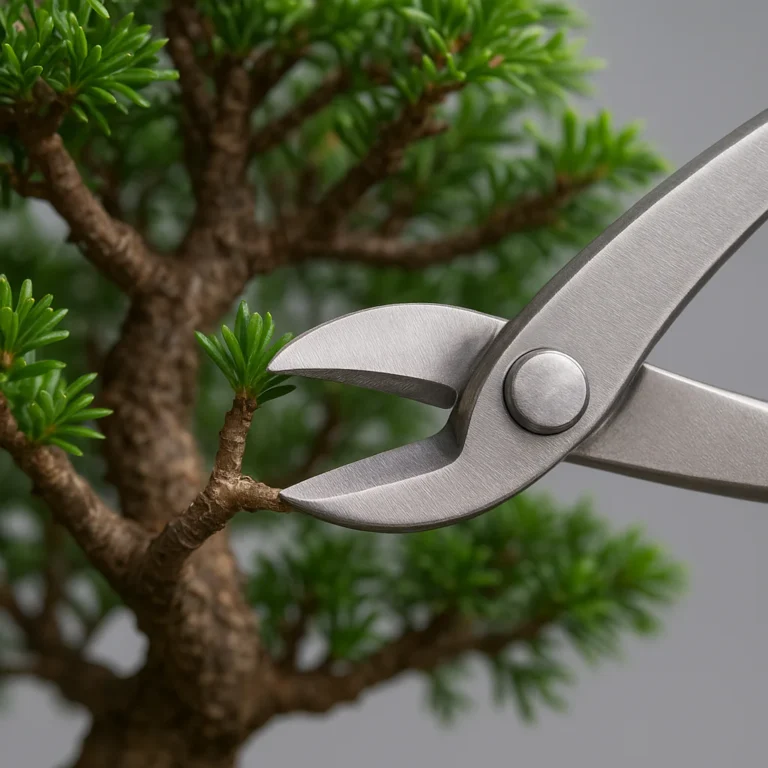
The most useful design feature is often not a fancy handle or polished finish. It is a jaw shape that reaches the wire without forcing the cutting edge into the tree. Dedicated bonsai cutters commonly have rounded outer profiles to reduce the chance of scraping bark as you approach a coil.
Wire cutters vs. bonsai branch cutters
These tools may share a place in a bonsai kit, but their jobs are different:
| Tool | Designed to cut | Typical role | Use it on wire? |
|---|---|---|---|
| Bonsai wire cutter | Metal wire | Cutting wire for wiring or removing it in sections | ✅ Yes, within its capacity |
| Concave branch cutter | Small branches and stubs | Creating a recessed cut that can heal over | ❌ No |
| Knob cutter | Knobs, roots, and protruding wood | Removing rounded wood features | ❌ No |
| Household diagonal cutter | Electrical or general-purpose wire | General utility cutting | ⚠️ Only if suitable for the wire and used carefully |
Using a branch cutter on metal can nick or misalign its cutting edges. Using a wire cutter on a branch is just as unhelpful: it is not shaped to make a clean horticultural cut. Our Bonsai for Beginners section covers how tools fit into a broader care routine.
How bonsai wire cutters differ from standard pliers
Standard pliers grip, bend, and twist. Bonsai wire cutters are meant to sever wire cleanly and give you close access to it. Some general-purpose cutters have sharp, flat or angled jaws that can be awkward beside bark. A rounded profile can help keep the outside of the jaws from gouging a branch, but it does not make careless cutting harmless.
For an especially useful demonstration of cutter size and rounded jaws during wire removal, see the featured video. The practical takeaway is simple: use a small cutter for fine work and a robust cutter for thick wire. One oversized tool is not automatically the right tool for every branch.
🕰️ A Brief History of Bonsai Wiring Tools
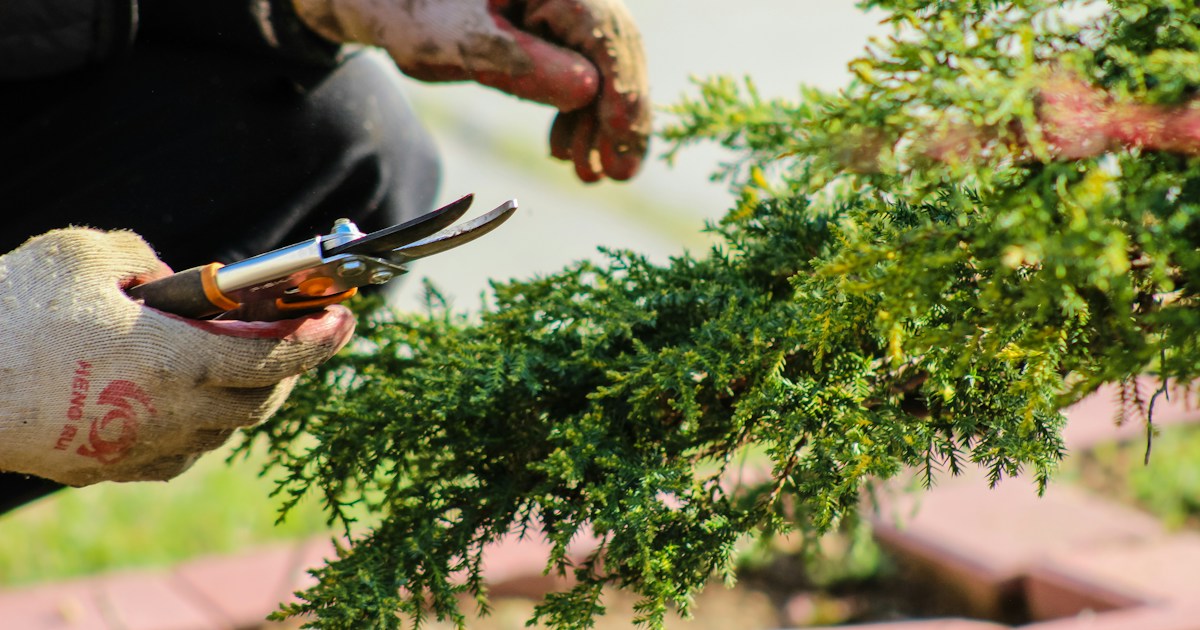
Bonsai wiring relies on a basic horticultural idea: temporarily guide a branch, then remove the wire once it has served its purpose. As bonsai tools became more specialized, cutters designed to work close to branches offered an alternative to twisting wire free by hand or reaching for a bulky workshop tool.
The craft has no single universal cutter design. Tool shapes vary by maker, intended wire range, and user preference. That is why we recommend judging a tool by fit, cutting capacity, access, and edge quality, rather than assuming that a particular style or country of manufacture guarantees good results.
✂️ Types of Bonsai Wire Cuters
Concave wire cutters
The phrase “concave wire cutter” can be confusing. In bonsai, concave cutters usually refer to branch-cuting tools, not wire cutters. Some wire cutters may have rounded or curved jaw exteriors, but that does not make them concave branch cutters.
When shopping, look for a product explicitly identified as a wire cutter and check the maker’s stated use and wire capacity. If the description focuses on removing branches or creating recessed wood cuts, it is the wrong tool for metal wire.
Knob cutters and branch cutters
Knob cutters and branch cutters belong in a bonsai toolkit, but they are not substitutes for wire cutters. Metal is harder than plant tissue and can damage delicate cutting edges. Keep separate tools for wire, live growth, and deadwood.
Long-nose and compact wire cutters
| Style | Advantages | Drawbacks | Best suited to |
|---|---|---|---|
| Compact bonsai wire cutter | Easier to maneuver around small branches and dense growth | Less leverage; may not handle heavy wire | Fine wire, small trees, close-access work |
| Long-handled heavy-duty cutter | More leverage and reach for larger wire | Bulkier near delicate foliage; can tempt users to cut beyond capacity | Thick wire and structural work |
| General-purpose diagonal cutter | Convenient for workshop use | Jaw shape may be less protective around bark; capacity varies | General wire tasks away from delicate branches |
The first video’s demonstration emphasizes using long-handled, heavy-duty cutters for thick wire and smaller cutters for fine wire and compact trees. That is sensible as long as you follow the tool maker’s capacity limits. A long handle increases leverage; it does not turn a light-duty cutter into a heavy-duty one.
Stainless steel vs. carbon steel
| Material | Potential benefit | Trade-off |
|---|---|---|
| Stainless steel | Better corrosion resistance in damp conditions | “Stainless” does not mean rustproof or maintenance-free |
| Carbon or tool steel | Can offer hard, durable cutting edges | More care may be needed to prevent rust |
| Coated or finished steel | Surface finish may offer some protection | Coating can wear; cutting performance depends on the steel and edge |
Material alone does not establish quality. Check the cuting capacity, jaw alignment, finish, handle comfort, and warranty or care instructions. After a damp session, wipe the tool dry regardless of its steel.
🛒 How to Choose the Right Bonsai Wire Cutter
Start with the thickest wire you actually plan to cut. Then consider how often you work, how much access you need around branches, and whether your hands prefer short or padded handles.
Match cutter size to wire gauge and tree size
A wire’s gauge and material affect how difficult it is to cut. Copper and aluminum differ in stiffness, and wire diameter matters too. Always check the manufacturer’s stated capacity rather than guessing from the cutter’s appearance.
The Bonsai Mirai Wire Cuters are listed as an 8-inch Knipex cutter with jaws that open to cut wire up to 4 gauge. The product page describes multi-rivet construction for mechanical advantage and extra-padded handles intended to distribute pressure across the hand. Those are useful features for demanding structural work, but the tool is larger than many people need for delicate, fine-wire jobs.
| Your typical work | Practical direction |
|---|---|
| Small trees and thin training wire | Compact, controlled bonsai wire cutter |
| A mix of fine and medium wire | General-purpose bonsai cutter with comfortable access |
| Thick structural wire and frequent heavy work | Heavy-duty cutter with published capacity and suitable leverage |
| Occasional wiring only | A modest, correctly rated cutter may be more sensible than a specialty heavy-duty tool |
Blade shape, handle comfort, and cutting access
Look for:
- Rounded outer jaws to help limit accidental bark contact.
- A cutting edge that meets cleanly, without visible gaps or woble.
- Handles that feel secure without forcing your wrist into an awkward angle.
- Enough clearance to get the jaw around the wire, not around the branch.
- A head size suitable for the places you need to reach.
We have found that a comfortable handle matters most during long wiring sessions. One winter workshop, a gardener switched from a short, hard-handled cutter to a padded long-handled model for thick wire; the hand fatigue eased, but the larger head was clumsy among fine twigs. The lesson? Comfort and access have to be balanced.
Forged, machined, and budget-friendly tools
Manufacturing claims can be useful, but they are not a substitute for testing the actual tool. A well-aligned, correctly rated cutter from a reputable maker is preferable to a tool chosen solely because it is described as “professional.”
Brands commonly found in bonsai tool discussions and supply catalogs include Knipex, Masakuni, Kaneshin, and Joshua Roth. Availability and exact models vary. Verify that a particular model is intended for wire and check its capacity before buying. The American Bonsai Tool and Supply Co. lists a wire-cutter category, while the Bonsai Mirai product page gives detailed specifications for its Knipex-based option.
What to check before you buy
✅ Confirm it is a wire cutter, not a branch cutter.
✅ Find the stated maximum wire size or gauge.
✅ Check that the jaw shape suits close work around bark.
✅ Consider handle length, weight, and your grip comfort.
✅ Read the maker’s care guidance and warranty terms.
❌ Don’t assume a cutter can handle thick copper just because it cuts thin aluminum.
❌ Don’t buy by brand name alone; model and intended use matter.
🔧 How to Remove Bonsai Wire Without Damaging the Tree
The safest method is usually to cut the wire into small pieces and lift them away, rather than unwinding the coil. Unwinding can drag a stiff wire across bark or flex a branch in the wrong direction.
Step-by-step wire removal technique
- Inspect the tree and wire. Note which branches are under tension, where coils cross, and whether any wire has begun to bite into the bark.
- Support the branch. Hold it gently near the wired area so it does not spring or twist when the wire is cut.
- Choose a safe cutting point. Place the cutter around the wire, keeping the jaws clear of bark and foliage.
- Cut one coil at a time. Make short cuts rather than trying to several loops at once.
- Lift the cut section away. Use your fingers or a suitable tool to remove the loose piece without dragging it along the branch.
- Continue around the branch. Reposition the cutter carefully as you work; avoid levering against the tree.
- Check the bark. Look for pressure marks, scratches, or signs that the wire had begun to embed.
- Stop if a branch moves unexpectedly. Re-support it before cutting more wire.
A University of Florida bonsai guide offers general bonsai-care context; for specific wiring schedules, follow trusted bonsai instruction and monitor each tree closely. The right removal time depends on growth rate, species, season, and how firmly the wire is pressing.
Cuting wire in tight spots and around delicate branches
In a crowded canopy, slow down. If the cutter head will not reach the wire without pressing against a twig, change your angle or use a smaller tool. Keep your free hand behind the cutting edge and support the branch without pinching it.
For a branch under tension:
- Cut the wire at a point where the loose ends can move away from the bark.
- Keep your face and fingers out of the likely path of a spring wire end.
- Avoid pulling a cut end lengthwise across a tender shoot.
- If the wire is embedded, do not dig under the bark with the cutter. Make controlled cuts and remove each piece with minimal disturbance.
The featured video stresses rounded edges during wire removal because they are less likely to damage bark than exposed sharp corners. That is helpful, but rounded jaws reduce risk; they don’t eliminate it.
When to remove wire and how to spot wire bite
There is no reliable calendar date for every bonsai. A fast-growing tree may need frequent checks; a slower-growing tree may hold its shape longer. Inspect wired branches regularly during the growing season.
Remove or adjust wire when:
- It begins to press into the bark.
- You see indentations developing around the coil.
- A branch has set in position and no longer needs the wire.
- The wire is so tight that removing it risks constricting growth.
A faint mark may fade in some cases, but deep wire bite can leave lasting scars. That is why experienced growers check the tree rather than relying on a fixed number of weeks. Learn more about ongoing observation in Bonsai Care Basics.
⚠️ Common Bonsai Wire-Cutting Mistakes
- Using concave branch cutters on wire: metal can damage their cutting edges.
- Using an undersized cutter on thick wire: excessive force may damage the tool or your hands.
- Twisting wire off: the wire can scrape bark or torque a branch.
- Cuting too close to the tree: the jaw or wire end can nick bark.
- Removing several coils in one squeeze: the tool may not cut cleanly, and wire can spring unpredictably.
- Ignoring wire bite: waiting for a routine “removal day” can be too late.
- Treating rounded jaws as a guarantee: careful positioning is still essential.
- Leaving wet or sap-covered tools uncleaned: residue and moisture can compromise smooth operation and encourage corrosion.
🧼 Cleaning, Sharpening, and Caring for Bonsai Cuters
Preventing rust and resin buildup
After each session, wipe away moisture, sap, and debris with a clean cloth. For sticky residue, use a cleaner suitable for the tool’s finish and follow the manufacturer’s instructions. Dry the cutter before storage, especially if it has carbon-stel components.
A light application of tool oil on the pivot and exposed steel can help protect the tool. Keep oil away from plant surfaces and wipe away excess before using the cutter near a tree.
Sharpening and checking blade alignment
Do not sharpen a cutter simply because it feels dull without first checking whether the edges are damaged or misaligned. Many wire cutters have hardened edges that require the correct service method. Follow the brand’s guidance, and consider professional servicing for a high-quality cutter with chipped or uneven jaws.
Before use, check that:
- The jaws meet evenly.
- The pivot moves smoothly.
- There are no chips or cracks.
- The handles are secure.
- The cutter still handles wire within its stated capacity.
Safe storage and tool maintenance
Store wire cutters dry, protected from knocks, and separate from branch cutters. A tool roll or case prevents cutting edges from striking other steel tools. Keep cutters away from children and do not leave them open on a bench where a hand can land on the jaws.
🧤 Bonsai Wire Cutter Safety and Workshop Setup
Wire ends can flick when cut, and a branch can move suddenly when tension is released. Set up a stable work area and keep the tree supported.
- Wear eye protection when cutting stiff or heavy wire.
- Hold the tool securely and keep fingers away from the jaws.
- Cut only wire within the manufacturer’s capacity.
- Do not extend the handles with a pipe or improvised lever.
- Keep the cutter’s cutting path clear of bark, leaves, and your other hand.
- Collect offcuts promptly; wire scraps are sharp and easy to miss.
🔄 Alternatives to Bonsai Wire Cuters
Can you use flush cutters, pliers, or household wire cutters?
Sometimes, but the tool’s rating and jaw design matter. A general-purpose cutter rated for the wire may work for workshop preparation, yet its shape may make it harder to work safely beside bark. Pliers can bend or grip wire but usually are not the right choice for cutting it.
| Alternative | Possible use | Main caution |
|---|---|---|
| Flush cutters | Fine wire away from delicate bark | Cutting-edge geometry and capacity may not suit bonsai removal |
| Electrical wire cutters | General wire tasks, if correctly rated | Often less convenient around branches |
| Pliers | Bending or holding wire | Can twist wire against bark; not a cutting tool |
| Concave cutters | Cutting branches | ❌ Keep them away from metal wire |
Choosing tools for copper and aluminum bonsai wire
Copper wire is generally stiffer than aluminum wire of comparable diameter, so do not assume that a cutter suitable for one material can handle the other at the same size. Check the cutter manufacturer’s specifications, and use a proper heavy-duty tool for thick wire.
When removing wire from a tree, the material does not change the basic technique: cut into manageable sections and remove them without unwinding across bark.
🧰 Building a Practical Bonsai Wiring Tool Kit
A practical kit does not need every tool in the catalog. Start with a dedicated wire cutter suited to your most common wire, then add tools as your work demands.
| Tool | Why it earns a place |
|---|---|
| Compact bonsai wire cutter | Fine work and access around small branches |
| Heavy-duty wire cutter | Thick structural wire, if you regularly use it |
| Concave branch cutter | Clean branch and stub removal; not for wire |
| Bonsai scissors | Leaf, shoot, and fine-growth trimming |
| Tool cloth and maintenance oil | Cleaning and corrosion prevention |
| Gloves and eye protection | Safer handling of sharp wire and spring ends |
For tool selection and other starter-kit guidance, explore Bonsai for Beginners and browse ideas in Bonsai Inspiration and Ideas.
✅ Quick Tips and Facts: Bonsai Wire Cutter Checklist
- Choose a cutter made for wire, not a branch cutter.
- Match the tool to the wire’s thickness and material.
- Use compact cutters for fine, close-access work and rated heavy-duty cutters for thicker wire.
- Cut wire into short sections instead of unwinding it from the branch.
- Support the branch and keep the jaws clear of bark.
- Inspect wired trees regularly; remove wire when it starts to bite or is no longer needed.
- Clean, dry, and store cutters properly after use.
- Don’t mistake leverage for capacity: a long handle cannot compensate for an unrated tool.
When wire is thick enough to make your hand complain, should you move to a bigger cutter or simply squeeze harder? The answer is to stop and check the tool’s rated capacity. For heavy structural work, the Bonsai Mirai Knipex-based cutter is one example with published dimensions and a stated wire limit; for fine work, a smaller cutter may be more precise and less awkward.