Support our educational content for free when you buy through links on our site. Learn more

Japanese bonsai tools are worth choosing for their precision and purpose-built designs, but you don’t need a giant kit. Start with comfortable bonsai scissors, wire cutters if you wire trees, and a chopstick or root rake; add specialist cutters as your trees and skills call for them.
At our Bonsai Garden™ workbench, we’ve seen a simple chopstick earn more use than a drawer full of fancy gadgets. The trick is matching each tool to the job, then cleaning and drying it before that forgotten speck of soil becomes tomorrow’s rust.
Key Takeaways
- Start small: Bonsai scissors, bonsai wire cutters, and a chopstick or root rake cover many common tasks.
- Match tool to material: Use branch cutters for branches, root shears for roots, and wire cutters for bonsai wire.
- Choose for fit and specifications: Check the tool’s capacity, blade alignment, handle comfort, steel, and maker details—not just the “Japanese” label.
- Protect your investment: Clean, dry, and lightly oil tools after use; carbon steel especially needs prompt care.
- Build your kit around your trees: Concave cutters, jin pliers, and other specialist tools make sense when your work calls for them.
👉 Shop Japanese bonsai tools: Amazon | Wazakura Japan Official Website | Bonsai Outlet
Table of Contents
- ⚡ Quick Tips and Facts
- 🌿 Japanese Bonsai Tools: What They Are and Why They Matter
- 🏯 A Brief History of Japanese Bonsai Tools and Craftsmanship
- 🧰 20 Essential Japanese Bonsai Tools, Explained
- 1. Concave Branch Cuters
- 2. Knob Cuters
- 3. Bonsai Scissors
- 4. Bud and Leaf Trimming Scissors
- 5. Root-Pruning Shears
- 6. Jin Pliers
- 7. Branch Benders
- 8. Wire Cuters
- 9. Bonsai Twezers
- 10. Root Hooks
- 11. Root Rakes
- 12. Chopsticks and Soil Probes
- 13. Soil Scops
- 14. Sickle Knives
- 15. Grafting Knives
- 16. Trunk Spliters
- 17. Bonsai Pliers
- 18. Wire-Bending Pliers
- 19. Turntables and Work Stands
- 20. Watering Wands and Fine-Rose Nozzles
- ✂️ Matching Bonsai Tools to Pruning, Wiring, and Repoting Tasks
- 🌲 Choosing Tools for Different Bonsai Species
- Japanese Maple, Pine, Juniper, and Other Common Species
- Deciduous Versus Conifer Bonsai Tool Needs
- 🔩 Japanese Tool Materials: Carbon Steel, Stainless Steel, and Damascus Steel
- 🛒 How to Choose Japanese Bonsai Tools
- Beginer, Intermediate, and Professional Tool Priorities
- Tool Size, Handle Fit, Balance, and Cutting Capacity
- Hand-Forged Versus Machine-Made Tools
- 🏷️ Japanese Bonsai Tool Brands and Makers to Know
- 🎒 The Best Japanese Bonsai Tool Kit for Beginners
- ✅ Safe and Correct Bonsai Tool Techniques
- 🧽 Cleaning, Sharpening, and Maintaining Japanese Bonsai Tools
- Preventing Rust and Sap Buildup
- Sharpening Bonsai Scissors and Cuters
- Seasonal Tool-Care Checklist
- ⚠️ Common Japanese Bonsai Tool Buying and Care Mistakes
- 🌍 Authenticity, Imports, and Buying Japanese Bonsai Tools Online
- ♻️ Japanese Tools Versus Budget Tools and Western Alternatives
- 📦 Storing and Traveling with Bonsai Tools
- 💡 Quick Tips for Getting More from Your Bonsai Tools
- 🏁 Conclusion
- 🔗 Recommended Links
- ❓ FAQ
- What Japanese bonsai tools should a beginner buy first?
- Are Japanese bonsai tools worth it?
- What is the difference between concave cutters and knob cutters?
- Are carbon-stel bonsai tools better than stainless steel?
- How do you remove rust from Japanese bonsai tools?
- How often should bonsai tools be sharpened?
- Can regular garden tools be used for bonsai?
- Where are authentic Japanese bonsai tools made?
- 📚 Reference Links
⚡ Quick Tips and Facts
For more hands-on advice, browse Bonsai Garden™ and our guides to bonsai care basics and bonsai for beginners.
- Buy tools for jobs you actually do, not because a shiny set contains 27 mysterious instruments.
- A beginner can handle most routine work with bonsai scissors, a concave cutter, wire cutters, and a root rake or chopstick.
- Use bonsai wire cutters for wire, not branches. Their rounded jaws help cut wire close to the tree without gouging bark.
- Carbon steel holds a keen edge and sharpens readily, but it needs cleaning and drying to help prevent rust. Stainless steel is more forgiving around moisture.
- Never cut branches thicker than a tool’s stated capacity. A stuck cutter is not a pruning technique.
- Clean tools after use, remove sap, dry them fully, and apply a light coat of tool oil. The Royal Horticultural Society’s pruning guidance likewise emphasizes clean, sharp tools for sound pruning.
- Japanese tools range from practical, machine-made models to hand-finished or forged pieces. “Japanese” alone does not guarantee the right tool, perfect fit, or durable steel.
- Good tools make cleaner cuts, but they cannot compensate for poor timing, incorrect technique, or a tree that is too weak for heavy work.
| Quick fact | Practical takeaway |
|---|---|
| Concave cutters | Remove branches while leaving a shallow hollow that can heal with less obvious swelling |
| Knob cutters | Shape old stubs and awkward bulges; not a substitute for a general branch cutter |
| Carbon steel | Sharp and easy to maintain, but requires prompt drying and oiling |
| Stainless steel | Easier to care for in damp conditions, though performance depends on steel and heat treatment |
| Tool sets | Convenient, but inspect each tool’s steel, fit, and useful capacity before buying |
| Best first purchase | A well-made pair of bonsai scissors, followed by tools for your actual trees |
🌿 Japanese Bonsai Tools: What They Are and Why They Matter
Japanese bonsai tools are purpose-built hand tools for pruning, wiring, repoting, shaping, and maintaining miniature trees. Their designs reflect a simple principle: make controlled work easier without making the tree pay for our impatience.
A sharp pair of scissors can make precise cuts among crowded shoots. A concave cutter can remove a branch close to the trunk while leaving a wound that is easier to blend into the tree’s natural contour. A root rake can untangle roots gently instead of turning repoting into a tug-of-war.
The classic tools are not magical. They are useful because their shape, leverage, and cutting edges suit particular jobs. We still choose the tool based on the tree, the branch, the season, and the intended result. For species-specific growing advice, see our bonsai care basics and bonsai inspiration and ideas.
What makes a tool “Japanese”?
The label can refer to where a tool was made, its design, its maker, or simply how a retailer categorizes it. Traditional Japanese bonsai tools include familiar forms such as concave branch cutters, jin pliers, and narrow bonsai scissors. Some are hand-forged; many modern tools are manufactured using more standardized processes.
That distinction matters. A tool’s country of origin does not tell you everything about its steel, heat treatment, assembly, edge quality, or suitability for your hand. Look for clear maker information, accurate tool dimensions, and a specific cutting capacity rather than relying on a flag or a vague “samurai-grade” claim.
Why purpose-built tools help
- Cleaner cuts: Sharp edges reduce crushing and tearing.
- Better access: Slim blades and compact jaws can reach crowded branches.
- More control: Short handles and balanced construction help with detailed work.
- Less strain: Proper leverage makes repeated tasks more manageable.
- Safer shaping: Correctly designed wire cutters and pliers reduce accidental bark damage.
There is a catch: specialized tools can encourage beginners to buy too much. One presenter in the first featured video describes the difference between poor budget tools and better-purpose-built tools as “night and day,” while also advising against oversized kits full of gadgets. We agree with the lesson, not the idea that every gardener needs a premium tool for every possible operation. Start with a few reliable tools and add to them as your trees demand.
🏯 A Brief History of Japanese Bonsai Tools and Craftsmanship
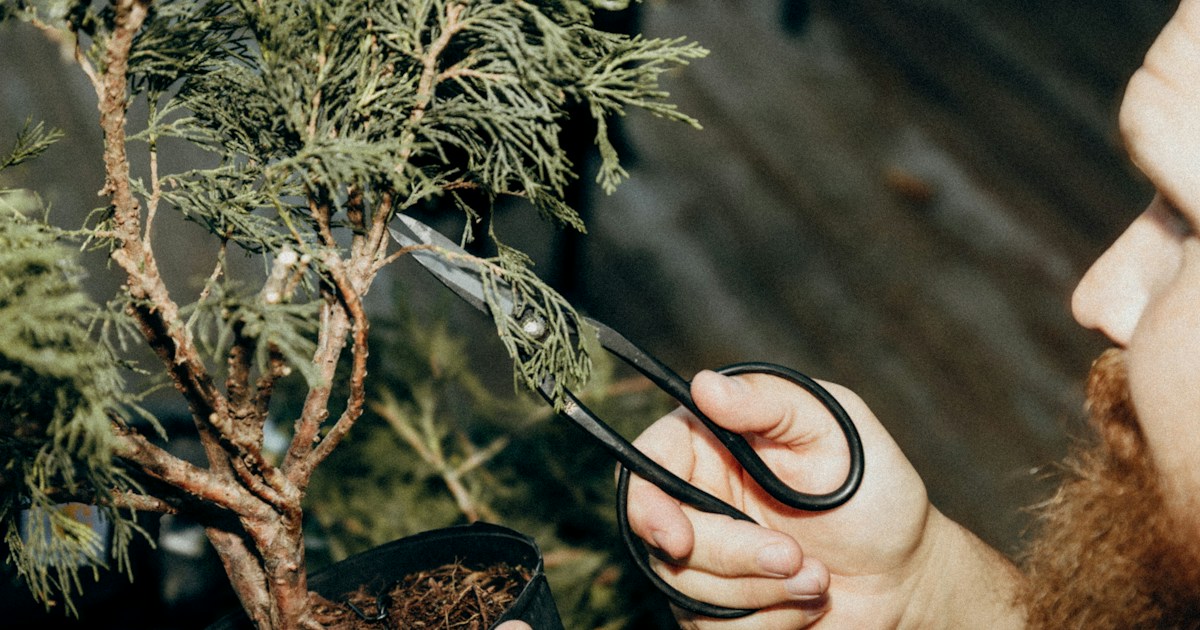
Bonsai developed through East Asian horticultural traditions and took distinctive forms in Japan over centuries. As bonsai practice became more refined, practitioners developed tools that helped them manage branches, roots, foliage, wire, and deadwood with precision. The tools evolved alongside the art: a branch cutter designed for a clean trunk cut is more useful than a general pruner when the goal is a carefully shaped silhouette.
Japanese metalworking traditions also contribute to the reputation of Japanese gardening tools. But history should inform a purchase, not replace practical evaluation. A heritage-inspired design is meaningful; edge quality and fit still decide whether the tool works well.
| Craft detail | Why it matters to a bonsai grower |
|---|---|
| Forging and forming | Can create a robust tool body and distinctive shape |
| Heat treatment | Influences hardness, edge retention, toughness, and sharpening behavior |
| Hand finishing | May improve alignment and fit, though standards vary by maker |
| Traditional tool forms | Help solve recurring bonsai tasks, from flush branch removal to wire handling |
| Modern production | Can provide consistent dimensions and accessible, practical tools |
Wazakura Japan’s collection page describes its range simply as “Japanese bonsai tools”. That product-focused description is useful for finding a category, but it does not, by itself, provide enough comparative detail to judge every tool’s steel or performance. We recommend checking the specifications for each item and matching them to your work.
🧰 20 Essential Japanese Bonsai Tools, Explained
No one needs all 20 tools on day one. Think of this as a reference shelf, not a shopping list. The right kit depends on whether you prune leafy elms, wire junipers, repot pines, or carve deadwood.
| Tool | Main job | Best reason to own one | Watch out for |
|---|---|---|---|
| Concave branch cutter | Removes branches near the trunk | Leaves a hollowed cut profile | Do not exceed its capacity |
| Knob cutter | Removes stubs and protrusions | Reaches and shapes awkward wounds | Needs steady control |
| Bonsai scissors | Prunes shoots and small branches | Versatile, precise cutting | Keep them clean and sharp |
| Bud and leaf scissors | Fine foliage work | Narrow blades reach crowded growth | Not for woody branches |
| Root-pruning shears | Cuts roots during repoting | Handles tough root work | Keep separate from fine scissors |
| Jin pliers | Strips and twists deadwood fibers | Helps create natural-looking jin | Can crush live bark if misused |
| Branch bender | Bends heavier branches | Adds leverage for shaping | Requires protection and patience |
| Wire cutters | Cuts bonsai wire | Protects branches from cut damage | Never use as branch cutters |
| Bonsai twezers | Removes debris and weeds | Reaches tight spaces | Avoid pulling healthy roots |
| Root hook | Separates tangled roots | Helps untangle root mats | Work gradually |
| Root rake | Losens soil and roots | Useful during repoting | Aggressive raking tears roots |
| Chopstick or soil probe | Checks soil and separates roots | Inexpensive, versatile | Use a blunt, smooth tip |
| Soil scoop | Moves substrate | Makes repoting tidier | Match scoop size to pot |
| Sickle knife | Fres rootball from pot edges | Useful when roots cling to pot walls | Keep blade away from roots and fingers |
| Grafting knife | Makes precise grafting cuts | Useful for specialized propagation | Requires skill and a very sharp edge |
| Trunk splitter | Splits wood for shaping | Enables advanced trunk work | High-risk specialist tool |
| Bonsai pliers | Bends wire or manipulates material | Stronger grip than fingers | Avoid crushing bark |
| Wire-bending pliers | Holds and forms wire | Helps shape heavier wire | Use protective wraps where needed |
| Turntable and work stand | Rotates and supports the tree | Improves access and posture | Secure the pot before working |
| Watering wand and fine rose | Waters soil evenly | Reduces substrate disturbance | Avoid harsh, concentrated jets |
1. Concave Branch Cuters
Concave cutters are among the most useful specialist bonsai tools. Their curved cutting jaws remove a branch while leaving a shallow concavity. That profile can help a wound close without leaving a raised, blunt stub.
How to use one:
- Identify the branch collar and decide how close to the trunk you can safely cut.
- Choose a cutter large enough for the branch, but not so large that it is awkward to control.
- Position the jaws around the branch and cut cleanly with steady pressure.
- Inspect the wound. If it is uneven, make a small corrective cut rather than repeatedly chewing at it.
- Clean sap and debris from the blades after use.
A concave cutter is not a general-purpose nipper. If the branch feels too thick, stop and use an appropriate saw or a larger-rated tool. For practical bonsai care, consult Bonsai Empire’s bonsai pruning guide.
- Benefits: Smooth cut profile; good trunk access; useful for structural pruning.
- Drawbacks: Can be damaged by oversized cuts, twisting, or use on hard wire.
- Best for: Branches within the manufacturer’s stated capacity.
👉 Shop concave cutters: Amazon | Wazakura Japan
2. Knob Cuters
Knob cutters have rounded jaws designed to remove knobs, stubs, and irregular wood. Their rounded cutting profile can help shape a concave wound where a straight cutter cannot reach cleanly.
Use a knob cutter when you need to remove a protruding stub or refine a difficult wound. Do not treat it like a stronger concave cutter: the jaw shape is designed for access and shaping, not unlimited force.
- Benefits: Useful for sculpting stubs and irregular wood.
- Drawbacks: Easy to overcut; requires good visibility and control.
- Tip: Remove material in small increments, then reassess the contour.
👉 Shop knob cutters: Amazon | Wazakura Japan
3. Bonsai Scissors
Bonsai scissors are everyday pruning tools for shoots and small branches. The long handles and narrow blades of many traditional models reach into dense growth, while shorter styles can feel nimble for routine trimming.
We keep scissors dedicated to plant work. Cutting wire, thick roots, or hard deadwood can nick the edge and turn a precise snip into a raged one.
- Benefits: Versatile; precise; useful for regular maintenance.
- Drawbacks: Blade styles differ; slender blades are not built for heavy branches.
- Check before buying: Blade length, handle comfort, steel type, joint smoothness, and intended cutting capacity.
👉 Shop Japanese bonsai scissors: Amazon | Wazakura Japan
4. Bud and Leaf Trimming Scissors
Fine-tip scissors are designed for delicate foliage work, trimming small shoots, and reaching into crowded areas. Their narrow tips are handy, but they are also easier to damage than robust pruning scissors.
Use them for:
- Fine shoot selection.
- Removing small leaves or spent growth when appropriate for the species.
- Trimming in tight areas without disturbing neighboring shoots.
Do not use them for: woody branches, thick roots, or wire. If you feel resistance, switch tools rather than squeezing harder.
5. Root-Pruning Shears
Roots are tougher and often dirtier than shoots, so root-pruning shears should be sturdy and kept separate from fine foliage tools. Soil grit is abrasive, and a root-covered blade can spread grime to clean pruning tools.
During repoting, remove dead or damaged roots and selectively shorten healthy roots according to the tree’s condition and species. Avoid taking a large portion of the root system simply because the pot looks crowded. The Royal Horticultural Society’s root-pruning advice offers useful general context; bonsai timing and severity also depend on species, climate, and vigor.
- Benefits: Better leverage for roots than delicate scissors.
- Drawbacks: Can tear roots if dull; root work can stress a tree.
- Tip: Clean soil from the joint before oiling.
6. Jin Pliers
Jin pliers grip and twist fibers when creating jin, the styled deadwood feature formed from a dead branch. They can also assist with some wire work, but their jaws can mark living bark.
On a practice branch, grip a small section of deadwood and twist gently along the grain. Work in stages; pulling a large strip at once can look artificial or split wood farther than intended. Deadwood techniques vary by species and design. Learn the basic approach from Bonsai Empire’s deadwood guide.
- Benefits: Strong grip; useful for stripping and shaping deadwood.
- Drawbacks: Can leave harsh marks or damage live tissue.
- Safety: Wear eye protection when snapping or twisting brittle wood.
7. Branch Benders
Branch benders provide leverage for positioning thicker branches. They are specialist tools, not a license to force a branch into a shape it cannot tolerate.
A careful bending sequence:
- Assess the branch’s flexibility and likely weak points.
- Protect the bark with raffia, tape, or another suitable wrap when appropriate.
- Apply supporting wire or a guy wire if the branch needs extra control.
- Bend gradually, pausing to feel for cracking or resistance.
- Secure the new position and inspect it regularly.
- Benefits: Adds leverage and control for heavier branches.
- Drawbacks: Can split wood or scar bark if rushed.
- Best for: Experienced shaping work after planning the branch’s movement.
8. Wire Cuters
Bonsai wire cutters have rounded or specially shaped jaws that allow you to cut wire close to a branch while minimizing the risk of cutting into the bark. They are not meant for branches, nails, or general hardware.
When removing wire, cut each coil in manageable sections. This avoids dragging a long wire coil across foliage or bark. The Bonsai Empire wiring guide explains why wire placement and timely removal matter.
- Benefits: Safer wire removal; controlled cuts close to the tree.
- Drawbacks: Can be damaged by wire thicker or harder than the tool is designed for.
- Tip: Check the tree regularly for wire bite, especially during vigorous growth.
👉 Shop bonsai wire cutters: Amazon | Wazakura Japan
9. Bonsai Twezers
Twezers help remove weeds, old needles, loose leaves, and debris from the soil surface. Narrow curved tips reach into foliage, while broader models can help handle small material during repoting.
Use a light touch. Pulling firmly on a weed growing among fine roots can disturb the root system; loosen the soil around it first or use a suitable weding tool.
10. Root Hooks
A root hook separates tangled roots during repoting. Single-prong hooks are precise; multi-prong versions can cover more area but may catch and tear fine roots if dragged forcefully.
- Start at the outside or underside of the root mass.
- Tease roots outward in short strokes.
- Work from the tips toward the trunk rather than yanking from the base.
- Pause when you meet firm resistance and change angle.
Benefits: Helps expose root structure and remove compacted old substrate.
Drawbacks: Aggressive use can tear feeder roots and add unnecessary stress.
11. Root Rakes
Root rakes loosen soil and help comb out roots. Some have a spatula on the opposite end for lifting soil from the pot. They are especially useful when a rootball is compacted, but they are not miniature garden cultivators. Gentle strokes win.
12. Chopsticks and Soil Probes
A smooth wooden chopstick is one of the most useful low-cost bonsai tools. It can help remove air pockets when filling a pot with substrate, separate roots gently, and check whether the soil is moist below the surface.
For moisture checks, insert the chopstick carefully and inspect it after a few minutes. A damp, soil-marked probe suggests moisture remains at that depth; it is one clue, not a replacement for understanding the tree, substrate, and weather.
13. Soil Scops
Soil scops make it easier to add bonsai substrate around roots without spilling half the bag onto the bench. Narrow scops suit small pots; larger scops work faster for bigger trees.
A scoop does not improve a poor substrate mix. Choose particle size and composition for the species, climate, watering habits, and growing setup. See our bonsai care basics for related growing guidance.
14. Sickle Knives
A bonsai sickle knife can help loosen a rootball stuck to the inside of a pot. Work around the pot’s edge, keeping the blade directed away from the trunk and major roots.
Best practice: Secure the tree, make shallow passes, and stop if you cannot see where the blade is going. A root hook or blunt tool may be safer when the rootball is not tightly bound.
15. Grafting Knives
Grafting knives are for clean, precise cuts when joining plant tissues. They are specialized tools that require skill, suitable plant material, and correct timing. A dull or poorly handled knife can crush tissues rather than making a smooth cut.
Use a stable work surface, keep fingers out of the blade path, and follow species-appropriate grafting guidance. If grafting is not part of your current practice, this is an easy tool to postpone.
16. Trunk Spliters
Trunk spliters make controlled splits in branches or trunks during advanced styling. This is high-risk work: a split that runs too far can permanently damage the tree.
- Plan the split and the intended bend before cutting.
- Protect the tree and yourself with a stable setup.
- Use the right size splitter and make a controlled cut.
- Stop if the wood begins to tear unpredictably.
For most home growers, trunk spliters are not an essential purchase. Learn under an experienced practitioner before attempting major trunk work.
17. Bonsai Pliers
General bonsai pliers can grip, twist, and manipulate wire or deadwood. They offer a stronger hold than fingers, but plain metal jaws can mark bark. Use a protective wrap where needed and avoid squeezing living branches.
18. Wire-Bending Pliers
Wire-bending pliers help form, position, or remove heavier wire. They are useful when fingers lack leverage, especially on larger trees. Choose jaw shapes that grip securely without cutting into the wire or crushing nearby bark.
A common mistake is applying excessive force to the wire while the tree is unsupported. Steady the branch, bend a small section at a time, and check that the wire is supporting the branch rather than strangling it.
19. Turntables and Work Stands
A bonsai turntable lets you rotate the tree instead of leaning across it. That improves access, helps you check the silhouette from several angles, and can reduce awkward wrist and back positions.
A sturdy stand is especially valuable during wiring and pruning. Make sure the pot is secure before rotating; a beautiful tree should not take a surprise tumble because the turntable has the grip of a greased dinner plate.
20. Watering Wands and Fine-Rose Nozzles
A fine-rose nozzle spreads water gently across the soil surface, helping avoid substrate washout. Use a steady flow and water the full rootball, not just the convenient front corner.
A wand is a watering tool, not a cure for poor drainage. The Royal Horticultural Society’s guide to watering plants covers general watering principles; bonsai watering frequency varies with species, soil, pot, season, and weather.
✂️ Matching Bonsai Tools to Pruning, Wiring, and Repoting Tasks
The fastest way to misuse a tool is to pick it before deciding what the task requires. Start with the job, then choose a tool that cuts or moves the material cleanly.
| Task | Suitable tool | Avoid using |
|---|---|---|
| Trim small shoots | Bonsai scissors | Wire cutters |
| Remove a branch near the trunk | Concave cutter, sized appropriately | Fine foliage scissors |
| Shape an old stub | Knob cutter | Oversized force on a small tool |
| Shorten roots | Root-pruning shears | Delicate leaf scissors |
| Remove bonsai wire | Bonsai wire cutters | Household scissors or branch cutters |
| Losen root mass | Root hook, rake, chopstick | Forceful pulling |
| Create jin | Jin pliers | Pliers that crush live bark |
| Water freshly repotted soil | Fine-rose nozzle | High-pressure jet |
Step-by-step: choose a tool for a branch
- Inspect the branch. Is it live, dead, wired, or supporting a design feature?
- Estimate diameter and hardness. Check the tool’s stated capacity.
- Decide the cut’s purpose. Routine pruning, flush removal, or wound shaping require different tools.
- Check access. Narrow scissors or a long-handled cutter may reach better than a bulky tool.
- Make one controlled cut. Avoid twisting or rocking a cutter through material it cannot handle.
- Review the result. A clean cut is better than repeated nibling.
Step-by-step: remove wire without injuring a tree
- Check the branch for wire bite and decide how many cuts are needed.
- Support the branch with your free hand.
- Cut each coil separately with bonsai wire cutters.
- Remove pieces outward, away from buds and foliage.
- Do not unwind wire that has begun to bite into the bark; cutting it into sections is generally safer.
Step-by-step: prepare tools for repoting
- Clean and disinfect tools before beginning.
- Arrange root hooks, shears, chopsticks, and soil tools within reach.
- Keep root tools separate from clean foliage scissors.
- Work efficiently, especially in conditions that dry exposed roots quickly.
- After repoting, clean off soil and sap, dry the tools, and oil moving joints.
The University of Minnesota Extension’s pruning guidance is a useful general reference for pruning practices. Bonsai decisions still need to account for species and the tree’s health.
🌲 Choosing Tools for Different Bonsai Species
Species influence tool choice because their growth habits, branch structure, foliage, and repoting needs differ. A compact pair of scissors may be ideal for fine shoots, while a robust cutter is needed for a thicker branch. No single tool kit is perfect for every species.
Japanese Maple, Pine, Juniper, and Other Common Species
| Bonsai type | Common tool priorities | Extra care |
|---|---|---|
| Japanese maple | Fine scissors, sharp branch cutters, twezers | Avoid careless cuts that damage delicate buds and shoots |
| Pine | Strong scissors, root tools, wire cutters | Learn species-specific needle and candle timing |
| Juniper | Scissors, wire cutters, jin pliers | Avoid stripping too much foliage; protect live bark during shaping |
| Chinese elm | Scissors, concave cutters, chopsticks | Frequent shoot trimming may make comfortable, sharp scissors especially useful |
| Ficus | Scissors, cutters, root shears | Sap can build up on blades; clean promptly |
| Azalea | Fine scissors, root tools | Follow species-specific pruning and repoting timing |
These are general tool priorities, not pruning calendars. Bonsai Empire’s guides provide species-specific background for maples, pines, and junipers.
Deciduous Versus Conifer Bonsai Tool Needs
Deciduous trees often need precise shoot selection and repeated fine pruning, so sharp scissors and narrow tools get plenty of use. Conifers may need careful wiring, foliage management, and deadwood work, making wire cutters and pliers more central.
- Deciduous trees: Prioritize pruning scissors, clean branch cuts, and tools that reach into dense shoots.
- Conifers: Prioritize wire management, careful foliage work, and species-appropriate styling tools.
- Both: Keep root tools clean, use the right cutting capacity, and avoid heavy work on weak trees.
The distinction is not absolute. A mature deciduous tree may need substantial structural cutting; a young juniper may need very little wire work. Let the tree’s stage and health lead.
🔩 Japanese Tool Materials: Carbon Steel, Stainless Steel, and Damascus Steel
Steel affects how a tool cuts, holds an edge, resists corrosion, and responds to sharpening. Steel type is only part of the story: heat treatment, blade geometry, assembly, and maintenance all matter.
| Material | Strengths | Trade-offs | Good fit for |
|---|---|---|---|
| Carbon steel | Can take a very keen edge; commonly straightforward to sharpen | Rusts if left damp or dirty | Growers willing to clean and oil tools |
| Stainless steel | Better corrosion resistance in ordinary use | Edge performance varies; not rust-proof in every condition | Damp climates or low-maintenance routines |
| Damascus-pattern steel | Distinctive layered appearance; performance depends on the core and construction | Pattern alone does not prove superior cutting performance | Buyers who value the maker’s specific construction |
The presenter in the first featured video says, “I prefer carbon steel in all my bonsai tool cases with one exception,” while warning that tools can rust if left dirty after repoting. That preference makes sense for someone who values sharpness and follows a careful cleaning routine. For a grower who often works in wet conditions or forgets tool care, stainless steel may be the more practical choice.
Our recommendation: Choose carbon steel if you enjoy maintaining tools; choose stainless steel if corrosion resistance better matches your habits. In either case, verify the maker’s specifications and don’t assume “Damascus” means a sharper or tougher edge.
🛒 How to Choose Japanese Bonsai Tools
A good buying decision begins with your trees, not the number of pieces in a box. Consider what you prune, how often you work, what fits your hands, and whether you can maintain the steel.
Beginer, Intermediate, and Professional Tool Priorities
| Experience level | Sensible priorities | Add later |
|---|---|---|
| Beginner | Bonsai scissors, wire cutters, chopstick or root rake | Concave cutter when structural pruning is needed |
| Intermediate | Better-fitted scissors, concave cutter, root shears, twezers | Jin pliers, turntable, specialized root tools |
| Advanced | Task-specific cutters and pliers chosen for species and technique | Grafting knives, trunk spliters, branch benders |
The first-video presenter suggests using common household tools for basic work rather than buying a low-quality set. A bent kitchen fork or chopstick can help loosen roots in a pinch; household secateurs may handle simple garden pruning. We would still keep a sharp, purpose-made tool for delicate cuts on valuable trees. A temporary substitute is sensible; a damaged kitchen knife is not.
Tool Size, Handle Fit, Balance, and Cutting Capacity
Before buying, check:
- Overall length and jaw size: Will the tool reach the work without blocking your view?
- Handle fit: Can you close it comfortably without straining your fingers?
- Balance: Does it feel controlled when held at the tip or near the pivot?
- Cuting capacity: Is the tool rated for the branch or wire you intend to cut?
- Joint movement: Do the blades align and open smoothly?
- Grip and maintenance: Can you clean the pivot and store the tool safely?
If you have smaller hands, an extra-large cutter may be tiring and difficult to place accurately. If you have larger hands, tiny scissors can cramp your grip. When possible, hold the tool before committing.
Hand-Forged Versus Machine-Made Tools
| Feature | Hand-forged or hand-finished | Machine-made or standardized |
|---|---|---|
| Appeal | Traditional craftsmanship and individual finishing | Consistent production and easy replacement |
| Variation | Fit and finish may vary slightly | Dimensions are often more uniform |
| Performance | Depends on maker, steel, and heat treatment | Also depends on maker, steel, and heat treatment |
| Best buying check | Maker reputation and finishing quality | Specifications, reviews, warranty, and edge alignment |
Neither category automatically wins. A well-made machine-produced tool can outperform a poorly finished hand-forged one. Look for a reputable maker, sensible specifications, a secure pivot, and an edge that meets cleanly.
🏷️ Japanese Bonsai Tool Brands and Makers to Know
Brand names can help you compare ranges, but they are not a substitute for checking the specific tool. Availability, models, materials, and manufacturing details can differ between product lines.
| Brand or source | What to examine | Buying perspective |
|---|---|---|
| Masakuni | Tool type, model, material, and intended capacity | A recognized Japanese bonsai-tool maker; verify details for each model |
| Kaneshin | Product specifications and construction | Compare individual tools rather than buying by reputation alone |
| Wazakura Japan | Product descriptions, steel, size, and care instructions | A convenient branded range; inspect listing details |
| Joshua Roth | Tool category and model information | A specialist bonsai supplier with varied tool options |
| Kikuwa | Model-specific fit and construction | Compare exact specifications with your tasks |
A product collection can show what is available but may not supply the independent comparisons a buyer needs. For example, Wazakura’s collection uses the phrase “Japanese bonsai tools”; that is a useful category label, not proof that each item suits every tree or maintenance routine. Compare the exact model, steel, dimensions, warranty, and care advice before ordering.
👉 Shop Japanese bonsai tool brands: Amazon | Wazakura Japan Official Website | Masakuni Official Website
🎒 The Best Japanese Bonsai Tool Kit for Beginners
For most first-time growers, we recommend assembling a small kit instead of buying the largest set on the shelf.
| Starter item | Why it earns a place |
|---|---|
| Bonsai scissors | Handles regular shoot pruning |
| Wire cutters | Removes training wire without dragging it across branches |
| Chopstick or simple root rake | Helps with soil and gentle root work |
| Concave cutter | Add when your trees need structural branch removal |
| Root-pruning shears | Add when you begin repoting trees yourself |
| Cleaning cloth and tool oil | Protects steel and keeps joints moving |
How to build the kit step by step
- List your trees and routine tasks. If you own one young ficus, you may not need a trunk splitter or jin pliers.
- Buy the tool you use most first. For many home growers, that is a comfortable pair of scissors.
- Add wire cutters if you wire trees. They are safer for removing training wire than improvised cutters.
- Add a concave cutter for structural pruning. Choose one with capacity appropriate for your trees.
- Keep root tools separate. Soil grit can dull or scratch fine cutting edges.
- Set up a care routine. A clean tool lasts longer than an expensive tool forgotten in a damp tray.
The first featured video argues against buying cheap kits packed with tools that see little use. We agree: a modest, well-maintained kit is often more useful than a crowded roll of mystery steel. For more beginner guidance, browse Bonsai for Beginners.
✅ Safe and Correct Bonsai Tool Techniques
Sharp tools are safer when controlled, maintained, and used for their intended jobs. A dull blade may require more force; a tool that slips under pressure can cause injury or damage the tree.
Safe working habits
- Cut away from your body and supporting hand.
- Keep fingers clear of blades, wire ends, and spring-loaded handles.
- Wear eye protection when splitting, bending, or snapping brittle wood.
- Support branches while cutting wire or pruning.
- Do not twist cutters to force them through oversized wood.
- Store sharp tools closed or sheathed, away from children and pets.
- Use disinfectant where disease transmission is a concern, following product directions and allowing tools to dry.
Cutting technique for a clean result
- Stabilize the branch or tool position.
- Align the blade with the intended cut before squeezing.
- Make one smooth cut rather than crushing, rocking, or twisting.
- Inspect the wound and stop once the cut is clean.
- Clean the tool before moving to another tree if disease is suspected.
For broader tree-pruning safety and technique, see the University of Minnesota Extension pruning guide. Bonsai work can be more detailed, but the fundamentals of sharp, suitable tools still apply.
🧽 Cleaning, Sharpening, and Maintaining Japanese Bonsai Tools
Tool care is not glamorous, but it is cheaper than replacing a favorite pair of scissors. The video presenter sums up the risk neatly: “You can’t skip the last thing you want is your favorite scissors to become rusty because you forgot to clean and oil them after doing a repot.” The phrasing may be informal; the warning is sound.
Preventing Rust and Sap Buildup
After each session:
- Wipe sap and plant residue from blades.
- Remove soil and grit with a brush or cloth.
- Dry every surface, including the pivot.
- Add a small amount of suitable tool oil to exposed steel and moving joints.
- Store tools in a dry place.
For sticky sap, use a cleaner intended for garden tools and follow its label. Avoid leaving carbon-stel tools wet in a tool roll, greenhouse, or outdoor tray. Stainless steel resists corrosion better, but it still benefits from cleaning.
Sharpening Bonsai Scissors and Cuters
Sharpening depends on blade design. A flat sharpening stone can work for some edges, but the wrong angle or excessive grinding can damage a specialized cutting profile. If you are unsure, use the maker’s instructions or a qualified tool sharpener.
General approach:
- Clean the blade before sharpening.
- Identify the original bevel and maintain its angle.
- Sharpen the cutting edge lightly; avoid grinding both sides indiscriminately.
- Check blade alignment and pivot tension.
- Test on suitable plant material, not wire or hard scrap.
Do not sharpen wire cutters as though they were pruning scissors. Some wire cutters have hardened jaws and specific geometry; careless grinding can ruin them.
Seasonal Tool-Care Checklist
| When | What to do |
|---|---|
| After pruning | Wipe blades, remove sap, dry, and oil as needed |
| After repoting | Brush away soil and grit, clean joints, dry completely |
| Before storage | Inspect edges, pivots, and handles; protect exposed steel |
| Before spring work | Confirm scissors cut cleanly and wire cutters are undamaged |
| After a disease concern | Clean and disinfect according to appropriate guidance |
If you discover light surface rust, address it promptly with a suitable rust remover or fine abrasive appropriate for the tool’s finish, then clean, dry, and oil the surface. Deep pitting near an edge or pivot may justify professional repair or replacement.
⚠️ Common Japanese Bonsai Tool Buying and Care Mistakes
- Buying a large kit before knowing what you use. Many gardeners repeatedly reach for the same few tools.
- Choosing by country label alone. Inspect material, fit, capacity, and maker details.
- Using bonsai scissors on wire or thick roots. That is an excellent way to turn a fine edge into a sad edge.
- Using wire cutters on branches. Different tool, different job.
- Overloading cutters. Respect the stated capacity and do not twist through resistant wood.
- Leaving carbon steel dirty or damp. Sap and moisture encourage corrosion.
- Sharpening without understanding the bevel. A few careless strokes can change the cutting geometry.
- Buying tools too large for your hands. Poor fit reduces control and can cause fatigue.
- Forcing roots apart. Root hooks and rakes should tease, not wrestle.
- Assuming expensive means indestructible. Good tools still need correct use and care.
A useful rule from our bench: if the tool feels stuck, the first question is “Am I using the right tool?”, not “How much harder can I squeeze?”
🌍 Authenticity, Imports, and Buying Japanese Bonsai Tools Online
Online listings can make tools look similar even when they differ in steel, assembly, capacity, and country of manufacture. Before buying:
- Check the maker’s name and model.
- Read the material and dimensions, not just the title.
- Look for clear photos of the pivot, blades, and finish.
- Confirm whether the tool is made in Japan or merely designed or sold by a Japanese brand.
- Review the seller’s return policy and warranty.
- Compare the listing with the maker’s official product information.
- Treat vague claims such as “professional Japanese quality” as marketing until supported by specifics.
Wazakura Japan maintains a dedicated bonsai-tools collection, while specialist suppliers such as Bonsai Outlet offer a category page for Japanese bonsai tools. A collection page is a starting point, not an independent quality test.
👉 Shop Japanese bonsai tools: Amazon search | Wazakura Japan Official Website | Bonsai Outlet
♻️ Japanese Tools Versus Budget Tools and Western Alternatives
The choice is not simply “Japanese equals excellent” and “budget equals useless.” There are well-made tools from different countries, and there are disappointing tools at every price level. The important differences are usually edge quality, fit, capacity, material, durability, and whether the tool suits the task.
| Option | Advantages | Limitations | Best perspective |
|---|---|---|---|
| Japanese bonsai tool | Traditional forms, specialist designs, strong maker options | Quality varies; maintenance may be required | Good choice when a specific design fits your work |
| Budget bonsai set | Convenient way to get several basic tools | Some pieces may be poorly finished or unnecessary | Inspect each tool and avoid relying on a large piece count |
| Western garden tool | Useful for rougher pruning and general garden work | Often bulkier than bonsai tools for detailed access | Good for larger cuts where appropriate |
| Household substitute | Handy for temporary, low-risk jobs | May be awkward, dull, or unsafe for delicate work | Fine as a short-term aid, not a replacement for a proper cutter in critical work |
The first-video presenter reports negative experiences with cheap tools that were ineffective and short-lived, and recommends using simple household items for basic tasks while investing in a few essential purpose-made tools. That is one gardener’s practical perspective, not a universal test result. We would not use a household knife for precision bonsai cuts, and we would not dismiss a budget tool that is well-made and correctly used.
Our balanced recommendation: Spend thoughtfully on tools you use often, keep temporary substitutes to low-risk jobs, and judge each tool by performance rather than its label.
📦 Storing and Traveling with Bonsai Tools
Store tools clean, dry, and protected from impact. A tool roll or case can prevent blades from knocking together and dulling, while a ventilated storage spot helps avoid trapped moisture.
Tool storage checklist
- Close or sheath sharp tools.
- Keep root tools apart from fine cutting tools.
- Use a dry case or roll and avoid packing tools away wet.
- Inspect carbon steel for rust before storage.
- Keep tools away from children and pets.
- During travel, secure sharp edges and follow applicable transport rules.
A simple, organized tool roll can save time at a workshop: scissors, branch cutter, wire cutters, and a cleaning cloth in predictable places. That small bit of order feels especially valuable when the tree is on the turntable and the wire is already halfway through a bend.
💡 Quick Tips for Getting More from Your Bonsai Tools
- Match the tool to the material. Branches, roots, and wire are different jobs.
- Keep one pair of scissors dedicated to fine foliage.
- Cut wire into sections instead of unwinding it from a tree.
- Use a chopstick to check moisture below the soil surface, alongside observation of the tree and substrate.
- Clean tools before sap hardens.
- Buy a tool only after you can name the task it will solve.
- Practice advanced work on expendable material before trying it on a prized tree.
- Rotate the tree instead of contorting yourself around it.
- Stop when the tree’s health or the tool’s capacity is in doubt.
For more practical growing and display ideas, visit Bonsai Care Basics, Bonsai FAQs, and Bonsai Display and Aesthetics.